
The Devil + Five of Cups
Explore how these two tarot cards interact in a reading through symbolic overlap, contrast, and shared narrative. Tarot combinations often reveal meaning that neither card fully expresses on its own.
The Devil and Five of Cups Tarot Combination Meaning
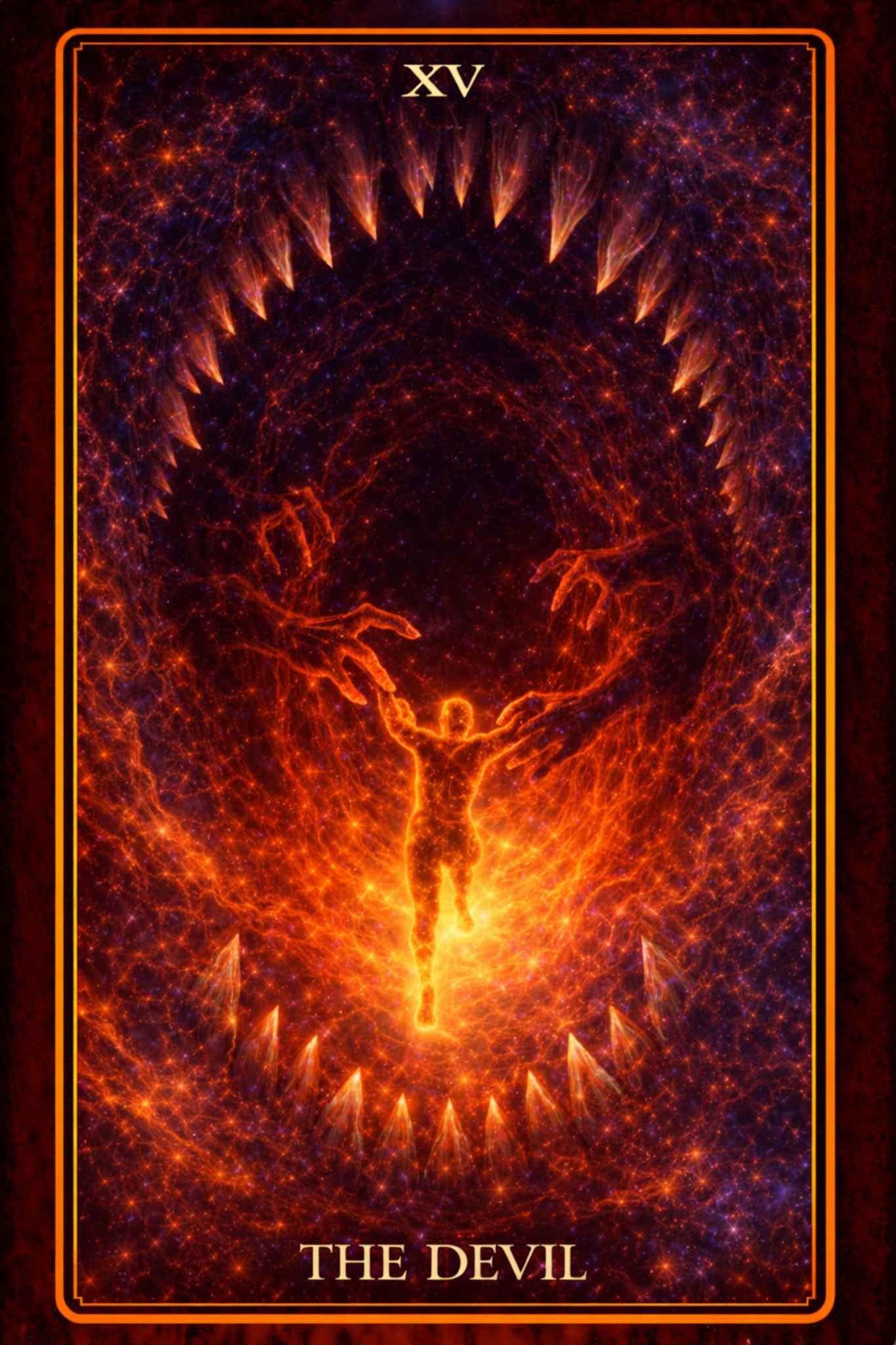
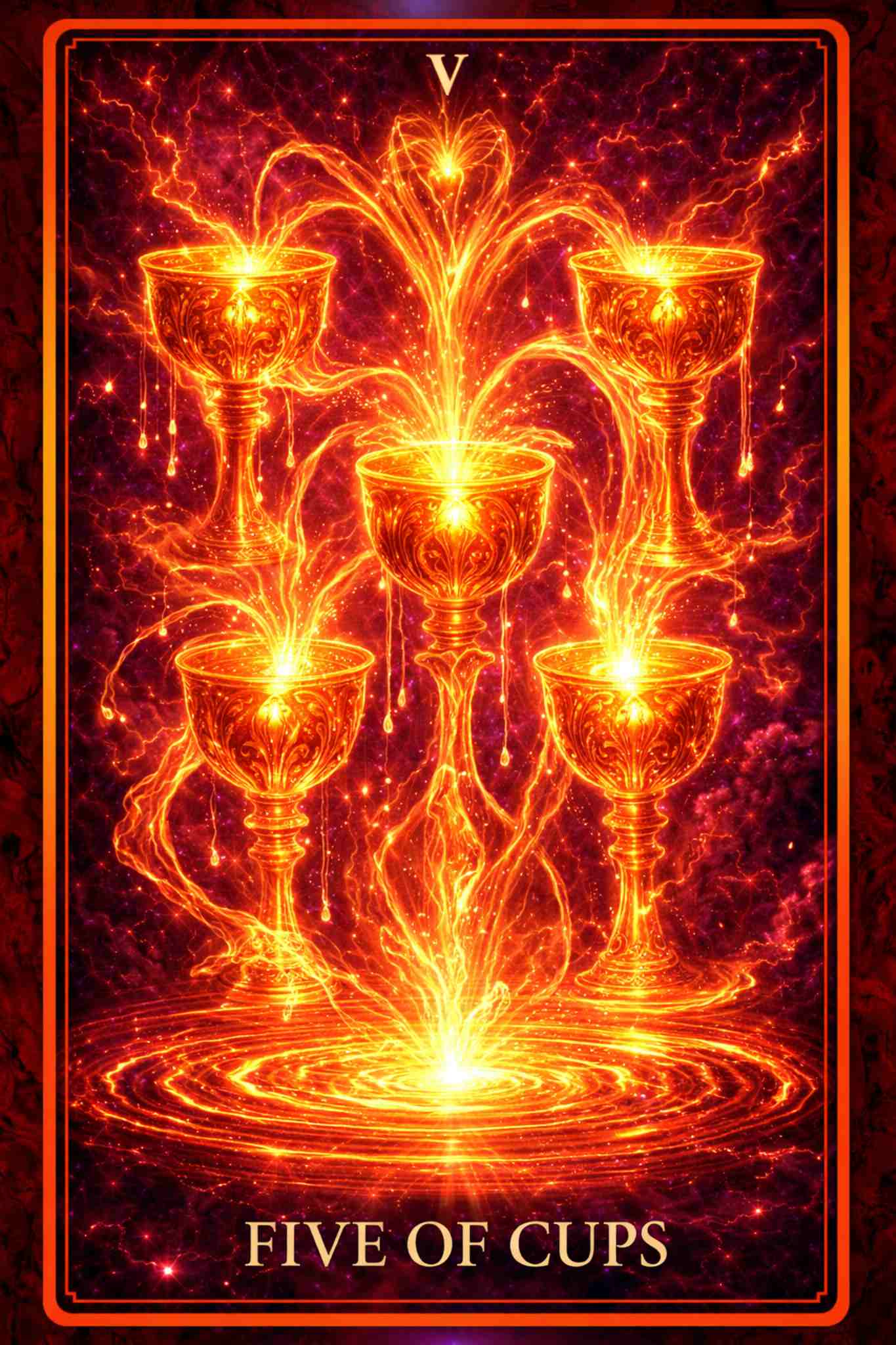
Regret can become a room the heart keeps returning to, even after the door has been left open. The Devil and Five of Cups brings grief into contact with attachment. The Five of Cups speaks of sorrow, disappointment, mourning, emotional loss, and the ache of focusing on what has spilled. The Devil adds fixation, shame, compulsion, self-punishment, longing, and the strange pull of a pain that has become familiar. Together, these cards describe the place where grief is real, but the bond to grief has begun to take over the inner landscape.
This is not a reading that blames someone for hurting. Loss can be deep. Regret can be sincere. A relationship, friendship, opportunity, or emotional hope may have left a genuine mark. The Devil enters when the heart starts circling the wound in a way that removes choice. A person may keep replaying one conversation, one mistake, one rejection, one ending, or one moment they wish they could change. The pain may feel like proof of love, proof of loyalty, or proof that the past still matters. Yet the question becomes whether the grief is being honored, or whether the grief has become a chain.
The Five of Cups alone often speaks of sadness and the slow work of turning toward what remains. The Five of Cups feelings meaning can help clarify the emotional base of this card: disappointment, regret, grief, and the difficulty of seeing beyond what has been lost. With The Devil, that emotional field becomes heavier. The person may feel attached to the very story that hurts them, not because they enjoy suffering, but because letting the story loosen might feel like losing the last connection to what mattered.
When grief starts asking for a sacrifice
The unique tension of The Devil and Five of Cups is attachment to pain. The Five of Cups weeps over what has spilled; The Devil keeps the eyes fixed there. This can appear as emotional rumination, guilt, regret, longing for someone unavailable, shame over a choice, or an inner belief that the person must keep suffering to prove that the loss meant something. The chain may say: “If I stop hurting, I betray what happened.” Yet healing does not erase meaning. It changes the way meaning is carried.
Want to explore this combination in a more personal way?
If this pairing feels important right now, a simple tarot spread can help you reflect on it with more context.
In love readings, this pair may describe a heart that remains bound to a painful bond, an ending, a disappointment, or a version of love that brought both sweetness and sorrow. The person may know that the dynamic narrowed them, yet still crave the feeling it once gave. They may miss the intensity, the apology that never came, the chance to be chosen differently, or the imagined future that collapsed. The Devil does not make the longing wrong. It asks what the longing is still trying to receive from a cup that has already spilled.
There is a close relationship here with The Devil and Four of Cups, where dissatisfaction and craving can keep the heart closed before the loss is fully named. The Devil and Five of Cups moves deeper into the aftermath. Something has hurt. Something has failed to become what the heart hoped. The emotional task is not to force brightness over grief, but to notice where grief has begun to demand identity, loyalty, or self-punishment.
The sorrow may be real, but the chain may be older
One of the deeper layers of this combination is the way present grief can awaken an older wound. A disappointment may hurt because of what happened, but it may also touch a place that has felt abandoned before. A breakup may carry the pain of the present relationship and the echo of earlier rejection. A missed opportunity may activate old shame. A friendship loss may reopen the fear of being replaceable. The Devil shows how the past can attach itself to the present until the heart is grieving more than one thing at once.
This is why the combination often benefits from gentleness rather than harsh advice. Telling the heart to “move on” rarely reaches the real chain. The question is more subtle: what part of this grief feels familiar? What belief about worth, love, desirability, forgiveness, or belonging has attached itself to the loss? The Devil spirituality meaning may help because it focuses on symbolic bondage, inner freedom, and the return of choice rather than judging the desire or the wound. The aim is not to deny sorrow. It is to stop letting sorrow become the only voice in the room.
In some situations, The Devil and Five of Cups can also point to guilt that has become distorted. A person may take responsibility for everything, even when a situation was shared, complex, or beyond one person’s control. They may replay what they could have said, what they should have seen, how they might have prevented the outcome. Reflection can be useful. Endless inner punishment rarely becomes wisdom. The cards invite a cleaner form of accountability: learn what can be learned, name what was yours, release what was not, and let the remaining cups become visible again.
When longing keeps the past alive
Timing with The Devil and Five of Cups often suggests that the moment is sensitive because the heart may be tempted to act from pain. A person may want to send a message from regret, return to a bond from loneliness, accept less than they need because absence feels unbearable, or make a decision mainly to quiet grief. The cards advise slowing down before the old wound chooses the next step. Strong longing can feel like guidance, but sometimes it is simply the pain of separation asking for immediate relief.
A careful spread such as the past present future tarot spread can fit this combination when the question needs context: what belongs to the past, what is truly active now, and what kind of future becomes possible when the chain around regret loosens. This keeps the reading reflective rather than predictive. It helps separate memory from present choice, sorrow from obligation, and love from the fear of living without the old emotional structure.
A useful major-arcana contrast can be found in The Devil and The Hanged Man, where attachment, surrender, sacrifice, and stuck perspective can become difficult to separate. The Devil and Five of Cups is more specifically emotional. The focus is less on pause itself and more on the attachment to the wound: the repeated return, the shame loop, the craving for what hurt, and the private belief that suffering must continue because something precious was lost.
Questions for the place that keeps replaying
The Devil and Five of Cups often becomes clearer when the reading moves away from blame and toward honest emotional inquiry. The pain may have a story, but the chain usually has a deeper root. The following questions can help the interpretation stay grounded in self-awareness:
The remaining cups are not a betrayal
Spiritually, this pair asks the heart to separate mourning from bondage. Mourning is sacred when it allows truth to be felt. Bondage begins when the person feels required to stay in the same pain to honor what happened. The Devil shows where the grief has taken on extra weight: shame, craving, fixation, or the belief that freedom would mean indifference. The Five of Cups reminds the reader that sorrow is human, but it also quietly points toward the cups still standing behind the figure. Something remains, even if the eyes are tired of turning.
The freedom offered by this combination is not instant emotional release. It is a slower return of choice. The person may still miss someone, still regret something, still wish the story had unfolded differently. Yet they may begin to notice that the pain does not need to govern every response. They may begin to feel the difference between remembering and re-entering, between grieving and feeding the wound, between love and the compulsion to keep proving love through suffering.
The Devil and Five of Cups is ultimately a mirror for grief that has become too tightly held. It does not shame the wound. It asks whether the wound has been allowed to define the whole self. It invites the heart to look at what spilled, but also to ask why the spilled cup still has so much power. When the chain around regret begins to loosen, the past may remain meaningful without becoming a prison, and the heart may find that freedom is not a betrayal of love. It is the space where love can stop hurting in the same way.
Want to place this combination into a wider reading?
If this pairing feels close to something you are experiencing, a simple spread can help you reflect on the surrounding energy with more clarity.
Frequently asked questions about The Devil and Five of Cups
What does The Devil and Five of Cups mean in love?
The Devil and Five of Cups in love often points to a painful emotional attachment that still holds power after disappointment, regret, or loss. It may describe a bond, memory, or missed possibility that the heart keeps returning to because the pain still feels meaningful. This combination does not shame the grief. It asks whether sorrow is being honored, or whether the attachment to what hurt has begun to narrow the person’s freedom.
Is The Devil and Five of Cups a bad tarot combination?
This is not automatically a bad combination, but it can be emotionally heavy. The Five of Cups shows sadness, regret, and the ache of what has spilled, while The Devil reveals where that pain may become fixed through shame, longing, or repeated inner replay. The message is not to force happiness over grief. It is to notice where the past is still shaping present choices more than the heart realizes.
What is the message of The Devil and Five of Cups?
The advice is to treat the wound with honesty without letting it become the whole story. A reflective reading can ask what still hurts, what the grief is trying to protect, and what remains standing even after loss. If the question is about love, an interactive love tarot reading can offer a softer way to explore the emotional pattern without turning the pain into a fixed prediction.
More combinations with The Devil
More combinations with Five of Cups
Continue with The Devil
Explore Related Guides by Topic
If you want to explore this combination through a more specific emotional lens, these tarot guides can help you follow the broader pattern behind the reading.