
The Devil + Four of Cups
Explore how these two tarot cards interact in a reading through symbolic overlap, contrast, and shared narrative. Tarot combinations often reveal meaning that neither card fully expresses on its own.

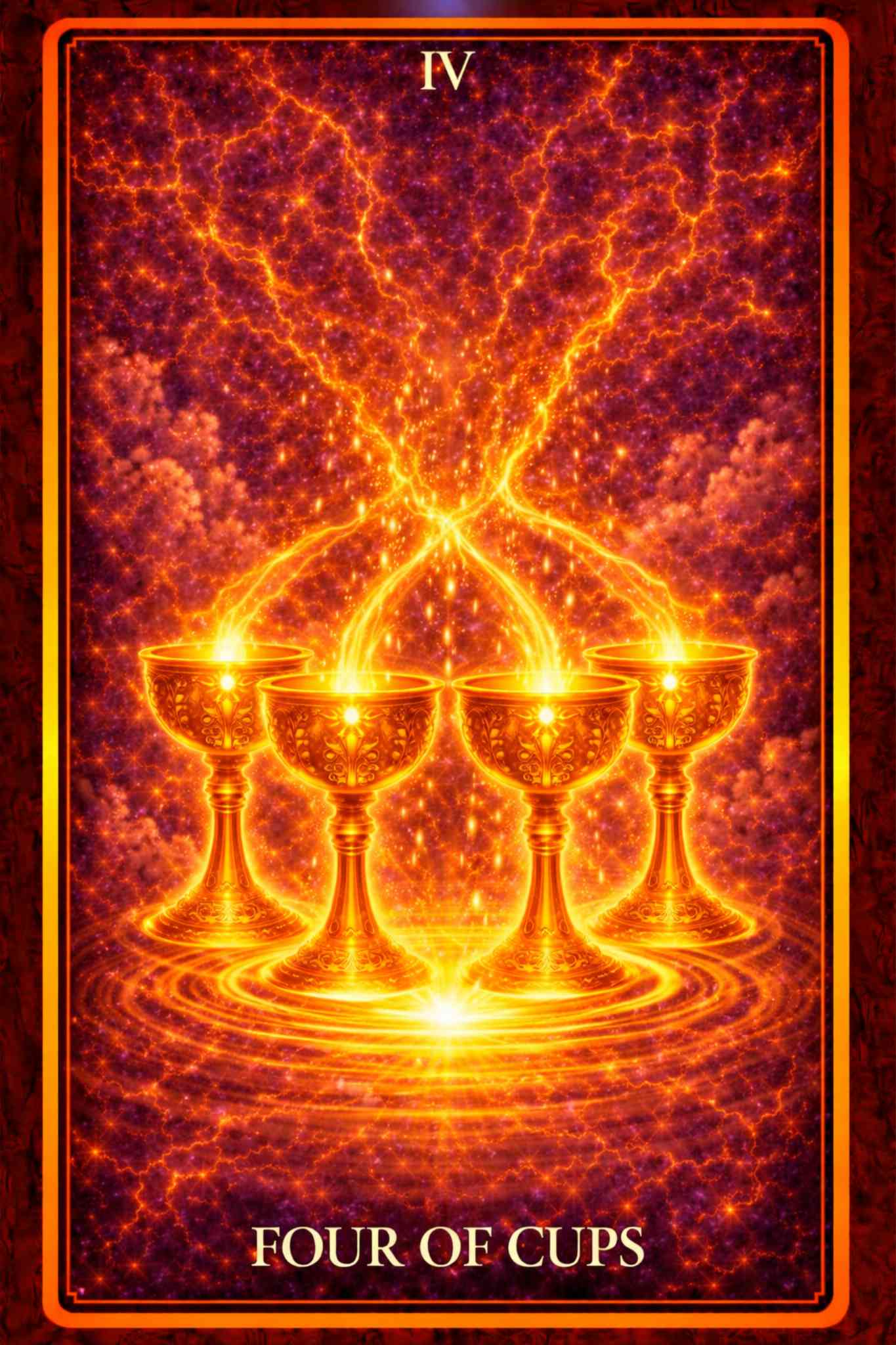
The Devil and Four of Cups Tarot Combination Meaning
There is a kind of hunger that does not look hungry from the outside. It may look like disinterest, boredom, emotional withdrawal, numbness, stubborn silence, or the refusal to reach for what is being offered. The Devil and Four of Cups brings that hidden hunger into focus. The Four of Cups speaks of dissatisfaction, inner distance, contemplation, emotional fatigue, and the strange stillness that appears when the heart has been offered something but cannot quite receive it. The Devil adds craving, attachment, inner compulsion, fixation, and the pattern of staying bound to what drains the spirit while ignoring what might soften it.
This combination is less dramatic than many Devil pairings, but it can be deeply revealing. It may describe a person who says they want emotional relief, yet remains attached to the very pattern that keeps them closed. It may point to a relationship dynamic where affection is available, but the heart is too occupied with an old craving to notice it. It may also describe the state of wanting more while feeling unable to name what “more” really means. The Devil does not accuse the person of ingratitude. It asks what has made the heart so difficult to satisfy.
The Four of Cups alone often suggests reflection, apathy, emotional pause, or a need to look again at what is being offered. The Four of Cups spirituality meaning can help clarify that quieter inner layer: contemplation, emotional distance, and the search for meaning beneath dissatisfaction. With The Devil, the pause becomes heavier because there may be an attachment to dissatisfaction itself. The person may be caught in a loop where nothing feels enough, yet the familiar emptiness is strangely hard to release. The cup is present, but the inner hand remains closed.
When dissatisfaction becomes familiar
The unique tension of The Devil and Four of Cups is not a craving that runs outward with obvious intensity. It is craving turned inward until it becomes dull, resistant, and difficult to move. The Devil wants the thing. The Four of Cups sits beneath the tree and refuses the cup. Together, they may describe the ache of wanting something deeply while also rejecting the forms in which life, love, care, or opportunity are actually arriving. The heart may be waiting for a specific feeling, a specific person, a specific proof, or a specific emotional high. Anything else may be dismissed before it is truly received.
In relationship readings, this can show the difference between genuine emotional discernment and a pattern of withholding. Someone may feel unsatisfied because a connection is truly misaligned. That possibility deserves respect. Yet the cards also ask whether the dissatisfaction is being strengthened by comparison, fantasy, resentment, old disappointment, or the belief that love should arrive in a form that perfectly answers an old wound. The Devil brings attention to the hidden contract: “I will open only if the cup looks exactly like the one I have been craving.”
This is where a useful major-arcana comparison appears in The Devil and The Moon, where craving, fear, fantasy, confusion, and emotional fixation can make the inner landscape harder to read clearly. The Devil and Four of Cups is quieter and more withdrawn. Here, feeling may be blocked because the hunger has become fixed. The cup is present, but the heart hesitates beside it. The result can be emotional stagnation: wanting love, yet resisting the vulnerability of receiving it; wanting change, yet clinging to the familiar story of lack; wanting freedom, yet staying loyal to the mood that proves nothing is enough.
The cup that cannot compete with the craving
There may be a specific emotional object at the center of this pair. A person may remain attached to someone unavailable, an old fantasy, an unresolved disappointment, a past version of a relationship, or an inner image of what would finally make life feel complete. Because that image is so charged, present reality may feel muted beside it. The offered cup may be kind, real, and steady, but it may not create the same intensity as the craving. The Devil asks the reader to notice how easily intensity can become the standard by which every quieter form of care is judged.
There is also a shadow of control here. The Four of Cups can withhold emotional response as a way of staying safe. The Devil can turn that safety into a private enclosure. A person may keep their distance because opening would mean losing the power of detachment. They may prefer dissatisfaction because it feels controlled, familiar, and less risky than hope. They may keep saying “nothing moves me” while quietly feeding a desire that no one else can touch. The reading becomes more honest when it asks: what does this emotional stuckness protect?
The Devil spirituality meaning can deepen this layer because it treats bondage as a symbolic loss of choice rather than a moral failure. In this combination, the bondage may be subtle. It may be the repeated return to dissatisfaction, the attachment to a private wound, the refusal to let ordinary tenderness matter, or the belief that only one unavailable cup can satisfy the heart. The chain may be quiet, but it still narrows the inner world.
What to notice before choosing from emptiness
Timing with The Devil and Four of Cups often suggests a pause before making decisions from numbness, resentment, or craving. When the heart is closed, every option can look dull. When desire is fixed on one missing thing, every available cup can seem inadequate. The cards invite the person to wait until they can sense the difference between true refusal and wounded refusal. True refusal has clarity. Wounded refusal often carries bitterness, repetition, and the feeling of being trapped inside a story that has been told too many times.
Need a little more context around this pairing?
A short reading can help you reflect on the tension, direction, or lesson this combination may be pointing toward.
A decision made from this state may try to solve emptiness too quickly. Someone may reject a connection because it does not create enough intensity, pursue an old attachment because dissatisfaction feels unbearable, or withdraw from life because receiving feels too vulnerable. The healthier movement is often smaller: name the craving, let the first emotional charge settle, ask what the heart has been waiting to receive, and notice whether the present cup deserves a fair look. This does not mean accepting what feels wrong. It means refusing to let an old hunger make every choice in advance.
For a related but more inward major-arcana pattern, The Devil and The Hermit often speaks to isolation, private fixation, and the difference between meaningful solitude and withdrawal that quietly tightens around the self. The Devil and Four of Cups is more specifically emotional: something may still be offered, but the heart may be too bound to its inner dissatisfaction to reach for it. The lesson is not forced gratitude. It is honest recognition of the place where longing has become a filter over reality.
Questions that soften the locked place
This pair can become clearer through questions that move beneath the surface mood. The Four of Cups may say, “I do not want this.” The Devil asks, “What do you want so badly that nothing else can reach you?” That question can feel uncomfortable, but it can also restore dignity to the stuck place. Beneath apathy, there may be grief. Beneath boredom, there may be fear. Beneath rejection, there may be a wish that has become too painful to admit directly.
- What am I still craving that makes the present feel empty?
- What kind of cup would I recognize as enough, and why that one?
- Where has dissatisfaction become safer than hope?
- Am I refusing this offer from clarity, or from an old wound?
- What would become possible if I loosened my loyalty to lack?
Want to place this combination into a wider reading?
If this pairing feels close to something you are experiencing, a simple spread can help you reflect on the surrounding energy with more clarity.
A quieter kind of freedom
Spiritually, The Devil and Four of Cups asks for compassion toward the closed heart. Emotional numbness is often a language. It may speak of exhaustion, disappointment, fear, overexposure, or the pain of wanting something that has not arrived in the desired form. The Devil brings the shadow of repetition: the way the same unmet need can keep the person circling back to the same inner room. The Four of Cups shows the stillness of that room. The work is not to force the door open, but to understand why the heart has come to trust the room more than the wider landscape.
The reading may become especially important when a person notices that nothing feels satisfying anymore. In symbolic terms, that does not mean life has stopped offering meaning. It may mean the inner appetite has become attached to a narrow source of relief. When that source is absent, everything else seems colorless. Freedom begins when the person can say: “This is the thing I keep wanting. This is what I hoped it would give me. This is what it costs me to keep waiting in this way.”
The Devil and Four of Cups ultimately describes a chain made of dissatisfaction, craving, and emotional withdrawal. It is not loud, but it can be powerful. The invitation is to look gently at the cup that has been refused, the desire that has been idealized, and the old lack that has been allowed to define the field. What remains true when the craving quiets? What becomes available when the heart stops measuring every offer against one imagined answer? The freedom here is quiet, but real: the ability to receive without being ruled by what is missing, and to choose without letting emptiness choose first.
More combinations with The Devil
More combinations with Four of Cups
Continue with The Devil
Explore Related Guides by Topic
If you want to explore this combination through a more specific emotional lens, these tarot guides can help you follow the broader pattern behind the reading.