
The Devil + King of Cups
Explore how these two tarot cards interact in a reading through symbolic overlap, contrast, and shared narrative. Tarot combinations often reveal meaning that neither card fully expresses on its own.
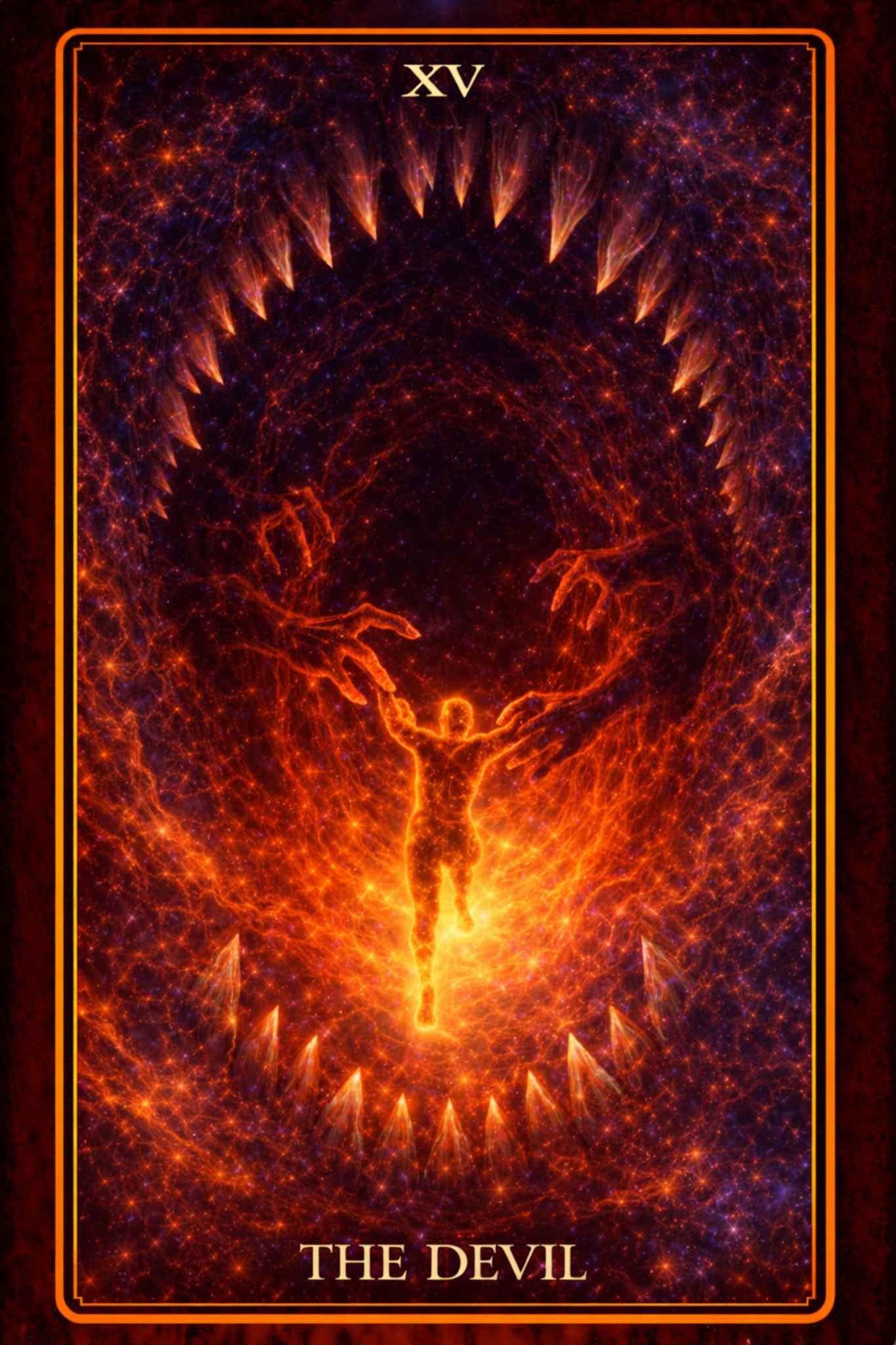
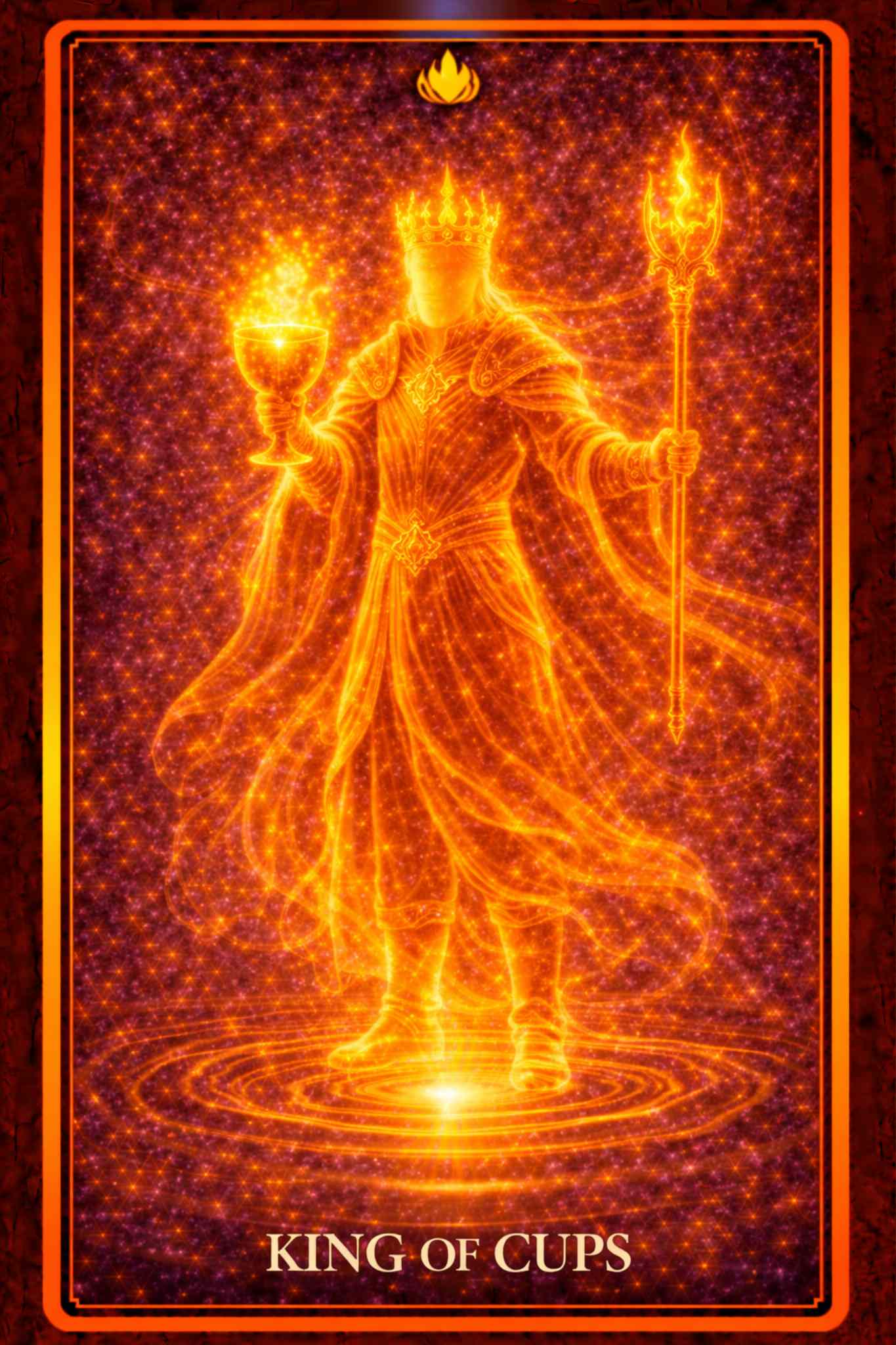
The Devil and King of Cups Tarot Combination Meaning
Emotional control can look like wisdom, even when something underneath is holding its breath. The Devil and King of Cups brings attachment into the realm of composure, restraint, emotional authority, deep feeling, and the quiet management of inner waters. The King of Cups is steady, compassionate, contained, and capable of holding strong emotion without being ruled by every wave. The Devil adds hidden craving, dependency, control, shame, fear of exposure, power dynamics, and the pressure that forms when intense feelings are managed so tightly that they begin to govern from behind the calm surface.
This combination is not saying that emotional discipline is false. The King of Cups can be a deeply wise card. He knows that feeling does not always need immediate expression, and that maturity often means responding rather than reacting. Yet with The Devil beside him, the reading asks whether composure has become control. A person may appear calm while feeling intensely attached. They may speak with balance while privately craving reassurance, access, influence, or emotional certainty. They may hold their feelings so carefully that the holding itself becomes a chain.
The King of Cups alone often represents emotional maturity, quiet compassion, and the ability to stay centered in complex feeling. The King of Cups feelings meaning offers that foundation: deep emotion that may be contained, thoughtful, protective, or carefully expressed. With The Devil, the same containment becomes more complicated. The feeling may still be real, but it may be mixed with fear of vulnerability, the desire to manage the outcome, or the need to remain in control of the emotional field.
The calm surface and the private chain
The unique tension of The Devil and King of Cups is controlled attachment. Unlike the Knight of Cups, who moves toward desire, the King may sit still with it. He may wait, observe, measure, withhold, or manage the emotional current. This can be wise when it comes from clarity. It becomes shadowed when restraint is actually a way to avoid exposure or keep emotional power. A person may avoid revealing need because need feels too vulnerable. They may offer care while keeping distance. They may influence the relationship through silence, steadiness, selective warmth, or the careful control of what is shown.
In love readings, this pair can describe strong feeling that is held behind composure. Someone may care deeply while also fearing what that care would cost if it became fully visible. They may desire closeness, yet protect themselves through emotional control. They may want to be trusted, desired, respected, or needed, but dislike the feeling of being emotionally exposed. The Devil does not turn them into a villain. It asks whether the control is protecting love, or protecting the ego from the humility of needing someone.
A related pattern appears in The Devil and Queen of Cups, where the shadow often appears through over-empathy, emotional caretaking, and the need to be needed. With the King of Cups, the shadow is usually more contained. The person may not drown in another person’s feelings; they may manage the room, hold the tone, choose the timing, or keep the emotional balance in ways that look mature while still being shaped by attachment.
When emotional authority becomes a guarded room
The King of Cups can hold influence because he understands emotion. He may know how to calm, soothe, guide, comfort, or respond in a way that others trust. The Devil asks how that influence is being used. Is emotional steadiness creating safety, or quietly controlling the atmosphere? Is restraint allowing truth to arrive at the right time, or keeping another person uncertain? Is compassion given freely, or used to remain indispensable? These questions matter because the power in this combination is often subtle. It may not look like force. It may look like the person who always knows what to say, what not to say, and how much emotion to reveal.
There is a difference between emotional mastery and emotional management. Mastery allows feeling to exist without letting it destroy choice. Management tries to keep feeling arranged so that nothing too vulnerable has to be risked. The Devil and King of Cups often sits at that threshold. A person may believe they are simply being mature, while part of them is avoiding the risk of direct honesty. They may be able to care for others, but struggle to admit longing directly. They may understand emotional complexity, yet still become bound to a dynamic where calmness hides a private dependency.
The Devil spirituality meaning can deepen this layer because it treats bondage as a symbolic loss of choice rather than a moral failure. In this pairing, the bondage may not look dramatic. It may be the pressure to stay composed, the fear of needing anyone, the habit of influencing from behind calmness, or the belief that being emotionally unreadable is the same as being safe. The chain is not always loud. Sometimes it is the careful silence that keeps the person from being truly met.
The hidden dependency inside control
The Devil and King of Cups can reveal a difficult paradox: the person who seems emotionally controlled may still be deeply dependent on the role of being controlled. Their calmness may have become part of their identity. They may need to be seen as stable, wise, protective, unshaken, or above the emotional storm. This image can bring respect, trust, and influence, but it can also become a private prison. If the person believes they must always be the composed one, they may lose permission to be messy, uncertain, needy, afraid, or openly longing.
This can create loneliness inside emotional authority. Others may come to the King for steadiness, but the King may not know where to bring his own unrest. He may be surrounded by people who trust his emotional balance while quietly feeling that no one sees the intensity beneath it. The Devil appears when the role becomes too powerful: the helper who cannot ask for help, the calm partner who cannot admit jealousy, the wise figure who cannot confess desire, the emotionally intelligent person who knows every feeling except the one they are trying not to show.
In relationship questions, this can create a strange distance. The other person may sense that something is being held back, but may not be able to name it. There may be warmth, protection, and care, yet also a feeling that the emotional door never opens fully. The King of Cups may offer enough to keep the bond alive, but not enough to become fully vulnerable inside it. The Devil asks whether this measured availability is truly respectful, or whether it keeps the other person orbiting a mystery that never becomes clear.
Control, responsibility, and the emotional image
There can also be a leadership or public role in this combination. The King of Cups may represent someone who holds responsibility, authority, or emotional influence in a group, family, workplace, spiritual circle, creative project, or intimate relationship. The Devil can show where responsibility becomes control, where calm leadership masks attachment to power, or where emotional intelligence is used to maintain an image. This does not automatically mean wrongdoing. It asks whether the role still serves truth, or whether the person has become dependent on being the one who manages the emotional field.
You may also want to go one step deeper.
The Devil + King of Cups can open up differently inside a focused personal reading.
The Devil career meaning may be relevant when the question involves status, workplace dynamics, mentoring, creative authority, emotional labor, or the pressure to remain composed while desire and fear operate underneath. In a professional or public setting, this pair may ask whether someone is holding power with maturity, or whether control has become a way to protect insecurity. The safest reading stays symbolic: it does not accuse. It asks where influence, attachment, responsibility, and self-image have become too tightly linked.
A useful major-arcana comparison appears in The Devil and Temperance, where desire, restraint, balance, habit, and the need for inner regulation can become difficult to separate. The Devil and King of Cups is more emotional and inwardly controlled. It does not only ask how feeling can be moderated; it asks what is being managed beneath the calm. Temperance brings the art of blending. The King of Cups brings the water. The Devil asks whether the mixture is still honest when some of the feeling has been held back for too long.
Before the controlled response
The important moment in The Devil and King of Cups often arrives just before the controlled response. There may be a chance to speak honestly, set a boundary, admit desire, offer care, or release the need to manage the emotional outcome. The King may want to wait until the feeling is perfectly composed. The Devil may prefer that waiting because it keeps vulnerability at a distance. The reading asks whether restraint is serving wisdom or whether it has become a polished form of avoidance.
A useful comparison appears in The Devil and Knight of Cups, where longing moves outward through pursuit, charm, and romantic action. The Devil and King of Cups is quieter, more strategic, and more internal. The desire may be equally strong, but it may show through timing, silence, careful words, emotional availability offered in measured amounts, or the decision to stay calm while the inner waters are far from still. The Knight chases the feeling. The King controls the climate around it.
For a reader, the practical reflection is subtle: what am I controlling, and why? What would happen if I admitted the feeling without trying to control the response? Where does maturity end and emotional self-protection begin? Where am I using calmness to create safety, and where am I using it to avoid being seen? These questions keep the reading grounded. They do not turn emotional discipline into a flaw. They simply ask whether discipline is still connected to truth.
Signs that composure has become a chain
The Devil and King of Cups may need careful interpretation because calmness can look healthy from the outside. Often it is healthy. But in this pairing, the reading asks whether composure still allows emotional honesty. These signs can help distinguish grounded maturity from control that has become too tight:
- The person can name everyone else’s feelings but avoids naming their own. Emotional intelligence may be easier when it is directed outward.
- Silence is used to manage the atmosphere. Quiet may be wise, or it may keep another person uncertain.
- Care is offered in measured amounts to preserve control. The bond receives warmth, but only within carefully held limits.
- Vulnerability feels like losing authority. The person may fear that honest need will weaken their position.
- Calmness becomes part of the identity. The role of being steady may become harder to release than the emotion itself.
- The desire to remain composed hides a private dependency. The person may still need the bond deeply, even while appearing unaffected.
Questions about The Devil and King of Cups
Does The Devil and King of Cups mean someone is hiding feelings?
It can suggest feelings that are contained, controlled, or carefully managed, but it should not be read as an accusation by itself. The hidden layer may involve desire, fear, attachment, jealousy, vulnerability, or the need to maintain emotional authority. The reading asks for discernment rather than suspicion.
Is The Devil and King of Cups negative in love?
It is complex rather than simply negative. It can show deep feeling, emotional maturity, loyalty, and care, but also the risk of control, withholding, or attachment hidden beneath composure. The healthier expression is honest steadiness: calmness that makes room for truth instead of calmness used to keep power.
What is the message of The Devil and King of Cups?
The message is to let emotional maturity include vulnerability. Calmness is strongest when it does not hide fear, desire, dependency, or the need to be seen as unshaken. The person may need to respond with steadiness while also admitting what is real beneath the surface.
Ready to see how this applies to your situation?
A focused tarot reading can help you explore how The Devil + King of Cups may reflect your current situation, not just the general meaning of the cards.
A steadier kind of freedom
On a deeper level, The Devil and King of Cups asks for freedom from the need to control the emotional sea. The King’s gift is not suppression. It is stewardship. He can hold feeling with dignity, but the feeling still needs honesty. The Devil shows where containment has become a chain: the pressure to remain composed, the fear of needing, the desire to influence from behind calmness, or the habit of turning emotional intelligence into subtle control.
The closing message of this combination is that true emotional mastery does not require the self to become untouchable. A person can be mature and still vulnerable. They can be calm and still honest. They can hold desire without making it someone else’s burden, and they can name attachment without letting it rule the room. When the private chain is seen, the King of Cups becomes freer. His calmness stops being a mask and becomes a vessel strong enough to hold real truth.
More combinations with The Devil
More combinations with King of Cups
Continue with The Devil
Explore Related Guides by Topic
If you want to explore this combination through a more specific emotional lens, these tarot guides can help you follow the broader pattern behind the reading.