
The Hanged Man + Five of Cups
Explore how these two tarot cards interact in a reading through symbolic overlap, contrast, and shared narrative. Tarot combinations often reveal meaning that neither card fully expresses on its own.
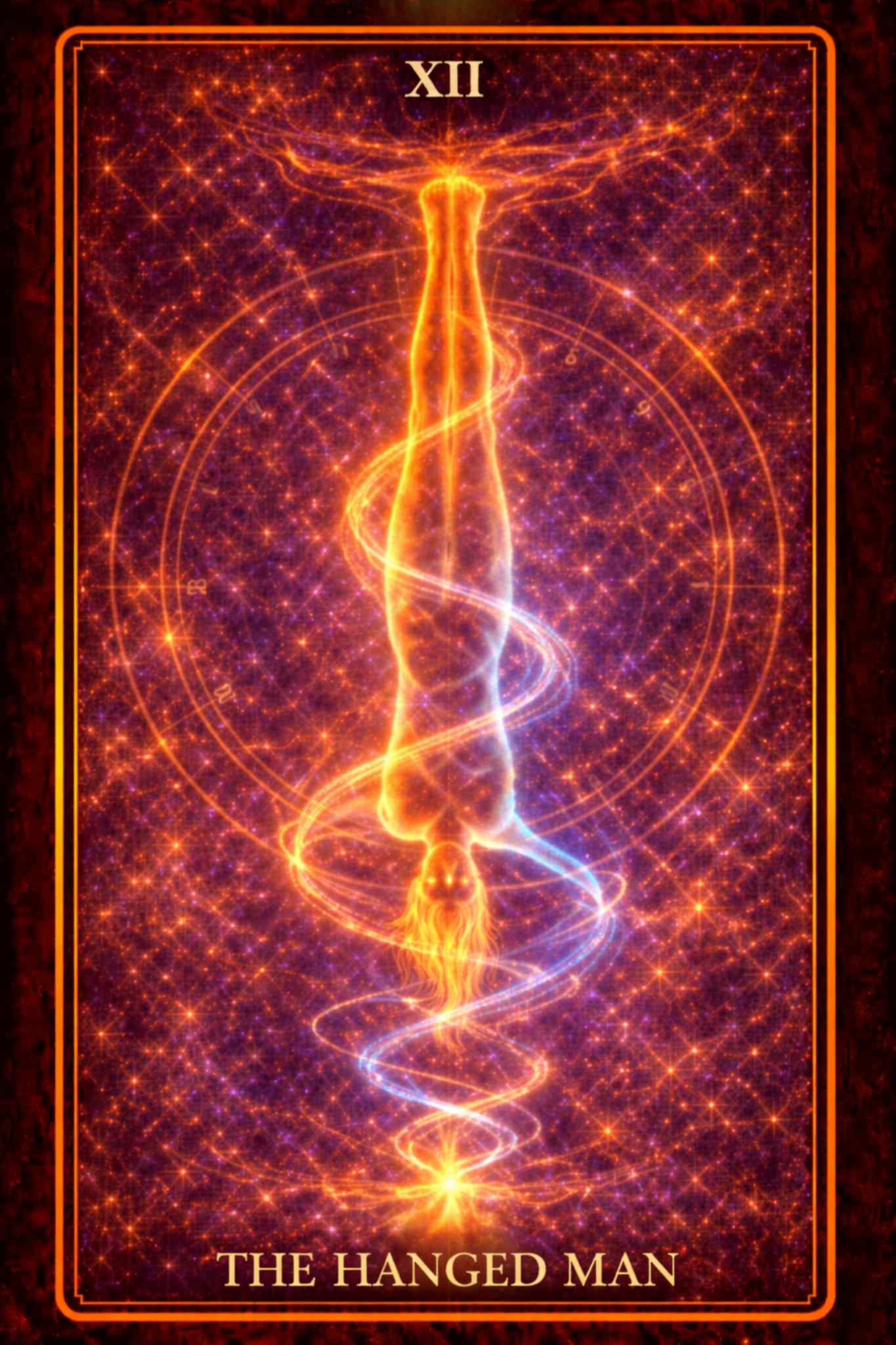
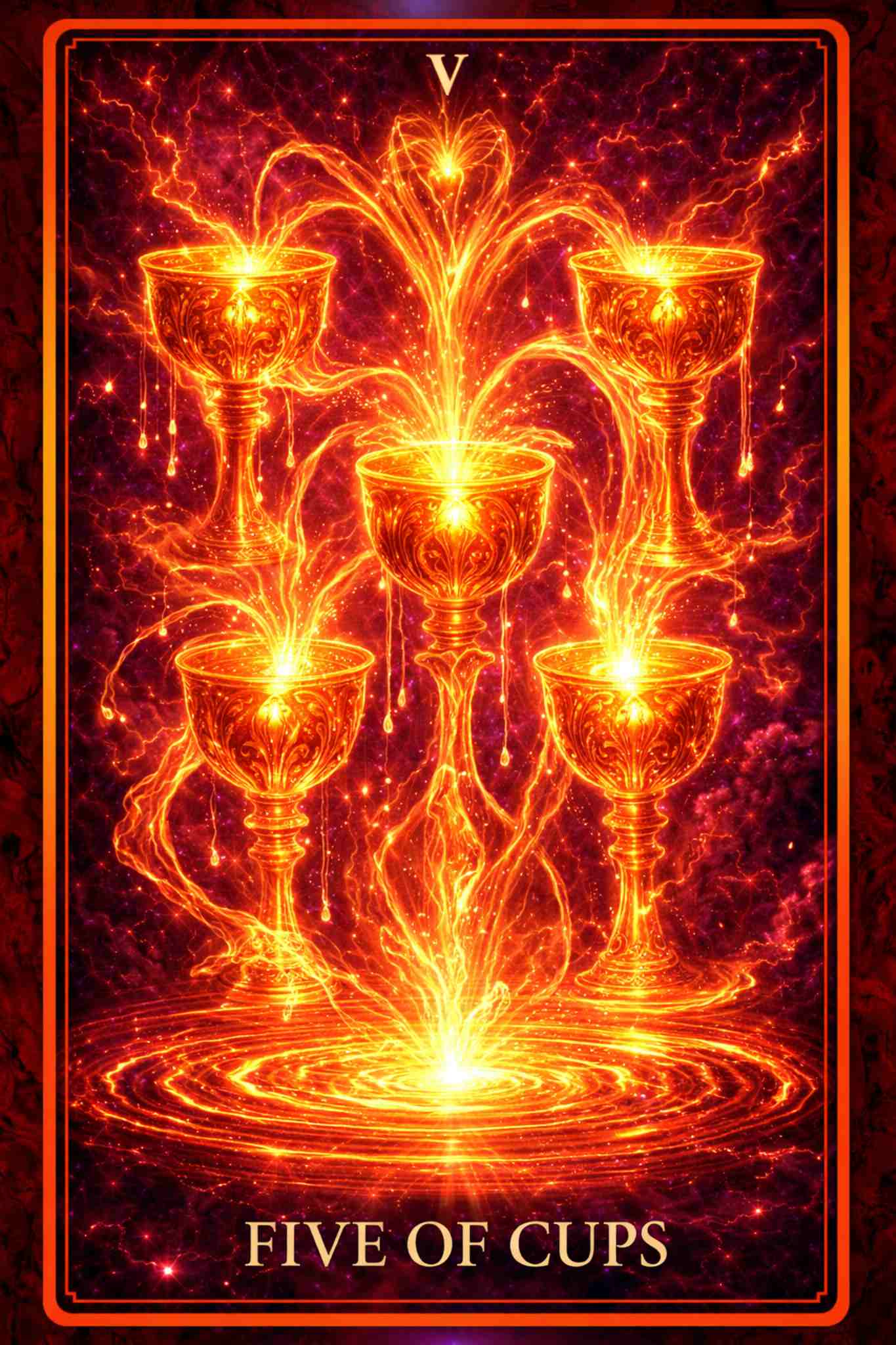
The Hanged Man and Five of Cups tarot combination meaning
The Hanged Man and Five of Cups speaks to the point where emotional pain stops being only pain and begins to ask for interpretation. The Five of Cups brings regret, disappointment, grief, or the heavy awareness that something hoped for has changed shape or slipped away. The Hanged Man enters that sorrow and slows the entire field, creating a pause in which the person can no longer rely on quick explanations, quick repair, or the comfort of repeating the same story. This makes the combination deeply introspective, yet its core is not simply sadness. Its deeper axis is emotional perspective under pressure, the moment when the heart is forced to look again at what it lost, what it expected, and what part of its suffering comes from the event itself versus the meaning attached to it. That is why this pairing can feel so profound. It asks whether grief is only being endured, or whether it is also becoming a doorway into a more truthful way of seeing.
There is a particular emotional intelligence in this combination because neither card flatters denial. The Five of Cups does not hide rupture, and The Hanged Man does not allow the person to rush past it through activity or comforting distraction. Together they create a suspended emotional chamber where what hurts remains visible long enough to reveal its structure. The sorrow may concern love, trust, missed timing, emotional distance, or the collapse of an inner image that once held great importance. Yet the cards suggest that understanding begins when the person stops asking only, “How do I get past this?” and begins asking, “What exactly has this changed in the way I see?” That shift matters. It turns grief from a closed loop into a reflective process, and it allows emotional pain to become more precise instead of more overwhelming.
This is why the pair often appears after a disappointment that has already been felt more than once. The first emotional wave may have come earlier. What remains now is the deeper layer, the part that still echoes because it is attached to a meaning that has not yet fully released. The Hanged Man brings stillness to that echo. It asks the person to stop wrestling so hard with the fact of loss and begin looking at the frame through which the loss has been interpreted. Was the grief intensified by attachment to a particular outcome, to a particular version of the self, or to a belief that something meaningful should have unfolded more cleanly than it did? The Five of Cups holds the ache. The Hanged Man asks what the ache is teaching about emotional perspective, emotional accountability, and the quiet ways the heart clings to what it can no longer inhabit in the same form.
When regret becomes a mirror
One of the most revealing dimensions of this pairing is the way it turns regret inward without turning it cruel. The Five of Cups often appears when attention is fixed on what went wrong, what did not happen, or what feels painfully absent in the present moment. The Hanged Man does not deny that focus, yet it changes its direction. Instead of allowing regret to remain only a backward-looking emotion, it turns regret into a mirror. The person begins to see what they expected, what they idealized, what they assumed would be enough, and what part of them still wants the past to return in its original emotional shape. This is where the pairing becomes so psychologically rich. The wound is real, but the cards suggest that part of healing comes from understanding what the wound attached itself to inside the self.
You may also want to go one step deeper.
The Hanged Man + Five of Cups can open up differently inside a focused personal reading.
That process can feel humbling, especially if the person has been trying to stay morally clear by telling a simple story about the pain. Sometimes the story is accurate, but sometimes it is incomplete. The Hanged Man introduces a more difficult honesty. It asks whether grief has become entangled with pride, with unmet need, with emotional innocence that expected certainty, or with a reluctance to see how much of the suffering belongs to an image that has already begun to dissolve. None of this minimizes the original hurt. It refines it. The Five of Cups gives the emotional weight. The Hanged Man makes that weight transparent enough for deeper truth to come through it.
In this sense, the combination can resonate with earned perspective, where emotional truth becomes clearer through honesty, accountability, and a willingness to see the situation without comforting distortion. Both pairings ask for maturity, though they move differently. Justice tends to clarify through balance and direct recognition, while Five of Cups clarifies through emotional consequence. The Hanged Man in both cases creates the pause in which old certainty stops dominating the reading. That is why this pair can feel serious without becoming rigid. It teaches that grief becomes more usable when it is seen clearly enough to reveal what it has been holding in place.
Love and emotional aftermath
In love readings, The Hanged Man and Five of Cups often points to a connection whose emotional meaning has not yet settled. Something may have been lost, disappointed, interrupted, or left incomplete. The person may still be standing inside the emotional atmosphere of what almost happened, what once felt promising, or what never fully became what the heart hoped it might become. The Five of Cups reflects the ache of that gap. The Hanged Man suggests that the heart is being asked to stop chasing immediate closure and instead understand what this experience has exposed about attachment, desire, and emotional interpretation. That makes the pairing especially important in matters of love, because love-related grief often contains as much self-revelation as relational pain.
This does not automatically mean the connection lacks value. In many cases, it means the connection has become significant precisely because it exposed something unresolved in the person’s emotional life. The disappointment may have uncovered deeper expectations around being chosen, being understood, being met at the right time, or being able to trust the emotional movement of another person. The Hanged Man invites the person to look beyond the most obvious question of whether the relationship worked or failed. It asks what the experience awakened and what it interrupted. Sometimes the deepest wound is not simply that something ended or changed. It is that the heart now has to see itself differently in light of what it can no longer keep imagining the same way.
For a more specific look at how sorrow, longing, and emotional focus on what did not unfold can shape intimacy, love after loss offers an important companion perspective. It helps illuminate the emotional weather around disappointment in matters of the heart, especially where affection and absence remain intertwined. The Hanged Man deepens those same themes by suggesting that emotional processing is part of the message rather than merely the aftermath. The pain is not only being felt. It is being asked to reorganize the person’s emotional understanding from within.
What sorrow is rearranging
The most meaningful question in this pairing is often less about what was lost and more about what the loss is rearranging. The Five of Cups shows the emotional field after rupture, when attention is drawn toward what is missing and the self feels altered by the absence. The Hanged Man asks the person to remain long enough with that altered field to notice what assumptions are breaking down. A person may begin to realize that they were holding onto an idea of love that left little room for ambiguity. They may see that they expected emotional honesty to protect them from change, or that they treated longing as proof of destiny, when in fact longing was also revealing unmet inner material. These realizations can feel painful, yet they are also clarifying.
This is where the pairing can become transformative rather than merely sad. Emotional disappointment has a way of collapsing illusions, and The Hanged Man gives the person enough stillness to see which illusions are actually falling. The collapse may involve unrealistic timing, emotional dependency on a particular outcome, or the belief that meaning disappears if the form of the relationship changes. Five of Cups makes the loss vivid. The Hanged Man turns that vividness into a suspended learning space. Instead of reducing the experience to “it hurt,” the person slowly begins to understand why it hurt in exactly the way it did. That understanding often opens the next layer of healing.
Another part of this rearrangement concerns emotional control. The Five of Cups can show the desire to revisit, to mentally replay, to imagine how things might have gone differently. The Hanged Man interrupts the fantasy of emotional management. It reminds the person that not every wound becomes meaningful through correction. Some become meaningful through surrender to a new perspective. This is a difficult lesson, especially when the heart still wants resolution in a familiar form. Yet it is often the turning point in the reading. The person stops negotiating with grief as though it were a puzzle to solve and begins receiving it as a truth that changes how the past, the present, and even the self are understood.
Guidance, feelings, and inner pause
Because this combination is so emotionally interpretive, it often benefits from broader context rather than narrow prediction. A person may need help distinguishing grief from attachment, longing from intuition, or sadness from the quieter truth that a perspective is ending. In that sense, a reflective resource like the feelings guide can be especially useful, because it helps map the emotional layers without flattening them into a single verdict. These cards rarely speak in the language of instant certainty. They speak in shifts of emotional weight, in altered perception, and in the internal meaning of what the heart continues to hold. A guide that respects emotional nuance fits them well.
This is also where The Hanged Man’s inner motive becomes essential. On the surface, the card may seem passive. At a deeper level, it reflects a deliberate refusal to force movement before truth has ripened. That quality is illuminated by suspended intentions, especially where action is delayed because the person is still seeing through a changing emotional frame. In combination with Five of Cups, intention becomes especially complex. The heart may want relief, yet the soul may be asking for understanding first. The person may want to move on, yet some part of them knows that moving on without reflection would only carry the same interpretation into a new context. The Hanged Man holds that tension with seriousness and patience.
Magician energy after disappointment
Another helpful contrast here lies in how the person responds to grief once they realize they cannot remain in emotional suspension forever. Five of Cups can leave the heart turned toward what is gone, while The Hanged Man can leave it temporarily unable to act in its old way. Yet there is often a later question hidden inside the combination: what kind of agency becomes possible after the emotional meaning changes? That question can be seen through repair after regret, where emotional disappointment begins to meet intention, choice, and a more conscious relationship to what can still be shaped. The contrast matters because it shows that grief does not end with insight, though insight often decides what kind of action becomes honest afterward.
In the current pairing, however, the person is usually still in the phase before that agency becomes stable. They are learning to separate emotional urgency from actual readiness. They may still be carrying fantasy, replay, hope, or inward argument, and The Hanged Man slows all of that long enough for clarity to become less performative and more real. The Five of Cups remains important because it keeps the reading anchored in feeling rather than in strategy. These cards are not rushing toward repair. They are revealing what must be seen before repair, release, or renewal can happen in a way that does not distort the lesson.
Timing, grief, and inner completion
Timing with this combination is rarely quick, because the emotional process itself is the event. The Five of Cups suggests that the heart is still metabolizing disappointment, and The Hanged Man suggests that this metabolizing has meaning beyond emotional endurance. A person may wish to move forward, to stop thinking about the loss, or to find a cleaner emotional ending, yet these cards indicate that something is still clarifying within. This does not mean the pain must be prolonged artificially. It means the person benefits from allowing the inner process to complete the shift it has already begun. If they leave it half-understood, the old interpretation may continue to shape future emotional choices in ways they do not yet recognize.
There is often a temptation in grief to choose between two extremes: stay inside it or escape it. The Hanged Man offers a third way. It asks the person to remain present with the sorrow without becoming wholly defined by it. The Five of Cups then stops being only a card of mourning and becomes a card of emotional truth that is still unfolding its full consequence. This middle path is one of the great strengths of the combination. It allows the person to feel what is real without making permanence out of a passing emotional state. It also allows grief to become complete enough that what remains afterward is not just exhaustion, but clarified perception.
Want to place this combination into a wider reading?
If this pairing feels close to something you are experiencing, a simple spread can help you reflect on the surrounding energy with more clarity.
Where the heart learns a new angle
The Hanged Man and Five of Cups ultimately describes sorrow that changes the way the heart interprets experience. The grief is real, the disappointment is real, and the ache of what did not unfold may still be active. Yet the deeper movement of the pair lies in the shift from loss as event to loss as teacher. Something in the person’s emotional vision is being turned, and that turning may prove more important than the original absence itself. This is why the combination is so delicate and so strong at once. It does not demand quick recovery. It asks for honest seeing. From there, the next emotional truth can emerge in a form that is less attached to what is gone and more faithful to what the heart has genuinely learned.
More combinations with The Hanged Man
More combinations with Five of Cups
Continue with The Hanged Man
Explore Related Guides by Topic
If you want to explore this combination through a more specific emotional lens, these tarot guides can help you follow the broader pattern behind the reading.