
The Devil + Page of Cups
Explore how these two tarot cards interact in a reading through symbolic overlap, contrast, and shared narrative. Tarot combinations often reveal meaning that neither card fully expresses on its own.

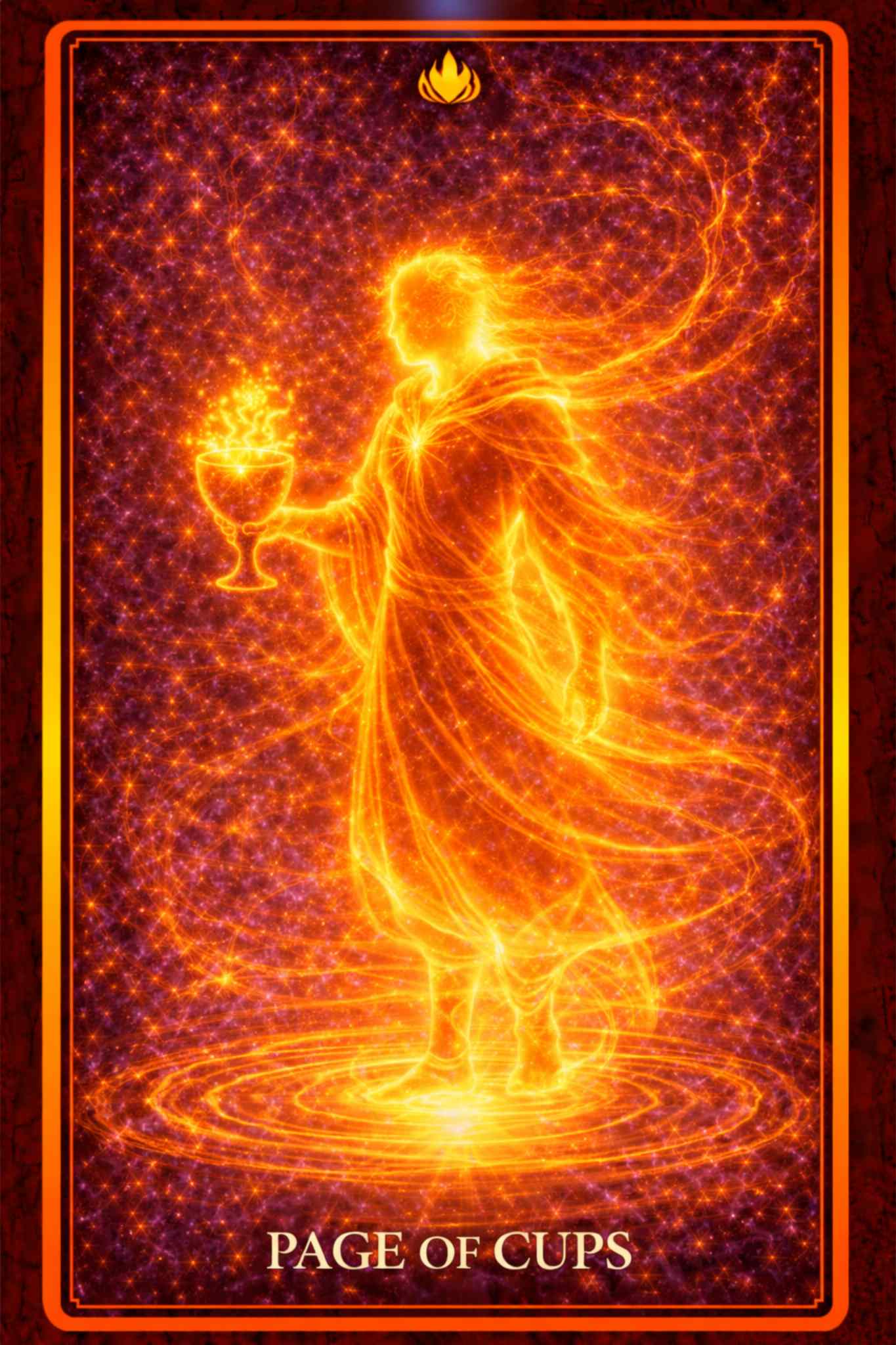
The Devil and Page of Cups Tarot Combination Meaning
A small feeling can become powerful when it carries a need the heart has not known how to name. The Devil and Page of Cups brings tender emotion into contact with attachment, insecurity, imagination, shame, and the early shape of desire. The Page of Cups is soft, curious, romantic, creative, and emotionally open. It can speak of a message, a crush, an apology, a vulnerable gesture, a dream, a poem, a private hope, or the first shy movement toward emotional expression. The Devil adds longing, fascination, inner pressure, craving, secrecy, and the possibility that something delicate may be carrying more need than it first appears to hold.
This combination is different from the heavier Devil pairings because the Page of Cups does not arrive with a fully developed emotional structure. The feeling may still be young. It may not know what it wants yet. It may appear as a message typed and deleted, a soft confession imagined many times, a creative impulse that feels exposing, or a romantic curiosity that grows larger in private than it has become in real life. The Devil does not make that tenderness wrong. It asks why the feeling has become so charged. A small cup may become large when it carries the wish to be loved, forgiven, noticed, desired, or relieved from loneliness.
The Page of Cups by itself often brings innocence, emotional curiosity, and the courage to let a feeling begin. The Page of Cups feelings meaning gives that softer layer more space: the tender confession, the uncertain affection, the dreamy opening of the heart, and the emotional sensitivity that appears before certainty has fully formed. With The Devil beside it, the reading becomes more complex. The feeling may still be sincere, but it may also be carrying a hidden demand. It may ask another person, a fantasy, a reply, or a creative dream to provide proof that the self is lovable.
The fragile cup and the answer it secretly waits for
The unique tension of The Devil and Page of Cups is vulnerable expression under the pressure of attachment. The Page wants to offer something: a message, a feeling, an apology, a flirtation, a song, a symbol, a small emotional truth. The Devil asks what has been attached to the response before the cup is even offered. A person may feel drawn toward someone because the connection feels sweet, magical, emotionally fresh, or creatively alive. Yet beneath that sweetness there may be a fear of rejection, a longing for validation, or a private shame around wanting so much. The heart may be asking, very quietly: if this feeling is received, will I finally feel safe?
Need a little more context around this pairing?
A short reading can help you reflect on the tension, direction, or lesson this combination may be pointing toward.
In love readings, this pair may appear when a crush or early romantic exchange feels unusually consuming. The outer situation may still be small: a few messages, a gentle look, a brief conversation, a memory, an apology, or the possibility of reaching out. Inside, however, the emotional meaning may become much larger. The person may wait for a reply with more weight than the situation can comfortably hold. They may read deeply into small signs, imagine what a message means, or feel caught between wanting to express affection and fearing what that exposure could awaken. The Page of Cups wants to offer the cup. The Devil may whisper that the answer to that offer will define the person’s worth.
This is where the combination differs from The Devil and Ace of Cups. In that pairing, the emotional opening itself is the central current: the first rush of feeling, the old hunger around a new cup, the sudden softness that may carry too much need. The Page of Cups adds personality, gesture, imagination, and expression. The feeling may want to speak, write, create, apologize, flirt, or send something into the world. The Devil asks whether that expression comes from living emotion or from the pressure to receive an answer that quiets an old ache.
When a message carries more than words
The Page of Cups often arrives through small forms. A text. A note. A shy invitation. A half-joking confession. A creative offering. A symbol shared at the right moment. A gentle apology. A dream that lingers after waking. These things may seem light from the outside, but The Devil shows how a small emotional act can become heavy when it carries too much hidden need. The message may not only say, “I feel something.” It may secretly ask, “Do I matter? Am I forgiven? Am I desirable? Am I still welcome? Can this feeling rescue me from the place where I have felt unseen?”
This does not mean the gesture is manipulative. It may be deeply human. Many tender expressions carry hope. The reading becomes useful when it helps the person separate honest vulnerability from emotional bargaining. Honest vulnerability offers the cup and remains connected to the self. Emotional bargaining offers the cup while silently needing the other person to fill it in a very specific way. If the response is kind, the heart rises. If the response is delayed, unclear, or different from what was hoped for, the heart may fall into shame, craving, or self-doubt. The Devil and Page of Cups asks for gentleness around that pattern, not punishment.
A useful major-arcana comparison appears in The Fool and The Devil, where innocence, impulse, desire, and attachment can become difficult to separate. The Devil and Page of Cups is more emotionally delicate. It is not only about stepping into temptation or following a reckless pull. It is about a small feeling that may be pure in its first movement, yet quickly becomes tangled with the need to be answered, chosen, admired, forgiven, or emotionally confirmed. The Fool may step forward without knowing the chain. The Page may hold the cup and feel the chain before moving at all.
Fantasy can protect tenderness, but it can also trap it
The Page of Cups often lives close to imagination. It may dream before it knows. It may sense before it has evidence. It may create stories because the heart is trying to understand a feeling too delicate to hold plainly. With The Devil, imagination can become a private room where longing grows stronger than reality. A person may become attached to a version of someone they barely know, or to the emotional meaning of a message, glance, apology, or creative sign. The fantasy may feel safer than a real conversation because it allows desire to remain alive without risking a clear response.
The Devil intentions meaning is relevant here because intention may be mixed. A person may want connection, but also reassurance. They may want to apologize, but also regain access. They may want to express affection, but also test whether they still have emotional power. The Page of Cups is rarely harsh in its surface energy, yet The Devil asks for honesty about what the gesture is carrying. Is the cup being offered freely, or is it quietly asking to be filled in return?
This combination can also appear in creative and spiritual questions. A tender artistic impulse may be tied to the fear of judgment. A creative longing may become dependent on praise. A spiritual sign or dream may become emotionally consuming if the person keeps using it to avoid grounded truth. The Page of Cups brings the symbol, image, song, poem, vision, or soft inner message. The Devil asks whether the person can receive inspiration without becoming bound to the need for it to prove something. A creative cup is still a cup. It can be offered with sincerity, but it becomes heavier when it must repair the whole self.
The tender part wants a witness
One of the deeper layers of The Devil and Page of Cups is the longing to have the tender self witnessed. This is not the same as the Ten of Cups desire for a whole emotional world, or the Nine of Cups wish to feel satisfied. The Page wants something smaller and more exposed: to be seen in the beginning of feeling. To have a shy truth received gently. To send the message and feel that it mattered. To show a creative piece and feel that the inner world was not foolish. To apologize and hope the other person can still recognize the softness beneath the mistake. The Devil appears when this wish for witness becomes tied to self-worth so tightly that the response begins to feel like a verdict.
This can be especially intense when the feeling is private, young, or not yet secure enough to stand on its own. A person may not know whether they are in love, only that the thought of being ignored hurts more than expected. They may not know whether the apology will change anything, only that silence feels unbearable. They may not know whether the creative dream is ready, only that hiding it has started to feel like a different kind of pain. The Devil and Page of Cups asks the reader to notice the emotional weight placed on the outside response. Is the gesture being made because it is true, or because the self cannot rest until someone else confirms it?
There is compassion in this question. The answer may be both. A feeling can be true and still needy. A message can be sincere and still carry longing. A creative offering can be alive and still seek approval. The purpose of the reading is not to purify the heart until it has no need. Human hearts have need. The deeper work is to keep the need honest and proportionate. The Page of Cups becomes healthier when it can say, “This is what I feel,” without turning the other person into the only source of emotional safety. The Devil loosens when the tender part is held from within before it reaches outward.
Before the message is sent
The most delicate moment in The Devil and Page of Cups often comes just before expression: before the message, before the confession, before the apology, before the flirtation, before the creative offering. The person may need to ask what they are hoping the response will repair. This does not mean silence is always wiser. It means the cup should be offered from a place that can survive the answer. If the response becomes the only source of self-worth, the emotional exchange becomes too heavy for such a tender beginning.
A related pattern appears in The Devil and Seven of Cups, where fantasy and projection can grow dense around desire. The Devil and Page of Cups is earlier and more vulnerable. The fog may not yet be large, but the seed of projection is present. A small emotional sign may become a whole inner story. A gentle attraction may become a private attachment before the outer relationship has had time to become real.
A reflective tool such as a love tarot reading can fit this kind of question when the focus is not on forcing a fixed outcome, but on understanding the emotional pattern around a message, crush, apology, or early romantic pull. The more useful question may not be “Will they answer exactly as I hope?” but “What am I asking this answer to prove?” That kind of inquiry keeps the reading symbolic, grounded, and less dependent on prediction.
Small signs that the cup is carrying too much
The Devil and Page of Cups often becomes clearer when the reader notices how much meaning has been placed on a small exchange. The feeling itself may be tender and real, yet the emotional pressure around it may be larger than the situation can hold. These signs can help separate sincere vulnerability from attachment pressure:
- A delayed reply feels like a statement about worth. The heart may be giving the response more authority than it deserves.
- The fantasy becomes safer than the conversation. Imagining the bond may feel easier than meeting the truth of it.
- The gesture is offered with a hidden demand. The cup may look soft, but it may quietly need a very specific answer.
- Creative expression depends too heavily on praise. The offering may begin to feel valuable only when someone else confirms it.
- An apology carries a wish to reconnect. The wish to repair may be sincere, yet still mixed with the hope of being welcomed back.
- The feeling becomes a verdict on the self. A small emotional exchange may start carrying the weight of being lovable, wanted, or enough.
The innocent part deserves protection, not shame
On a deeper level, The Devil and Page of Cups asks for care toward the young-feeling part of the self. This may be the part that still hopes easily, blushes at kindness, longs to be chosen, writes the message, imagines the reunion, or believes that love might arrive through one small sign. That part does not need to be mocked or silenced. It needs a steadier inner presence around it. The Devil shows where the vulnerable part can become bound to outside approval. The Page of Cups shows why compassion matters: the feeling is soft, even when the attachment becomes strong.
The reading becomes clearer when the person can hold the cup without demanding that it become proof. A crush can be a crush. A message can be a message. A dream can be a dream. A creative impulse can be offered because it is alive, not because it must secure admiration. Desire can be listened to without becoming the master of the whole inner world. The more gently the person tells the truth about the hidden need, the less power the need has to control the gesture.
Questions about The Devil and Page of Cups
What does The Devil and Page of Cups mean in love?
The Devil and Page of Cups in love often points to a tender feeling, crush, message, apology, or early emotional exchange that carries more weight than it first appears to hold. The feeling may be sincere, but the response may also feel tied to validation, reassurance, or the need to feel lovable. This combination asks whether the cup is being offered freely, or whether it has become too dependent on being answered in one exact way.
Is The Devil and Page of Cups a warning?
It can be a gentle warning about emotional pressure around something delicate, but it does not condemn the feeling itself. The Page of Cups brings vulnerability, imagination, and soft expression. The Devil reveals where attachment, shame, fantasy, or the need for approval may become too strong. The message is not to close the heart. It is to protect tenderness from becoming dependent on one response.
What is the message of The Devil and Page of Cups?
The message is to let tenderness stay honest. A feeling can be expressed, a message can be sent, an apology can be offered, or a creative dream can be shared, but the self should not disappear into the need for a certain reaction. The cup becomes cleaner when it is offered with sincerity, proportion, and enough inner freedom to remain whole whatever the answer may be.
Want to place this combination into a wider reading?
If this pairing feels close to something you are experiencing, a simple spread can help you reflect on the surrounding energy with more clarity.
Letting the cup stay small enough to be true
The Devil and Page of Cups ultimately describes a tender feeling carrying an old hunger. It is not a warning against vulnerability. It is an invitation to protect vulnerability from becoming dependency. The heart may want to reach out, create, confess, imagine, flirt, apologize, or forgive. Those movements can be meaningful. The deeper wisdom is to let the cup move with sincerity while keeping enough inner freedom that the response does not become a chain.
When this pair is handled with awareness, the Page does not have to harden and The Devil does not have to rule the exchange. The person can still feel, still dream, still send the message, still make the art, still offer the apology, still notice the crush, and still remain connected to themselves. The cup does not need to become proof of worth. It can simply become a truthful offering from one part of the heart. When tenderness is held with awareness, it can remain open without becoming captured by longing.
More combinations with The Devil
More combinations with Page of Cups
Continue with The Devil
Explore Related Guides by Topic
If you want to explore this combination through a more specific emotional lens, these tarot guides can help you follow the broader pattern behind the reading.