
The Devil + Queen of Cups
Explore how these two tarot cards interact in a reading through symbolic overlap, contrast, and shared narrative. Tarot combinations often reveal meaning that neither card fully expresses on its own.
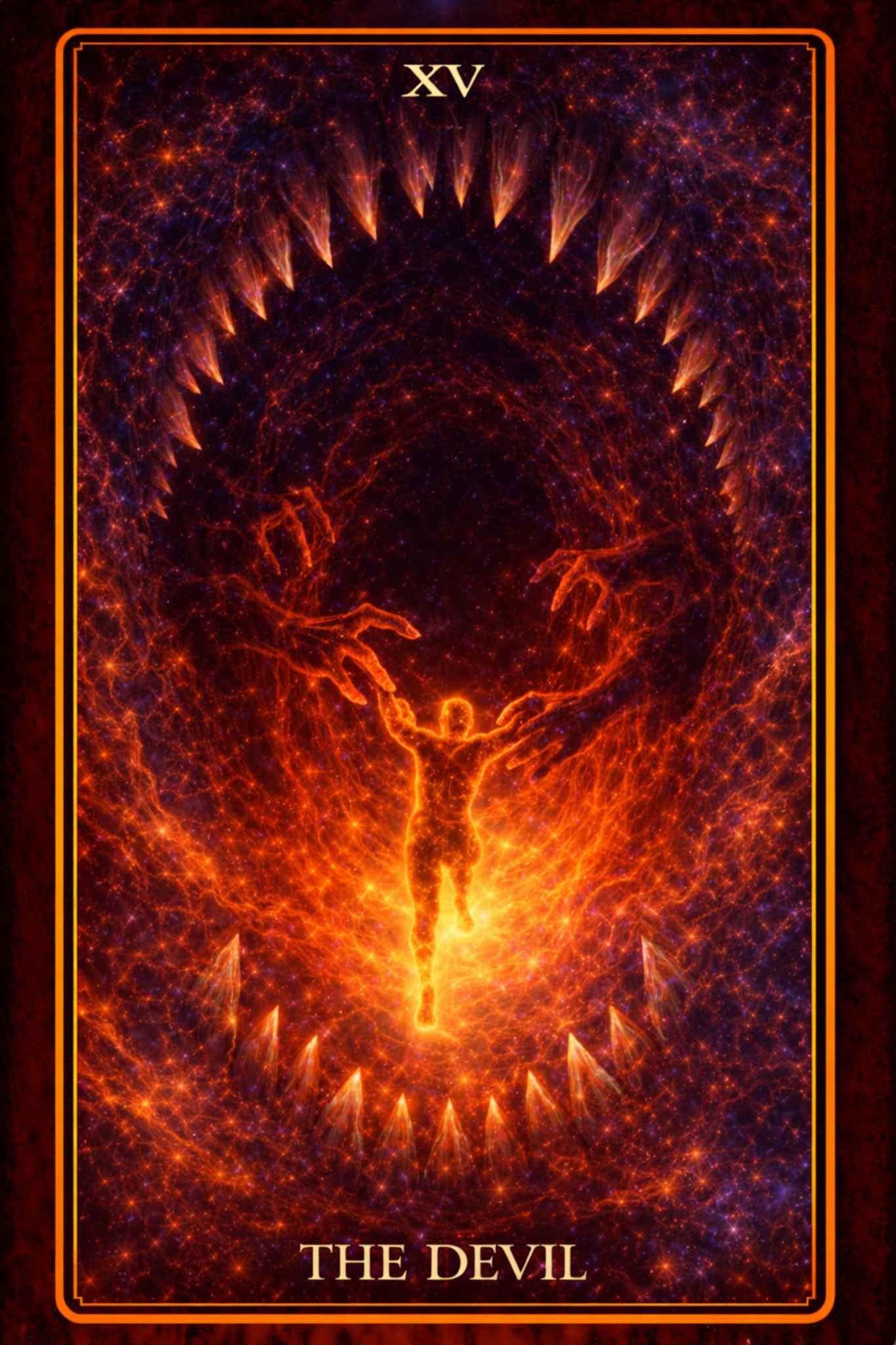
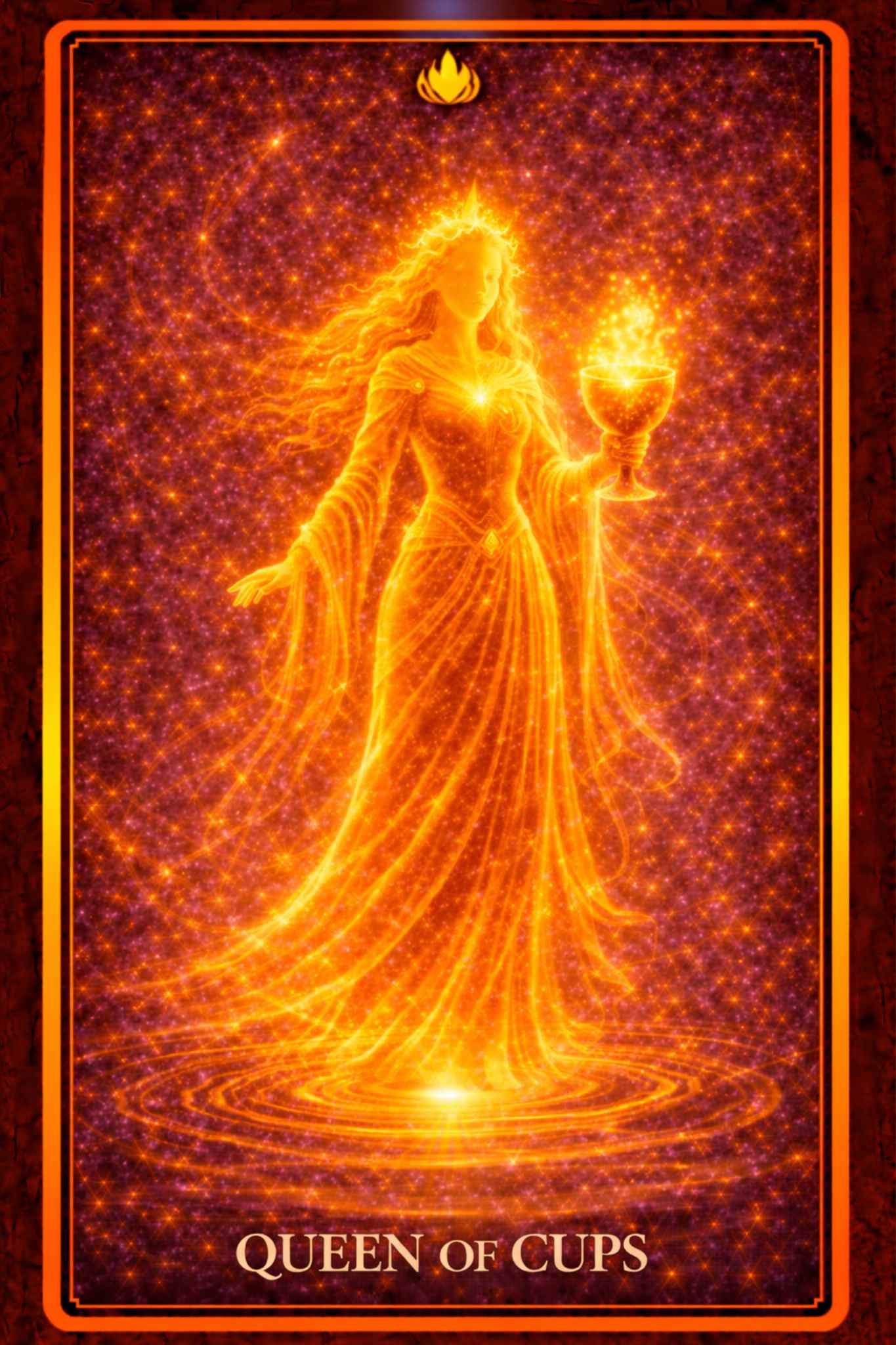
The Devil and Queen of Cups Tarot Combination Meaning
Deep empathy can become a sanctuary, but it can also become the place where the self quietly disappears. The Devil and Queen of Cups brings attachment into the emotional world of sensitivity, compassion, intuition, care, and receptive love. The Queen of Cups feels deeply. She listens beneath words, notices subtle emotional shifts, and often senses what another person is carrying before it is spoken directly. The Devil adds longing, dependency, guilt, emotional enmeshment, craving, and the shadow that forms when care becomes tied to the need to be needed. Together, these cards explore the moment when compassion stops being only a gift and begins to carry a hidden chain.
This combination is not a judgment against tenderness. The Queen of Cups is one of the most emotionally intelligent figures in the tarot. She can hold space, offer gentleness, and move through feeling with rare depth. Yet with The Devil beside her, the reading asks where empathy has become too costly. A person may feel responsible for another person’s emotional state. They may confuse love with absorbing pain, intuition with anxious monitoring, or devotion with the quiet surrender of their own needs. The heart may be open, but the vessel around that heart may have become too porous to protect the self inside it.
The Queen of Cups alone often carries emotional maturity, kindness, imagination, and inner listening. The Queen of Cups love meaning gives that softer foundation: love as care, tenderness, intuitive connection, and deep emotional presence. With The Devil, the same gift can become overextended. The central question shifts from emotional capacity to emotional boundaries: “Can I feel deeply without giving away my center?”
When compassion becomes a place to disappear
The unique tension of The Devil and Queen of Cups is emotional self-abandonment disguised as love. The Queen knows how to understand. The Devil can turn that understanding into attachment. Someone may keep explaining another person’s behavior because seeing their pain feels easier than naming the cost. Someone may remain emotionally available to a pattern that repeatedly drains them because stepping back feels cruel. Someone may sense the wound inside another person and feel bound to soften it, forgive it, wait for it, or keep making room for it long after their own inner cup has begun to empty.
Want to explore this combination in a more personal way?
If this pairing feels important right now, a simple tarot spread can help you reflect on it with more context.
In relationship readings, this pair can describe a bond where one person’s sensitivity becomes the place where the whole emotional weight gathers. There may be genuine affection, deep attraction, and a real intuitive connection. Yet the pattern may ask too much from the one who feels more, forgives more, understands more, or stays open longer than their own rhythm can comfortably sustain. The Devil does not say the love is false. It asks whether the love has become mixed with guilt, rescue, fear of abandonment, or the need to remain indispensable.
This differs from The Devil and Two of Cups, where the focus is mutual attachment and the exchange between two hearts. The Devil and Queen of Cups turns toward the inner vessel of one deeply receptive person. It asks what happens when the cup becomes so open that it begins to hold what was never meant to be carried alone. The Two of Cups studies the bond between two hands. The Queen of Cups asks what happens inside the hand that keeps offering, holding, and forgiving.
The quiet reward of being needed
There is a tender but difficult layer in this combination: sometimes the chain is the desire to matter through care. A person may feel most valuable when they are the healer, listener, comforter, emotional home, or steady presence for someone else. This role can be meaningful. It can also become binding when the person begins to fear who they would be without being needed. The Devil may reveal the hidden reward inside overgiving: closeness, purpose, access, identity, influence, or the hope that devotion will finally secure love.
This is why The Devil and Queen of Cups can be more subtle than louder cards of conflict. Nothing may look dramatic from outside. The person may simply be kind, available, patient, understanding, and emotionally generous. They may answer the late message, soften the argument, notice the mood, forgive the repetition, or translate another person’s pain into something easier to bear. Yet privately, they may feel tired, resentful, anxious, or invisible. The chain is not always made of force. Sometimes it is made of being the one who always understands.
The Devil feelings meaning is relevant here because feelings with The Devil can be intense, magnetic, and difficult to separate from fear. With the Queen of Cups, those feelings may become deeply internalized. The person may carry another person inside them emotionally, think about their moods, interpret their silence, anticipate their reactions, and feel responsible for keeping the connection soft. This can look like devotion from outside, but inside it may feel like constant emotional labor.
Intuition, anxiety, and the need for discernment
The Queen of Cups has a natural relationship with intuition. She senses undercurrents. She reads silence. She notices what changes in tone, distance, warmth, and emotional atmosphere. With The Devil, however, sensitivity can become tangled with fear. A person may call something intuition when it is partly anxiety. They may feel another person’s pain and believe they are meant to carry it. They may interpret emotional intensity as a soul bond when part of the pull may be unmet need, old attachment, or the familiar ache of trying to earn love through depth.
This does not mean intuition should be dismissed. The reading asks for cleaner discernment. True intuition usually leaves the person more centered, even when the truth is difficult. Fear-driven sensitivity often leaves the person more restless, watchful, and dependent on signs. The Devil and Queen of Cups invites the reader to ask: does this perception bring clarity, or does it keep me circling? Does this emotional knowing help me act with dignity, or does it bind me more tightly to the mood of another person? Sensitivity is a gift; enmeshment is the place where the gift loses freedom.
A useful major-arcana comparison appears in Justice and The Devil, where attachment, responsibility, consequence, and the need for a clearer inner boundary can become difficult to separate. The Devil and Queen of Cups is warmer and more relational. It is not only about what is fair or what must be named clearly; it is about what the heart does with what it feels. The Queen may sense another person’s pain deeply, but The Devil asks whether that sensitivity is helping love become more honest, or pulling the heart into a pattern that keeps asking for more care than it can freely give.
The boundary that protects the cup
The important moment in The Devil and Queen of Cups often arrives when compassion needs a boundary before it becomes depletion. This may involve waiting before responding to an emotional request, noticing what the self actually has to give, or asking whether support is being offered freely or from fear of losing connection. The Queen of Cups may want to keep the water flowing. The Devil asks whether the water is still clean, or whether it has become mixed with guilt, obligation, longing, and the need to maintain access to another person.
The relationship tarot spread can fit this combination when the question is about emotional roles, not only romantic outcome. A grounded reading may ask what each person carries, where care becomes imbalance, where empathy is genuine, and where one person’s sensitivity is being used to hold the whole structure together. This keeps the interpretation reflective rather than accusatory. It also helps the reader see whether the bond is asking for love, a clearer boundary, or a return to self-respect.
A useful contrast appears in The Devil and Page of Cups, where vulnerable feeling is still young, tentative, and searching for response. The Queen of Cups has more emotional capacity, but that capacity can become exactly why the chain is harder to notice. When someone can hold a great deal, they may forget that they are allowed to put something down. The Page asks whether the cup will be answered. The Queen asks whether the cup has become responsible for everyone else’s water.
Signs that care is becoming a chain
The Devil and Queen of Cups may need gentle language because care often looks beautiful from the outside. The person may not recognize the chain at first because it is made of compassion, loyalty, patience, and emotional intelligence. These signs can help the reading stay grounded without turning tenderness into something suspicious:
- The person feels responsible for another person’s mood. Care may have moved from support into emotional ownership.
- Intuition feels restless rather than clear. The heart may be monitoring the bond instead of simply listening inward.
- Forgiveness becomes a way to avoid naming the cost. Compassion may be real, but it may also be protecting the pattern from honest attention.
- The need to be needed becomes difficult to release. The person may fear losing their place if they stop being the emotional caretaker.
- Love feels measured by endurance. The heart may believe it has to keep absorbing pain to prove devotion.
- Boundaries feel like betrayal. The Devil often appears where a healthy limit has been confused with abandonment.
Questions about The Devil and Queen of Cups
Does The Devil and Queen of Cups mean emotional manipulation?
Not automatically. This combination is better read as a symbol of emotional attachment, blurred boundaries, intense sensitivity, and care that may carry hidden need. It can point to manipulation in some contexts, but it can also describe self-abandonment, guilt, rescue patterns, or the difficulty of separating compassion from dependency. The safest reading asks what is happening in the emotional pattern rather than labeling a person too quickly.
Can The Devil and Queen of Cups show deep love?
Yes. It can reflect deep feeling, intuitive connection, and strong emotional devotion. The important question is whether the love allows both people to remain whole. Love becomes heavier when one person feels responsible for absorbing, fixing, or carrying the emotional world of the other. A healthier expression allows care to exist with boundaries, mutuality, and room for the self to breathe.
What is the message of The Devil and Queen of Cups?
The message is to protect sensitivity with clearer emotional boundaries. The heart can remain compassionate without becoming available to every pull, wound, mood, or need around it. The Queen of Cups does not have to become colder. She becomes freer when her empathy has a vessel strong enough to hold both love and self-respect.
Explore the next layer of this reading.
This combination can mean different things depending on context. A short tarot reading can help you reflect on the question behind the cards.
Feeling deeply without disappearing
On a deeper level, The Devil and Queen of Cups asks for compassion that can stay awake without merging. This is the kind of care that can see pain without becoming responsible for it, love someone without taking ownership of their inner life, and offer tenderness without turning the self into a sacrifice. The Devil shows where care has become bound to fear, longing, identity, or the need to be chosen. The Queen of Cups reminds the reader that emotional depth is still sacred when it has a vessel strong enough to hold itself.
The closing message of this pair is gentle but firm. Empathy is not the same as surrender. Love is not measured by how much of the self disappears. A person can care deeply and still have limits. They can feel another person’s pain and still return to their own rhythm, their own truth, and their own inner water. The Devil and Queen of Cups asks the heart to stop proving love through emotional self-erasure. When the chain around care loosens, compassion becomes clearer, freer, and more truly loving.
More combinations with The Devil
More combinations with Queen of Cups
Continue with The Devil
Explore Related Guides by Topic
If you want to explore this combination through a more specific emotional lens, these tarot guides can help you follow the broader pattern behind the reading.