
The World + Five of Cups
Explore how these two tarot cards interact in a reading through symbolic overlap, contrast, and shared narrative. Tarot combinations often reveal meaning that neither card fully expresses on its own.
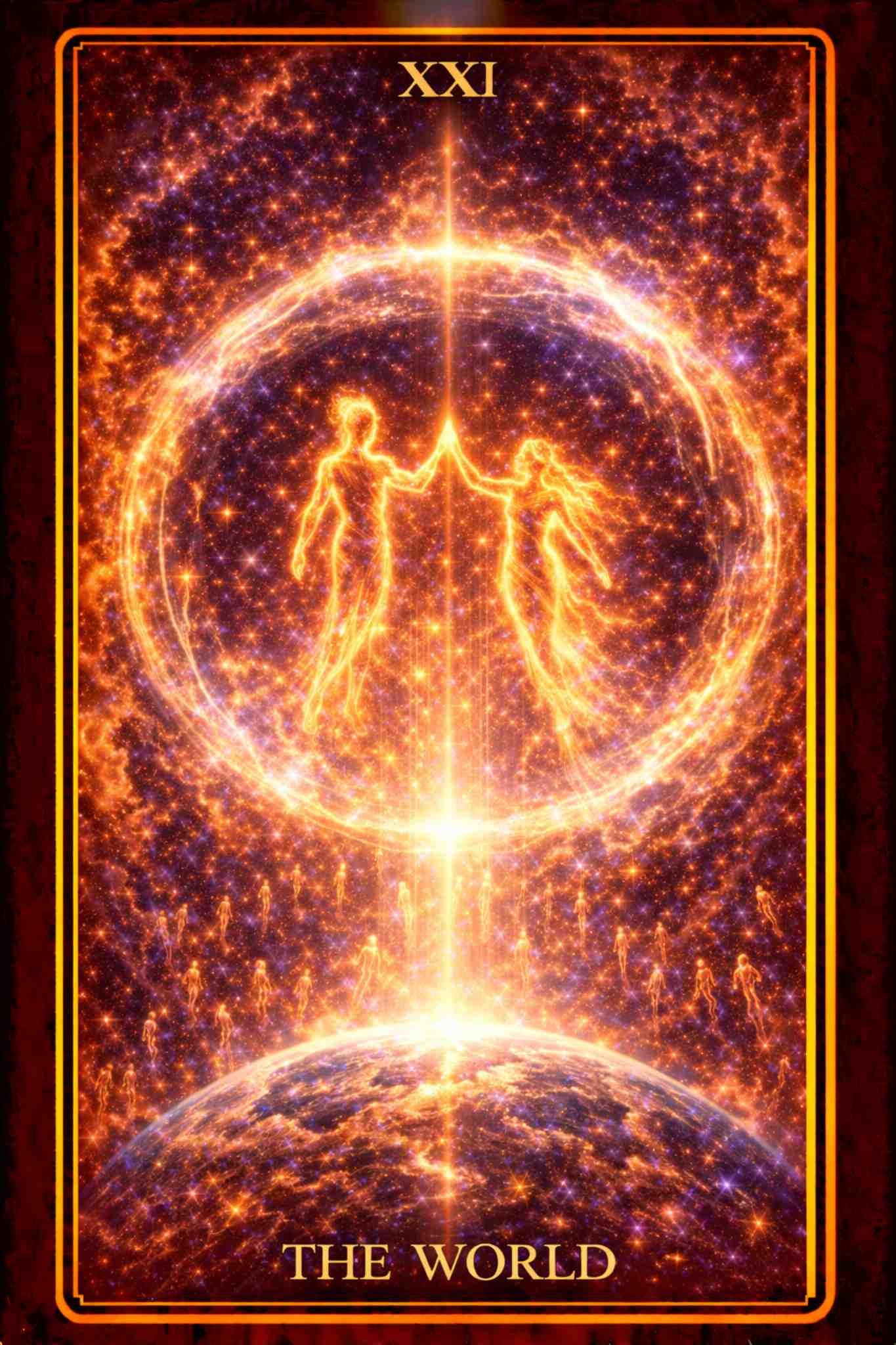
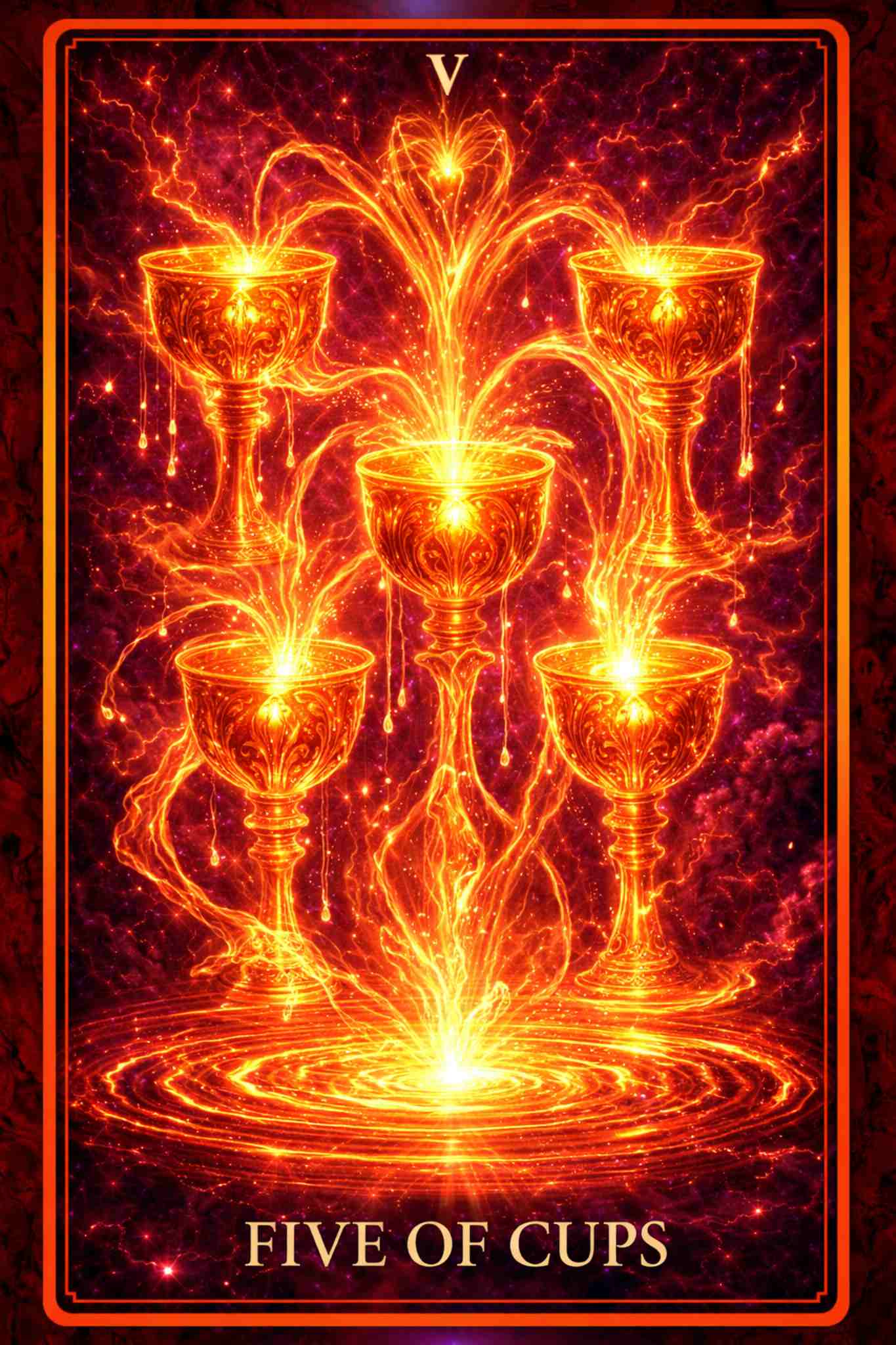
The spilled cups become part of the whole story
The World and Five of Cups begins with a difficult kind of completion. The Five of Cups brings grief, regret, disappointment, emotional loss, remorse, mourning, and the tendency to stand near what has fallen while the remaining cups stay out of view. The World does not erase that sorrow or dress it as victory. It gives the sorrow a border, a place, and a fuller shape. Something painful may no longer be an open wound without meaning; it may be becoming part of the wider story the heart has survived.
This combination is emotionally serious, but it is not hopeless. The World changes the Five of Cups by asking what the grief has taught, what part of the cycle is now complete, and how the heart can carry the loss without letting it remain the center of every future response. A relationship may have ended, a chance may have passed, a conversation may have gone badly, or a person may be facing the residue of an old emotional mistake. The deeper movement is integration. The spilled cups still matter, yet they are no longer the entire landscape.
For a direct look at the emotional tone of the minor card, the Five of Cups intentions meaning can help frame regret, sorrow, and the wish to repair or understand. With The World beside it, intention becomes less impulsive and more reflective. The heart may want to apologize, return, forgive, release, or make peace, but the action has to come from the whole story rather than from the panic of loss. This pair asks whether grief has become wise enough to stop punishing the self.
Regret becomes different when it has a place
The inner tension here is between looking back and completing the emotional cycle. The Five of Cups is drawn toward what hurt. It stands close to the broken part of the story, sometimes so close that the rest of life feels distant. The World brings a wider circle around that scene. It does not command the heart to move on quickly. It shows that the pain, the lesson, the remaining love, the mistake, the apology, the memory, and the future all need to exist in the same frame before real acceptance can begin.
You may also want to go one step deeper.
The World + Five of Cups can open up differently inside a focused personal reading.
This is where the pair becomes deeply human. Many people try to turn regret into self-punishment because punishment feels like proof that the loss mattered. The World offers another possibility: the loss can matter without becoming a permanent sentence. A person can honor what happened, name what they wish had been different, and still allow the experience to become integrated. The heart does not have to keep staring at the spilled cups in order to prove that it cared.
Compared with Judgement and Five of Cups, where grief may call for accountability, awakening, or a sober reckoning, The World and Five of Cups feels more like the stage after the reckoning has begun to settle. The emotional material is still tender, but it is gaining shape. The question is less about hearing the call and more about finding a mature place for what the call revealed. If there is remorse, can it become learning? If there is grief, can it become memory rather than an endless inner trial?
In love, this pair can appear around endings, separations, missed timing, emotional disappointment, or the realization that a bond has completed an important role. It does not guarantee reunion, apology, forgiveness, or closure from another person. It reflects the symbolic atmosphere of grief becoming more whole. Sometimes that may support a warm conversation. Sometimes it may support a private release. Sometimes it may reveal that a connection remains meaningful even though its old form has ended.
The bridge between sorrow and acceptance
The World and Five of Cups has a quiet relationship with memory. It may bring the moment when a person can look at an old relationship without collapsing into the same pain. The sorrow is still real, but it has edges now. The heart can name what was lost and also sense what was gained in maturity, discernment, humility, or compassion. This is not a trade or a consolation prize. It is the slow inner work of allowing an emotional wound to become part of the life story instead of the whole identity.
A deeper comparison appears with Death and The World, where transformation, ending, and completion gather into a larger passage of release. The World and Five of Cups is more emotionally specific. It is less about the structure of change itself and more about the sorrow that remains after something has changed. Death may close the door. The Five of Cups shows the heart standing near what was lost. With The World beside it, that sorrow can begin to find its rightful place inside the completed circle.
The World feelings meaning adds another layer because feelings under The World are often broad, reflective, and shaped by time. With the Five of Cups, a person may feel sadness and completion at once. They may miss someone while also knowing that a cycle has found its natural limit. They may feel love without believing the old pattern should continue. These mixed emotions are not contradictions. They are often signs that the heart is finally seeing the full landscape.
If the reading involves an apology or a desire for repair, this combination asks for dignity and realism. Repair is strongest when it respects the whole story, including the impact of what happened and the freedom of the other person to respond honestly. The World does not use completion as pressure. The Five of Cups does not use sorrow as leverage. A mature expression of regret can be sincere, but it cannot demand that the past return to its previous shape. The heart may need to offer truth and release control over the answer.
When grief has taught enough to become form
This pair asks for careful timing. It may be too early to act when sorrow is still searching for immediate relief. It may be time to speak, write, release, or mark an ending when the person can hold the whole situation with enough steadiness to avoid turning pain into pressure. The World asks whether the emotional cycle has become intelligible. The Five of Cups asks whether the grief has been given enough respect. A rushed attempt to close the story can become another form of avoidance, while endless mourning can keep the heart from receiving the remaining cups.
There are moments when a closing conversation fits this energy well. Such a conversation may be useful when it aims to honor the truth rather than force a particular outcome. It might include apology, gratitude, acknowledgment, or a calm naming of what each person can no longer carry. It can also be private: a letter never sent, a ritual of release, a quiet decision to stop revisiting the same emotional scene. The World and Five of Cups often needs an act that gives shape to the sorrow, even when that act is simple and unseen.
In relationship timing, this pair can also warn against confusing emotional intensity with unfinished destiny. A connection can feel powerful because it hurt deeply, but depth of pain alone does not prove that the bond should resume. The World asks for the whole pattern: how the relationship functioned, what repeated, what healed, what damaged trust, what remained sincere, and what has changed in real behavior. The Five of Cups honors the ache. The World asks whether the ache has become clear enough to guide a responsible next step.
The dignity of a sorrow that no longer rules the room
The spiritual feeling of this combination is sober, gentle, and surprisingly spacious. It can feel like the moment after long grieving when the heart realizes that memory does not have to be a prison. The person may still carry love, sadness, regret, or tenderness, but those feelings no longer have to stand between the self and the rest of life. The World creates a larger room. The Five of Cups remains inside it, yet other parts of the soul can enter too: gratitude, humility, compassion, renewed sensitivity, and the quiet courage to continue.
This pair can also soften the fear that acceptance means betrayal. Accepting the shape of what happened does not make the love false, the loss small, or the lesson easy. It simply allows the emotional experience to become integrated. In the language of The World, something has completed enough to belong. In the language of the Five of Cups, something still hurts enough to be honored. Together, they make space for an honest kind of peace, one that does not require pretending the cups never spilled.
For self-reflection, the core question is where the grief now belongs. Does it belong in a conversation? In a boundary? In an apology? In a memory? In a changed way of loving? In a decision to stop replaying the same inner scene? The cards do not dictate the answer, and they should not be treated as proof of what another person will do. They offer a symbolic mirror for the moment when regret may be ready to become learning and loss may be ready to become part of a fuller life.
The World and Five of Cups leaves the heart standing somewhere different from where it began. The spilled cups are still visible, but they are no longer the only truth in the room. Behind them, a larger circle has formed. Inside that circle, sorrow can have its rightful place, and the remaining cups can be seen without guilt, denial, or the need to rewrite the past into something simpler than it was.
Ready to see how this applies to your situation?
A focused tarot reading can help you explore how The World + Five of Cups may reflect your current situation, not just the general meaning of the cards.
When the heart stops living inside the loss
The World and Five of Cups does not ask the heart to deny what was painful. It asks whether the pain is still being treated as the entire truth. There is a difference between honoring grief and living inside it as if nothing else can ever become real again. The Five of Cups remembers what spilled, what failed, what was lost, or what could not be repaired in the way the heart once hoped. The World brings a larger frame around that memory. It does not make the sorrow smaller. It allows the sorrow to exist beside everything else that has also become true.
This can be a deeply important distinction in love readings, especially when regret is involved. A person may still care, still miss someone, still wish they had spoken differently, stayed longer, left sooner, apologized more clearly, or understood the situation before it reached its breaking point. Those feelings may be sincere. Yet sincerity alone does not mean the past can be restored, and it does not mean the heart should remain in permanent self-punishment. The World asks what has been learned from the pain. The Five of Cups asks that the pain be respected. Together, they point toward a form of acceptance that includes responsibility without turning responsibility into an endless inner sentence.
Sometimes this pair appears when a person is ready to look at the remaining cups without feeling disloyal to what was lost. This does not mean moving on quickly, replacing someone, or pretending the old story was easy. It means the heart may be strong enough to notice that life still contains tenderness, meaning, friendship, beauty, creativity, or the possibility of emotional peace. The spilled cups may remain part of the landscape, but they no longer have to block the whole horizon. In that sense, The World gives grief a place to belong, while the Five of Cups gives the completed story emotional truth.
In practical terms, this combination may invite a gentle act of closure. That might be an apology offered without expectation, a private ritual, a journal entry, a conversation held with care, or a quiet decision to stop returning to the same painful scene in the mind. The form matters less than the maturity behind it. If the action is meant to force a response, reopen a wound, or prove that the loss still has power, the heart may need more time. If the action is meant to honor what happened and release control over what comes next, it may support the deeper movement of the cards.
The final wisdom of The World and Five of Cups is that sorrow can be included without being enthroned. The heart does not have to betray the past in order to keep living. It does not have to erase regret in order to become whole. What happened may always matter, but it can matter from its rightful place. The larger circle has room for the spilled cups, the remaining cups, the lesson, the love, the mistake, the memory, and the life that continues beyond the moment of loss.
More combinations with The World
More combinations with Five of Cups
Continue with The World
Explore Related Guides by Topic
If you want to explore this combination through a more specific emotional lens, these tarot guides can help you follow the broader pattern behind the reading.