
The Devil + Six of Cups
Explore how these two tarot cards interact in a reading through symbolic overlap, contrast, and shared narrative. Tarot combinations often reveal meaning that neither card fully expresses on its own.
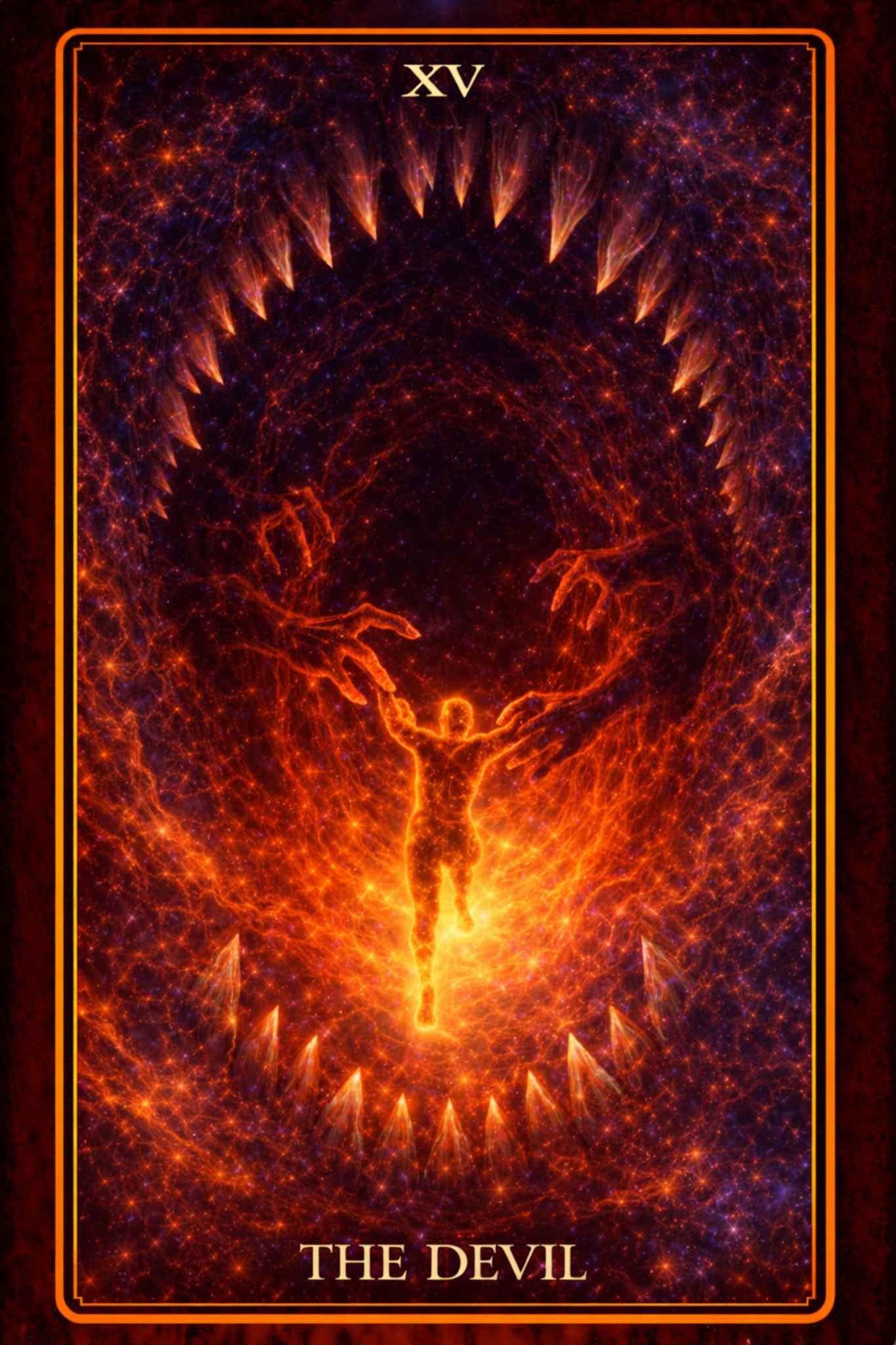
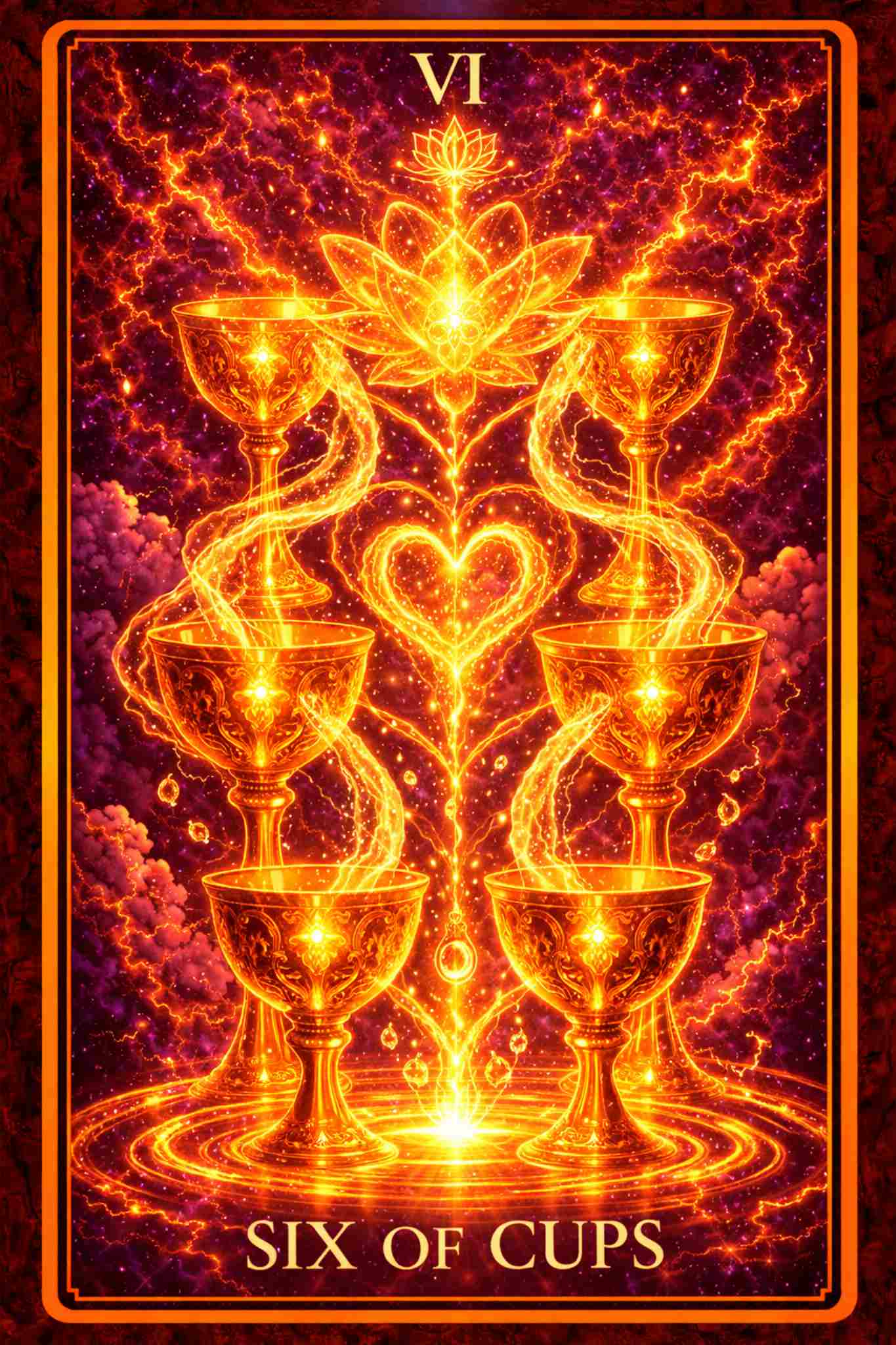
The Devil and Six of Cups Tarot Combination Meaning
The past can smell like sweetness even when it still carries a chain. The Devil and Six of Cups brings memory into the field of attachment. The Six of Cups speaks of nostalgia, innocence, old bonds, childhood echoes, tenderness, familiar love, and the emotional pull of what once felt simple. The Devil adds craving, repetition, dependency, idealization, shame, and the loss of inner freedom that can happen when the heart keeps returning to an old emotional role. Together, these cards explore the past as something both meaningful and magnetic.
This combination does not say that every old bond is unhealthy, or that nostalgia is false. The Six of Cups can hold genuine kindness, soft remembrance, reconciliation, and the healing presence of earlier love. With The Devil, however, the memory may become too powerful. A person may keep reaching for an old relationship, old identity, old family pattern, old friendship, or old version of themselves because it feels known. The past may offer warmth, but it may also ask the person to become smaller, younger, less free, or more bound to a role they have outgrown.
The Six of Cups on its own has a tender emotional language. The Six of Cups love meaning can show the softer side of this card: remembrance, affection, innocence, and the way old feelings can still move through the present. The Devil changes the question. The reading begins to ask whether the old sweetness is nourishing the heart, or whether it has become a familiar doorway back into dependency, fantasy, longing, or a pattern that keeps repeating because it feels like home.
What feels familiar may still be binding
The unique tension of The Devil and Six of Cups is the emotional pull of the familiar. A person may know a pattern is limiting, yet still feel drawn to it because it carries the texture of belonging. An old bond may feel like home because the heart remembers the rhythm. A family dynamic may feel impossible to challenge because the role was learned early. An early emotional wound may echo through adult desire in subtle ways. A past friendship or old group may keep calling because it lets the person return to a version of themselves they understand, even if that version is no longer whole.
There can be a strong romantic layer here. Someone may long for a person from the past, or for the way a relationship once felt before disappointment entered. They may be attached less to the current reality and more to the memory of warmth, innocence, and possibility. The Devil shows how memory can become selective. It may polish the sweetness and soften the cost. The heart may remember the cup, the smile, the tenderness, the belonging, while placing less attention on the ways the bond also restricted choice or repeated an old need.
A useful companion reading is Death and Six of Cups, where memory, endings, and old emotional attachments often meet the need for release. The Devil and Six of Cups is more focused on the seduction of the familiar. It may ache, but it also glows. The danger is not only sorrow. It is the belief that because something once felt emotionally significant, it must still be the place where the heart belongs.
The old role inside the new moment
This combination can be especially revealing around family patterns and early emotional conditioning. The Six of Cups may point toward childhood, formative relationships, or the emotional style learned in younger years. The Devil shows where that early style has become a chain. A person may overgive because love once had to be earned. They may chase unavailable people because distance feels familiar. They may mistake control for care, intensity for devotion, or anxiety for attachment because those were the emotional languages they learned first.
In this sense, The Devil and Six of Cups can describe the moment when an adult situation activates a younger part of the self. The present person may be reacting with the feelings of an earlier self: fear of being left, hunger for approval, shame around desire, or the need to keep someone close at any cost. This does not make the person weak. It makes the pattern visible. The Devil feelings meaning can help here because it explores how attraction, fear, need, and fascination can become entangled beneath the surface.
There is also a strong spiritual invitation in this pair: to honor memory without worshiping it. Some memories deserve tenderness. Some past bonds deserve gratitude. Some old versions of the self deserve compassion. Yet devotion to the past can quietly become a refusal of the present. The heart may keep returning to what it understands because new freedom feels unfamiliar. The Devil asks whether nostalgia is being used as a sanctuary or as a cage.
When the past asks for another chance
Timing with The Devil and Six of Cups often appears when something old resurfaces. A message may arrive, an old feeling may return, a memory may become vivid, a familiar person may re-enter awareness, or a repeating emotional pattern may show itself again. The cards suggest slowing down before confusing familiarity with truth. A bond can be meaningful and still require discernment. A person can remember love and still notice what the old dynamic costs. A reunion, apology, or renewed conversation may deserve care rather than automatic surrender to the pull of memory.
Need a little more context around this pairing?
A short reading can help you reflect on the tension, direction, or lesson this combination may be pointing toward.
The mirror tarot spread can fit this combination when the question is about why a past bond still has emotional power. A useful reading might ask what the memory reflects, what need the past still holds, what role the person is tempted to re-enter, and what part of the self is ready to choose differently. This approach keeps the focus on awareness instead of prediction. It helps the reader ask whether the past is returning to be repeated, understood, or released into a cleaner form.
Another helpful major-arcana contrast appears with The Devil and Judgement, where the past may call for recognition, accountability, and a clearer response to what still has power. The Devil and Six of Cups is softer and more nostalgic. It does not only ask what must be answered or released; it asks why the old feeling still feels like home, and whether returning to it would bring healing, repetition, or a smaller version of the self.
Small signs that nostalgia is becoming a chain
The Devil and Six of Cups may need careful language because nostalgia often feels soft. It may not announce itself as compulsion. It can arrive through songs, old messages, remembered places, repeated dreams, family expectations, or the desire to become the person one used to be. The following signs may show that the past is carrying more power than the present can comfortably hold:
- The memory feels warmer than the actual pattern was. The heart may be editing the past to keep the longing alive.
- Old roles return quickly. Around certain people, the person may become younger, smaller, pleasing, dependent, or afraid to speak clearly.
- Familiar pain feels easier than unfamiliar freedom. The known wound may feel safer than a new rhythm.
- The present is measured against an idealized earlier version. Real people may struggle to compete with a polished memory.
- Desire carries a hidden wish to repair the past. The bond may symbolize an old wound more than the current situation itself.
Keeping the tenderness, releasing the chain
Emotionally, this combination asks for a mature relationship with memory. The goal is not to erase the past. The Six of Cups would never ask that. It honors the truth that some people, places, and moments become part of the heart’s inner landscape. The Devil simply asks whether the person still has choice in relation to that landscape. Can they remember without returning? Can they love what was without handing the present to it? Can they feel the sweetness without letting the old pattern decide who they become now?
In love, this may mean distinguishing between a genuine renewed connection and the craving to recreate a feeling. In family matters, it may mean seeing an inherited pattern without letting it define every response. In personal healing, it may mean offering compassion to the younger self while allowing the adult self to choose differently. These are symbolic reflections, not instructions that override lived reality. The cards are most useful when they help the person become more honest with their own inner movement.
The Devil and Six of Cups ultimately describes a bond to the past that is emotionally powerful because it carries both sweetness and need. It asks the heart to look carefully at what feels familiar, what feels nourishing, and what quietly takes away freedom. Some memories can remain sacred without becoming a chain. Some old loves can be honored without being repeated. Some younger parts of the self can be held with tenderness without being allowed to choose every path forward. The deepest message is this: what once shaped you does not have to keep binding you, and what you remember with love does not have to own your life now.
Explore the next layer of this reading.
This combination can mean different things depending on context. A short tarot reading can help you reflect on the question behind the cards.
Frequently asked questions about The Devil and Six of Cups
What does The Devil and Six of Cups mean in love?
The Devil and Six of Cups in love often points to an old bond, memory, or familiar emotional pattern that still has a strong pull. There may be tenderness, nostalgia, attraction, or the wish to return to something that once felt safe. This combination does not make the past false or harmful by itself. It asks whether the old sweetness is nourishing the heart now, or whether it is leading the person back into a role, longing, or pattern they may have outgrown. If the question is romantic, an interactive love tarot reading can help explore the emotional pattern without turning the past into a fixed prediction.
Is The Devil and Six of Cups about an ex returning?
It can appear when someone from the past, an old feeling, or a familiar relationship pattern returns to awareness, but it should not be read as a fixed prediction. The deeper message is about the emotional power of memory. The cards ask why the past still feels magnetic, what need it touches, and whether returning to it would bring clarity, repetition, healing, or renewed attachment.
What is the message of The Devil and Six of Cups?
The message is to honor memory without letting it own the present. The Six of Cups allows tenderness toward the past, while The Devil asks where nostalgia, longing, shame, or old dependency may be narrowing choice. A reflective reading can help separate genuine affection from the desire to recreate an earlier feeling, so the heart can keep the sweetness while releasing the chain.
More combinations with The Devil
More combinations with Six of Cups
Continue with The Devil
Explore Related Guides by Topic
If you want to explore this combination through a more specific emotional lens, these tarot guides can help you follow the broader pattern behind the reading.