
The Devil + Knight of Cups
Explore how these two tarot cards interact in a reading through symbolic overlap, contrast, and shared narrative. Tarot combinations often reveal meaning that neither card fully expresses on its own.
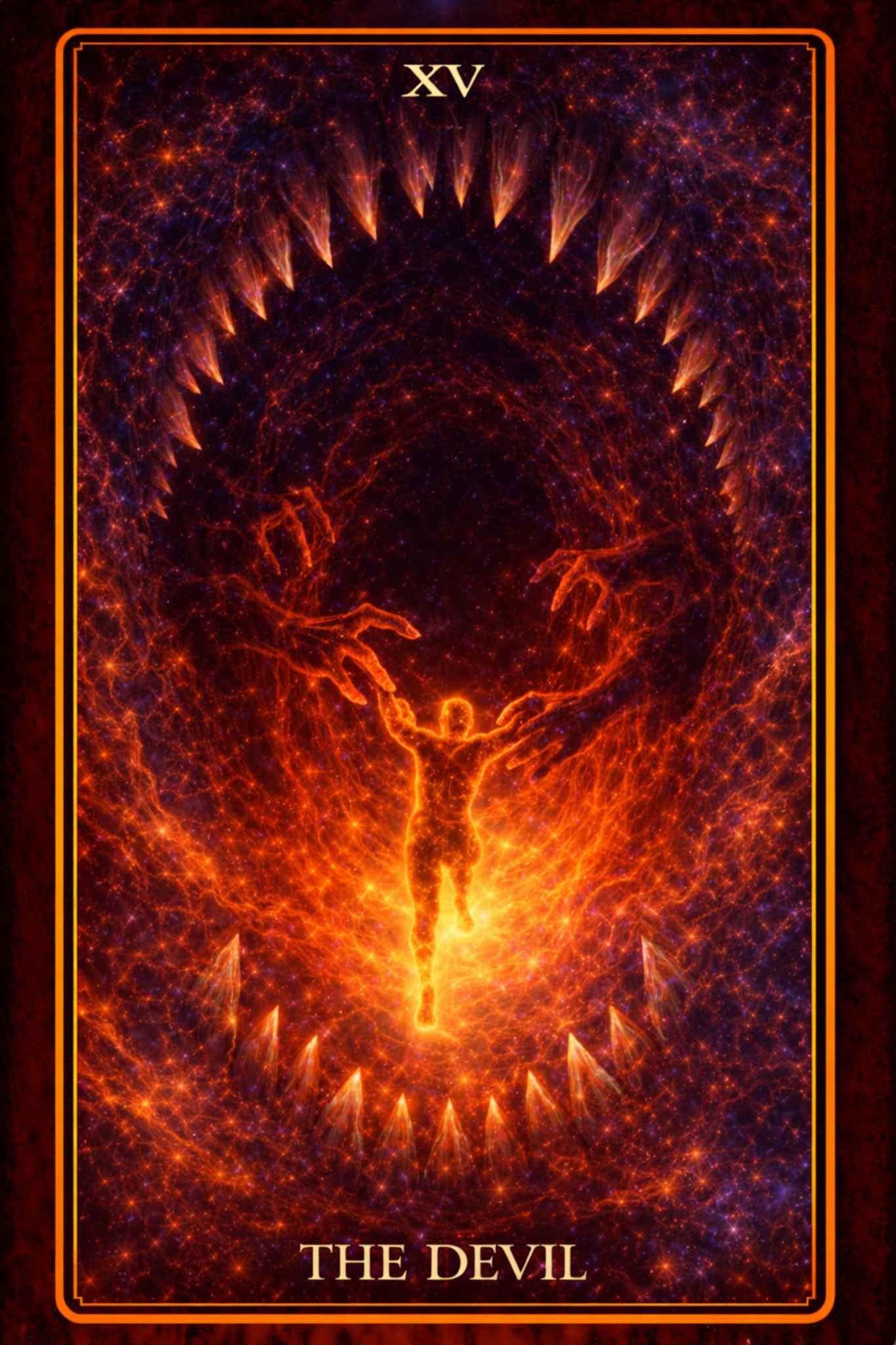
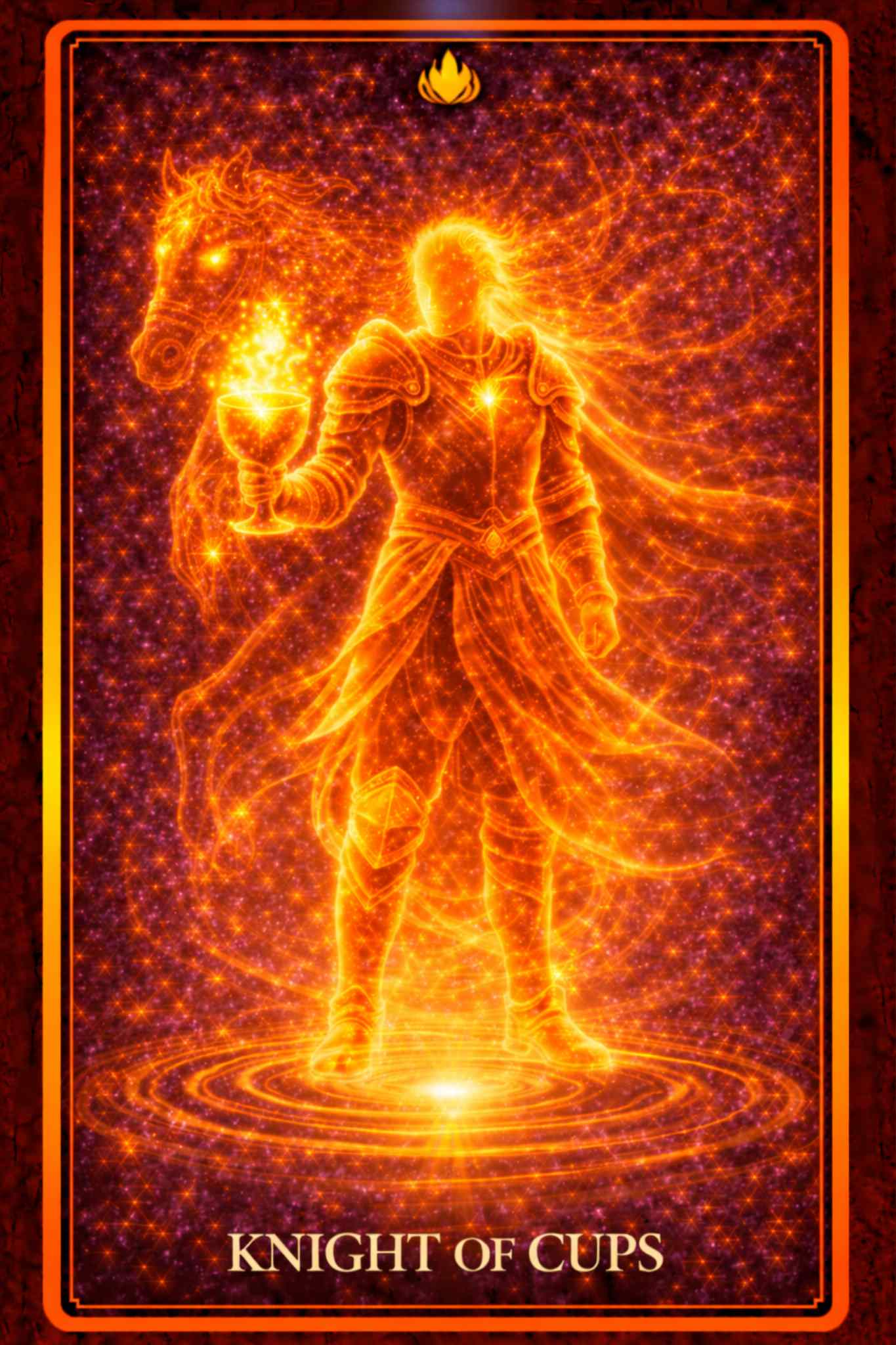
The Devil and Knight of Cups Tarot Combination Meaning
Romance becomes complicated when the heart starts chasing the feeling of being enchanted more than the truth of the connection itself. The Devil and Knight of Cups brings desire into movement. The Knight of Cups brings a softer kind of movement: emotion seeking expression, attraction looking for shape, and longing trying to become a gesture. The Devil adds craving, fixation, seduction, dependency, projection, and the pattern of pursuing what feels intoxicating even when inner freedom begins to narrow. Together, these cards explore the pursuit of love, beauty, approval, or emotional intensity when the pursuit itself becomes part of the chain.
This is not a card pair that condemns romance. The Knight of Cups carries a real gift: the courage to feel, to approach, to offer, to create, to speak in the language of emotion. The Devil does not remove that beauty. It asks what is steering the horse. Is the movement guided by sincere feeling, or by the need to be desired? Is the gesture an offering, or a way to regain control? Is the romantic pursuit rooted in love, or in the hunger for a certain emotional high? The combination becomes especially important when charm, longing, and urgency begin to blend together.
The Knight of Cups on its own can describe emotional movement, romantic invitation, artistic expression, and the willingness to follow a feeling. The Knight of Cups love meaning gives that softer current a clearer foundation. With The Devil, however, the movement may carry an extra charge. A person may pursue the beloved, the dream, the apology, the fantasy, or the emotional reward with such intensity that they begin to lose contact with proportion.
When the chase becomes part of the spell
The deeper layer of The Devil and Knight of Cups is the way movement can feel like meaning. The person may believe they are following love, but they may also be following the emotional rush that comes from pursuit itself. A message sent, a gesture prepared, a song remembered, a confession imagined, a return planned, a beautiful sentence chosen carefully — all of these can make the heart feel alive before anything has truly been met in reality. The Knight of Cups moves through feeling with grace and intensity. The Devil asks whether the movement is still free, or whether the person has become attached to the drama of reaching, hoping, waiting, and trying again.
Want to explore this combination in a more personal way?
If this pairing feels important right now, a simple tarot spread can help you reflect on it with more context.
This matters because pursuit can sometimes protect a person from the quieter truth of mutuality. As long as the story remains in motion, the heart does not have to fully face whether the connection is balanced, whether the other person is equally present, or whether the romantic image can survive ordinary honesty. The chase can become a beautiful corridor where desire keeps moving forward, but never has to sit still long enough to be answered clearly. In that corridor, the person may feel poetic, brave, devoted, and deeply emotional. Yet underneath the beauty, there may also be a hidden question: am I pursuing this because it is true, or because stopping would make me feel empty?
The Devil and Knight of Cups can also point to the temptation to make emotion impressive. The Knight knows how to offer the cup with style. The gesture may be sincere, but it may also carry a wish to be seen as romantic, unforgettable, wounded, loyal, artistic, or impossible to ignore. This does not make the feeling false. It simply asks the reader to notice the second layer beneath the offering. Is the person expressing love, or trying to create a mood strong enough to secure a response? Is the cup being offered with openness, or is it quietly asking to control the emotional atmosphere? The distinction is subtle, but it changes the whole reading.
There is tenderness here too. Many people chase because stillness feels frightening. If the person stops sending, hoping, imagining, returning, or performing romance, they may have to feel the older hunger beneath the movement: the wish to be chosen, the fear of being forgettable, the ache of unreturned affection, the need to prove that their love has power. The Devil does not shame that hunger. It brings it into view so the Knight can become more honest. A romantic gesture becomes cleaner when it does not have to carry the whole weight of self-worth. A pursuit becomes more respectful when it leaves space for the other person’s reality. The cup can still be offered beautifully, but it no longer has to become a spell cast against uncertainty.
The pursuit may be beautiful, and still be binding
The unique tension of The Devil and Knight of Cups is emotional pursuit mixed with compulsion. The Knight wants to move toward the cup. The Devil wants the cup to deliver relief, power, validation, or escape. This can appear as romantic longing, seductive communication, repeated attempts to win someone over, attachment to an unavailable person, or the need to keep the emotional story alive through gestures, messages, songs, promises, and idealized images. The pursuit itself may feel meaningful because it keeps desire active.
In love readings, this pair may describe someone who is strongly drawn toward another person and may express that attraction with intensity, charm, or poetic language. Yet the reading asks whether the emotional offer has space for the other person’s reality. The Knight of Cups can sometimes love the image of love. The Devil can make that image hard to release. A person may be less attached to mutual intimacy than to the feeling of wanting, chasing, being wanted, or imagining what the bond could become.
A related major-arcana pattern appears in The Devil and The High Priestess, where hidden desire, secrecy, fascination, and unspoken emotional knowledge can become difficult to separate. The Devil and Knight of Cups is more active and expressive. The feeling does not remain only beneath the surface; it begins to move through gesture, language, beauty, pursuit, and return. The person may act, speak, reach out, confess, charm, come back, or try again because the emotional movement itself has become hard to stop.
Charm, longing, and the hidden need to be chosen
The Devil and Knight of Cups can also describe the shadow side of charm. Charm is not automatically false. It can be warmth, creativity, emotional intelligence, beauty, and a genuine wish to connect. Yet charm can also become a tool for managing insecurity. A person may learn to be appealing because being wanted makes them feel safe. They may pursue affection because stillness brings up emptiness. They may offer romance while secretly needing the response to confirm their worth.
The Devil feelings meaning deepens this layer because feelings with The Devil often carry attraction mixed with fear, longing mixed with control, and desire mixed with old emotional hunger. With the Knight of Cups, those feelings move outward. They become a message, invitation, confession, poem, apology, return, or dramatic romantic gesture. The key question is whether the gesture leaves room for truth, or whether it tries to create a mood strong enough to overpower uncertainty.
There may be a strong pattern of idealization. The Knight sees beauty. The Devil attaches to it. A person may believe that one romantic connection will finally transform their emotional life, that one response will heal an old rejection, or that one successful pursuit will prove something essential about who they are. This is where the reading becomes tender rather than harsh. The desire may be sincere, but the burden placed on the desire may be too heavy.
Before following the wave
The most delicate moment in The Devil and Knight of Cups often comes just before the heart acts on romantic intensity. The feeling may be strong, but strength alone does not make it clear. A message sent at midnight, a sudden confession, a return to someone from longing, or a grand emotional gesture may feel irresistible because it promises immediate relief. The cards suggest asking whether the action comes from presence or from the urge to quiet anxiety. The difference may shape the whole meaning of the exchange.
The love tarot spread can fit this combination when the reader wants to understand the emotional pattern around desire, pursuit, and mutuality. A grounded reading may ask what is truly felt, what is being projected, what is being chased, and where the person needs to recover self-respect before making the next move. This keeps the focus on awareness rather than prediction, and it helps separate romantic courage from emotional compulsion.
A useful contrast appears in The Devil and Page of Cups, where the feeling is more tender, young, and uncertain. The Knight is already moving. He has a direction, a cup, a gesture, and a story. The Devil asks whether that movement is guided by love, desire, performance, fear, or the need to feel powerful through being desired in return.
Want to place this combination into a wider reading?
If this pairing feels close to something you are experiencing, a simple spread can help you reflect on the surrounding energy with more clarity.
The romance that survives clarity
On a deeper level, The Devil and Knight of Cups turns romance toward the test of clarity. Some feelings shine most brightly while they remain partly distant, imagined, secret, or unfinished. They can gather intensity through pursuit and longing because reality has not yet asked them to become fully mutual, ordinary, or accountable. When the feeling enters honest conversation, it may change shape. The question is whether the desire still carries truth when fantasy no longer protects it. Can the heart meet the person as they are, not only the emotional charge around them? Can the gesture be offered without trying to steer the answer? Can romance become a living bridge rather than a spell the person disappears into?
The answer does not have to be cold. The Knight of Cups still wants beauty. The Devil simply asks for freedom inside beauty. The person may still write, speak, approach, apologize, or express love. The deeper invitation is to do so without handing over the center of the self. A romantic act becomes cleaner when it is not secretly demanding salvation. A pursuit becomes more respectful when it leaves space for the other person’s truth. Desire becomes safer when it is allowed to be alive without becoming a command.
The closing message of The Devil and Knight of Cups is not to make the heart colder. It is to make the movement more honest. The pursuit may be shaped by love, longing, beauty, reconciliation, creative desire, or the wish to feel wanted. None of that has to be dismissed. The cards simply ask what is carrying the horse forward: sincere feeling, the thrill of the chase, the need for validation, or the hope that another person will finally answer an old emptiness. When that hidden need is named, the cup can still be offered, but with more freedom. The gesture becomes less about being completed by the response, and more about expressing something true without disappearing into the pursuit.
More combinations with The Devil
More combinations with Knight of Cups
Continue with The Devil
Explore Related Guides by Topic
If you want to explore this combination through a more specific emotional lens, these tarot guides can help you follow the broader pattern behind the reading.