
The Devil + Ten of Cups
Explore how these two tarot cards interact in a reading through symbolic overlap, contrast, and shared narrative. Tarot combinations often reveal meaning that neither card fully expresses on its own.
The Devil and Ten of Cups Tarot Combination Meaning
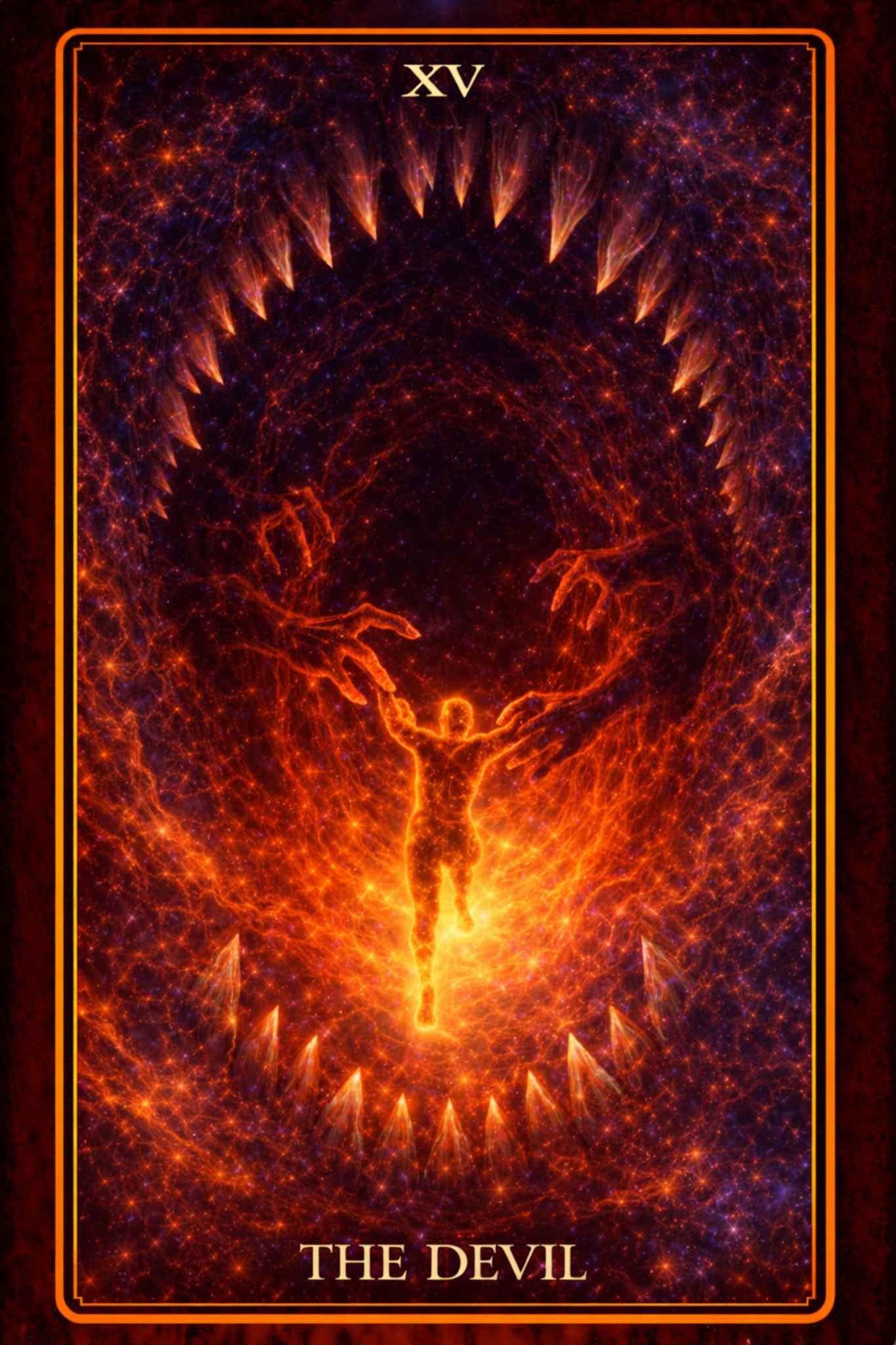
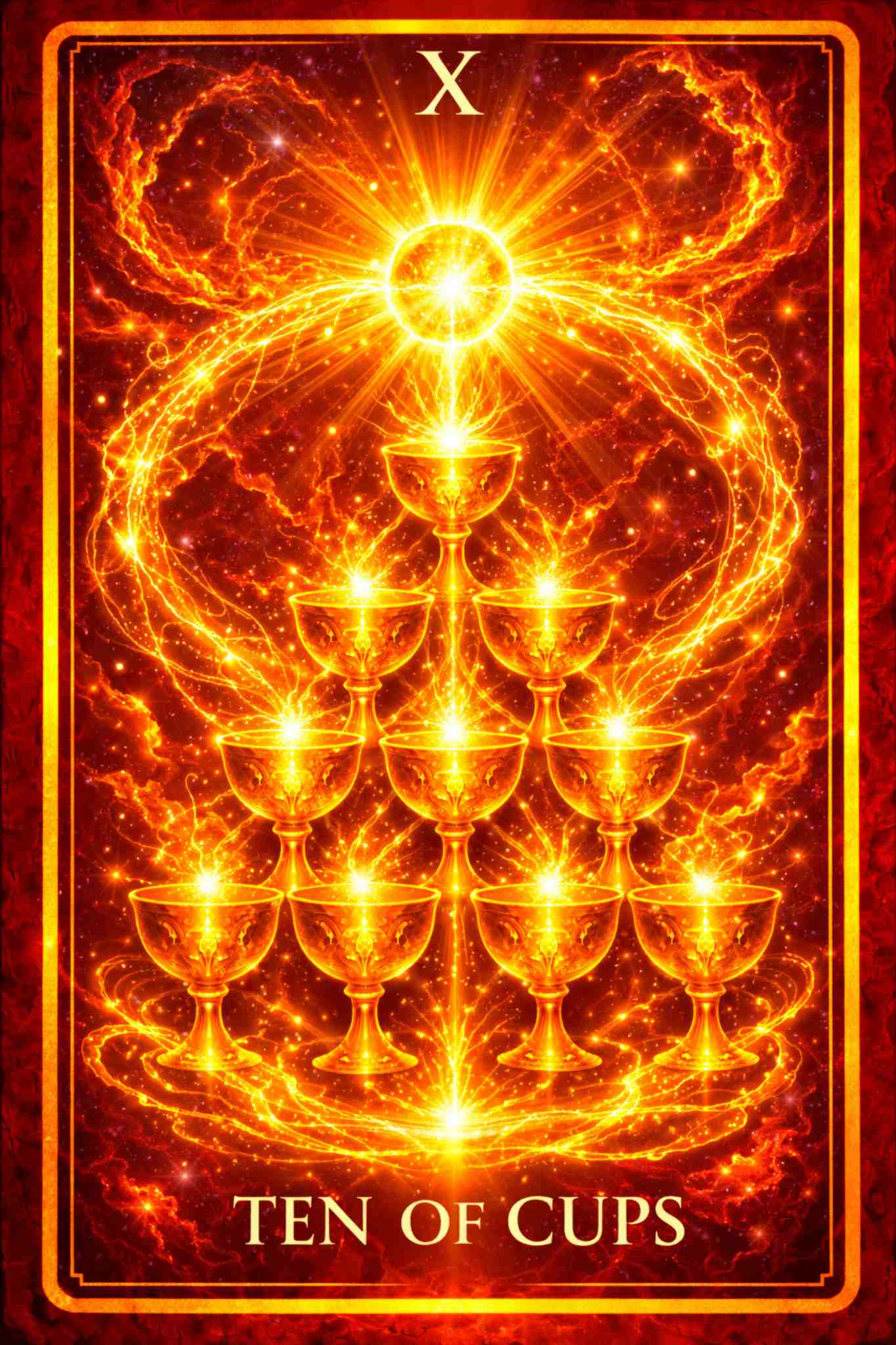
The dream of perfect happiness can become heavy when the heart feels it must protect the picture at any cost. The Devil and Ten of Cups brings attachment into the realm of love, family, belonging, emotional ideals, shared life, and the wish for a beautiful ending. The Ten of Cups speaks of harmony, home, emotional fulfillment, family bonds, long-term love, and the image of a life that feels whole. The Devil adds control, pressure, fear, dependency, appearance, longing, and the loss of freedom that can happen when the ideal becomes more important than the truth inside it.
This combination is not saying that happiness is false, or that family love and lasting connection are suspicious. The Ten of Cups is one of the most tender emotional cards in the deck. It holds the human wish to belong somewhere, to be loved safely, to build a shared emotional world, and to feel that the heart has arrived. The Devil enters when that wish becomes too tight. A person may cling to an image of love because they fear what would happen if the image changed. A family or relationship may look complete on the surface while carrying pressure, silence, control, or unspoken emotional contracts underneath.
The Ten of Cups alone can describe warmth, shared emotional life, and the hope of loving connection. The Ten of Cups love meaning gives that softer foundation. With The Devil, the reading asks a more complex question: is the ideal nourishing the people inside it, or are the people serving the ideal? The difference can be quiet. A bond may look beautiful, yet someone may feel they must suppress needs, hide dissatisfaction, or stay attached to a picture because leaving the picture would feel like failure.
The beautiful picture and the hidden contract
The unique tension of The Devil and Ten of Cups is attachment to the ideal of happiness. The Ten of Cups gives the image: the home, the family, the partner, the future, the emotional completion, the rainbow after difficulty. The Devil asks what has been sacrificed to keep that image intact. Sometimes the sacrifice is honesty. Sometimes it is individuality, boundaries, desire, grief, or the right to admit that the perfect-looking arrangement is also complicated. The chain may be made of expectations rather than obvious force.
Want to explore this combination in a more personal way?
If this pairing feels important right now, a simple tarot spread can help you reflect on it with more context.
In relationships, this pair can describe the pressure to make love look successful. A couple may feel bound by history, shared dreams, family expectations, public image, children, community, or the emotional investment already made. A person may stay attached to the idea of what the bond was supposed to become, even when the lived experience asks for clearer truth. This does not automatically mean separation or crisis. It means the reading is asking for honesty about the difference between genuine harmony and the performance of harmony.
A related major-arcana pattern appears in The Devil and The Hierophant, where attachment, tradition, expectation, belonging, and the pressure to follow an approved structure can become difficult to separate. The Devil and Ten of Cups brings that pressure into the emotional home. Now the bond may include family systems, future plans, social approval, shared identity, or the need to maintain a complete picture of happiness. The cup is no longer only between two hands; it has become a whole world.
Belonging can heal, and it can bind
The Ten of Cups carries a sacred longing: to be part of something loving and safe. That longing deserves respect. Many people carry wounds around belonging, family, acceptance, and emotional security. The Devil does not mock those wounds. It reveals where the longing for belonging has become so powerful that the person may give away too much of themselves to keep it. They may agree when they need to speak. They may maintain peace by swallowing truth. They may protect the emotional picture because the thought of disrupting it feels unbearable.
The Devil career meaning may seem unusual here, but it can be relevant when the Ten of Cups ideal involves shared status, money, work-life image, family business, public success, or the pressure to maintain a life structure that looks fulfilling from outside. The Devil often appears where security and control are entangled. In this combination, the question may be emotional, relational, or domestic, yet the hidden pressure can involve livelihood, reputation, lifestyle, or the fear of losing a carefully built identity.
There is also a softer spiritual layer. A person may be attached to the idea that happiness must look a certain way. The right partner, the right home, the right family, the right emotional ending. When reality is more textured, the person may feel shame or fear, as if imperfection means failure. The Devil and Ten of Cups asks for a kinder truth: real love usually has more complexity than the picture. The goal is not to destroy the rainbow. It is to stop using the rainbow to hide the weather.
When timing asks for truth inside the home
The key moment in The Devil and Ten of Cups often arrives when the picture of harmony begins asking for more honesty. This may surface through a relationship conversation, a family pattern, a shared plan, a living situation, or a private realization about what happiness has come to mean. Immediate decisions may matter less than seeing the emotional structure clearly. The cards ask what is being protected, what is being left unsaid, and what truth would make the bond feel more spacious rather than more controlled.
There may be a temptation to preserve peace by avoiding the difficult subject. The Ten of Cups wants harmony. The Devil may prefer silence if silence keeps the structure intact. Yet real harmony rarely grows from hidden resentment or emotional self-abandonment. The reading may invite a slower, steadier honesty: what does this shared life ask of me? What do I give freely, and what do I give because I fear losing belonging? What would love look like if it made room for truth instead of only appearance?
A helpful contrast appears in Temperance and Ten of Cups, where harmony, patience, emotional balance, and shared healing can shape the picture of happiness in a gentler way. The Devil and Ten of Cups moves into a more pressured emotional architecture. It asks how desire, attachment, fear, and expectation operate inside the family picture, the relationship ideal, or the imagined happy ending.
Questions that reveal the pressure behind the happy ending
Does The Devil and Ten of Cups mean a relationship or family is fake?
No. This pair does not reduce love to illusion. It asks whether the image of happiness has become too powerful. A bond can contain genuine care and still carry pressure, silence, control, fear of change, or emotional dependence that needs honest attention.
Can this combination point to family patterns?
Yes. It can reflect inherited expectations, emotional roles, loyalty patterns, or the pressure to keep a family story looking whole. The cards invite reflection on where belonging supports the self and where belonging asks the self to disappear.
What is the main reflection in this combination?
The main advice is to protect truth, not only the picture of harmony. Real emotional safety becomes stronger when people can speak honestly, hold boundaries, and allow the shared dream to become more human, more flexible, and less controlled by fear.
Ready to see how this applies to your situation?
A focused tarot reading can help you explore how The Devil + Ten of Cups may reflect your current situation, not just the general meaning of the cards.
A freer version of happiness
On a deeper level, The Devil and Ten of Cups turns the idea of happiness away from perfection and back toward truth. A shared emotional life does not have to look flawless in order to be meaningful. It may include tenderness, repair, difference, boundaries, grief, laughter, fatigue, devotion, and change. The Devil reveals where the beautiful picture has started to tighten around the people inside it. The Ten of Cups keeps the heart connected to love, belonging, and the wish for harmony. The clearer path is not to destroy the dream, but to let it become honest enough to breathe.
This combination can be powerful for anyone who feels torn between loyalty and inner freedom. It may speak to the person who wants to keep a family together while also wanting space to be real. It may speak to the person who wants lasting love, but fears that admitting a truth will break the dream. It may speak to the person who has built a life around an ideal and now senses that the ideal needs to become more truthful if it is going to remain alive.
The Devil and Ten of Cups ultimately describes the chain that can form around the dream of belonging. It does not reject the dream. It asks the dream to become honest. A freer version of happiness does not require people to pretend. It allows love to include truth, home to include individuality, and commitment to include choice. When the ideal loosens, the emotional world may become less perfect on the surface, but more real at the center. That is where the Ten of Cups can become a living cup rather than a picture the heart feels forced to protect.
More combinations with The Devil
More combinations with Ten of Cups
Continue with The Devil
Explore Related Guides by Topic
If you want to explore this combination through a more specific emotional lens, these tarot guides can help you follow the broader pattern behind the reading.