
The Hierophant + Five of Cups
Explore how these two tarot cards interact in a reading through symbolic overlap, contrast, and shared narrative. Tarot combinations often reveal meaning that neither card fully expresses on its own.
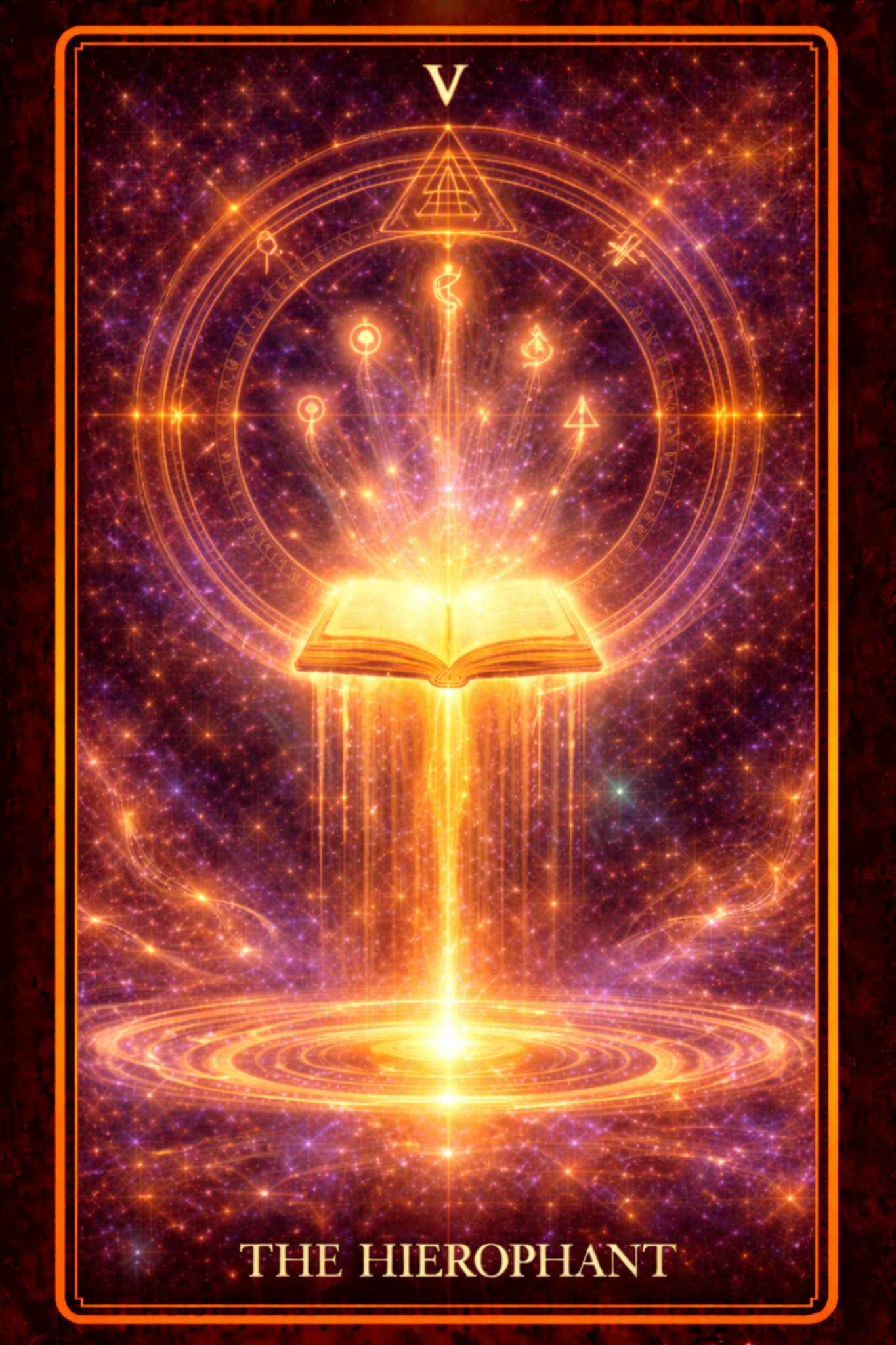
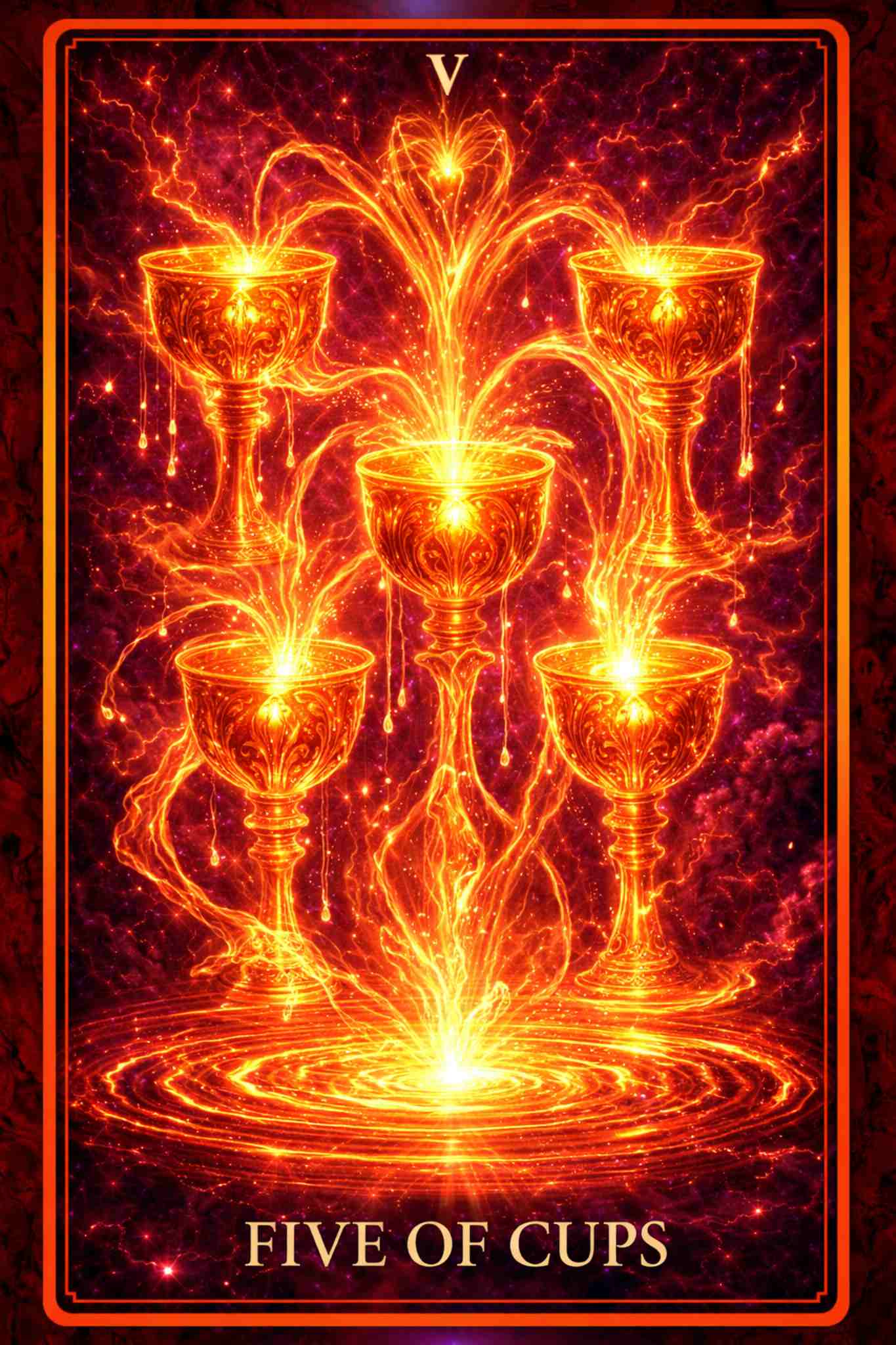
The Hierophant and Five of Cups Tarot Combination Meaning
Some grief belongs to what happened. Something ended, something failed, something precious slipped out of reach, and the heart aches because reality no longer matches what it once held. Yet some grief reaches further than the event itself. It touches the meaning you had placed inside the experience, the trust you had given it, and the inner structure that helped you believe life was moving in a certain direction. The Hierophant and Five of Cups speaks to that deeper kind of sorrow. This pair describes loss that unsettles belief, disappointment that shakes inner order, and the painful work of discovering what still remains true after something meaningful has broken open. The Five of Cups brings grief, regret, sadness, mourning, and the human tendency to keep looking toward what has been spilled. The Hierophant brings values, moral and spiritual structure, interpretation, and the search for a deeper truth that can hold the pain without reducing it. Together, these cards suggest that sorrow is doing more than hurting. It is reorganizing the way meaning is carried.
This is what gives the combination its gravity. The Five of Cups often appears when the heart remains turned toward what was lost, what failed, or what never became what it was meant to become. Yet beside The Hierophant, the grief becomes more layered. The wound may be emotional, though it also reaches into the structures of trust that once supported the experience. A person may be grieving the loss of a relationship, but also the loss of what they believed that relationship meant. They may be mourning an outcome, while also mourning the collapse of a hope, an image, or a moral certainty they had quietly built around it. The Hierophant asks what exactly has been disturbed. Was it only the event, or also the deeper belief that gave the event its significance?
That distinction matters because grief becomes harder to understand when its deeper dimensions remain unnamed. People often think they are mourning one thing, while inwardly they are mourning several things at once. They may be grieving a person, a promise, a future, a role, or their own faith in how life was supposed to unfold. The Hierophant enters there as the interpreter of the larger wound. He does not take the pain away. He makes it more intelligible. He asks what values were involved, what trust was broken, and what inner structure must now be rebuilt more truthfully. Through that lens, the combination becomes less about simple sadness and more about grief as a force that reveals where meaning had been placed, and whether that meaning was as stable as the heart hoped it would be.
When sorrow shakes the structure beneath the feeling
The Five of Cups often describes a state in which the emotional body remains fixed on what has gone wrong. There may be regret, loss, disillusionment, or the ache of seeing something broken that once felt full of promise. In many readings, the card captures that heavy inward posture beautifully. The gaze falls toward what is gone. The heart circles the absence. Beside The Hierophant, however, the reading asks what supports have been disturbed beneath the visible grief. What did this loss represent? What belief, expectation, or value had been woven into it? What part of your inner order feels less certain now because this disappointment happened? A more hopeful version of this spiritual search can be seen in The Hierophant and The Star, where meaning begins moving toward renewal.
This is where The Hierophant becomes especially important. He represents frameworks through which people understand life: spiritual beliefs, ethical assumptions, inherited meanings, personal codes, commitments, and the stories through which experience becomes coherent. When grief enters that territory, it can feel especially destabilizing. A person may realize that they did not simply lose something they loved. They lost something they had trusted to carry part of their emotional world. The Five of Cups shows the sadness clearly. The Hierophant shows why the sadness may feel so profound. It reaches beyond the event into the structure of meaning itself.
There is a serious tenderness in that realization. Grief sometimes deepens because it exposes how sincerely we believed. We trusted a bond, a path, a promise, an image of love, or an idea of what was unfolding. When reality breaks that image, the loss can feel larger than the visible facts. The Hierophant and Five of Cups suggests that part of the healing lies in understanding this without shame. The heart attached meaning because it was alive, hopeful, and willing to devote itself. The work now is not to harden against that truth, but to discover a steadier relationship to meaning going forward. This connects closely with Hierophant spirituality, especially where belief and lived experience need to meet more honestly.
Disappointment can become a spiritual and emotional reckoning
One of the deepest teachings in this combination is that grief can reveal where trust had become fused with assumption. The Five of Cups shows the pain of what did not hold. The Hierophant asks what had been sanctified inwardly, perhaps without full examination. A person may discover that they gave sacred weight to something that was still uncertain, or that they built part of their emotional life on an interpretation that reality could not sustain. This does not make the grief foolish. It makes it revelatory. The pain becomes a way of seeing more honestly what the heart had entrusted itself to.
This is especially relevant when sorrow carries moral or spiritual disappointment. Sometimes the grief is not only about losing a person or outcome. It is about feeling that something meaningful should have worked, should have stayed true, or should have justified the faith placed in it. The Hierophant brings those deeper expectations into view. He asks what you believed about loyalty, love, goodness, or destiny when you gave your heart to this experience. The Five of Cups then shows the ache of finding that life has answered differently. That discovery can be sobering, though it can also open the way toward a more grounded inner truth.
The pair also carries an important lesson about what remains after disillusionment. The Five of Cups is famous for its focus on what has spilled, and rightly so, because grief deserves to be felt where it truly lives. Yet The Hierophant introduces another question: what values survive the loss? What forms of dignity remain intact even when the heart has been hurt? What deeper truths can still be trusted after illusion has fallen away? This is where the pair begins to move toward healing. It does not rush the person away from sorrow. It helps them notice that even in grief, some foundations are still present and may now become clearer than before.
Love and relationship meaning
In love readings, The Hierophant and Five of Cups often points to grief or regret that extends beyond the visible relationship story. There may be heartbreak, disappointment, emotional distance, or the pain of realizing that a connection did not become what it seemed to promise. The Five of Cups shows the sadness itself. The Hierophant shows that the sadness is also touching values, trust, and the meaning you had given to the bond. This is why the combination can feel so weighty in relationship readings. A person may be mourning the connection, while also mourning what the connection represented in their life.
Sometimes this appears when someone is grieving a relationship that had become linked with hope, identity, future plans, or a larger emotional vision. The pain then carries several layers at once. One layer says, “I miss what was here.” Another says, “I miss what I believed this meant.” The Hierophant helps separate those layers gently. He asks what exactly was lost, what part was real, what part was idealized, and what deeper standard is still worth preserving even after disappointment. This makes the pair clarifying as well as painful. It encourages the person to keep their values while releasing false forms that could not truly hold them. A more defensive expression of faith under pressure appears in The Hierophant and Seven of Wands, where conviction has to stand against resistance.
There is also an important lesson here around self-blame and misplaced reverence. A person may think they failed because the relationship did not fulfill the meaning they had attached to it. Yet these cards often suggest something subtler. The deeper task is not self-punishment. It is truthful discernment. What did you ask this bond to carry? Was it able to hold that weight? Did you place sacred expectation inside something that was still unresolved, uncertain, or divided? These are not harsh questions. They are part of restoring emotional honesty. The Hierophant and Five of Cups wants grief to become a doorway toward deeper alignment rather than a prison of regret.
Healing, conscience, and rebuilding inner coherence
Outside romance, this combination can speak to family sorrow, disappointment in a path once trusted, spiritual disillusionment, or any experience in which grief forces the self to reconsider what it has built life around. The Five of Cups may show the emptiness that follows a painful ending or a painful recognition. The Hierophant shows that healing will involve more than emotional recovery alone. It will also require a rebuilding of inner coherence. The person may need to reexamine beliefs, values, and the structures of meaning that once shaped their expectations. This is quiet work, though it is often the most important work in the aftermath of loss.
You may also want to go one step deeper.
The Hierophant + Five of Cups can open up differently inside a focused personal reading.
Psychologically, the pair often marks a maturing threshold. A person begins to understand that grief is not only about what has ended. It is also about how meaning was assigned, how trust was formed, and how emotional life was organized around certain hopes. That recognition can deepen self-understanding dramatically. The Hierophant gives language to the deeper pattern. The Five of Cups makes sure the person remains close to the human truth of sorrow while that pattern comes into view. Together, they describe a process in which pain becomes more articulate and therefore more capable of being integrated. For a more focused emotional lens, Five of Cups feelings can help clarify how sadness, regret, and disappointment may be experienced inwardly.
Timing and the wisdom of letting grief become clear
Timing matters strongly with this pair because it often appears when the loss is already present and the next step is not to escape it, but to understand what it has disturbed. This may be a time for reflection, grief work, prayer, conversation, writing, or any practice that helps the heart become honest about what it is truly mourning. The Hierophant supports reverent pacing here. Meaning may reform slowly. That slowness has value. A deeper truth is trying to emerge from the disappointment, and it asks for patience rather than emotional haste.
There is also wisdom in allowing the old interpretation to fall apart before rushing to replace it. Many people try to recover by constructing a new story immediately. These cards suggest another rhythm. Let the grief teach you what mattered. Let it show you what was projected, what was real, and what remains worthy of trust. Healing grows stronger when the person does not merely move on, but moves through the sorrow with enough honesty that inner life can be rebuilt on clearer ground. A related shift appears in Wheel of Fortune and Five of Cups, where loss is read through change, timing, and turning cycles.
Frequently asked questions
Does The Hierophant and Five of Cups mean grief?
Yes, very often. This pairing usually points to sorrow, disappointment, or regret that also touches deeper questions of trust, meaning, and inner truth.
Can this combination show disillusionment in love?
Absolutely. It can reflect heartbreak mixed with the pain of realizing that a relationship did not hold the meaning, promise, or emotional truth you had hoped it would.
Is this a spiritual combination?
Often, yes. The Five of Cups brings grief, while The Hierophant adds moral and spiritual interpretation, making the loss part of a deeper reckoning with belief, values, and emotional alignment.
What is the main lesson of this pair?
That grief can reveal where the heart placed meaning, and that disappointment may become a path toward a truer, steadier foundation for emotional life.
Want to place this combination into a wider reading?
If this pairing feels close to something you are experiencing, a simple spread can help you reflect on the surrounding energy with more clarity.
Closing reflection
There is something deeply sobering and deeply worthwhile in The Hierophant and Five of Cups because it shows that grief is never only about what vanished. The Five of Cups turns toward what has been lost, while The Hierophant reveals how that loss may also be shaking the beliefs, hopes, and structures that once made life feel coherent. Together, these cards suggest that sorrow becomes transformative when it is allowed to tell the truth about what was trusted, what has broken, and what deeper values still remain. The pain here is real, though so is the possibility of rebuilding inner life around something clearer, more honest, and more durable than the meaning that was lost.
More combinations with The Hierophant
More combinations with Five of Cups
Continue with The Hierophant
Explore Related Guides by Topic
If you want to explore this combination through a more specific emotional lens, these tarot guides can help you follow the broader pattern behind the reading.