
The Star + Five of Cups
Explore how these two tarot cards interact in a reading through symbolic overlap, contrast, and shared narrative. Tarot combinations often reveal meaning that neither card fully expresses on its own.

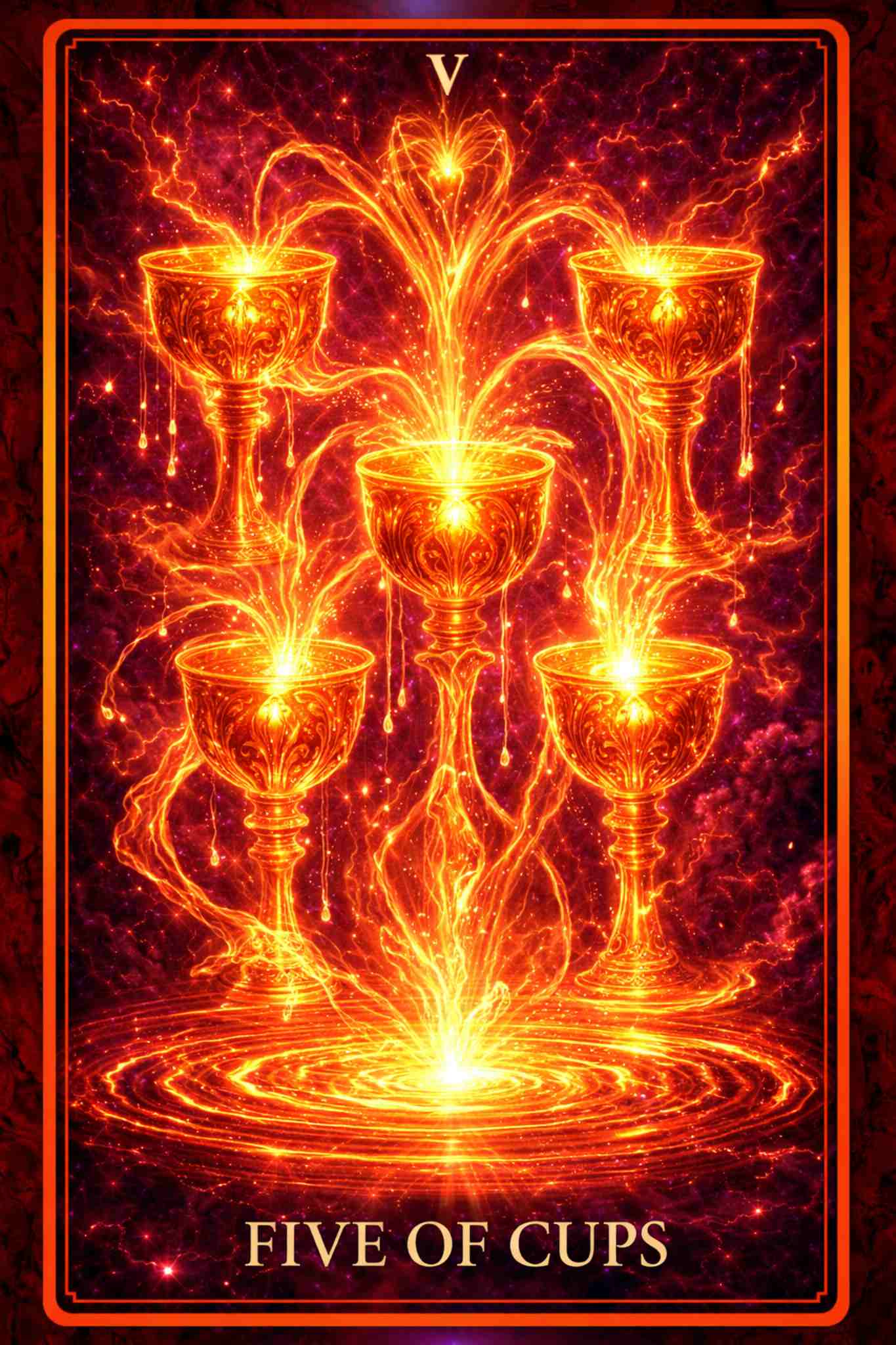
The cup that remains after the spilling
There is a particular kind of silence that follows emotional loss. It is not always dramatic from the outside. Sometimes it looks like someone continuing with daily life while the inner world keeps returning to what was spilled, what changed, what could have been said differently, or what no longer feels available in the same way. The Star and Five of Cups enters that silence with unusual tenderness. The Five of Cups brings grief, regret, disappointment, and the ache of looking at what has fallen. The Star brings a quieter light above the scene, asking whether the heart can begin to notice what still has water in it.
This is not a simple message of moving on. It is far more human than that. The Star does not tell the Five of Cups to stop grieving, and it does not replace sorrow with a bright slogan. It gives grief a cleaner atmosphere. It suggests that loss may still be real while hope quietly returns in a form that does not disrespect what happened. The emotional field may still ache, but the ache no longer has to be the only truth. Something may remain: a lesson, a bond, a memory, a capacity for love, a spiritual thread, or the first small willingness to breathe again.
Compared with the warmer support of The Star and Three of Cups, this pairing is more solitary. Help may exist, but the central movement happens inside the person who is standing before the spilled cups. The hope is intimate, almost private. It may appear as the moment someone stops blaming themselves for every part of a story, or the moment a painful memory becomes something they can hold without being fully swallowed by it. The Five of Cups intentions meaning can add useful depth when regret, apology, silence, or emotional hesitation is part of the question.
Grief under a clearer sky
The Five of Cups often asks the heart to face what hurts. The Star asks the heart to face it in a way that does not close the future completely. Together, they create a reading of gradual emotional cleansing. Tears may be part of it, but the tears are not only despair. They may also be release. They may carry the exhaustion of holding sorrow too tightly for too long. This combination may appear after a breakup, a friendship wound, a family disappointment, a creative loss, or an inner grief that has no simple name. Its tone is soft because it recognizes that some emotional truths need time before they can become wisdom.
You may also want to go one step deeper.
The Star + Five of Cups can open up differently inside a focused personal reading.
In relationship readings, The Star and Five of Cups may describe a connection marked by regret or sadness, yet still surrounded by a faint light of understanding. This does not guarantee repair. It does not require reconciliation. It may simply show that the emotional story is becoming clearer, less poisoned by panic, and more available for compassionate reflection. A person may begin to see where they were hurt, where they hurt another, where expectations collapsed, or where a bond mattered even though it could not remain in its former shape.
The The Star feelings meaning helps clarify the difference between hope and denial here. Hope does not mean pretending the cups never spilled. It means the heart is slowly remembering that spilled water is not the whole landscape. There may still be two cups standing. There may still be a bridge. There may still be a path toward self-compassion, a calmer conversation, or a more honest relationship with the past.
When regret softens into understanding
One of the deeper layers of this combination is the transformation of regret. The Five of Cups can hold the mind in a loop of what went wrong. The Star does not erase accountability, but it changes the emotional texture around it. Regret can become a teacher rather than a prison. A person may begin to see which part of the sorrow belongs to grief, which part belongs to responsibility, and which part belongs to a longing for a version of the past that cannot be recreated exactly. This is where the pair becomes quietly restorative. It invites reflection without self-punishment.
A useful contrast appears with Death and The Star, where hope begins to return after a deeper ending has changed the shape of life itself. With the Five of Cups, the focus is closer to the emotional moment of grief, regret, and looking at what has been spilled. The wound is visible. The person may be looking at what hurts, sometimes too intensely, yet The Star adds the possibility that this looking can become cleansing instead of repetitive. The emotional water does not need to stay stagnant. It can move, slowly, through tears, honesty, forgiveness, or a clearer acceptance of what cannot be changed.
Spiritually, this pairing can describe the moment when sorrow becomes less isolating. The Star brings the sense that the soul is still being held by something wider than the loss. This can be faith, inner guidance, nature, prayer, a quiet ritual, or the simple awareness that life has not completely withdrawn its tenderness. The Five of Cups brings the human ache. The Star gives that ache a place under the sky. Together, they allow grief to be honored without making grief the final identity of the heart.
Timing: let the sorrow move before asking it to resolve
Timing with The Star and Five of Cups favors gentle emotional processing rather than immediate closure. It may be a time to acknowledge sadness honestly, to speak with care if a conversation is needed, or to let the body release what has been held. If the question concerns contacting someone, the cleanest timing comes when the intention is truth rather than emotional rescue. A message sent from calm regret may land very differently from a message sent to escape discomfort. This pair asks for sincerity, humility, and enough spaciousness to accept that the other person may have their own emotional rhythm.
If the reading concerns personal restoration, the timing may point toward gradual relief. The first sign of movement may be small: a memory hurts less sharply, a person stops replaying one scene, a compassionate thought appears, or a new source of comfort becomes visible. The Star reminds the Five of Cups that slow easing is real. A wound does not need to vanish for healing to begin. Sometimes the beginning is simply the moment the heart can look up long enough to see that the whole world has not become the loss.
What remains can still matter
The Star and Five of Cups ultimately speaks of grief touched by a clean, quiet hope. It is the image of someone standing near emotional ruin and gradually realizing that not everything sacred has been destroyed. The message is not to hurry away from sorrow. It is to let sorrow be held in a wider field. What was lost may still deserve mourning. What remains may still deserve care. Both can be true without cancelling each other.
This combination is especially powerful because it treats healing as a human process rather than a performance. There is no demand to feel better quickly, no pressure to turn pain into inspiration before the heart is ready. The Star offers water where grief has dried the inner landscape. The Five of Cups admits that something hurt. Together, they suggest that the heart can begin again from a place of honesty, not denial. Hope returns here as a small light beside the wound, and that may be enough for the next step.
Explore the next layer of this reading.
This combination can mean different things depending on context. A short tarot reading can help you reflect on the question behind the cards.
When hope does not ask grief to disappear
The Star and Five of Cups is one of those combinations that carries hope very carefully. It does not arrive with noise, certainty, or a demand to feel better. It arrives like a small light beside someone who is still looking at what spilled. This matters because the Five of Cups often speaks to the part of the heart that cannot simply turn away from loss. Something mattered. Something hurt. Something did not become what the heart hoped it would become. The Star does not argue with that truth. It does not ask the person to deny the sadness, cover it with spiritual language, or pretend that the remaining cups make the fallen ones meaningless. Its light is gentler than that. It says that grief can be real, and still not be the whole sky.
This is the deeper tenderness of the pair. The Five of Cups may keep attention fixed on what went wrong, what was lost, what was said too late, or what can no longer be held in the same form. The Star widens the scene without erasing it. It helps the heart understand that the spilled cups belong to the story, but they do not have to become the entire identity of the person standing there. There may still be two cups upright. There may still be a bridge behind the figure. There may still be a path back into life, even if that path begins slowly, with tears, silence, humility, or the first honest breath after a long emotional night.
In love, this combination can feel especially delicate. It may describe regret after a relationship wound, sadness around what changed, or the ache of realizing that care existed alongside mistakes, distance, or missed understanding. Yet The Star keeps the reading from becoming trapped in despair. It does not guarantee reconciliation, and it does not turn sorrow into a promise. Instead, it asks whether the emotional truth can become cleaner. Can regret soften into responsibility without becoming self-punishment? Can longing be honored without turning the past into an altar that nothing else may approach? Can the heart recognize what was meaningful while still allowing itself to receive life beyond the loss?
The spiritual lesson here is not quick forgiveness or instant peace. It is the slow return of inner spaciousness. Sometimes the heart needs to mourn before it can recognize what remains. Sometimes a person has to name the disappointment honestly before hope can feel trustworthy again. The Star allows that process to be sacred without making it theatrical. It may be found in a quiet ritual, a walk beneath open sky, a conversation that does not solve everything but releases one hard knot, a journal page that finally tells the truth, or a moment when memory hurts and comforts at the same time. The Five of Cups brings the human ache. The Star gives that ache a wider place to rest.
There is also a strong message here about what remains. After loss, the mind can become loyal to absence. It returns to the spilled water again and again, as if looking harder will undo what happened. The Star does not shame this instinct. It simply offers another direction for the eyes. What is still standing? What part of love survived as wisdom? What part of the self is still capable of tenderness? What kindness is still possible, even if the original hope has changed shape? These questions do not rush grief. They help the heart remember that sorrow and remaining life can exist in the same room.
This combination can also speak to self-compassion after regret. The Five of Cups can be harsh when it turns inward, replaying every choice through the language of blame. The Star brings a cleaner kind of accountability. It encourages the heart to learn without becoming cruel to itself. A person can admit what hurt, what failed, or what they wish had been different without using that awareness as a punishment. In this way, hope becomes less like denial and more like mercy. It does not remove consequence. It makes growth possible without asking the soul to live forever inside one painful chapter.
Ultimately, The Star and Five of Cups speaks of the moment when grief is still present, but the emotional world begins to widen around it. The fallen cups are not mocked. The tears are not treated as weakness. The past is not dismissed as unimportant. Yet somewhere above the scene, a quiet light remains. Somewhere nearby, water still exists. The heart may not be ready to call this renewal yet, but it may begin to sense that the loss is not the only thing left. That is enough for this pairing. Not a bright ending. Not a forced answer. Just the first clear hint that what remains can still be cared for, and that hope can sit beside sorrow without betraying it.
More combinations with The Star
More combinations with Five of Cups
Continue with The Star
Explore Related Guides by Topic
If you want to explore this combination through a more specific emotional lens, these tarot guides can help you follow the broader pattern behind the reading.