
Wheel of Fortune + Five of Cups
Explore how these two tarot cards interact in a reading through symbolic overlap, contrast, and shared narrative. Tarot combinations often reveal meaning that neither card fully expresses on its own.
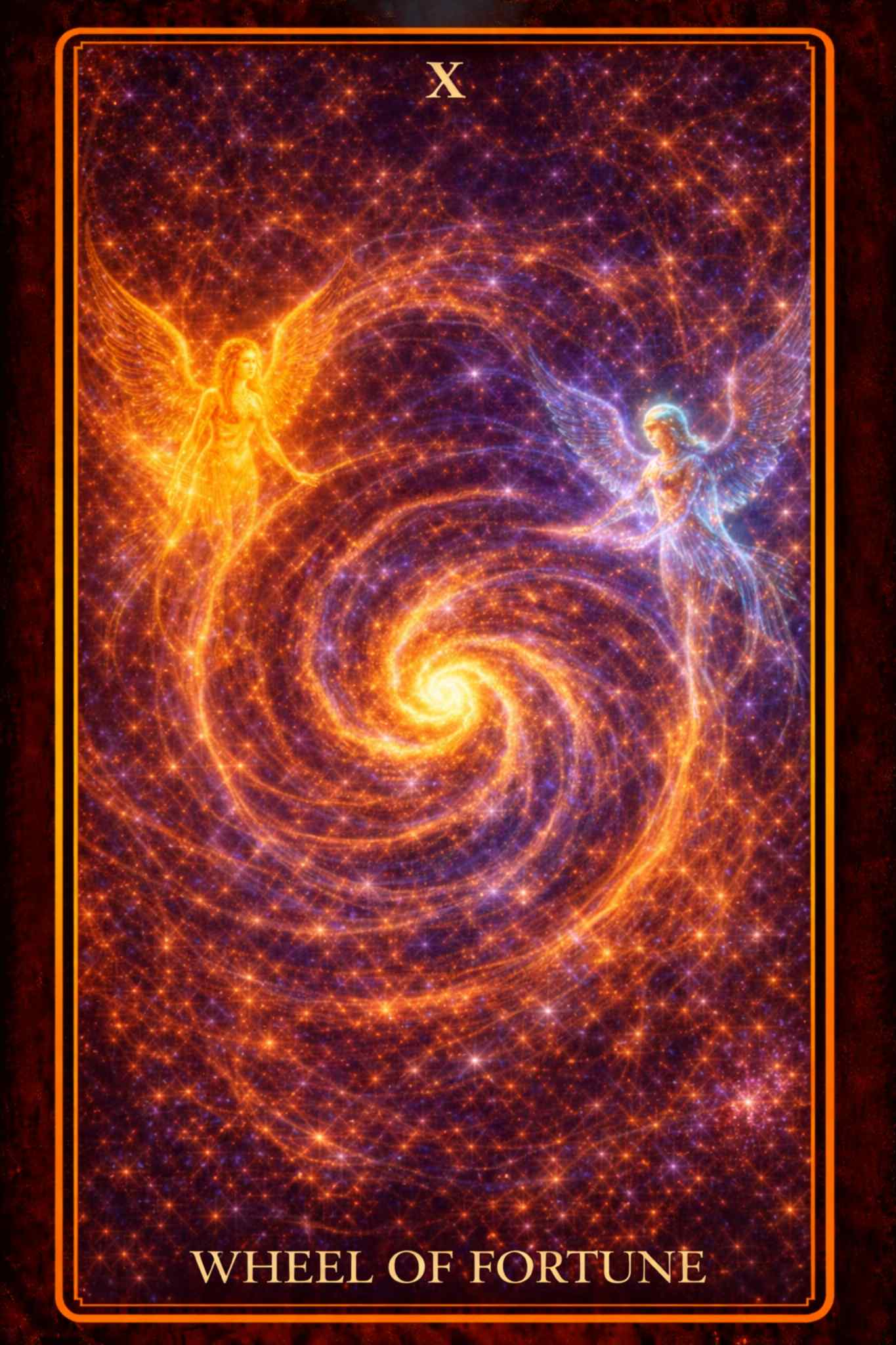
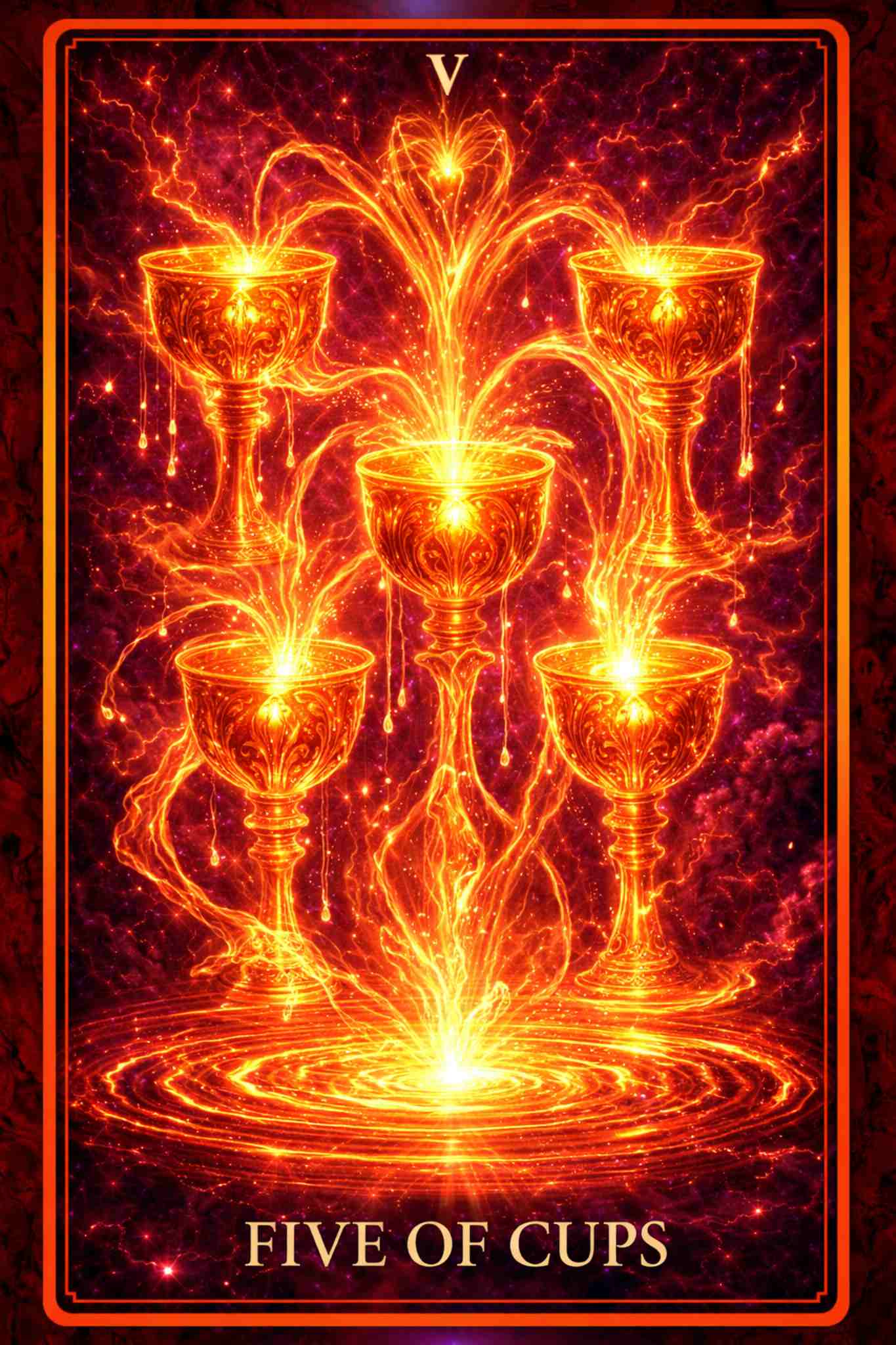
The Wheel of Fortune and Five of Cups Tarot Combination Meaning
Some emotional shifts begin at the exact point where meaning breaks down. Not in the moment of impact itself, but in what follows, when the mind tries to understand what has been lost and finds no immediate structure to hold onto. The Wheel of Fortune and Five of Cups speaks to that space in a way that reaches beyond simple grief or disappointment. It reflects the gradual reorganization of emotional reality, where what initially feels like a singular loss begins to reshape perception, attention, and inner narrative over time. What first appears as a contained emotional rupture often expands into a deeper awareness of patterns that were present long before the moment itself.
The Five of Cups holds the weight of regret, sadness, and emotional contraction, where attention naturally gravitates toward what has ended or failed to meet expectation. This narrowing of focus is not accidental, and it often serves a purpose in early emotional processing. The Wheel of Fortune introduces a broader movement that cannot be reduced to the immediate feeling, suggesting that the experience belongs to a cycle that is still unfolding. Together, these cards describe a state where sorrow is real, though also part of a larger process that gradually reveals meaning through time rather than immediate clarity. The emotional truth remains valid, even as its interpretation begins to evolve.
This pairing often appears when a person begins to sense that their experience is connected to something larger than the present situation. The emotional response may feel specific and immediate, though over time it begins to echo earlier experiences or reveal recurring themes. The Wheel of Fortune does not remove the pain, nor does it reinterpret it prematurely. Instead, it expands the frame so that the loss can be seen as part of a broader emotional landscape. This shift allows the person to move from reaction toward awareness without forcing resolution before it is ready to emerge.
Grief as a shift in perception
One of the defining aspects of this combination is how it transforms perception rather than simply describing an emotional state. The Five of Cups narrows focus, drawing attention toward absence and the emotional residue of what has been lost. This narrowing can feel consuming, as if the experience defines everything else. The Wheel of Fortune gradually widens that perspective, though it does so through time and repeated awareness rather than immediate insight. It introduces the possibility that understanding evolves, and that meaning may shift as the cycle continues to unfold.
As this process develops, subtle changes begin to appear in how the experience is held internally. Certain aspects of the loss may lose intensity, while others gain clarity or context. What once felt like complete absence may begin to reveal structure, pattern, or direction. This does not remove grief, nor does it simplify it. Instead, it creates a layered experience where emotional intensity and growing awareness coexist. The Wheel allows this complexity to exist without forcing a conclusion, which gives the experience space to develop into something more integrated.
This shift often marks the beginning of a deeper form of emotional awareness. Instead of asking only what has been lost, the person begins to explore how the experience fits into their broader life pattern. This movement does not invalidate the pain, though it prevents it from becoming the only perspective available. Over time, this creates a more balanced relationship with the experience, where grief remains meaningful without remaining central to everything else.
Pattern recognition through emotional repetition
The Wheel of Fortune introduces repetition as a key element, and this is where the combination gains depth. What appears at first as a singular disappointment may begin to resemble earlier experiences when viewed over time. The details may differ, though the emotional structure can feel familiar in subtle ways. This recognition may take time to emerge, especially while the immediate emotional impact remains strong. When it does become visible, the experience of loss begins to shift from isolated pain into meaningful information.
Want to explore this combination in a more personal way?
If this pairing feels important right now, a simple tarot spread can help you reflect on it with more context.
This stage can feel confronting, because it asks the person to look beyond the surface event and consider how their emotional patterns interact with external circumstances. The Five of Cups holds the emotional weight of the moment, while the Wheel reveals that the moment may belong to a recurring cycle. This does not assign fault, nor does it suggest inevitability. It simply brings awareness to patterns that may have been operating without clear recognition. Through that awareness, the possibility of change begins to take form.
As this awareness develops, the experience often begins to feel less isolated and more connected to a broader relational movement. What once appeared as a single disappointment may start to resemble a shift in how connection itself unfolds over time, similar to the dynamic reflected in The Wheel of Fortune and Three of Cups, where emotional patterns become visible through interaction and shared experience rather than through loss alone. This perspective does not remove grief, though it adds dimension to how it is understood. Over time, even small shifts in response can indicate that the cycle is no longer repeating in the same way.
Love, loss, and relational identity
In relationship readings, this combination often reflects a moment where emotional identity begins to shift alongside the experience of loss. The Five of Cups may appear as grief connected to another person, though the deeper layer often involves how the individual understands themselves within that connection. The Wheel of Fortune suggests that this understanding is not fixed, and that it may evolve as the emotional process continues. What feels like an ending can also mark the beginning of a different internal perspective.
A relationship may change, end, or reveal something unexpected, and the immediate emotional response may focus on what is no longer present. Over time, the experience may begin to show how attachment patterns, expectations, or emotional roles have been operating beneath the surface. This realization does not remove the emotional impact, though it adds context that was not available at the beginning. The person may begin to see how their experience of connection has developed and how it may continue to shift moving forward.
As emotional processing continues, it often becomes clear that grief is not only about what has been lost, but also about how the loss is being held internally. This process is closely connected to how emotional states evolve beneath the surface, which is explored in Five of Cups feelings meaning, where attachment and emotional memory remain active even as circumstances change. In broader situations where past experiences shape present perception, a Past Present Future Tarot Spread can help clarify how the cycle continues to unfold.
Emotional memory and identity shift
Another layer of this combination appears in how emotional memory begins to shift over time. The Five of Cups often holds the immediate imprint of loss, where the experience feels clearly defined by what has gone wrong. The Wheel of Fortune gradually places that imprint into a broader sequence of events, allowing the memory itself to evolve. This does not erase the past, though it changes how it is integrated into present awareness.
As this process continues, identity may begin to shift in subtle ways. The person may recognize that their understanding of themselves has been influenced by experiences that are now being seen differently. What once felt definitive may begin to feel transitional. This change does not happen all at once, and it rarely feels dramatic in the moment. Instead, it develops gradually through repeated awareness and reflection.
This movement often mirrors the deeper emotional transition reflected in The Hermit and The Star, where reflection gradually softens into a quieter form of emotional clarity and renewal. Over time, the experience of loss becomes part of a broader sense of self that is no longer defined only by the moment itself. As this shift stabilizes, the perspective reflected in Five of Cups spirituality meaning becomes more accessible, where emotional experience begins to connect with a larger sense of inner movement rather than remaining fixed in a single interpretation.
Explore the next layer of this reading.
This combination can mean different things depending on context. A short tarot reading can help you reflect on the question behind the cards.
FAQ
Does this combination always indicate loss?
It often reflects emotional disappointment or grief, though the focus remains on how that experience develops over time. The presence of The Wheel of Fortune suggests movement within the situation, even if that movement is not immediately visible. The experience is rarely static, and its meaning may evolve as the cycle continues. This allows the situation to carry depth rather than remaining fixed.
Is this a negative combination?
It can feel heavy, particularly in the early stages, though it also contains meaningful insight. The Five of Cups highlights emotional truth, while The Wheel of Fortune introduces context and movement. Together, they create a more complex picture that includes both feeling and awareness. This makes the combination layered rather than purely negative.
What is the main lesson of this pairing?
It shows how emotional patterns become visible through loss and how those patterns evolve over time. The experience may reveal connections between different events that were not previously clear. This can lead to a deeper understanding of how emotional cycles operate. The lesson develops gradually rather than appearing all at once.
Can this combination indicate change after grief?
It can reflect a gradual shift in perception, where the experience of loss begins to reveal a larger emotional movement. The change may develop slowly through awareness and repeated reflection. The presence of The Wheel suggests that movement continues even when the emotional state feels unchanged. Over time, this can lead to a more integrated understanding of the experience.
More combinations with Wheel of Fortune
More combinations with Five of Cups
Continue with Wheel of Fortune
Explore Related Guides by Topic
If you want to explore this combination through a more specific emotional lens, these tarot guides can help you follow the broader pattern behind the reading.