
The Hanged Man + Ten of Wands
Explore how these two tarot cards interact in a reading through symbolic overlap, contrast, and shared narrative. Tarot combinations often reveal meaning that neither card fully expresses on its own.
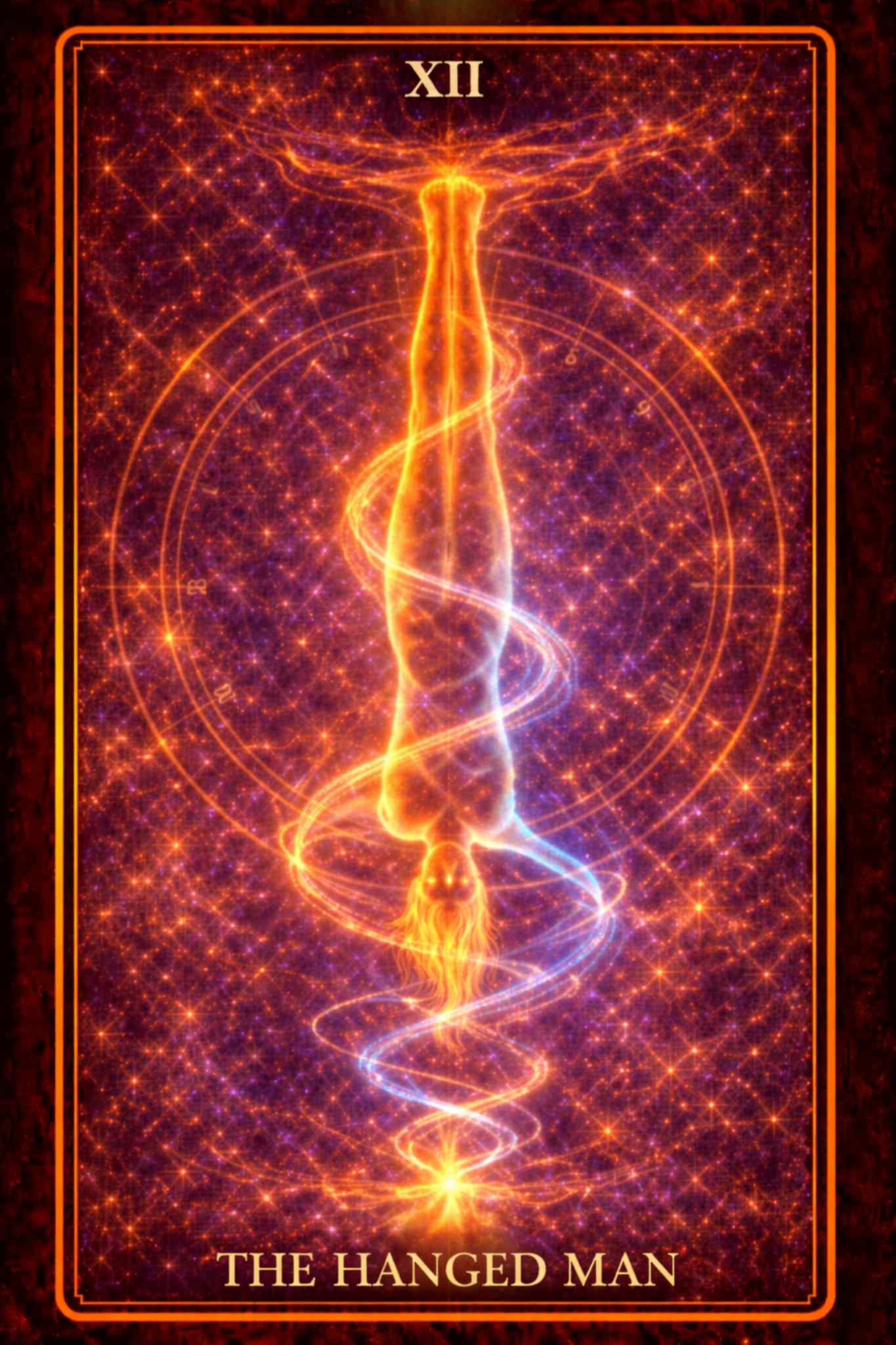
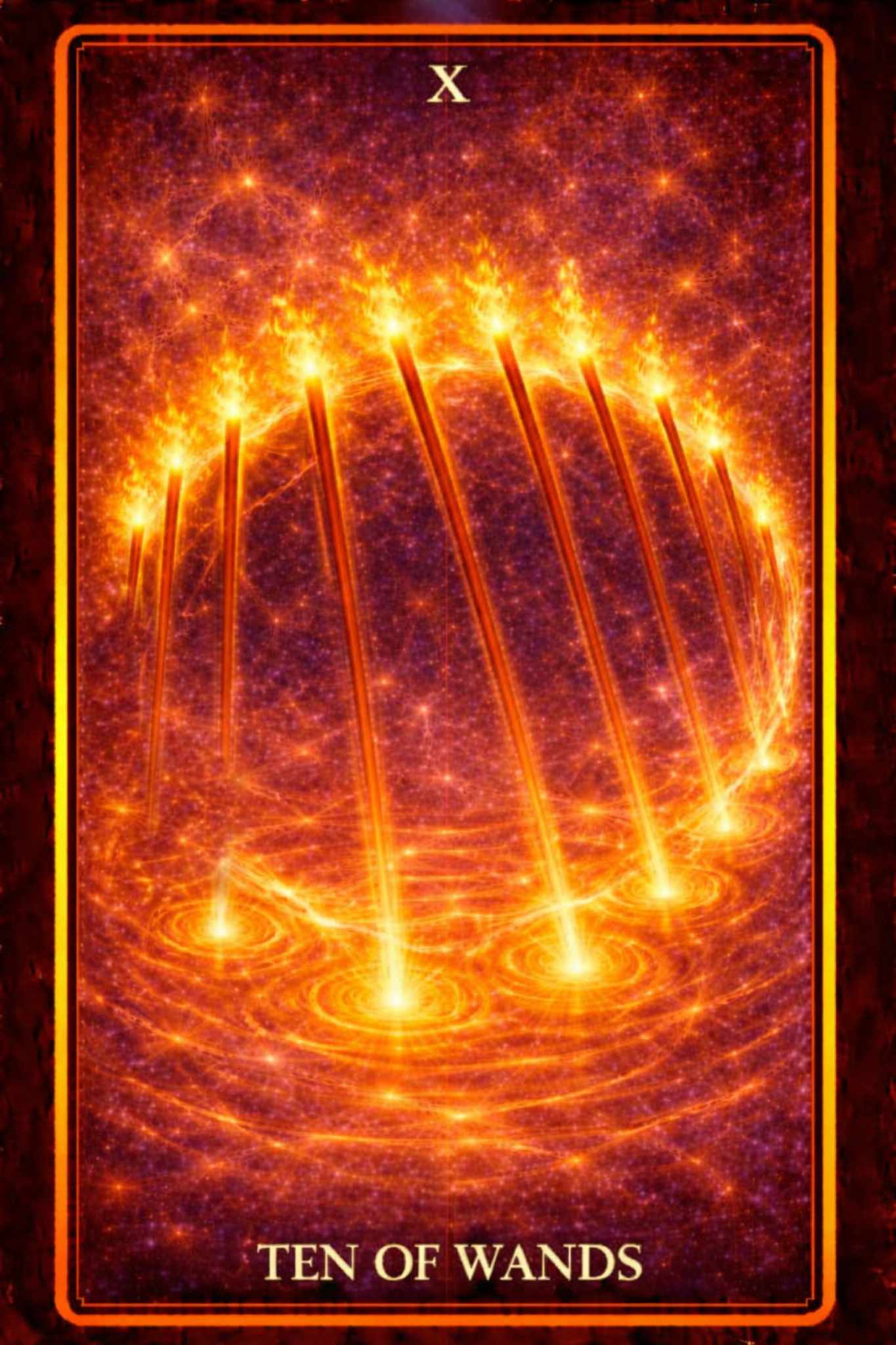
The Hanged Man and Ten of Wands Tarot Combination Meaning
The Hanged Man and Ten of Wands meet where burden has become undeniable, and the deeper issue is no longer just how much is being carried, but why it is still being carried in the same way. The Ten of Wands is the card of accumulated load. It shows pressure that has moved beyond meaningful effort and become heavy, consuming, and difficult to separate from the self. Responsibilities pile up. Emotional or practical demands consolidate. What may once have felt purposeful begins to shape posture, mood, and identity. The Hanged Man enters that overburdened field with a different kind of question. He does not focus only on how to carry more efficiently. He asks whether the current form of carrying is still aligned with truth. He asks what changes when the person stops assuming that continuation is always the most faithful response. Together, these cards often appear when the weight is real, yet the next insight will not come through more force, more self-denial, or one more round of determined overextension.
This makes the pair especially powerful. The Ten of Wands often reflects someone who has already proven responsibility. They have shown up, taken on what needed doing, absorbed more than expected, and kept moving even after lightness disappeared from the process. The Hanged Man honors that seriousness, while also exposing the illusion that burden always gains meaning through endurance. Sometimes it does. Sometimes it becomes a structure of unconscious control, guilt, identity, or fear of what would happen if one stopped carrying what others have come to rely upon. The Hanged Man asks whether the person can bear the more unsettling possibility that some of the weight no longer belongs to them. That can be a spiritually difficult question, because many people would rather keep carrying than confront what the overcarrying has been protecting them from seeing.
When burden becomes a way of life
One of the deepest themes in this combination is the point at which responsibility stops being situational and becomes atmospheric. The Ten of Wands often describes more than a busy week or a demanding phase. It describes a condition in which life itself has started to feel weighted. The person may barely notice how much they are holding because the burden has become the normal tone of their days. It shapes decisions, reactions, and even what they believe they are allowed to want. The Hanged Man interrupts that normalization. He asks whether the person can suspend automatic loyalty to the burden long enough to actually see it.
Need a little more context around this pairing?
A short reading can help you reflect on the tension, direction, or lesson this combination may be pointing toward.
This matters because burden that remains unquestioned often starts to look like virtue. The person may describe themselves as loving, mature, competent, dedicated, necessary, or resilient. Some of that may indeed be true. Yet the Hanged Man asks whether those qualities now hide a more difficult reality: the person may have lost contact with what it would even mean to loosen, reassign, release, or stop. The Ten of Wands does not always represent imposed pressure alone. It can also reflect pressure that has been accepted, accumulated, and reinforced through habits of over-responsibility. The Hanged Man suggests that the real shift begins when one becomes willing to see that carrying is not always the same thing as serving truth.
Responsibility, control, and surrender
The tension between these cards is spiritually significant because the Ten of Wands often carries a hidden control dynamic. A person may think of themselves as responsible, while overcarrying quietly allows them to manage disappointment, contain collapse, protect others from consequence, or avoid facing what would happen if certain structures were allowed to show their weakness. The Hanged Man reveals this layer. He asks whether the burden is still being held partly because surrender would expose realities the person has spent a long time preventing. That may include grief, anger, dependency, or the realization that some dynamics would have to change if they stopped being the silent support beam.
This does not make the person wrong for caring. It shows that burden can become entangled with self-definition. The Hanged Man invites a different kind of responsibility: one rooted in truth rather than compulsion. That may mean continuing to carry some things, though with far more consciousness. It may also mean letting certain weights fall where they have long refused to fall because someone else always stepped in first. The Ten of Wands says the load is real. The Hanged Man says the relationship to the load must now change.
- Weight that can no longer be treated as normal
- Burden asking to be seen before it is carried further
- Responsibility entangled with control or identity
- A pause that reveals what is truly yours to hold
- Surrender as a wiser form of strength than overextension
Love and relationship meaning
In relationship readings, The Hanged Man and Ten of Wands often point toward a bond in which emotional, practical, or psychological burden has become too heavy to ignore honestly. The Ten of Wands may show one person carrying the connection more than the other, taking on disproportionate responsibility for emotional regulation, future planning, conflict repair, or the invisible labor of holding the relationship together. The Hanged Man does not immediately say the bond must end. He says that the current arrangement can no longer be understood only through loyalty, patience, or the willingness to keep trying. Something about the burden must be seen differently now.
This can be especially revealing when one person has built an identity around being the stable one, the patient one, the forgiving one, the one who keeps carrying because someone has to. The Hanged Man asks what would be exposed if they stopped. Would the relationship become more honest? Would certain imbalances become undeniable? Would the other person finally have to face their part? These are painful questions, which is why many people remain inside the Ten of Wands pattern longer than they consciously intend. Carrying can feel easier than witnessing what appears when the carrying ends.
At its healthiest, this combination can begin a profound relational correction. One may realize that love is not being protected by overextension, but distorted by it. The pair can support a pause in which the relationship is no longer evaluated by how much one can endure for it, but by whether the bond can hold truth when old carrying patterns are no longer automatically supplied.
Career, work, and structural overload
In work readings, this is one of the clearest combinations for accumulated professional burden that now requires more than stamina to address wisely. The Ten of Wands may indicate impossible scope, silent overfunctioning, too many roles, managerial absorption of others’ shortcomings, or the normalization of being the one who carries what the system does not distribute fairly. The Hanged Man suggests that the next growth point is perspective. What exactly has been accepted as normal here? What part of this burden is structural, and what part is being self-maintained through identity, fear of being seen as incapable, or the inability to allow the system to reveal its flaws without compensating for them?
This pair often appears for highly responsible people who are deeply practiced at carrying more than should reasonably be theirs. They may even do it beautifully. That is part of the trap. Competence becomes permission for others to offload. The Hanged Man asks whether the person can finally bear seeing that their ability to carry does not automatically make the burden rightful. That insight can be destabilizing, because it often leads to decisions that change dynamics: delegating, refusing, slowing, restructuring, or stepping back in ways that feel unfamiliar and morally uncomfortable. Yet without such shifts, the Ten of Wands tends to become identity rather than circumstance.
Psychological and spiritual meaning
Psychologically, The Hanged Man and Ten of Wands often describe the inner state of someone who has become so accustomed to load that ease, emptiness, or release may now feel disorienting. The Ten of Wands is not only about tasks. It is also about psychic compression. The person is holding things mentally, emotionally, morally, relationally. They may not realize how much of their identity has formed around being burdened until something interrupts the pattern. The Hanged Man is that interruption. He suspends the usual flow and asks the person to look at their burdened self from another angle. What if the pressure you live under is not simply fate, but also a pattern? What if your suffering is partly maintained by how tightly you associate carrying with purpose?
Spiritually, this is a profound pair because it brings sacrifice and surrender into sharp distinction. Many people assume they are surrendering when they are actually sacrificing continuously to preserve structures, identities, or relationships they are afraid to let transform. The Ten of Wands can look holy because it is heavy. The Hanged Man asks whether that heaviness is leading to revelation or repetition. Real surrender may require setting down what sacrifice kept picking up. That can feel less noble at first, yet far more truthful.
Shadow expression and challenge
The shadow side of this combination appears when burden becomes moralized. A person may quietly believe that carrying so much proves their goodness, seriousness, or indispensability. The Ten of Wands then becomes an unconscious altar to self-worth. The Hanged Man challenges this by asking what the burden conceals as well as what it seems to prove. Does it conceal fear of letting others fail? Fear of disappointing? Fear of discovering who you are without being the one who carries the most?
Another shadow expression occurs when The Hanged Man turns into immobilized martyrdom. The person sees the burden, feels its weight, and perhaps even understands its distortion, yet remains suspended inside it without change, turning deep insight into another layer of heaviness rather than a doorway to release. The healthier version of the pair asks for more. It asks the person to let understanding alter the relationship to what is being carried.
Timing and the moment when carrying must change
This pair carries a timing message that is often sobering but necessary. The Ten of Wands suggests that the burden is already advanced. This is far beyond the first sign of strain. Something has accumulated and may now be nearing the stage where continuation in the same form is no longer wise. The Hanged Man suggests that before one more push, one more sacrifice, one more act of carrying, there may need to be a complete pause in interpretation. A person may think the moment calls for finishing the load at all costs. The cards may instead suggest that the deeper necessity is to stop and look at why the load became so total in the first place.
Sometimes this means delay in outward movement while inner recognition catches up. Sometimes it means a literal interruption: a forced stop, an emotional wall, a sudden inability to keep operating in the old way. Even then, the pair is not merely punitive. It is revelatory. It says that carrying has reached the point where it must either be transformed or continue hollowing out the deeper life.
FAQ — The Hanged Man and Ten of Wands
Is this combination about overload?
Very often, yes. It can indicate heavy burden, accumulated responsibility, and the need to pause long enough to see what is truly being carried and why.
What does it mean in relationships?
It often points to one-sided effort, emotional overfunctioning, or the burden of holding too much in the bond, while asking whether the current pattern is preserving love or replacing mutuality.
What does it mean in career readings?
It strongly suggests overwork, structural overload, or being the person who silently carries too much. The cards ask for a new perspective before more effort is added.
Is The Hanged Man telling me to stop everything?
More often, he is asking for a shift in consciousness so that burden is no longer carried automatically, blindly, or as proof of worth.
What is the core lesson here?
The core lesson is that not everything heavy is sacred. Some burdens are meaningful, while others continue mainly because no one has questioned them deeply enough, including the person carrying them.
What this combination is really asking
The Hanged Man and Ten of Wands ask: are you carrying what is truly yours, or carrying what keeps you from confronting what would happen if you stopped? That is the heart of the pair. The weight may be real. The dedication may be real. The care may be real. But the cards ask whether continuing in the same way is still aligned with truth. They want to know whether burden has become identity, whether sacrifice has become habit, and whether responsibility has become so entangled with control, fear, or worth that setting anything down now feels impossible.
The deeper lesson is that release begins in perception before it reaches the outer structure. The Ten of Wands brings heaviness, accumulated pressure, overburden, and the undeniable truth that too much is being held. The Hanged Man brings suspension, surrender, altered perspective, and the wisdom to recognize that force is not always the answer to weight. Together, they create one of the clearest teachings in tarot about the difference between meaningful responsibility and unconscious overcarrying. That distinction can change a life.
Explore the next layer of this reading.
This combination can mean different things depending on context. A short tarot reading can help you reflect on the question behind the cards.
Closing reflection
There are seasons when life becomes so heavy that the person carrying it forgets what life feels like without the load. This pairing appears in such seasons, not to shame the strength it took to keep going, but to ask whether another kind of strength is now needed. Less endurance. More truth. Something quieter and more radical: the willingness to see the burden clearly enough that it no longer defines what devotion means.
The Hanged Man suspends the old compulsion to keep carrying without question. The Ten of Wands makes visible what that compulsion has cost. Between them is a difficult mercy: the possibility that setting something down, or at least seeing it truthfully, may be the most faithful act available now.
More combinations with The Hanged Man
More combinations with Ten of Wands
Continue with The Hanged Man
Explore Related Guides by Topic
If you want to explore this combination through a more specific emotional lens, these tarot guides can help you follow the broader pattern behind the reading.