
Wheel of Fortune + Ten of Wands
Explore how these two tarot cards interact in a reading through symbolic overlap, contrast, and shared narrative. Tarot combinations often reveal meaning that neither card fully expresses on its own.
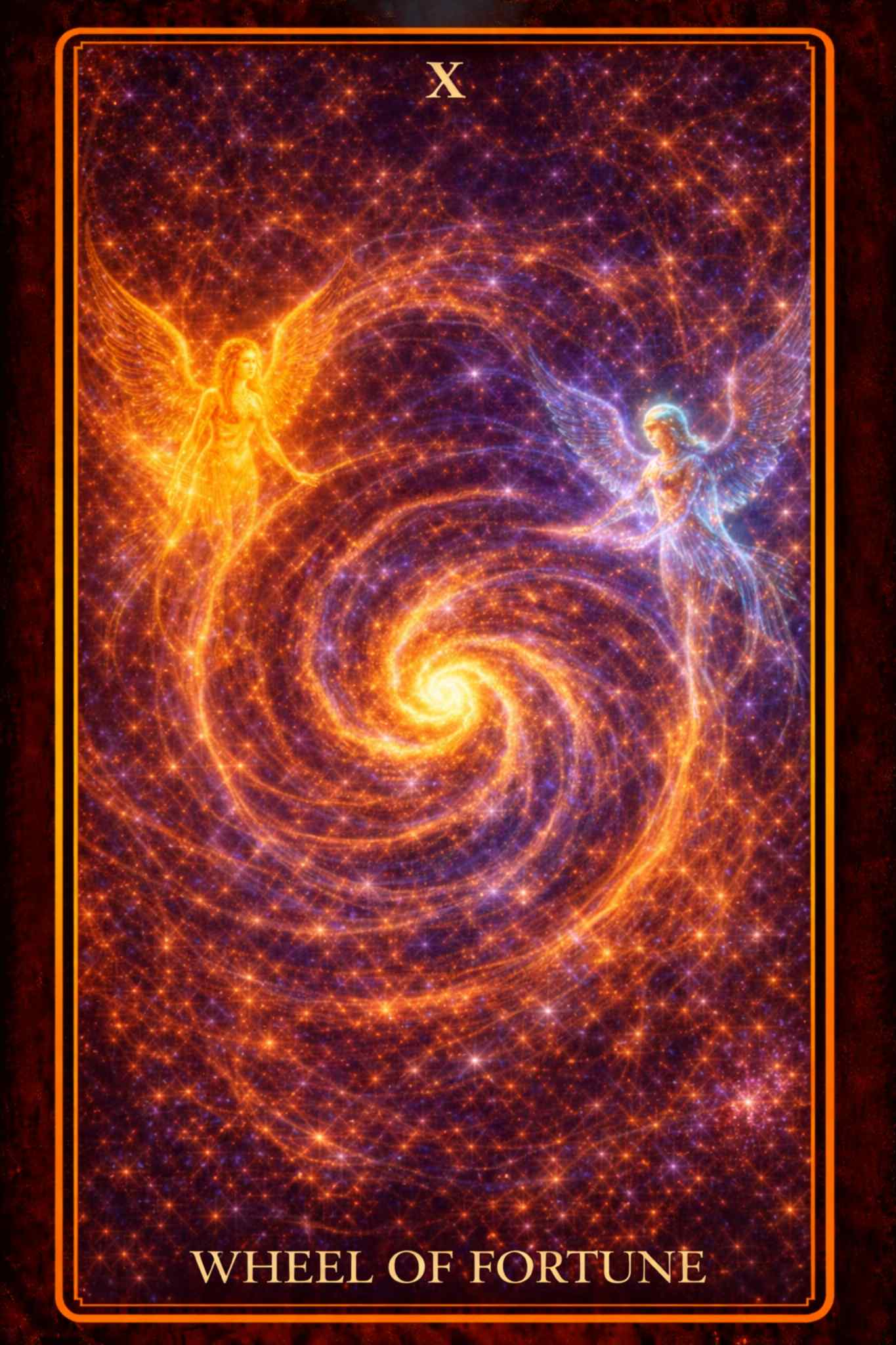
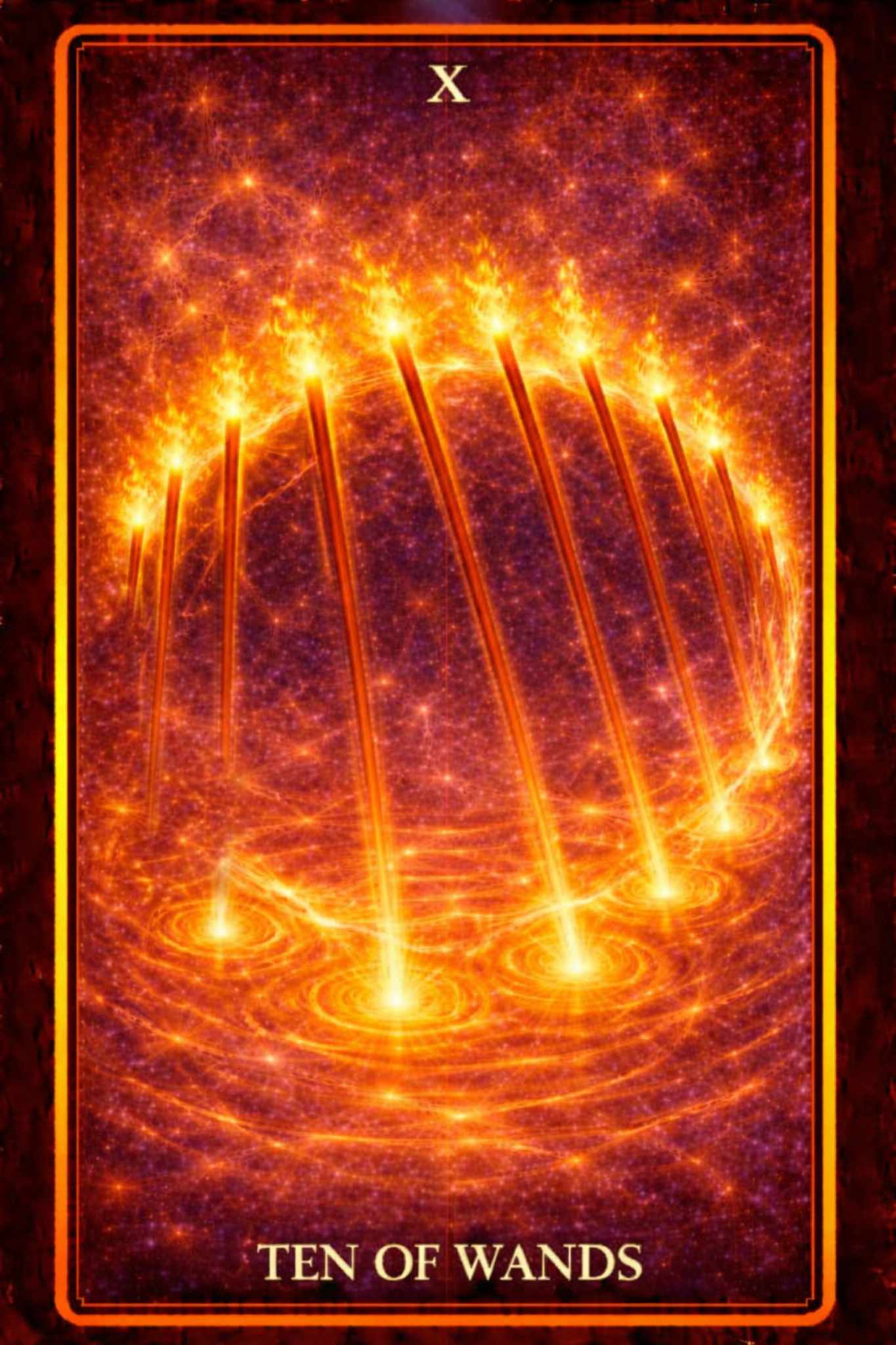
The Wheel of Fortune and Ten of Wands Tarot Combination Meaning
The Wheel of Fortune and Ten of Wands form a combination that speaks about burden in the middle of change, and about what happens when a cycle begins to turn while a person is still carrying more than the next phase can reasonably support. The Wheel of Fortune reflects movement in the deeper structure of life: timing shifts, patterns rotate, and a chapter begins to loosen from its previous form. The Ten of Wands shows accumulated weight — effort, responsibility, overextension — and the quiet pressure that builds when too much has been carried for too long. Together, these cards often indicate that a turning point is not arriving into a clear, open space, but into a life already under strain.
This is what gives the pairing its gravity. The Wheel does not wait for ideal conditions. Life turns when it turns. A person may reach a threshold of change not because everything has been resolved, but because the old way of carrying has reached its limit. The Ten of Wands reveals how much energy is tied up in maintaining what already exists. Outwardly, things may still function. Inwardly, the weight is no longer neutral. It narrows perception, reduces flexibility, and makes every new shift feel like one burden more instead of a true redirection. The question is no longer just what is changing, but what cannot be carried forward in the same way.
When the cycle turns under the weight of too much
There are moments when change feels spacious and welcome, and others when it arrives into a life that is already full. The Wheel of Fortune and Ten of Wands belong to the latter. Something is shifting — a phase ending, a direction changing, a threshold approaching — yet the person meeting it is already overloaded, and movement itself begins to feel heavy. This heaviness is often quiet. The Ten of Wands appears in people who keep going, who fulfill obligations, who hold things together even when the load has exceeded what is sustainable. That makes it harder to recognize how decisive the burden has become. When the Wheel appears here, the reading suggests that the weight can no longer remain background. The cycle is turning, and the current way of carrying may not survive that turn unchanged.
This does not automatically mean collapse. Sometimes it means completion is near, a long effort reaching its final stage. But even then, the cards ask for realism. Not everything being carried belongs in what comes next. Some of it is necessary, some of it is habit, and some of it has simply never been questioned.
Pressure, responsibility, and the limits of endurance
The Ten of Wands shows the point where fire becomes load, where effort compresses into duty and life narrows around what must be maintained. When paired with The Wheel, this becomes more revealing because the environment itself is changing. Responsibilities that once made sense may now need to be re-evaluated. This is rarely comfortable. Responsibility can become identity, and endurance can feel like proof of worth. Many people know how to keep carrying long after it stops being wise. The Ten of Wands does not dismiss this — often the burden was meaningful. But The Wheel introduces a different truth: what belonged to one phase does not always belong to the next.
You may also want to go one step deeper.
Wheel of Fortune + Ten of Wands can open up differently inside a focused personal reading.
A person may want change while trying to preserve the exact structure that created the strain. They may hope for a lighter phase without adjusting what they are holding. The cards suggest that timing alone does not resolve weight. Something has to shift in how the weight is carried — or whether it is carried at all.
Love and relationship meaning
In love readings, this combination often shows a relationship moving through a turning point while carrying accumulated strain. The Wheel indicates change in the dynamic, while the Ten of Wands shows that the connection may already be burdened by emotional labor, expectations, or imbalance. This does not always mean an ending. More often, it signals that the current way of sustaining the relationship is no longer workable. The bond may still matter deeply, but the way it has been held may be exhausting one or both people. There can be loyalty, effort, even care — yet also fatigue.
At its healthiest, this pairing brings recognition: something has to shift if the relationship is to remain alive. In shadow form, people may stay attached to the burden itself, continuing to carry, fix, and endure because they no longer know how to relate without that weight. The question becomes whether the relationship is still lived, or simply maintained.
Career, work, and practical life
In practical life, The Wheel of Fortune and Ten of Wands often appear when external change meets internal overload. A new opportunity or shift may be emerging, but the person is already stretched to their limit, so even positive change can feel like additional pressure rather than relief. This is common in real life. Turning points rarely arrive in perfect conditions. The Wheel suggests that something is moving. The Ten shows that the person may not be able to meet that movement clearly without reducing the load.
This can involve finishing something, delegating, or simply admitting that the current structure is too heavy to continue unchanged. The cards do not reject responsibility — they question its current cost. There is value in devotion, but there is also value in recognizing when devotion has started to work against the life it was meant to support.
Spiritual meaning
Spiritually, this pairing reflects a phase where a heavy cycle is nearing its end, but the weight has not yet been released. The person may sense that something is shifting, yet still feel defined by what they have been carrying. Insight does not immediately lighten experience. Often, the first step is recognizing that the cycle is turning, and only after that comes the more difficult question of what must be set down. The deeper work is not rejecting the burden, but seeing it clearly enough to know whether it still belongs.
The lesson here is simple but not easy: not every burden remains meaningful forever. Some are meaningful because they teach you when it is time to stop carrying them.
Shadow expression and challenge
The shadow appears when a person tries to move forward without releasing anything. They want change, but only if everything remains intact. In that state, the turning feels blocked — not because life is still, but because nothing is allowed to shift internally. Another challenge is identifying with overburden, where exhaustion becomes a measure of worth. The Wheel disrupts this by showing that phases change, and what once proved strength may later become limitation.
There can also be resistance to release itself. Burden is familiar, even when it is heavy. Letting go requires stepping into something less defined. The work is not only practical — it is also psychological.
What this combination is really asking
The Wheel of Fortune and Ten of Wands ask a simple but demanding question: if the cycle is turning, what can no longer be carried in the same way? Something is shifting, but change does not automatically reduce weight. The next phase depends not only on timing, but on what you allow to change with it. Some forms of effort belong to what is ending, not what is beginning.
FAQ
Is The Wheel of Fortune and Ten of Wands a difficult tarot combination?
Often, yes. It usually reflects burden, pressure, or overextension during a period of change, but it can also indicate that a heavy phase is nearing completion or transition.
Does this combination mean burnout?
It can, especially in work or responsibility-based situations, where too much is being carried while circumstances are shifting. The cards suggest the need for adjustment or release.
What does this mean in relationships?
It often indicates a relationship under strain while also going through change, where the bond may still matter but the way it is being carried needs to evolve.
What is the core lesson of this pairing?
The key insight is that change alone does not lighten a burden. If a cycle is turning, something may need to be restructured or released for the next phase to become sustainable.
Explore the next layer of this reading.
This combination can mean different things depending on context. A short tarot reading can help you reflect on the question behind the cards.
Closing reflection
Some turning points do not begin with relief. They begin with the realization that what you have been carrying cannot continue in the same form, even if the shift itself is already underway. The weight may still be present, the responsibilities still real, yet something in the structure of the situation has started to change. And that change does not always ask for more effort — sometimes it asks for a different relationship to what you have been holding.
So the question is not whether you are capable of carrying more, because you already have. The question is whether everything you are carrying still belongs to where you are going next, or whether part of the next phase depends on your willingness to leave something behind that once made sense, but no longer needs to come with you.
More combinations with Wheel of Fortune
More combinations with Ten of Wands
Continue with Wheel of Fortune
Explore Related Guides by Topic
If you want to explore this combination through a more specific emotional lens, these tarot guides can help you follow the broader pattern behind the reading.