
The Magician + Ten of Wands
Explore how these two tarot cards interact in a reading through symbolic overlap, contrast, and shared narrative. Tarot combinations often reveal meaning that neither card fully expresses on its own.
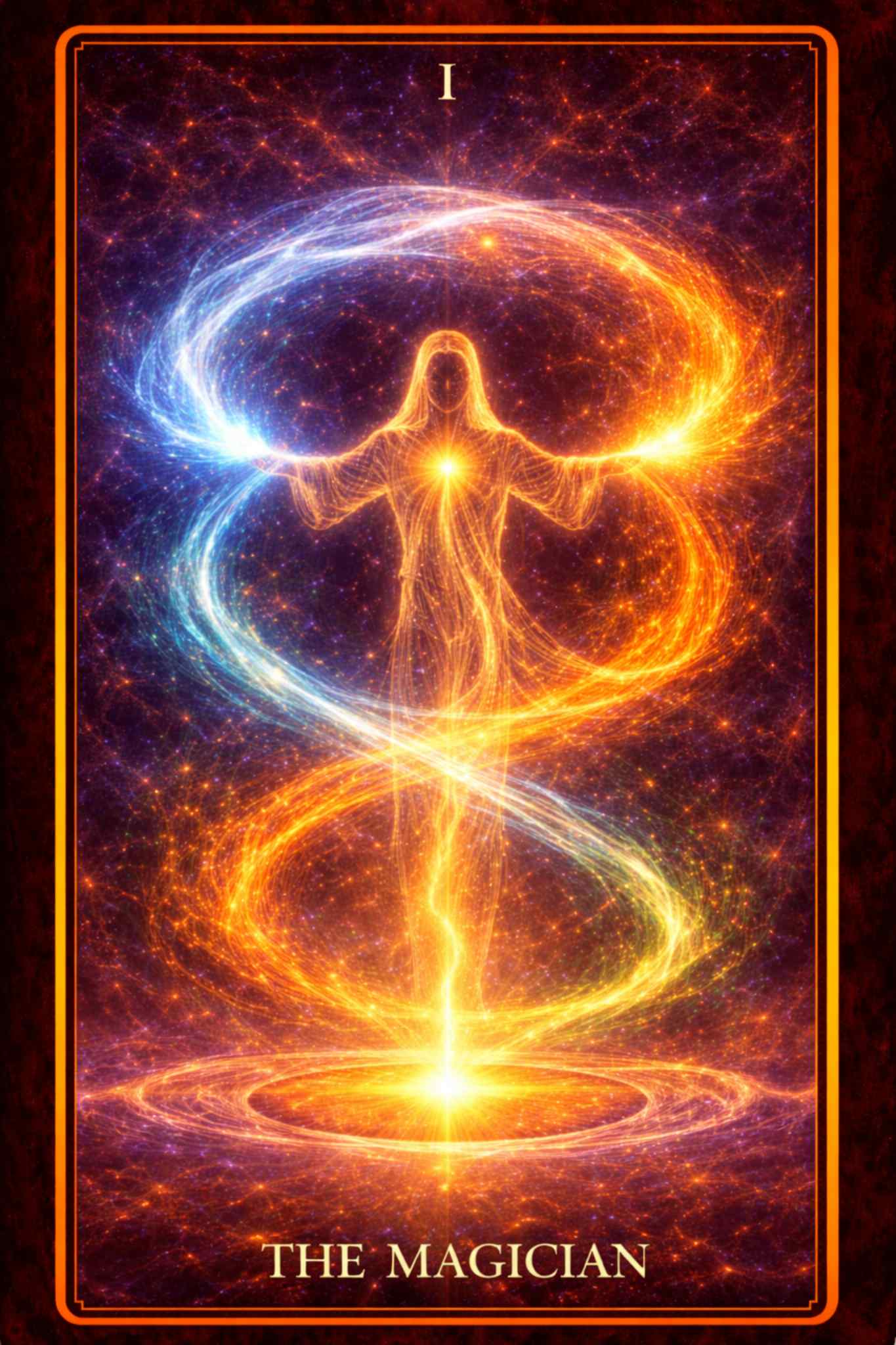
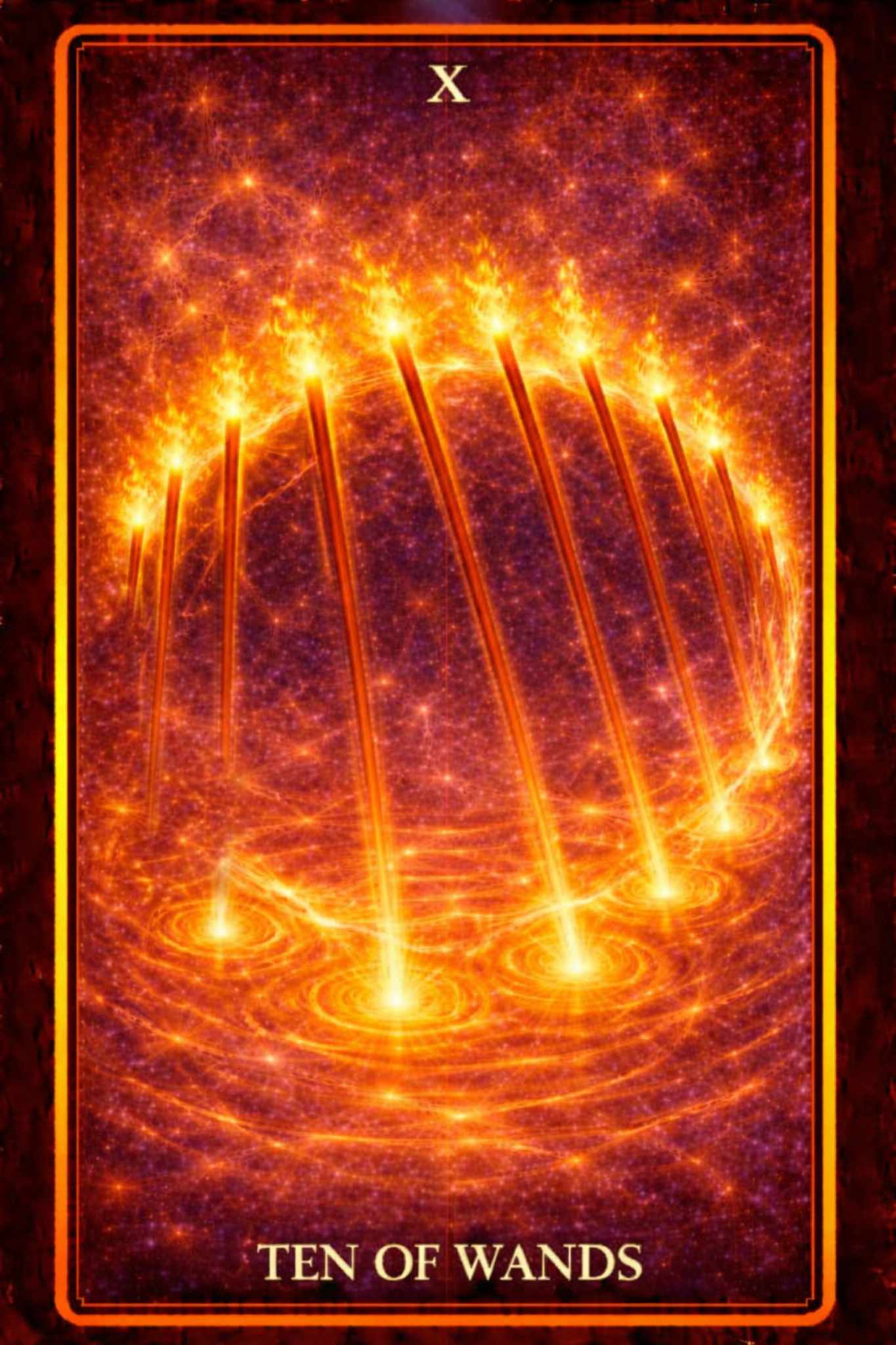
The Magician and Ten of Wands Tarot Combination Meaning
There are moments when what you have created begins to demand something back from you. Not because it has gone wrong, but because it has grown. The Magician with Ten of Wands describes a phase where intention has not disappeared, but has accumulated into responsibility. What you have shaped is still active, still moving, yet it now carries weight that cannot be ignored.
The Magician represents conscious action, direction, and the ability to shape outcomes through engagement. The Ten of Wands introduces pressure, burden, and the sense that effort has reached a point where continuation is no longer light or flexible. Together, they describe a situation where direction continues, but not without cost. What once felt like possibility now includes maintenance, obligation, and the need to carry what has already been built.
This does not necessarily indicate failure. In many cases, it reflects something that has worked long enough to become substantial. The challenge is not whether it should exist, but how it is now being carried.
When creation becomes something you must carry
The shift from The Magician to the Ten of Wands marks a clear transition from shaping to sustaining. What was once being formed through intention now exists in a way that requires ongoing effort simply to remain stable. The focus moves away from starting or expanding, and toward managing what has already taken shape.
This can feel heavier than expected. Not because the direction is wrong, but because growth itself has consequences. Each layer that was added now exists as something that must be supported. The experience changes from possibility to responsibility, from choice to structure.
Effort versus overload
Not all pressure is a problem. Some forms of effort are necessary to bring something into completion or to stabilize what has already been created. The difficulty appears when effort stops being effective and begins to turn into strain. The Ten of Wands often marks that threshold.
The Magician can still act, organize, and adapt. But if the structure itself has become too heavy, action alone cannot resolve it. This is where awareness becomes critical. Are you continuing because the situation still requires your involvement, or because you have become used to carrying everything yourself?
One leads to completion. The other extends the burden without changing its nature.
Where responsibility starts to reshape behavior
There is a point where responsibility itself begins to change how you act within the situation. Decisions become more cautious. Movement becomes more deliberate. The presence of weight influences not only what you do, but how you do it.
Want to explore this combination in a more personal way?
If this pairing feels important right now, a simple tarot spread can help you reflect on it with more context.
This is not necessarily negative. In some cases, it brings maturity and precision. But it can also reduce flexibility if everything starts to feel like it must be held together at all costs. The Magician remains important here because it reintroduces the possibility of conscious adjustment, even within a structure that feels heavy.
Relationships and emotional weight
In relationships, this combination often reflects a connection that still exists, but carries accumulated expectation, effort, or tension that changes how it feels. There may still be care and engagement, yet the interaction becomes less effortless and more structured around what needs to be maintained.
This can create a sense of responsibility that is not always shared equally. One person may feel more responsible for stability, while the other experiences the connection differently. The result is not necessarily conflict, but a shift in how the relationship is carried.
The Magician suggests that the connection can still be shaped through conscious engagement. The Ten of Wands indicates that something within the structure may need to change if the connection is to remain alive rather than simply maintained.
Work, pressure, and accumulated demand
In practical situations, this pairing often appears when responsibilities have expanded beyond what initially felt manageable. What once seemed like opportunity now includes obligation. Tasks multiply, expectations increase, and the situation begins to rely on continued effort just to remain stable.
The Magician provides the ability to organize, prioritize, and keep functioning within this environment. The Ten of Wands reflects the reality that there is now more to carry than before. The question is no longer only how to move forward, but how to do so without becoming constrained by the weight itself.
When responsibility can be shared, but isn’t
There are situations within this combination where the weight is not only the result of what exists, but of how it is being carried. Not everything that feels heavy must be carried alone, yet the habit of maintaining control can make it seem as though it must be. The Ten of Wands often reflects not only accumulated responsibility, but concentrated responsibility, where too much has been gathered into a single point of effort.
The Magician introduces the possibility of redistribution. Not as a loss of influence, but as a different way of applying it. When responsibility is shared, delegated, or allowed to move through a broader structure, the situation can remain active without requiring the same level of personal strain. This does not remove commitment. It changes how that commitment is expressed.
The difficulty is that letting go of part of the load can feel riskier than continuing to carry it, especially when the current structure has been built through your own effort. Yet without some form of adjustment, the weight tends to remain constant or increase. Recognizing where responsibility can shift without losing direction is often what allows this phase to become sustainable rather than exhausting.
When control becomes part of the burden
Another dynamic appears when the desire to maintain control begins to contribute to the strain. The Magician is used to directing outcomes, to keeping things aligned through active involvement. The Ten of Wands introduces a situation where that level of involvement becomes demanding in itself.
Not everything needs to be held in the same way it was at the beginning. Some elements may no longer require direct control. Others may function better when they are allowed to move without constant management. Recognizing this difference is what allows pressure to decrease without losing direction.
When continuation no longer improves the outcome
There are moments when continuing in the same way does not actually bring the situation closer to resolution. It only increases the weight. This is one of the quieter signals within this pairing. More effort does not always mean better results.
The Ten of Wands often appears when something has reached the limit of what its current structure can support. The Magician offers the possibility of changing that structure, rather than reinforcing it. This can involve releasing certain responsibilities, redefining priorities, or allowing parts of the situation to function independently.
This is not a loss of control. It is a shift in how control is applied.
What this combination is really asking
The Magician and Ten of Wands together ask a grounded question: what are you carrying because it is still necessary, and what are you carrying simply because you have not yet chosen to set it down?
This question is not about immediate release, but about awareness. It asks whether the current way of continuing still reflects the direction you intended to create.
Explore the next layer of this reading.
This combination can mean different things depending on context. A short tarot reading can help you reflect on the question behind the cards.
Closing reflection
The Magician and Ten of Wands describe a phase where creation has become responsibility, and where direction continues inside a structure that now has weight. What you have built still matters, but the way you carry it determines what it becomes.
When effort remains aligned with what is actually necessary, the situation stabilizes. When everything is carried equally, regardless of relevance, strain increases without adding value. This is where conscious engagement matters most, not in creating something new, but in deciding what is worth continuing to hold.
More combinations with The Magician
More combinations with Ten of Wands
Continue with The Magician
Explore Related Guides by Topic
If you want to explore this combination through a more specific emotional lens, these tarot guides can help you follow the broader pattern behind the reading.