
The Hanged Man + Four of Cups
Explore how these two tarot cards interact in a reading through symbolic overlap, contrast, and shared narrative. Tarot combinations often reveal meaning that neither card fully expresses on its own.
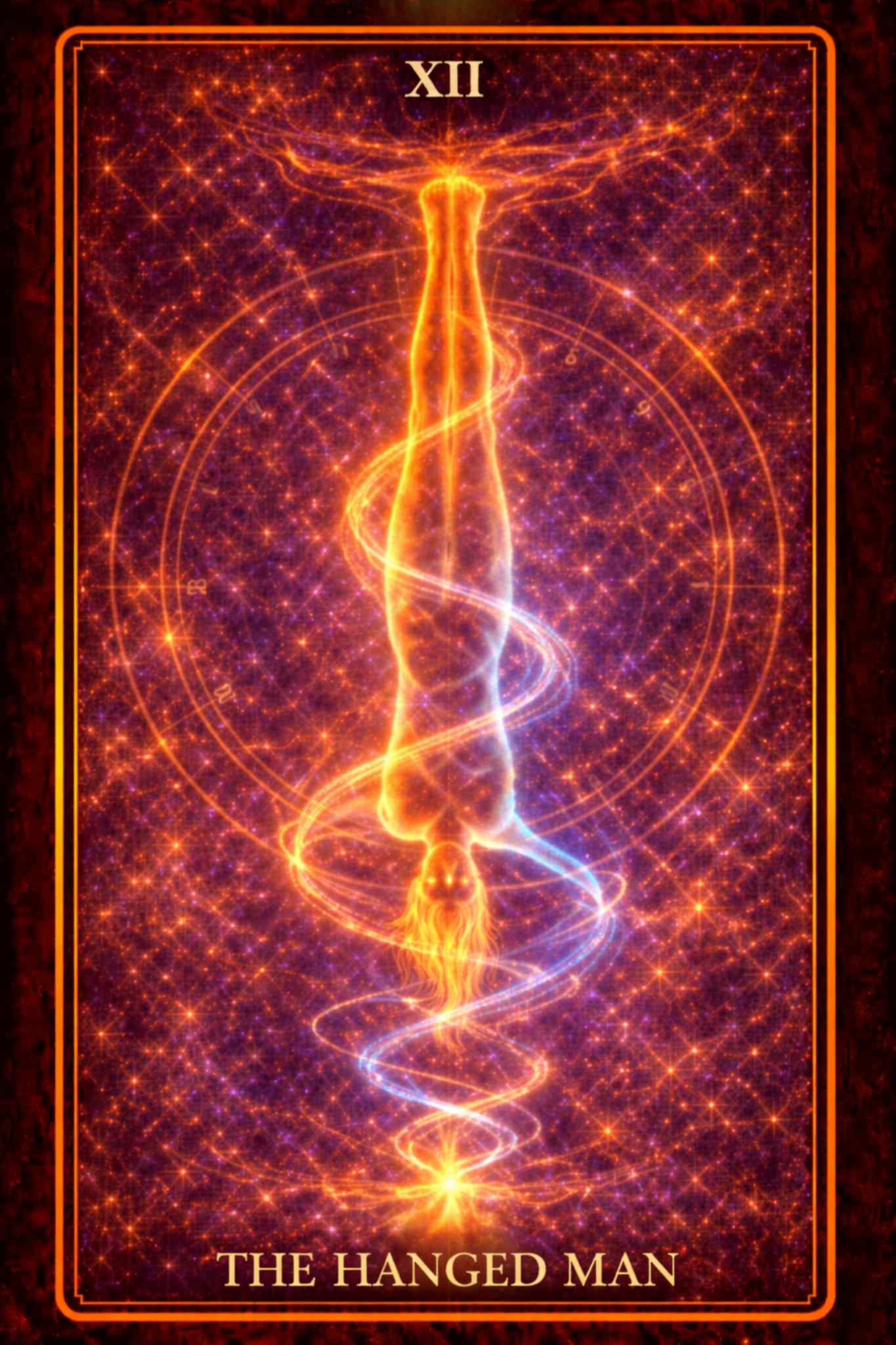
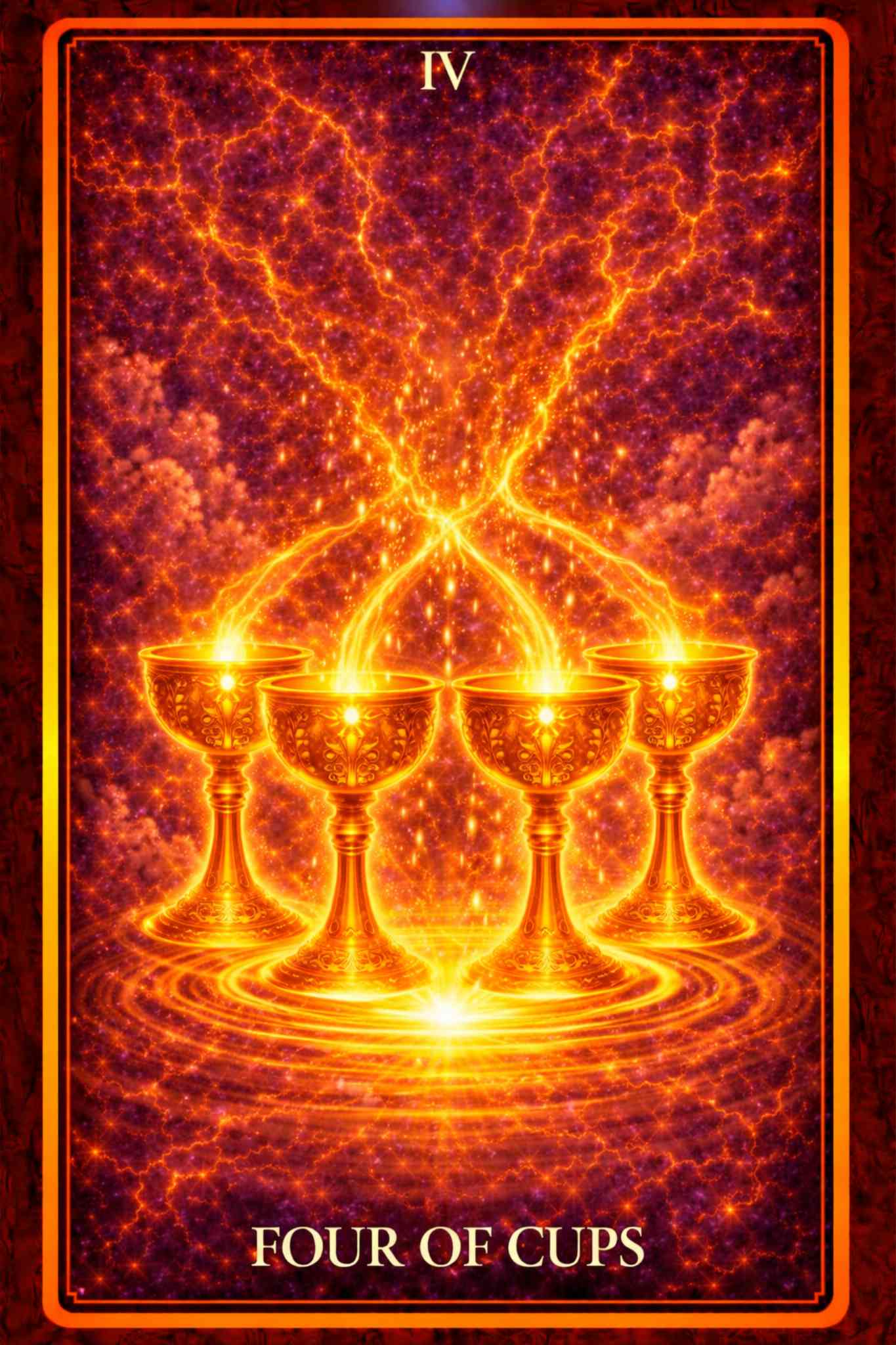
The Hanged Man and Four of Cups tarot combination meaning
The Hanged Man and Four of Cups is a pairing about emotional meaning that has gone quiet, yet has not disappeared. The Four of Cups often shows a heart that has become selective, tired, inwardly distant, or strangely unmoved by what once would have felt easier to receive. The Hanged Man enters that field and changes the emphasis from simple withdrawal to suspended understanding, as if the emotional pause itself is asking to be read more carefully. Together, these cards describe a state in which the heart is still active, yet its language has become slower, subtler, and less responsive to familiar forms of invitation. This is why the combination can feel so layered. It is rarely about dramatic rejection alone. More often, it reflects a threshold where emotional appetite is changing, and the deeper task is to understand what the soul is no longer willing to consume in the same way.
There is something refined in this pairing, even when it feels heavy. The Four of Cups can look like disinterest on the surface, yet beneath that mood there is often a serious inner evaluation taking place. The Hanged Man gives that evaluation spiritual depth, asking whether the emotional flatness is really emptiness, or whether it is a sign that an old frame has stopped carrying life. Instead of treating the pause as a flaw to fix quickly, this combination asks what kind of truth becomes visible when enthusiasm falls away and instinctive participation slows down. Many readings show movement, desire, or decision. This one often shows discernment happening in silence. The person may not yet have the new answer, but the old answer no longer fits cleanly inside the heart.
That is why this pair can feel more mature than it first appears. A person may be standing in front of emotional options, relational possibilities, or familiar sources of comfort, and yet something in them remains still. The usual reaction might be to call that apathy, stagnation, or ingratitude. The Hanged Man complicates that reading in an important way. It suggests that what looks passive may actually be a restructuring of value, where the heart is becoming less available to surfaces and more sensitive to deeper alignment. The Four of Cups then stops being merely a card of disengagement. It becomes a card of emotional filtration, where the soul is no longer willing to say yes simply because something is present.
When emotional appetite changes
One of the clearest themes in this combination is the shift from reaction to discernment. The Four of Cups often appears when something is being offered, yet the person cannot fully meet it with openness. In simpler readings, this may be explained as boredom, emotional fatigue, or inward distraction. With The Hanged Man, the picture becomes more revealing. The emotional hesitation may be connected to a deeper change in perception, where the person is no longer trying to feel more, but trying to understand why certain forms of emotional engagement have started to lose their power. This makes the pairing less about immediate response and more about inner selection. The heart is not necessarily closed. It may be recalibrating.
That recalibration can feel disorienting because it rarely announces itself with certainty. A person may sense that something is off, yet struggle to explain whether the issue lies in the offer, in their own emotional state, or in a way of seeing that has quietly outlived its usefulness. The Hanged Man invites them to remain with that uncertainty long enough for a different angle to emerge. Instead of reaching for quick motivation or forcing emotional participation, the wiser movement is often to observe what the pause is revealing. What kinds of connections feel thin now? What kinds of desires have become less convincing? What emotional habits continue by momentum even though their real nourishment has faded? The Four of Cups brings the mood. The Hanged Man brings the meaning.
In this sense, the pairing can resonate with inner release, where emotional change begins long before the outer form has fully caught up. Both combinations describe an in-between state where the old landscape is losing authority, yet the new one is still taking shape. Four of Cups, however, is more intimate and more emotionally textured. It stays close to the felt experience of quiet dissatisfaction, selective receptivity, and the sense that the heart is withdrawing from what no longer reaches it deeply. The Hanged Man helps that withdrawal become conscious rather than merely habitual. It turns emotional dullness into a question with depth.
Love and relationship meaning
In relationship readings, The Hanged Man and Four of Cups often describes a connection that cannot be read accurately through speed. One or both people may appear hesitant, inwardly removed, or hard to reach in the usual ways. Yet the deeper issue is often less about the absence of feeling and more about the difficulty of receiving, naming, or trusting what is present. The Four of Cups can show emotional reserve, muted receptivity, or a sense that the available emotional language no longer fits the truth of the situation. The Hanged Man asks whether the relationship is being viewed from an angle that has become too narrow. Sometimes the pause exists because the heart is refusing to keep participating through an outdated emotional pattern.
This can be especially important when someone interprets slowness as simple lack of care. The Four of Cups can certainly describe retreat, yet it can also describe emotional complexity that has not yet found its right expression. The Hanged Man adds patience to that complexity, making room for a more nuanced reading. Is the distance a shield against disappointment, or a signal that something deeper is trying to reorganize itself? Is the person disengaged from the relationship, or from the version of the relationship they can no longer honestly inhabit? These distinctions matter. The pairing asks for enough stillness to tell the difference before conclusions become too hard or too premature.
At times, this combination shows a relationship caught between emotional availability and emotional truth. There may be affection, yet the form in which that affection has been exchanged no longer feels satisfying. There may be interest, yet the heart resists easy progress because it senses that a deeper adjustment is needed. This is why the cards can feel frustrating and wise at once. They do not flatter emotional avoidance, but they also refuse simplistic interpretations of it. The heart may be withholding itself because it is tired, or because it is finally becoming more honest about what kind of connection it can truly receive. The Hanged Man supports that honesty by slowing the urge to define the relationship before its deeper structure becomes clear.
What this pause may be asking for
The emotional task here is rarely to push harder. More often, it is to listen more truthfully. The Four of Cups suggests that something in the heart has already stopped responding automatically, and The Hanged Man asks why. The answer may have little to do with laziness, disinterest, or lack of appreciation. It may have everything to do with spiritual and emotional saturation, where the person has reached a point that can no longer be crossed through repetition. What used to work no longer works. What used to feel enough no longer feels alive. Instead of forcing gratitude, affection, or clarity, the pair asks for honest witness.
This is where the combination becomes deeply useful. Emotional numbness is often treated as something embarrassing, something to fix quickly so life can resume its normal pace. These cards take a different view. They suggest that emotional flatness can be informative when approached with maturity. It may reveal that the person is exhausted by interpretive overwork, by relational ambiguity, by emotional offerings that never quite touch the deeper hunger, or by patterns of connection that ask for presence without ever creating real depth. The Hanged Man does not promise instant relief. It offers a more meaningful form of pause, where the heart is allowed to stop performing availability before it truly feels it.
Key shifts this pairing invites
- Pause before naming the emotional distance too quickly.
- Watch what the heart stops choosing.
- Let reluctance reveal its deeper reason.
- Notice whether the offer truly nourishes.
- Allow new perspective before new action.
These shifts matter because they change the way the entire reading is held. Instead of treating the pause as a problem alone, the person begins to ask what the pause is refining. The Four of Cups may look withdrawn, yet withdrawal itself can become meaningful when examined with honesty. The Hanged Man slows the reflex to make the emotional stillness either dramatic or meaningless. It suggests that the person is standing in a threshold state where receptivity is being reeducated. In that state, even reluctance has intelligence. The heart may be doing less because it has become less willing to invest itself in what does not carry truth.
You may also want to go one step deeper.
The Hanged Man + Four of Cups can open up differently inside a focused personal reading.
Intentions, receptivity, and inner consent
When the reading turns toward motivation and emotional direction, the issue often becomes one of inner consent. A person may be present in theory, yet inwardly unable to move toward something with wholehearted intention. This is one reason the pairing can be illuminated by suspended motives, where action is delayed because perspective has not yet stabilized into a clear inner yes. The Hanged Man does not act from pressure. It acts from altered vision, and until that shift takes hold, intention may remain suspended. Four of Cups adds the emotional texture of reluctance, indifference, or selective withdrawal. Together, they show that the lack of movement is not random. It has meaning in the structure of desire itself.
This matters because people often assume intention should be visible through quick responsiveness. These cards suggest a very different rhythm. A person may be trying to determine whether their reluctance is a warning, a tired habit, or the first sign of deeper truth. They may need distance before they can tell whether their own heart is resting, resisting, or quietly refusing what no longer feels right. That process can be slow, yet it is rarely empty. The Hanged Man supports the dignity of inner delay. The Four of Cups reminds us that genuine emotional consent cannot be manufactured simply because a situation seems externally reasonable.
There is also an important spiritual dimension to this question of consent. Sometimes the soul stops leaning toward what the personality still thinks it should want. That gap can feel confusing, especially in love or relational settings where visible progress is often treated as the main proof of sincerity. The pairing suggests something subtler. A person may be sincere and still paused. They may care and still feel unable to receive or respond in the old way. What matters is whether the stillness is being used to deepen truth, rather than to prolong emotional vagueness without purpose.
The difference between emptiness and refinement
One of the most useful distinctions in this combination is the difference between depletion and refinement. The Four of Cups can feel emotionally empty, yet emptiness is not always the most accurate word. Sometimes what is happening is selection. The person is less available to noise, less impressed by repetition, less emotionally responsive to what once felt acceptable but now feels thin. The Hanged Man deepens that process by encouraging a view from outside the usual emotional frame. Instead of measuring the situation by energy alone, the person begins to sense its alignment. Something may feel flat because it no longer belongs to the deeper truth of the heart.
This is why the pairing can connect powerfully with quiet endurance, where emotional restraint and inner steadiness matter more than visible excitement. Both combinations show that emotional life is not always healthiest when it is loud, fast, or immediately expressive. Sometimes wisdom looks like lowered appetite, careful pacing, and the refusal to overstate feeling that has not yet become clear. The Hanged Man and Four of Cups takes that principle even further. It shows how stillness can serve as a chamber of refinement, where the heart stops over-consuming experience and begins to discriminate more honestly.
This can feel lonely if the person expects emotional truth to come with instant brightness. Yet the gift of the pairing is precisely that it does not reduce clarity to intensity. It allows the heart to become wiser without demanding that wisdom appear cheerful from the outside. In some periods, emotional maturity looks like withdrawal from what is merely available, so that deeper receptivity can eventually return to what is meaningful. The Four of Cups holds the low tide. The Hanged Man reveals that low tide may be part of a larger rearrangement rather than a permanent loss.
Spiritual meaning and inner realignment
Spiritually, this combination can speak of a sacred pause in desire itself. The Four of Cups brings the feeling that ordinary satisfactions have stopped reaching the soul with the same force. The Hanged Man blesses that condition with depth, turning what might otherwise be labeled boredom into a serious inner threshold. The person may be learning that more stimulation is not the answer, that more options are not the answer, and that more effort applied from the same angle will only prolong the same inner fog. Instead, they are being invited into a more contemplative relationship with emotional life. The question is no longer “How do I feel more quickly?” but “What truth is emerging now that my old appetite has become quiet?”
This spiritual dimension can be enriched by spiritual detachment, especially where the emotional pause begins to reveal a shift in values rather than simple dissatisfaction. Four of Cups, in this light, is not only a card of disinterest. It can be a card of inner redirection, where the self becomes less available to what is merely emotionally familiar and more sensitive to what carries real depth. The Hanged Man helps hold that transition with patience. It reminds the reader that the in-between space has meaning even when it does not yet offer a finished answer. Some truths arrive only after the heart has stopped reaching automatically for what used to be enough.
Explore the next layer of this reading.
This combination can mean different things depending on context. A short tarot reading can help you reflect on the question behind the cards.
Where stillness becomes honest
The Hanged Man and Four of Cups ultimately describes an emotional pause that asks to be understood rather than escaped. The surface mood may be reluctance, flatness, reserve, or dissatisfaction, yet the deeper movement often concerns realignment. Something in the heart is slowing down because it no longer wants to participate through old reflexes. Something in the soul is becoming more selective, more perceptive, and less willing to call emotional noise by the name of nourishment. This is why the combination deserves patience. It is not merely showing what has stalled. It is showing what the heart may be outgrowing.
When approached with maturity, these cards can become profoundly clarifying. They reveal that emotional distance is not always emptiness, and that lowered appetite is not always failure. Sometimes stillness is the exact condition that allows truth to separate itself from habit. Sometimes the heart needs to stop reaching before it can recognize what it genuinely wants to receive. The Hanged Man and Four of Cups teaches that kind of wisdom. It slows the field so that emotional honesty has room to arrive, and in that slower space, the next real movement begins to prepare itself quietly from within.
More combinations with The Hanged Man
More combinations with Four of Cups
Continue with The Hanged Man
Explore Related Guides by Topic
If you want to explore this combination through a more specific emotional lens, these tarot guides can help you follow the broader pattern behind the reading.