
The Fool + Ten of Wands
Explore how these two tarot cards interact in a reading through symbolic overlap, contrast, and shared narrative. Tarot combinations often reveal meaning that neither card fully expresses on its own.
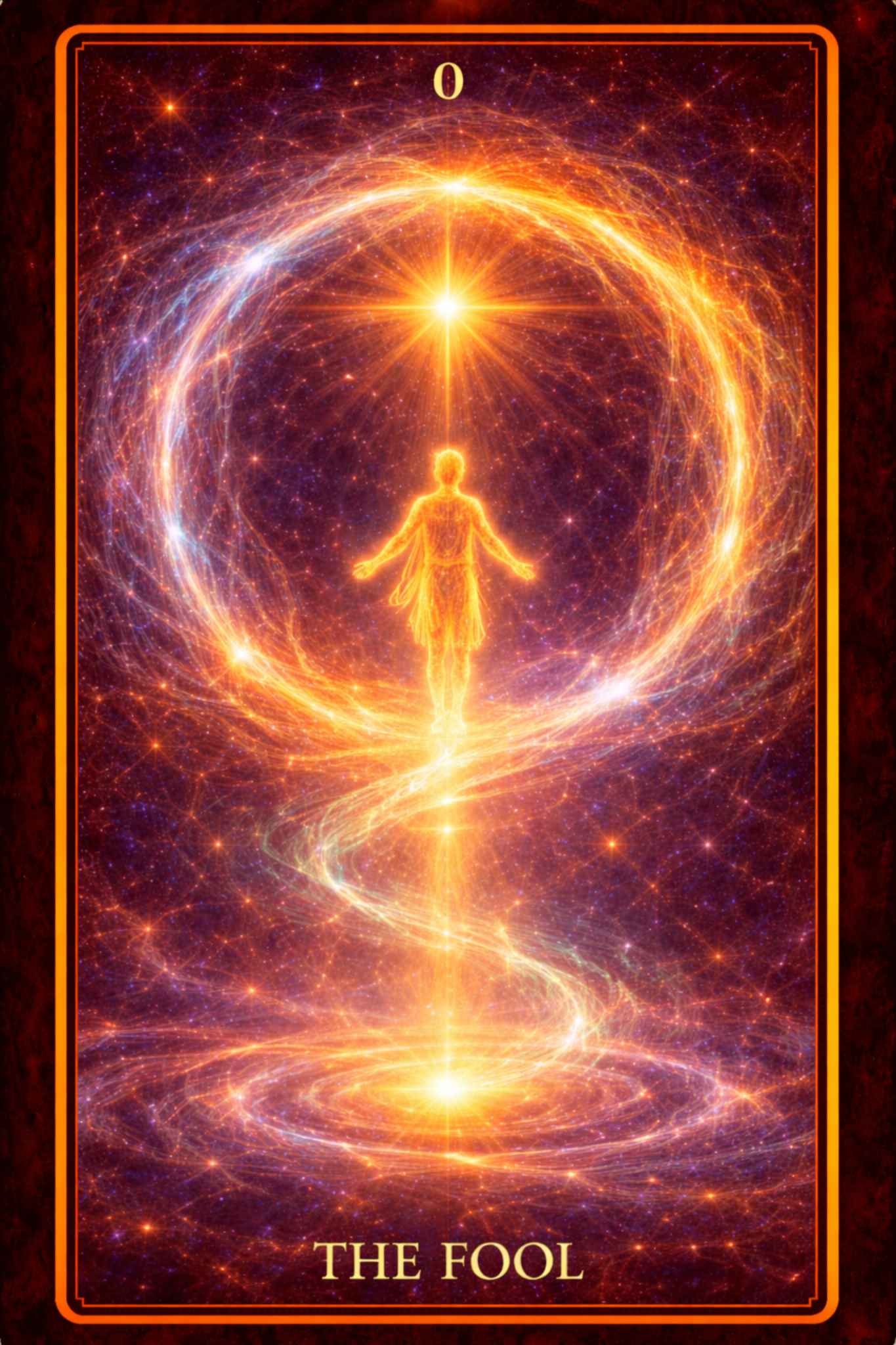
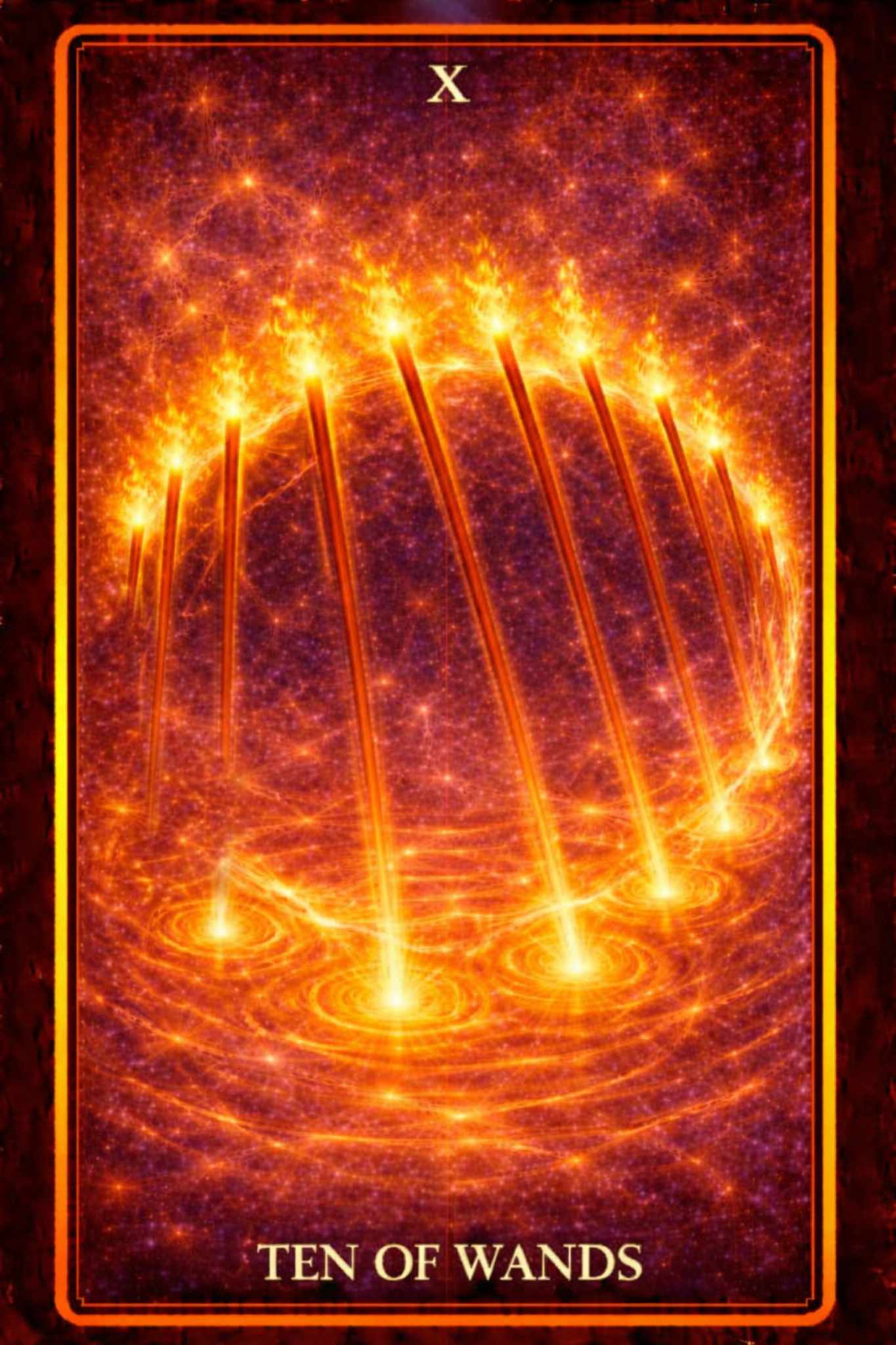
The Fool and Ten of Wands Tarot Combination Meaning
Not every beginning stays light. Some start with openness, curiosity, and a sense that movement itself is enough. Then, almost without noticing exactly when it happened, that same movement begins to carry weight. The Fool with Ten of Wands often appears at that turning point — when what once felt simple now asks more of you than you expected to give.
The shift is not always dramatic. There is no clear moment where everything changes. Instead, the experience slowly becomes heavier. Responsibilities accumulate. Expectations form. What started as a free step forward begins to feel like something you now have to maintain, manage, or carry.
This does not automatically mean something has gone wrong. It means the nature of the situation has changed. The Fool represents the beginning — open, undefined, and not yet shaped by obligation. Ten of Wands represents what happens when that same beginning develops into something that requires sustained effort. Together, they describe the distance between starting something and being responsible for it.
When openness turns into responsibility
In real-life situations, this pairing often shows up when something you stepped into freely begins to demand structure. A project that felt exciting becomes something you have to keep up with. A connection that felt easy now requires consistency, communication, and emotional presence. A direction that once felt like possibility becomes something you are actively maintaining.
This transition is easy to overlook at first. The early stages still carry momentum, and that momentum can hide how much is gradually being added on top of it. But over time, the difference becomes harder to ignore. What you are carrying is no longer just the original idea or feeling. It is everything that has grown around it.
The question this combination raises is not whether the beginning was right. It is whether what it has become is still aligned with you in its current form.
The weight of continuation
Ten of Wands is not about failure. It is about accumulation. It shows what happens when something continues without being adjusted, simplified, or reconsidered. The weight does not come from a single decision, but from everything that has been added along the way.
You may also want to go one step deeper.
The Fool + Ten of Wands can open up differently inside a focused personal reading.
In combination with The Fool, this creates a very specific kind of tension. The origin of the situation is still present — the openness, the willingness, the sense of possibility. But the current experience may feel far removed from that original state. What you are dealing with now is not just the beginning. It is the result of everything that followed it.
This is where many people start to question themselves. Was the initial step a mistake? Did something go wrong along the way? But those questions are not always helpful. The more relevant question is whether the current structure reflects conscious choice, or whether it has formed automatically without being examined.
Where pressure replaces clarity
One of the more challenging aspects of this pairing is that pressure can begin to replace clarity. When something becomes heavy, the focus often shifts to managing the weight rather than understanding the situation itself. You keep going because stopping feels complicated. You continue because there are now consequences attached to stepping back.
But pressure does not always mean necessity. Sometimes it simply reflects a buildup that has not been adjusted over time. The Fool reminds you that the beginning did not come with these conditions. The Ten of Wands shows that those conditions developed later.
That distinction matters, because it means the situation is not fixed. What has been built can also be restructured. What has accumulated can be reconsidered. But that only becomes possible when you stop treating the weight as inevitable.
Relationships and emotional load
In relationships, this combination often reflects a dynamic where something that started naturally has become more demanding than expected. There may be care, connection, or genuine involvement, but there is also effort — sometimes unevenly distributed, sometimes unspoken, sometimes simply felt as a constant background pressure.
This does not automatically mean the connection is unhealthy. It means the dynamic has reached a stage where it needs awareness. Are both people contributing to the structure, or is one person carrying more than the other? Is the connection still supported by mutual presence, or is it being maintained through effort alone?
The Fool still points to the origin — the reason the connection began at all. Ten of Wands asks whether that origin is still visible beneath everything that has been added since. If it is, the relationship can be adjusted and brought back into balance. If it is not, the weight itself becomes the defining experience.
Work, direction, and overextension
In practical life, The Fool with Ten of Wands often appears when a new direction turns into overextension. What began as an opportunity becomes a workload. What felt like freedom becomes something structured around obligation. The initial movement is still there, but it is no longer the dominant experience.
This is especially common in creative or self-directed paths. You start because something feels meaningful or alive. Over time, that same path becomes something you have to sustain, organize, and carry forward. Without adjustment, the original sense of openness can become buried under everything required to keep it going.
The challenge here is not simply to push through. Pushing through tends to increase the weight without changing its structure. A more useful approach is to step back and look at what has been added. What is necessary? What is optional? What are you carrying out of habit rather than choice?
This combination does not suggest abandoning what you started. It suggests becoming more conscious about how you are continuing it.
The internal experience
Internally, this pairing can feel like a conflict between who you were at the beginning and who you are in the middle of the process. There is still a part of you that recognizes the original intention, the openness that made the first step possible. But there is also a part of you that feels the weight of everything that has followed.
This can create a sense of tension that is difficult to name. It is not regret, exactly. It is not resistance, either. It is more like the awareness that something has become more than you expected, and that continuing requires a different kind of engagement than starting did.
That awareness is not a problem. It is a form of clarity. It shows you where you are in the process, not just where you began.
What this combination is really asking
The Fool and Ten of Wands together ask a direct but often uncomfortable question: are you still choosing this, or are you simply carrying it?
There is a difference between commitment and accumulation. Commitment involves awareness. Accumulation happens gradually, often without being noticed until it becomes heavy. This combination points to that difference.
It does not ask you to drop everything. It asks you to look at what you are holding and understand how it got there. Some parts may still matter. Some may no longer be necessary. Without that distinction, everything ends up feeling equally heavy, even when it is not.
When approached consciously, this pairing can lead to a kind of reset. Not by undoing the beginning, but by reconnecting with it in a more grounded way. The Fool is not asking you to return to where you started. It is asking you to bring that same clarity of choice into where you are now.
Ready to see how this applies to your situation?
A focused tarot reading can help you explore how The Fool + Ten of Wands may reflect your current situation, not just the general meaning of the cards.
Closing reflection
The Fool and Ten of Wands do not describe a failed beginning. They describe a beginning that has grown into something substantial — something that now requires attention, structure, and conscious engagement.
The weight you feel is not random. It comes from everything that has been added along the way. That means it can also be understood, adjusted, and, where necessary, reduced.
The most grounded response is not to push harder or to walk away impulsively. It is to see clearly what you are carrying, why you are carrying it, and whether it still reflects a choice you recognize as your own.
From that place, the next step becomes simpler. Not necessarily easier, but clearer. And clarity, in situations like this, is often more useful than ease.
More combinations with The Fool
More combinations with Ten of Wands
Continue with The Fool
Explore Related Guides by Topic
If you want to explore this combination through a more specific emotional lens, these tarot guides can help you follow the broader pattern behind the reading.