
The Devil + Ten of Wands
Explore how these two tarot cards interact in a reading through symbolic overlap, contrast, and shared narrative. Tarot combinations often reveal meaning that neither card fully expresses on its own.
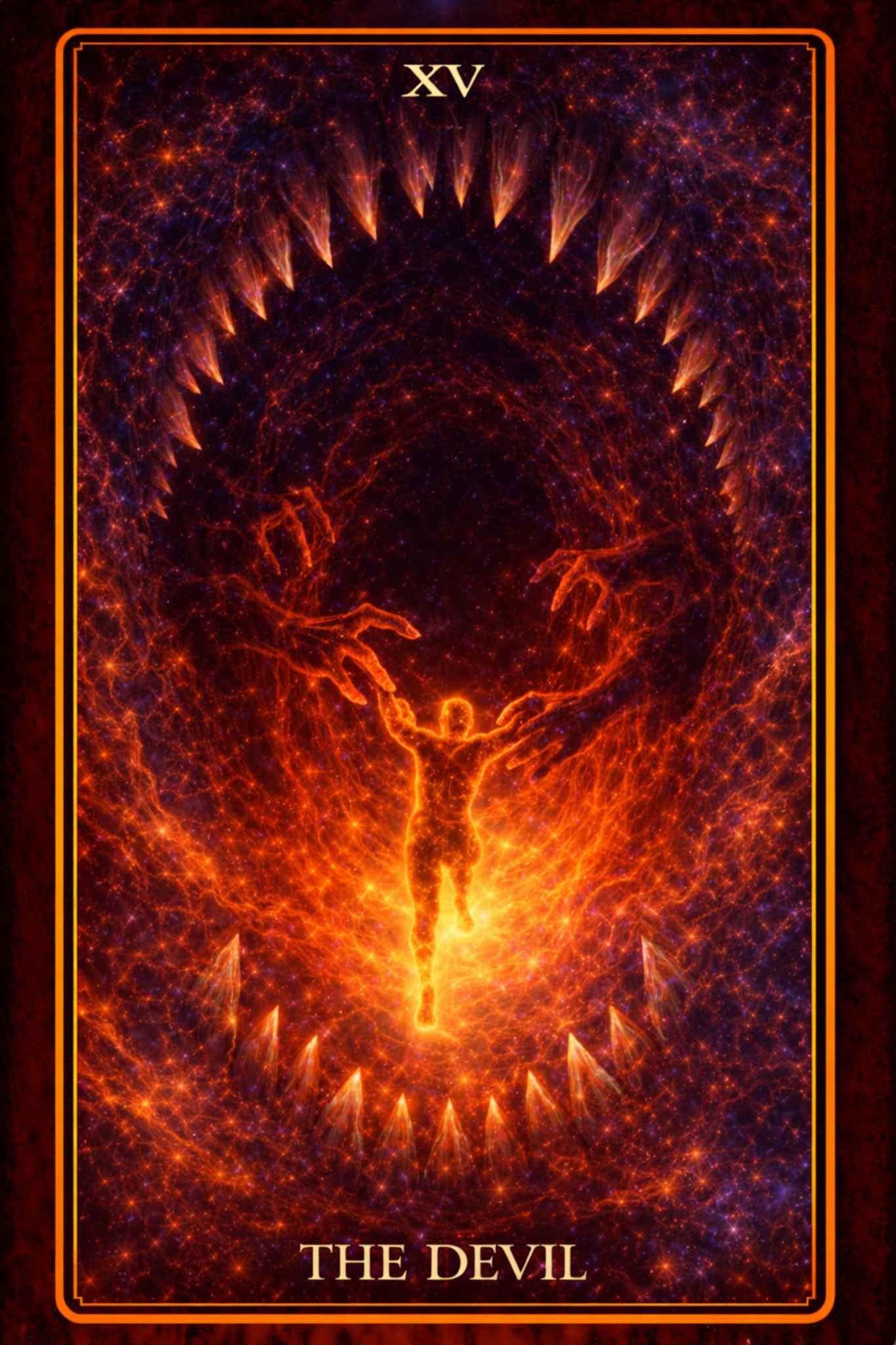
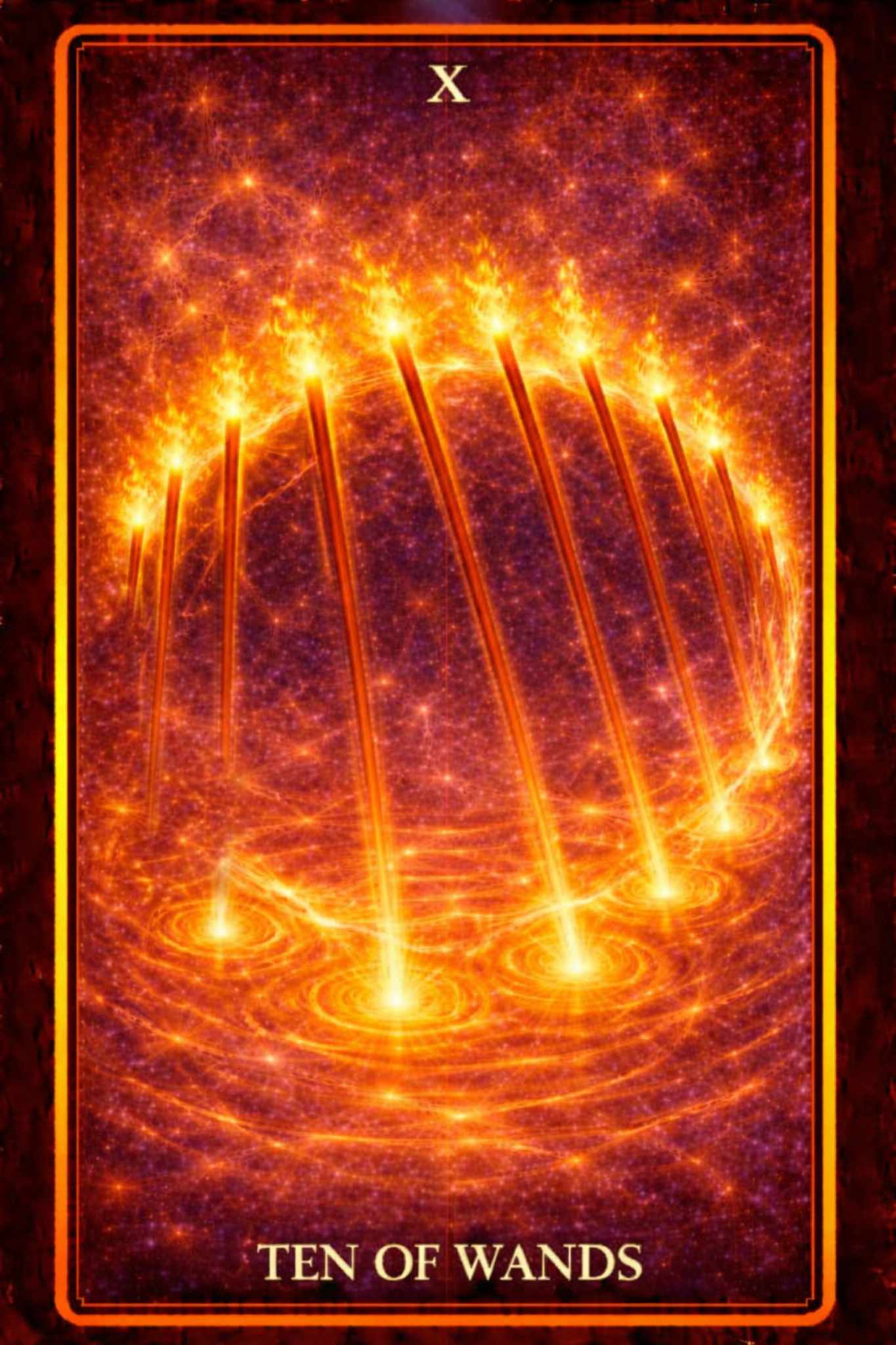
Devil and Ten of Wands Tarot Combination Meaning
Some attachments stop feeling exciting long before they stop being carried. Devil and Ten of Wands often appear when a pattern has moved beyond temptation and turned into lived weight. The Devil reveals what still holds leverage through craving, compulsion, excess, fear, secret payoff, identity, or the deeper agreement to keep feeding something even after its costs have become obvious. The Ten of Wands shows what that agreement looks like once it accumulates into daily strain: too much to manage, too much to hold together, too much pressure packed into one life. Together, these cards describe a situation where the person is no longer only dealing with desire or intensity. They are carrying its consequences as structure, obligation, emotional labor, and visible burden.
That is what gives the pair such sobering force. The Devil often begins with heat, charge, and the feeling of being gripped by something vividly alive. The Ten of Wands belongs to the later chapter, where that same force has become cumbersome. It now demands maintenance. It now asks to be justified, protected, repeated, covered for, or dragged forward one more day. A person may still call it love, ambition, duty, loyalty, hunger, or choice. Sometimes part of that remains true. Yet these cards ask a much sharper question: is what you are carrying still bringing life, or has it become a familiar heaviness that keeps moving only because you have grown used to hauling it?
When the burden becomes impossible to romanticize
The Ten of Wands is a card of accumulation. It shows what happens when fire keeps being added until the load becomes difficult to move with grace. Beside the Devil, that accumulation often points to excess that has lost its glamour. The person may have taken on too much because the pattern promised intensity, validation, erotic charge, control, relief, purpose, or a powerful sense of identity. Over time, the promise turns into labor. What once felt stimulating now also feels like maintenance. What once felt alive now asks to be carried across every practical part of the day.
This can show up in many forms. A compulsive relationship becomes emotionally exhausting. A driven work identity becomes nearly unlivable. A pleasure habit becomes a logistical and psychological load. A status chase becomes relentless pressure. A secret becomes something the whole body has to carry. A power dynamic becomes draining because too much of life is now organized around sustaining it. The important truth in this pair is that the burden is not accidental. It is the visible architecture of a deeper attachment. The Ten of Wands makes the hidden chain practical, physical, and increasingly hard to deny.
Overcarrying and the private meaning of heaviness
One of the deepest themes here is the temptation to confuse carrying with meaning. The Ten of Wands often appears around people who are capable, loyal, dutiful, or used to handling more than they should. Beside the Devil, that strength can become part of the trap. A person may keep hauling the pattern forward because they are able to. They may tell themselves that endurance proves seriousness, devotion, maturity, or necessity. Yet the Devil asks what hidden need is still being fed through all this carrying. Why does the burden remain so difficult to set down. What would feel threatened if the person finally admitted that the weight has gone beyond healthy proportion.
Want to explore this combination in a more personal way?
If this pairing feels important right now, a simple tarot spread can help you reflect on it with more context.
This is where the pair becomes more than a simple warning about burnout. It speaks about bondage through overresponsibility and repeated emotional labor. Someone may keep sustaining a draining arrangement because the role of carrier has become part of identity. They may feel useful through being burdened. They may feel morally cleaner through overfunctioning. They may even prefer heaviness to the barer and more unsettling question of who they would be without this load. The Devil knows how often depletion gets confused with value, and how often a person stays attached to what exhausts them because exhaustion itself has become woven into purpose.
Love and relationship meaning
In love readings, Devil and Ten of Wands often point to a bond whose intensity has turned into burden. Attraction may still be present. History may still be present. The emotional charge may still be strong. Yet the relationship now also feels heavy, difficult to sustain, and draining to carry. One or both people may be holding too much emotional labor, too much repeated repair, too much secrecy, too much psychological responsibility, or too much fallout from the same old cycle. The Devil shows why the bond remains difficult to leave. The Ten of Wands shows what staying with it is costing in real emotional and practical terms.
At its healthiest, this pair can bring radical honesty. A person may finally admit that what once felt irresistible now also feels exhausting. That admission matters because it changes the reading from fascination with intensity to recognition of burden. The cards do not deny desire. They reveal that desire is now tangled with strain, repetition, and too much carrying. Sometimes this opens the door to healthier structure, clearer accountability, and more grounded change. Sometimes it reveals that the person has been holding together something whose weight already speaks more truthfully than its promises do.
In more difficult expressions, the pair can show someone who keeps carrying a relationship because the burden itself has become part of what love means in their inner world. They may believe that because it is hard, it must be deep. Because it asks so much, it must matter. Because they are tired, they must be devoted. The Devil exposes the hidden contract beneath that belief. The person may still be feeding fear of emptiness, erotic attachment, emotional overinvolvement, or an old identity built around saving, surviving, or enduring while calling the whole arrangement commitment.
Career, work, and public life
In work and career readings, Devil and Ten of Wands can be one of the clearest signs of burdensome ambition or a work pattern that has grown too large for the life holding it. The person may be carrying far too much because success, money, relevance, recognition, leadership, or pressure-based achievement has become fused with self-worth. The drive may still be alive. The Devil keeps the hunger active. The Ten of Wands shows the cost in deadlines, obligations, constant output, mental load, emotional fatigue, and the practical reality of a life packed too tightly around one binding agenda.
This combination can be especially exact for people in entrepreneurial, leadership, public, or creative roles who have built a whole world around fire and momentum. What began as meaningful may now require relentless carrying. Each gain produces more load. Each success creates more expectation. Each visible step forward adds more pressure to sustain image, pace, and growth. The Devil explains why stepping back feels almost impossible. The Ten of Wands explains why continuing in exactly the same way is becoming increasingly hard to justify at the level of body, mind, and spirit.
At its best, the pair can mark the moment when the burden stops looking impressive and starts looking accurate. The issue may no longer be how strong the person is. The issue may be that too much of the structure is still being fed by unconscious hunger rather than by a living and proportionate purpose. That shift in perception can be a turning point.
Psychological and spiritual meaning
Psychologically, Devil and Ten of Wands often describe an inner world overloaded by what it keeps serving. The person may feel crowded by obligations, cravings, self-justifications, emotional carryover, vigilance, or the endless maintenance of a pattern they already know is too much. The Devil shows what still keeps them invested. The Ten of Wands shows the psychic traffic jam created by that investment. This can feel like living beneath a private weight that others only partly see, while still waking each day and lifting it again because no other rhythm has yet become believable.
Spiritually, the pair asks whether the soul is still meant to carry this. There are burdens that belong to growth, service, and real devotion. There are others that belong to compulsion, fear, and the inability to stop feeding what no longer needs more of your life-force. The Devil reveals the chain. The Ten of Wands reveals the consequences of hauling the chain everywhere as if it were a sacred duty. Together, these cards ask whether heaviness still belongs to truth or whether it has become the clearest evidence that something is being prolonged beyond wisdom. Spiritual maturity here looks less like heroic endurance and more like honest relinquishment.
Shadow expression and challenge
The shadow side of this combination appears when the person secretly clings to the burden because it keeps them occupied, important, morally elevated, or too busy to face deeper emptiness. They may speak often about the weight while refusing every opening to set some of it down. The Devil is very present in that contradiction. It shows the psychological profit hidden inside suffering. Perhaps the burden provides identity. Perhaps it prevents stillness. Perhaps it offers a story about loyalty, worth, or greatness that the person is not ready to lose. The Ten of Wands then becomes more than exhaustion. It becomes a costume worn so long that it begins to feel like skin.
Another challenge appears when the person believes the only choices are collapse or continued overcarrying. These cards usually point toward a more truthful third possibility: conscious release. Yet release can feel frightening when so much of life has been organized around being the one who carries, handles, survives, or keeps everything moving. The Ten of Wands makes that identity visible. The Devil shows why letting it go can feel like losing not only the burden, but the self built around it. That is why this pair asks for honesty with tenderness. The burden has often been serving more than one function.
Timing and the moment when weight becomes the message
Timing is central with this pair because it often appears when the burden itself has already become part of the answer. The person may keep waiting for a cleaner sign, a softer opening, or one more external confirmation that the load is truly too much. These cards often suggest that the load itself is the sign. There are seasons in life when much must be carried for a while. Yet Devil and Ten of Wands together rarely speak of temporary hard work alone. They speak of pressure tied to attachment, excess, compulsion, or a pattern that has grown beyond its rightful size.
The most revealing timing question here is simple: what would happen if I stopped calling this necessary simply because it has become familiar? That question opens a different door. Sometimes the answer will be delegation. Sometimes confession, simplification, restructuring, ending, or release. Whatever form it takes, the cards are urging a more honest reading of weight. The burden no longer needs to prove itself through drama. It is already speaking clearly through sheer mass.
What this combination is really asking
Devil and Ten of Wands ask a stern and freeing question: what are you still carrying because some part of you is not ready to stop feeding it? That is the heart of the pair. The pressure may look necessary. The burden may feel inevitable. The attachment may still be dressed as duty, love, loyalty, ambition, or strength. Yet the cards want to know whether the weight truly belongs to the path or whether it is the accumulated cost of a pattern that has been indulged, justified, or dragged forward long after its healthiest size was lost.
The deeper lesson is that bondage becomes unmistakable when it takes on mass. The Devil provides the chain. The Ten of Wands provides the life bent beneath the repeated carrying of that chain. Together, they reveal a stage where intensity is no longer the whole story. Now there is strain, overburden, and visible heaviness. That is not punishment. It is revelation. Very often it is the revelation that finally makes a more honest release possible.
Explore the next layer of this reading.
This combination can mean different things depending on context. A short tarot reading can help you reflect on the question behind the cards.
Closing reflection
There is a point in carrying where the body tells the truth before the mind agrees. The shoulders know. The jaw knows. The evening knows, when a person sets the bag down for a moment and feels the ghost of its weight still hanging in the muscles. Devil and Ten of Wands understands that hour. It understands how easily a burden becomes woven into identity, how a load can start as choice and slowly become posture, then schedule, then character, then destiny in the private language of a tired life.
The wisdom here is not to admire how much more you can endure. It is to notice when endurance itself has become the final disguise worn by attachment. Put the burden in front of you. Look at its shape in daylight. Ask what part of it is truly yours, what part belongs to an older hunger, and what part only stayed because you were strong enough to keep lifting it. Then remember something essential: strength is not measured only by what you can carry uphill. Sometimes it is measured by the moment you stop, unfasten the straps, and feel the whole spine learn a different future all at once.
More combinations with The Devil
More combinations with Ten of Wands
Continue with The Devil
Explore Related Guides by Topic
If you want to explore this combination through a more specific emotional lens, these tarot guides can help you follow the broader pattern behind the reading.