
The Fool + Seven of Wands
Explore how these two tarot cards interact in a reading through symbolic overlap, contrast, and shared narrative. Tarot combinations often reveal meaning that neither card fully expresses on its own.
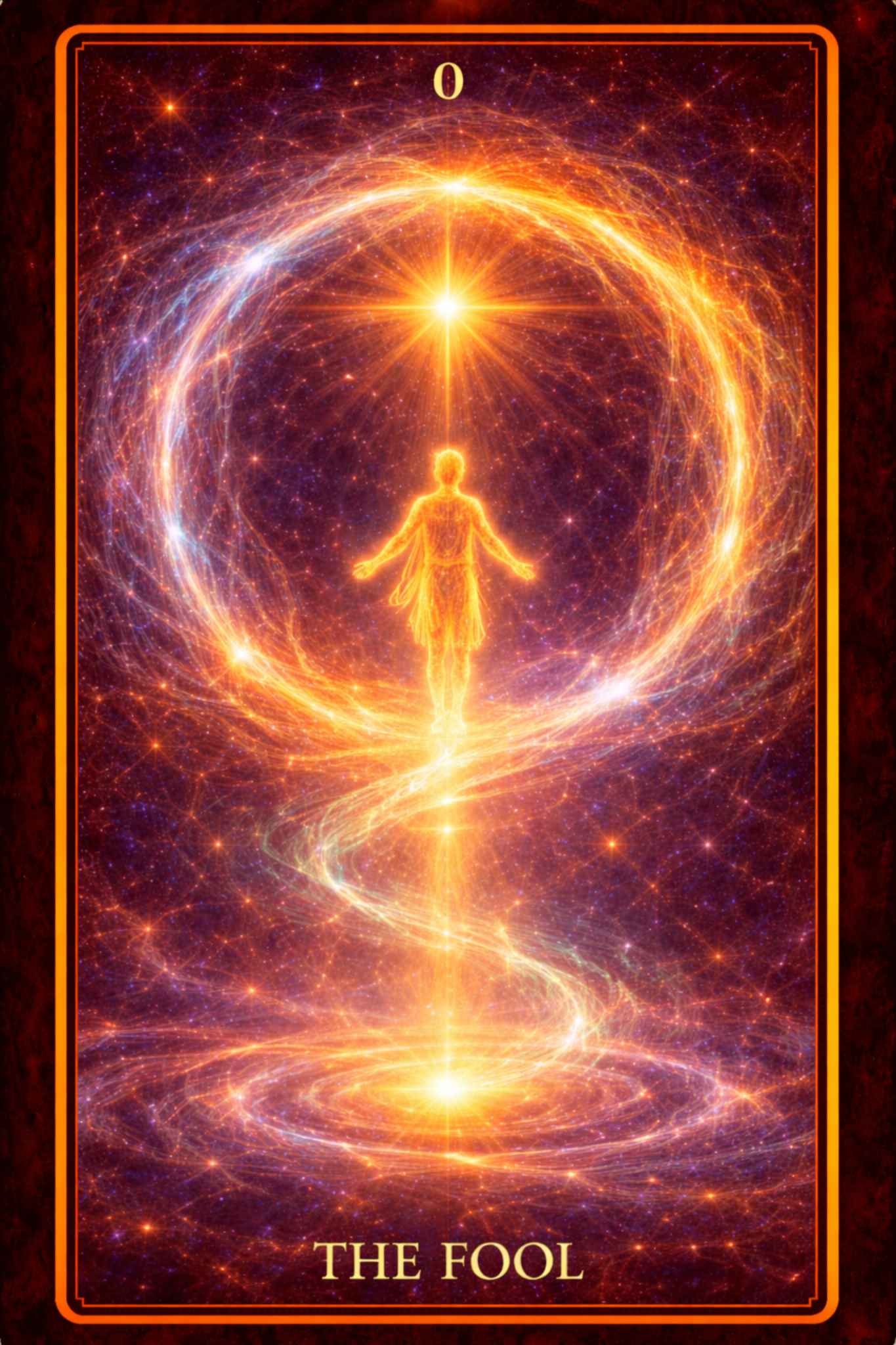
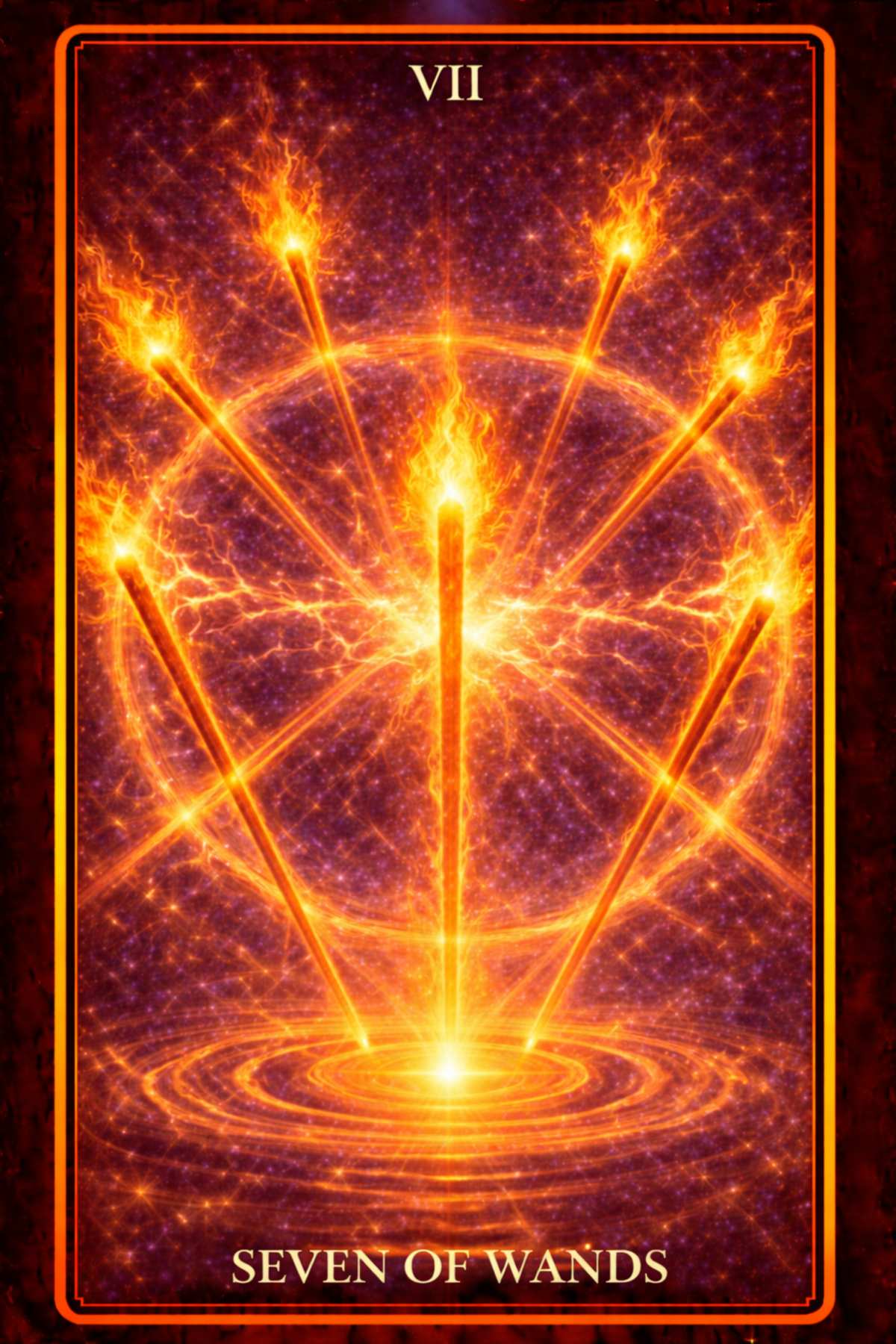
The Fool and Seven of Wands Tarot Combination Meaning
Some beginnings feel open and expansive. Others ask for something more immediate: not just movement, but position. The Fool with Seven of Wands often appears at that exact point — when something has already begun, and instead of remaining neutral or fluid, it starts to meet resistance.
This is not necessarily conflict in the dramatic sense. More often, it is the moment when a direction you have stepped into becomes visible enough to be questioned, challenged, or tested. The openness of The Fool does not disappear, but it no longer moves through empty space. It meets friction. And that friction changes the nature of the experience. A softer emotional contrast appears in The Fool and King of Cups, where newness is held through emotional steadiness rather than immediate pressure.
Where The Fool alone can feel free, undefined, and exploratory, Seven of Wands introduces the need to hold ground. Not aggressively, not defensively by default, but consciously. Something has taken shape to the point where it now asks: will you stay with it when it is no longer effortless?
When movement meets resistance
In real situations, this pairing often appears after something has already started to unfold. A decision has been made. A connection has begun. A direction has been taken. At first, it may have felt light, even natural. But then something shifts. Other perspectives enter. Expectations appear. Doubt — internal or external — starts to surface.
This does not mean the beginning was wrong. It means it has moved into a new phase. Early movement is one thing. Continuing when there is pressure is something else entirely. The Fool brings the willingness to step forward. Seven of Wands asks whether that willingness holds when the path is no longer clear or uncontested. For a sharper transformation-based contrast, The Fool and Death explores what happens when a new beginning meets release, endings, and deeper change.
That shift is subtle but important. Many people expect resistance to mean failure, or at least misalignment. But in this combination, resistance often simply means that what you started has become real enough to interact with the world around it. And the world does not always respond passively.
The nature of the tension
The tension in this pairing comes from the contrast between openness and defense. The Fool does not begin with a fixed position. It moves because something feels right, or necessary, even without full understanding. Seven of Wands, however, requires definition. It asks you to stand somewhere, even if that place is still new.
This can create an internal conflict. Part of you may still want to explore freely, without commitment or pressure. Another part recognizes that something now depends on your presence, your stance, or your consistency. That does not have to become rigid, but it does ask for awareness.
The key question is not whether resistance exists, but how you relate to it. Do you interpret it as a signal to withdraw, or as an invitation to clarify where you actually stand? Do you react automatically, or do you take a moment to understand what is really being challenged?
Relationships and boundaries
In relationships, this combination often appears when a connection that started easily begins to meet differences. These differences are not necessarily signs of incompatibility. More often, they are the natural result of two people moving beyond initial attraction into something more defined.
Need a little more context around this pairing?
A short reading can help you reflect on the tension, direction, or lesson this combination may be pointing toward.
There may be moments where you feel the need to assert your perspective, protect your space, or hold onto something that matters to you. That can feel uncomfortable if the beginning was smooth or effortless. The Fool energy prefers flow. Seven of Wands introduces the reality that connection also involves boundaries. For a broader romantic reading of The Fool’s openness, Fool love meaning can help clarify how innocence, risk, and emotional possibility may appear in love questions.
This is where many dynamics either strengthen or become unstable. If everything depends on ease, the first sign of tension can feel like something has gone wrong. But if there is room for difference — for standing in your own position without turning it into conflict — the connection can deepen in a more realistic way.
The question becomes less about maintaining harmony at all costs, and more about whether the connection can hold both openness and individuality at the same time.
Work, direction, and external pressure
In practical life, The Fool with Seven of Wands often reflects the stage where a new direction starts to face real-world pressure. An idea that felt exciting now needs to be explained, defended, or refined. A choice that felt intuitive may now be questioned by others, or even by yourself.
This is not a sign that the direction is wrong. It is a sign that it is no longer abstract. When something becomes visible, it also becomes subject to response. Not all of that response will align with your expectations.
The challenge here is not to harden into defensiveness, but also not to collapse under pressure. There is a middle ground where you remain open enough to adjust, but grounded enough not to abandon your direction at the first sign of resistance. A more suspended version of this pressure appears in The Hanged Man and Seven of Wands, where resistance meets pause, perspective, and the need to read timing carefully.
In practice, this might mean continuing forward while making small adjustments, listening without immediately agreeing, or recognizing which feedback is useful and which simply reflects someone else’s perspective rather than your own reality.
The internal experience
Internally, this pairing can feel more intense than it looks from the outside. The Fool’s openness makes you receptive, but that also means you may feel the impact of resistance more strongly. What might appear as a small disagreement or challenge externally can feel like a deeper question internally.
You may notice moments of doubt, not necessarily about the direction itself, but about your ability to hold it. This is where Seven of Wands becomes less about external opposition and more about internal alignment.
Can you stay with what you started, not because it is easy, but because it still feels true? Can you distinguish between meaningful challenge and reactive discomfort? Can you remain open without becoming ungrounded?
These are not questions with immediate answers. They are part of the process this combination describes.
What is actually being tested
It can be tempting to see this combination as a test imposed by circumstances, or by other people. But more often, the real focus is internal. The situation does not create your position — it reveals it.
The Fool begins without needing to prove anything. Seven of Wands introduces the moment where proof, or at least presence, becomes relevant. Not in a performative sense, but in a grounded one. Where are you actually standing now that something has begun?
This is not about becoming rigid or defensive. It is about recognizing that openness and clarity can exist together. You can remain flexible while still knowing what matters to you. You can listen without losing your own direction. You can adjust without abandoning yourself.
What the cards are pointing toward
This pairing does not suggest that you need to push harder, or fight more aggressively. It suggests that awareness is needed where movement meets resistance. The energy has already shifted from pure beginning into early structure, and that structure will naturally interact with the environment around it.
The strength here is not in winning or proving something. It is in staying present enough to understand what is actually happening. Not every challenge needs to be answered. Not every pressure needs to be resisted. But some moments do require you to stand, even if that stance is still evolving. For a simple decision-style reading of this card’s pressure, Seven of Wands yes or no can help frame courage, resistance, and self-protection more directly.
The balance is subtle. Too much openness, and you lose direction. Too much rigidity, and you lose the original movement that made the beginning possible. The space between those two is where this combination becomes most meaningful.
Want to place this combination into a wider reading?
If this pairing feels close to something you are experiencing, a simple spread can help you reflect on the surrounding energy with more clarity.
Closing reflection
The Fool and Seven of Wands describe a beginning that has reached its first point of resistance. Something has started, and now it is interacting with reality in a more direct way. That does not make it fragile, and it does not make it fixed. It makes it real.
You do not need to resolve everything at once. You do not need to defend every detail. What matters is recognizing where you stand in this moment, and whether that position comes from awareness or reaction.
The most grounded response is not to withdraw from the challenge, and not to fight it blindly, but to stay with the process long enough to understand it. From there, the next step becomes clearer — not because the path is easy, but because you are more aligned with it as it unfolds.
More combinations with The Fool
More combinations with Seven of Wands
Continue with The Fool
Explore Related Guides by Topic
If you want to explore this combination through a more specific emotional lens, these tarot guides can help you follow the broader pattern behind the reading.