
The Hermit + Ten of Wands
Explore how these two tarot cards interact in a reading through symbolic overlap, contrast, and shared narrative. Tarot combinations often reveal meaning that neither card fully expresses on its own.
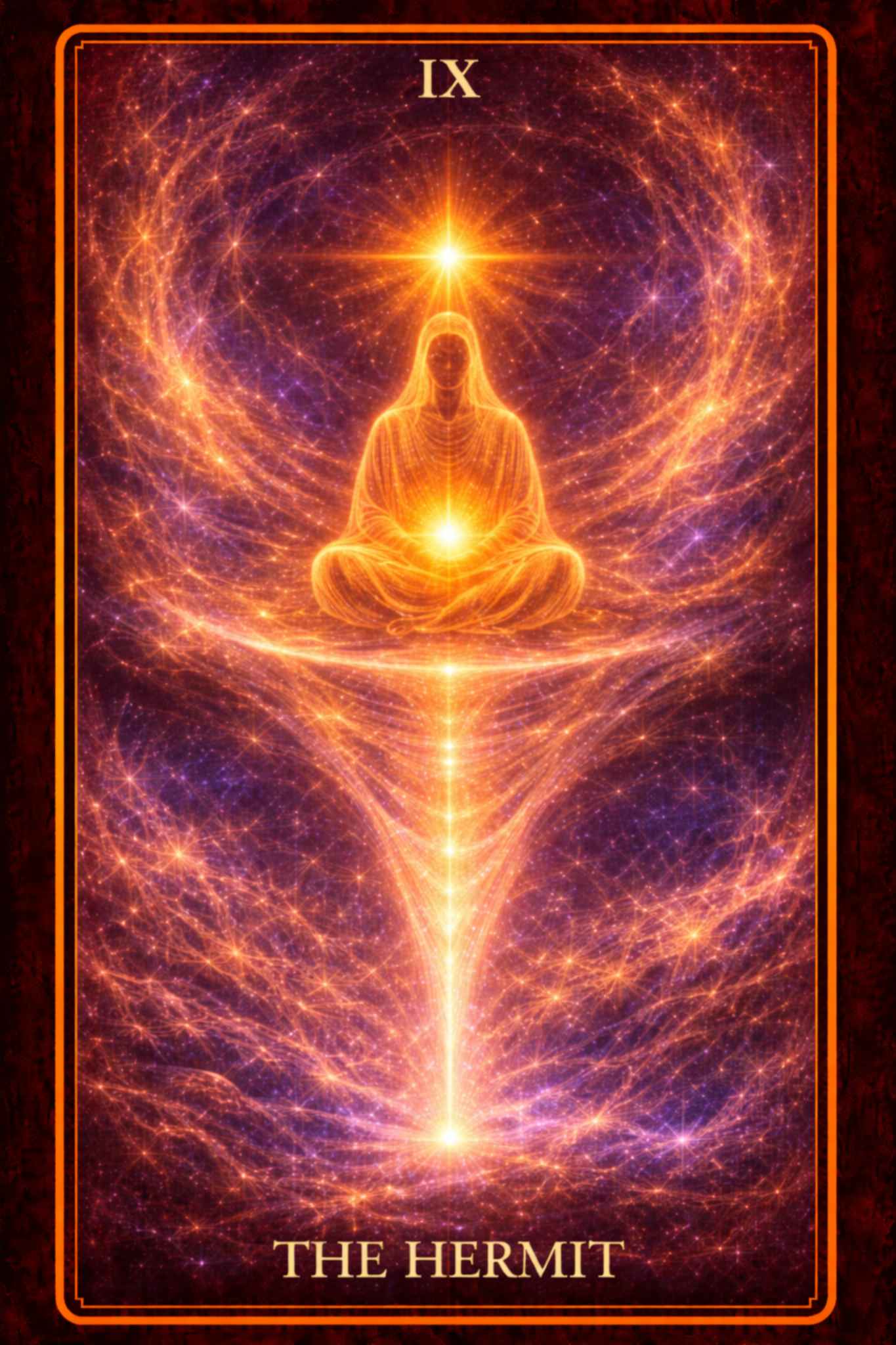
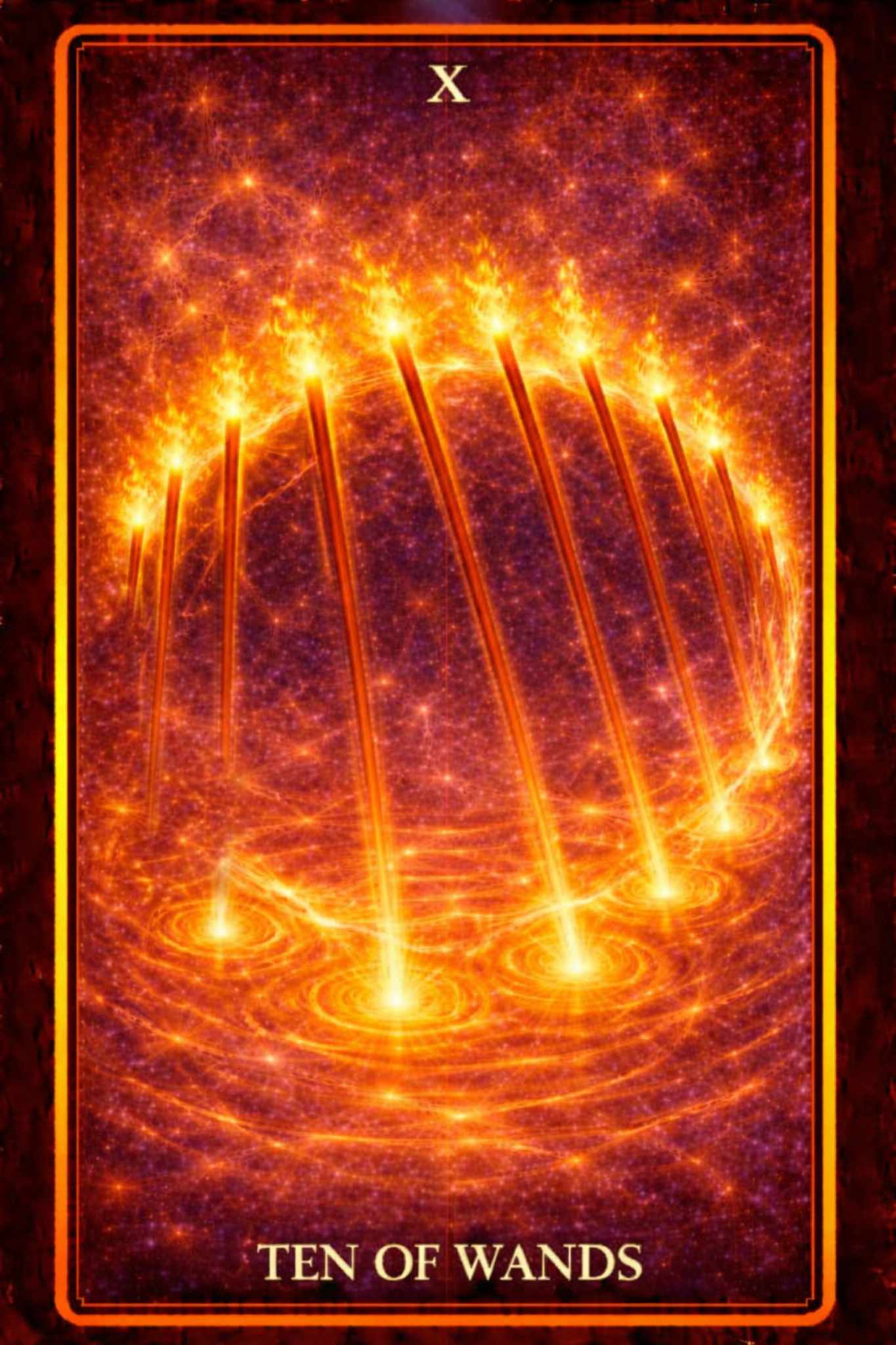
The Hermit and Ten of Wands Tarot Combination Meaning
The Hermit and Ten of Wands form a heavy, introspective, and deeply revealing combination. The Hermit turns inward in search of truth, clarity, and the kind of quiet perspective that becomes possible only when unnecessary noise is set aside. The Ten of Wands brings a different weight entirely. It is the card of overextension, accumulated burden, late-stage effort, and the sense of carrying more than the heart, body, or spirit should reasonably have to hold alone. Together, these cards often point to a season in which the inward life is not merely reflective, but burdened. The soul is trying to understand what it carries, why it carries it, and whether all of it truly belongs there.
This makes the combination especially important when life has become heavy in a quiet way. Not always dramatic, not always visible to others, but deeply felt. The Hermit does not rush to complain, and the Ten of Wands often describes pressure that has built gradually through endurance, responsibility, habit, or the unwillingness to set something down. As a result, the burden here can become inwardly normalized. A person may be functioning, still carrying, still fulfilling, still showing up, but the cost is gathering in the background. The Hermit then enters not to glorify the burden, but to illuminate it. He asks what has become too heavy, what is being carried in silence, and whether continued effort is actually serving truth or only serving old obligation, fear, or overidentification with being the one who endures.
Silent heaviness and the inward life
The Hermit often appears when someone is stepping back to understand what is real beneath surface movement. With the Ten of Wands beside him, that movement may already feel exhausted. The person may not be confused about whether life is demanding. They may know it is. The question is more subtle: how long has this heaviness been accepted without being deeply examined? The Ten of Wands shows the load. The Hermit asks whether the load has become part of identity. Some people get so accustomed to carrying that they no longer know how to distinguish duty from unnecessary strain. They feel responsible for the atmosphere, the outcomes, the relationships, the work, the healing, the emotional balance, the unfinished tasks, the future itself. The burden grows because no one moment seems decisive enough to question it. It simply keeps accumulating.
This is why the pairing can feel sobering. The Hermit slows the moment down enough that the weight can no longer remain unnamed. He does not shame responsibility. He does not deny that some tasks are genuinely yours. But he insists on a more honest inventory. What are you carrying because it is meaningful? What are you carrying because no one else has? What are you carrying because you no longer trust that anything will hold if you let go? The Ten of Wands is often less about evil circumstances than about the point at which effort stops being cleanly aligned and becomes spiritually compressive. The Hermit wants to restore truth inside that compression, not by forcing collapse, but by making the load visible enough to be evaluated clearly.
When fire becomes burden instead of life-force
One of the deeper nuances of this pairing is the question of what happens when Wands energy no longer feels like inspiration, desire, or meaningful effort, but becomes pure weight. The Ten of Wands still belongs to the suit of fire, but it is fire carried rather than lived. Passion has become obligation. Movement has become load. Will has become pressure. The Hermit sees this and asks what part of the soul has been lost inside over-responsibility. This is not merely about doing too much in a practical sense. It is about how overextension can crowd out inner listening until the self becomes a function rather than a presence.
Yet the cards also contain a possibility of great honesty. The Hermit does not only diagnose heaviness; he gives language to it. He makes it thinkable that setting something down may not be failure. He reveals that not all burdens are sacred, and not all responsibilities remain yours forever simply because you once took them on. The Ten of Wands is often at the edge of completion, but completion can look very different depending on whether one is willing to release what no longer needs to be carried. The Hermit helps that release become conscious rather than reactive, and in doing so he restores the difference between devotion and depletion.
Love and relationship meaning
In love readings, The Hermit and Ten of Wands often point to a relationship dynamic weighed down by emotional labor, unspoken pressure, or the burden of carrying too much internally. One or both people may feel serious, committed, and deeply invested, but also tired. The connection may have become heavy with responsibility, unresolved patterns, repeated strain, or the feeling that one person is holding more of the emotional structure than they can sustain indefinitely. The Hermit suggests that these burdens may not be fully visible in the relationship’s outer presentation. Much of the load may be carried privately, inwardly, or silently.
Need a little more context around this pairing?
A short reading can help you reflect on the tension, direction, or lesson this combination may be pointing toward.
This pairing can describe someone who needs space not because love is absent, but because the burden of maintaining the bond has become inwardly exhausting. They may still care profoundly. They may still want truth, closeness, and depth. But the Ten of Wands suggests that the current form of the connection may be asking too much of one person’s inner resources. The Hermit then becomes necessary. He makes room for the question that pressure often suppresses: is this effort still mutually life-giving, or has love become tangled with silent overcarrying? Sometimes the issue is not the presence of feeling, but the disproportion between feeling and strain.
In more constructive readings, the cards can help name a pattern that has been endured too long without being honestly addressed. This is important because the pairing does not necessarily point toward endings. Often it points toward relief, truth, redistribution, and a more mature sense of shared responsibility. In more difficult expressions, however, it can reveal that a person has withdrawn inwardly because they no longer know how to keep carrying the emotional or practical load without losing touch with themselves. The core issue is not whether burden exists, but whether burden has replaced aliveness as the dominant atmosphere of the bond.
Career, vocation, and practical life
In work readings, The Hermit and Ten of Wands are highly significant for burnout, silent overload, and the spiritual cost of carrying too much for too long. The Hermit may represent the worker, creator, guide, or thinker who takes their responsibility seriously and tends to process things inwardly rather than noisily. The Ten of Wands suggests that the current workload, pressure, or accumulated duty has exceeded a healthy threshold. There may be too many obligations, too much invisible labor, too much self-containment around stress, or a long-standing habit of saying yes because the burden feels easier to carry than the consequences of setting a limit.
This combination is especially relevant for people whose identity is tied to reliability, depth, or meaningful contribution. They may not complain early. They may endure long past the point where rest, support, or restructuring became necessary. The Hermit can intensify this, because inward people often try to process strain privately. Yet the cards together suggest that private processing is no longer enough. A deeper question must be asked: does this work still serve the soul, or is the soul now serving the weight of the work? That question is not dramatic, but it is decisive. It separates meaningful effort from self-erasure.
At its best, this pairing leads to sober re-evaluation. Responsibilities may need to be simplified. Goals may need to be clarified. Certain loads may need to be completed, delegated, renegotiated, or consciously released. The Hermit does not advise impulsive collapse. He advises truthful seeing. The Ten of Wands is often a sign that something has reached a limit. The wisdom lies not in pretending the limit does not exist, but in understanding what the burden has been saying long before exhaustion forced it to speak more loudly.
Spiritual meaning
Spiritually, The Hermit and Ten of Wands can reflect a stage where the inner path feels weighted by seriousness, effort, or an overdeveloped sense of duty. A person may still be sincere, still devoted, still willing to walk the difficult road, but the road has become heavy in a way that obscures the original light. The Hermit seeks illumination. The Ten of Wands suggests that too much has been piled around that illumination. Spiritual practice, healing work, self-improvement, service, or life responsibility may have become so effort-laden that the soul feels compressed rather than clarified.
This does not mean the path is false. It often means the path has become overburdened by what the self believes it must carry in order to remain worthy, helpful, competent, or in control. The Hermit asks for a return to essence. What is actually yours to hold? What was once meaningful but is now dead weight? What responsibilities are real, and which are maintained by guilt, fear, or identification with suffering as proof of value? These are difficult questions, but they are liberating ones. The pairing suggests that spiritual maturity may now require simplification, not more noble strain, and that truth sometimes returns not when more is added, but when enough has finally been set down.
Shadow expression and challenge
The shadow side of this combination often appears when burden becomes a private identity. A person may feel so accustomed to carrying that they no longer trust who they would be without the weight. The Hermit then withdraws further into silence, and the Ten of Wands keeps loading the inner life with responsibility, obligation, and pressure. In this state, even genuine offers of help or moments of relief may feel unfamiliar, suspicious, or impossible to receive. The self becomes bonded to heaviness because heaviness has come to feel purposeful.
Another challenge is confusing endurance with truth. Just because you can carry something does not mean you should. Just because a burden has been with you for a long time does not make it sacred. The Hermit is vital here because he interrupts this false equation. He invites a more honest spiritual reading of effort. What is deeply meaningful may indeed require devotion, but devotion and overburden are not identical. The Ten of Wands shows the cost when that distinction is lost. The shadow is not responsibility itself, but the belief that worth must always feel heavy in order to be real.
What this combination is really asking
The Hermit and Ten of Wands ask: what weight has become so normal that you no longer question it? This is one of the most important insights the pair can offer. Many people know they are tired, but not all know exactly what they are tired of carrying. The Hermit wants precision. The Ten of Wands wants release, even if it has not yet admitted that to itself. Together, they ask for a serious inward inventory of labor, duty, emotional burden, and the hidden contracts by which the self keeps taking on more than it can sustain with peace.
The deeper lesson is that wisdom does not always look like holding more. Sometimes it looks like carrying only what is truly yours. The Hermit contributes perspective, honesty, and reverence for essence. The Ten of Wands contributes the unmistakable sign that something has become too heavy to remain spiritually clean. Together, they suggest that relief is not a betrayal of purpose. It may be the only way purpose can become real again, because what is overburdened cannot stay inwardly honest forever without some form of release.
FAQ
Is The Hermit and Ten of Wands a negative tarot combination?
It is often a heavy combination, but not a meaningless one. It tends to point toward burden, inward strain, and the need for truthful re-evaluation. The value of the pairing lies in what it reveals: what has become too much, what is being carried in silence, and what may need to be simplified before deeper clarity can return.
Does this combination mean burnout?
Very often, it can. Especially in work or responsibility-based readings, these cards may reflect long-term pressure, emotional overload, or the habit of carrying more than is sustainable. The Hermit suggests that the person may be processing this quietly, which can make the burden less visible to others but no less real internally.
What does this mean in love readings?
It can indicate a relationship burdened by emotional labor, unresolved strain, or one person carrying too much of the inner weight of the bond. The cards do not automatically mean the relationship must end, but they often ask whether the current form of effort is still life-giving or whether burden has started to replace intimacy.
What is the deeper lesson of this combination?
The deeper lesson is that endurance is not the same as alignment. These cards ask whether what you are carrying still belongs to your path, or whether some of it is being held out of habit, guilt, fear, or overidentification with being the one who can endure more than others.
Ready to see how this applies to your situation?
A focused tarot reading can help you explore how The Hermit + Ten of Wands may reflect your current situation, not just the general meaning of the cards.
Closing reflection
Some burdens do not arrive all at once. They gather quietly, become familiar, and slowly begin to feel like part of who you are. This pairing often appears at the moment when that familiarity starts to break, and you realize that endurance alone is no longer a sufficient answer.
The deeper invitation here is not to prove how much more you can carry, but to become honest about what the weight has been doing to your inner life. What is truly yours may still matter. But what is no longer yours, or no longer life-giving, does not become sacred simply because you have carried it for a long time.
More combinations with The Hermit
More combinations with Ten of Wands
Continue with The Hermit
Explore Related Guides by Topic
If you want to explore this combination through a more specific emotional lens, these tarot guides can help you follow the broader pattern behind the reading.