
The Tower + Ten of Wands
Explore how these two tarot cards interact in a reading through symbolic overlap, contrast, and shared narrative. Tarot combinations often reveal meaning that neither card fully expresses on its own.
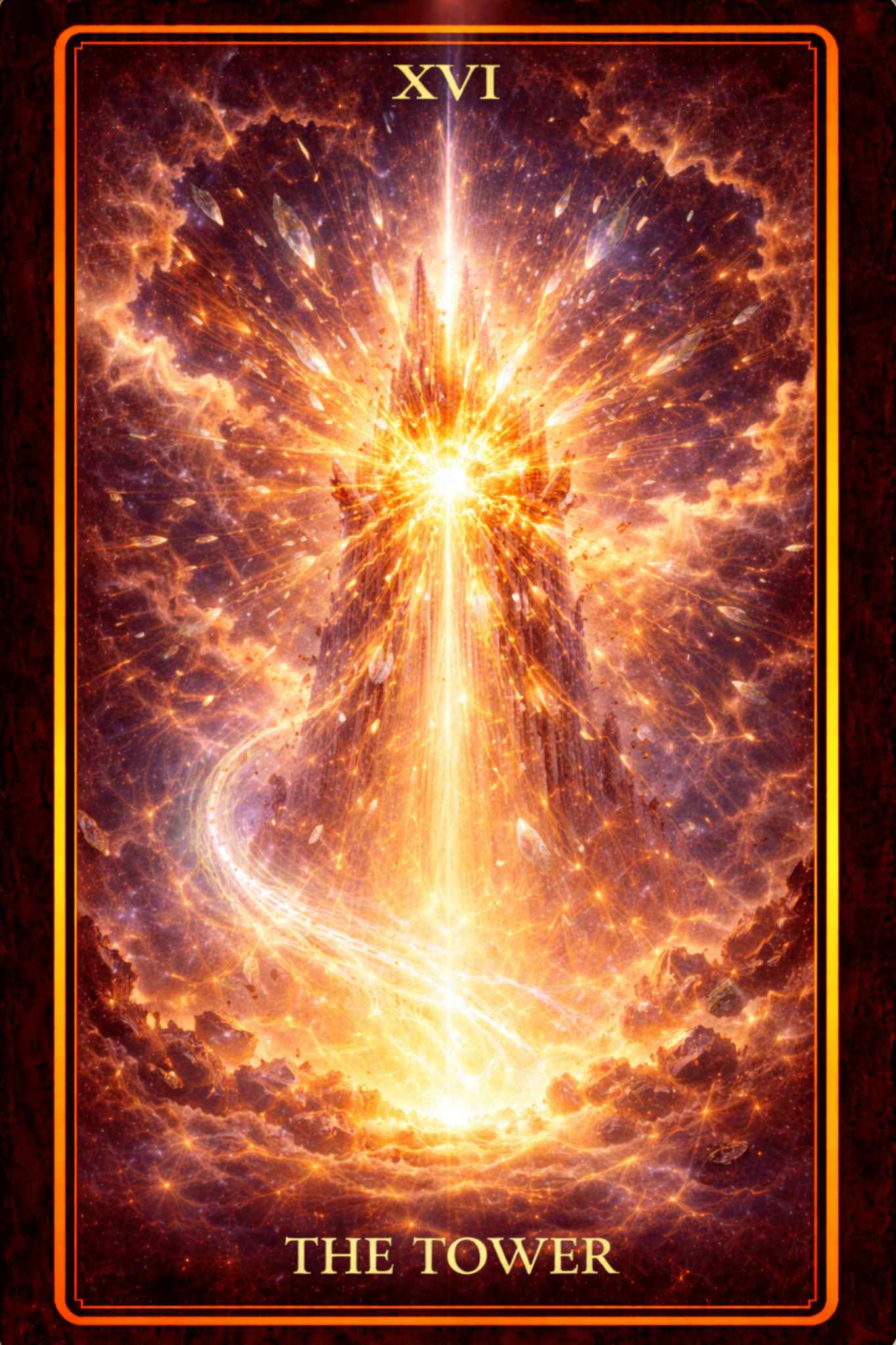
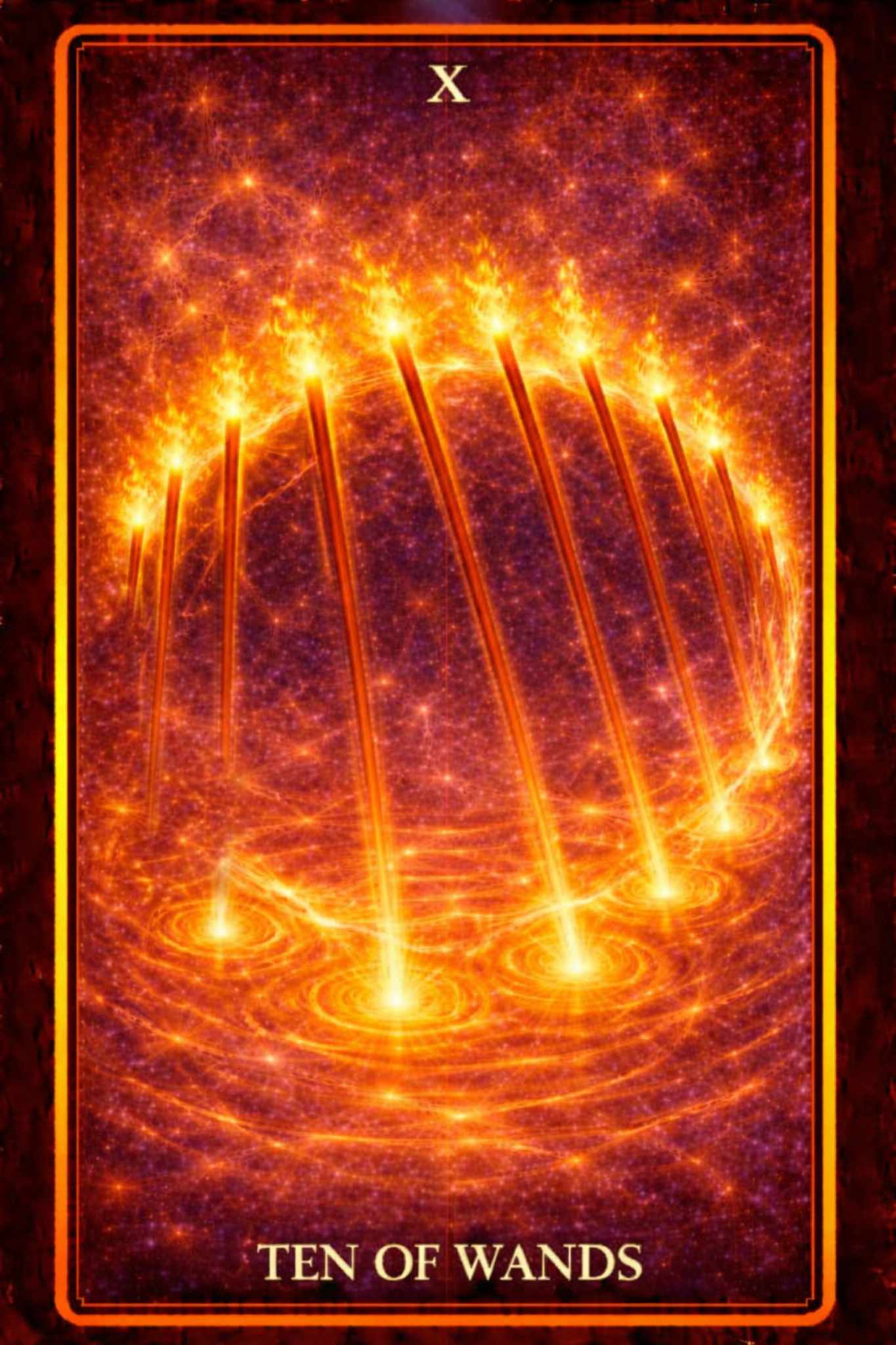
Tower and Ten of Wands Tarot Combination Meaning
Some structures do not reveal the truth through conflict, speed, or one dramatic shock. They reveal it through weight, through repetition, through the slow accumulation of too much carried for too long, until reality finally becomes heavier than the story that this was all still manageable. Tower and Ten of Wands speak to that kind of threshold. The Ten of Wands brings burden, overextension, accumulated responsibility, emotional labor, obligation, and the dense pressure of a system that keeps adding more while asking the same form to keep carrying it. The Tower, approached through a shifted lens here, is less about random destruction and more about capacity truth. It shows the moment when a structure can no longer hide overload behind competence, loyalty, grit, or the appearance of strength. Together, these cards describe a breaking point born from excess carrying, where what has been treated as admirable endurance is forced to answer to what it has actually cost.
This pairing is powerful because the pressure here has substance. It is not abstract. It has been building through repeated demands, repeated effort, repeated accommodation, and repeated decisions to keep lifting what should have been questioned, shared, redesigned, or released much earlier. The Tower does not arrive as punishment. It exposes the real condition of a framework that has been asked to carry beyond honest capacity. The central issue is not simply what is falling now. It is why the burden became so normalized that collapse started looking like the first truthful language available. Under these cards, overload matters as more than a side effect. It becomes the message. The strain is no longer something to manage around. It has become the evidence that the form itself needs a different relationship to truth.
When burden stops looking like virtue
The Ten of Wands often appears in late-stage fire, the point where initiative has turned into load, responsibility, and the hard practical weight of too much resting on one system, one person, one bond, or one arrangement. This can look admirable. There may be dedication here, strong work ethic, care for others, or a sincere desire to see something through. Beside the Tower, however, the reading sharpens. The question is no longer whether the person can carry one more stretch. The deeper question is whether carrying has already replaced structural honesty. A situation may still function outwardly, though its ability to keep functioning has become increasingly dependent on excess effort rather than on sound design.
This is one of the most important truths in the pair. A person can be strong and still overloaded. A relationship can be loving and still crushed by unshared weight. A career can look successful and still be unsound because it rests on impossible carrying. The Ten of Wands often encourages the idea that if one just keeps going a little longer, the destination will redeem the cost. The Tower interrupts that belief. It shows that a structure may fail before any finish line arrives, not because the person lacked character, but because the burden had exceeded what the structure could honestly hold long before anyone named it clearly. In this way, the cards become deeply clarifying. They separate effort from sustainability and force the reading to ask what the effort has really been covering.
The visible shape of hidden excess
One of the deepest themes in this combination is that invisible strain eventually becomes visible consequence. The Ten of Wands shows pressure in practical form: workload, duty, emotional carrying, overmanagement, overresponsibility, and the dense accumulation of tasks and burdens that all seem necessary in the moment. The Tower reveals that necessity itself may have become distorted. What was called commitment may have become imbalance. What was called capability may have become chronic overextension. What was called strength may have gradually turned into a system’s way of avoiding the truth about its own poor design.
This can show up in many forms. A household runs on one person’s excessive carrying until the strain finally reveals how unequal the whole arrangement had become. A business grows through overextension until the pace exposes that there was never enough structure underneath the momentum. A person builds identity around being the reliable one and slowly loses contact with the reality that reliability has turned into self-erasure. The Tower does not invent the weight. It reveals what the weight has already been doing. That is why this pair can feel severe and oddly relieving at once. The breakdown may be painful, though it also ends the false dignity of pretending that overload was a reasonable long-term form of life.
Love and relationship meaning
In relationship readings, Tower and Ten of Wands often point to a bond strained by too much pressure, too much labor, too much duty, or too much being carried in silence by one or both people. The relationship may still exist, and there may still be care in it. Yet care is being asked to operate inside a structure packed with burden. The Ten of Wands shows the heaviness plainly. The Tower reveals the point where that heaviness becomes structurally decisive. Something can no longer be maintained through effort alone in the same way.
You may also want to go one step deeper.
The Tower + Ten of Wands can open up differently inside a focused personal reading.
At times this pair describes a connection where one person has become the load-bearing beam for stability, planning, emotional regulation, domestic effort, or practical continuity. At other times it shows two people trying to preserve the bond while outside pressures, long habits, exhaustion, and uneven responsibilities have slowly made the relationship harder to inhabit with ease. The issue is not always lack of love. Very often it is lack of recalibration. The cards ask what happens when devotion becomes fused with carrying too much, and when the idea of being committed quietly turns into an arrangement where one or both people are crushed by what was never properly redistributed, discussed, or changed.
At its healthiest, this pairing can end the fiction that love is proved by how much weight a structure can absorb. A couple may finally admit that the burden in its current form is too great. That admission can lead toward more truthful redistribution, repair, simplification, or even a necessary ending. What these cards resist is the idea that staying overburdened is evidence of deeper virtue. More often, it is evidence that too much was accepted as normal long after it had already become harmful.
Career, work, and overloaded systems
In work readings, Tower and Ten of Wands can be one of the clearest signs of organizational overload, burnout risk, unsustainable growth, or a role becoming unlivable because too much rests on too few supports. The Ten of Wands shows the burden clearly: deadlines, responsibilities, output pressure, carrying others, overexpansion, and the practical consequences of a system that keeps demanding more without redesigning itself. The Tower reveals where that burden stops being a challenge and starts becoming a truth event. The structure no longer has enough integrity to keep hiding the cost.
This is especially relevant in jobs or businesses that appear impressive from the outside while relying on concealed overextension within. A company may scale too quickly. A leader may become the entire support beam for the team. A creative path may grow so packed with production, performance, and administrative load that the original fire beneath it can barely breathe. The Tower does not shame work. It reveals when effort has been doing the job of structure for far too long. Under these cards, one of the most useful shifts is moving from “How do I keep carrying this?” toward “Why was this ever arranged so that this much had to be carried in the first place?” That question changes the tone of the reading from stoic endurance to structural intelligence.
At its best, the combination acts as a fierce correction. It can show where the system must simplify, redistribute, redesign, or stop pretending that more effort will solve what only redesign can solve. Many people under these cards are not weak, unserious, or incapable. They are carrying what no honest framework should have required from one person or one brittle arrangement. Seeing that clearly is often the first deeply respectful thing the reading can offer.
Psychological and spiritual meaning
Psychologically, Tower and Ten of Wands often describe a self burdened by internalized responsibility. The person may organize identity around competence, usefulness, loyalty, endurance, and the quiet belief that they must keep functioning no matter how dense the load becomes. The Ten of Wands shows that self-structure clearly. The Tower reveals where it has become too heavy to remain truthful. This can be emotionally significant because the person may not only be carrying tasks, they may be carrying an entire self-concept built around being the one who can handle more than others. When that identity begins to crack, the experience can feel disorienting, though it may also be the beginning of a much healthier relationship to worth.
Spiritually, this pair can mark the collapse of burden as identity. A person may have confused carrying everything with being good, needed, or mature. Yet a life cannot breathe well when every form of value is tied to load-bearing. The Tower asks what false holiness may have formed around overresponsibility. The Ten of Wands shows the earthly form of that distortion. The spiritual lesson here is not selfishness. It is proportion. It is capacity. It is the sacred necessity of refusing burdens that deform the very structure meant to carry life with integrity.
FAQ
Does Tower and Ten of Wands always mean a breakdown?
Not always in a dramatic outer sense. It more often points to overload becoming impossible to ignore in the old way. The cards suggest that the present structure is under serious strain and needs honest reassessment.
Is this combination always negative in love readings?
No. It can be difficult, especially where labor and responsibility have become uneven or exhausting. Yet it can also be useful because it helps reveal where devotion has been confused with overcarrying, creating a chance for more truthful change.
What does this pair suggest in career readings?
It often suggests that the work system, role, or pace has become heavier than it looks from the outside. The question is less whether you are capable and more whether the structure itself is built in a way that respects real capacity.
Should I read this as a sign that I have failed?
Usually no. These cards often point toward the opposite insight: the structure may have become unrealistic long before the breaking point became visible. The reading tends to question the burden, not reduce everything to personal inadequacy.
Can this combination still be constructive?
Yes. It can be deeply constructive because it makes excess carrying visible. What feels like a hard truth can become the beginning of a more livable arrangement built on proportion, support, and honesty.
Shadow expression and challenge
The shadow side of this combination appears when a person keeps choosing more weight because weight has become identity. They may read rest as failure, redistribution as weakness, and simplification as moral loss. The Ten of Wands can make this seem responsible or even admirable. The Tower reveals how dangerous it becomes when overcarrying has replaced structural honesty. In that state, burden starts looking like virtue, and the person may keep lifting more precisely when reality is asking them to stop and tell the truth about capacity.
Another difficult expression appears when the breaking point finally comes and the person interprets it only as personal insufficiency. That misses the deeper teaching. The cards often suggest the opposite. The structure had become unrealistic long before the visible threshold arrived. The task is not to despise effort, but to understand where effort was being used to preserve something fundamentally misproportioned. Real strength here is not endless carrying. It is the willingness to let overload become visible enough that life can be reorganized around what can actually be borne.
Want to place this combination into a wider reading?
If this pairing feels close to something you are experiencing, a simple spread can help you reflect on the surrounding energy with more clarity.
Closing reflection
There are moments when a person sets something down, even briefly, and feels with startling clarity how much of their life posture has been shaped around carrying. The shoulders know it. The breath knows it. The spirit may know it long before the mind agrees. Tower and Ten of Wands understand that moment. They understand the sorrow of discovering that what looked like strength was often accumulated strain compressed into habit and called normal.
The wisdom here is to let weight become honest before it becomes total. Let the overloaded beam stop pretending it was built for this. Let the burden show its true size. Then ask a more life-giving question than “How do I keep carrying it?” Ask what must be redistributed, released, rebuilt, or refused so that the next structure is shaped around truth rather than around impressive collapse delayed by sheer effort.
More combinations with The Tower
More combinations with Ten of Wands
Continue with The Tower
Explore Related Guides by Topic
If you want to explore this combination through a more specific emotional lens, these tarot guides can help you follow the broader pattern behind the reading.