
The Fool + Ten of Swords
Explore how these two tarot cards interact in a reading through symbolic overlap, contrast, and shared narrative. Tarot combinations often reveal meaning that neither card fully expresses on its own.
The road after the story has fallen silent
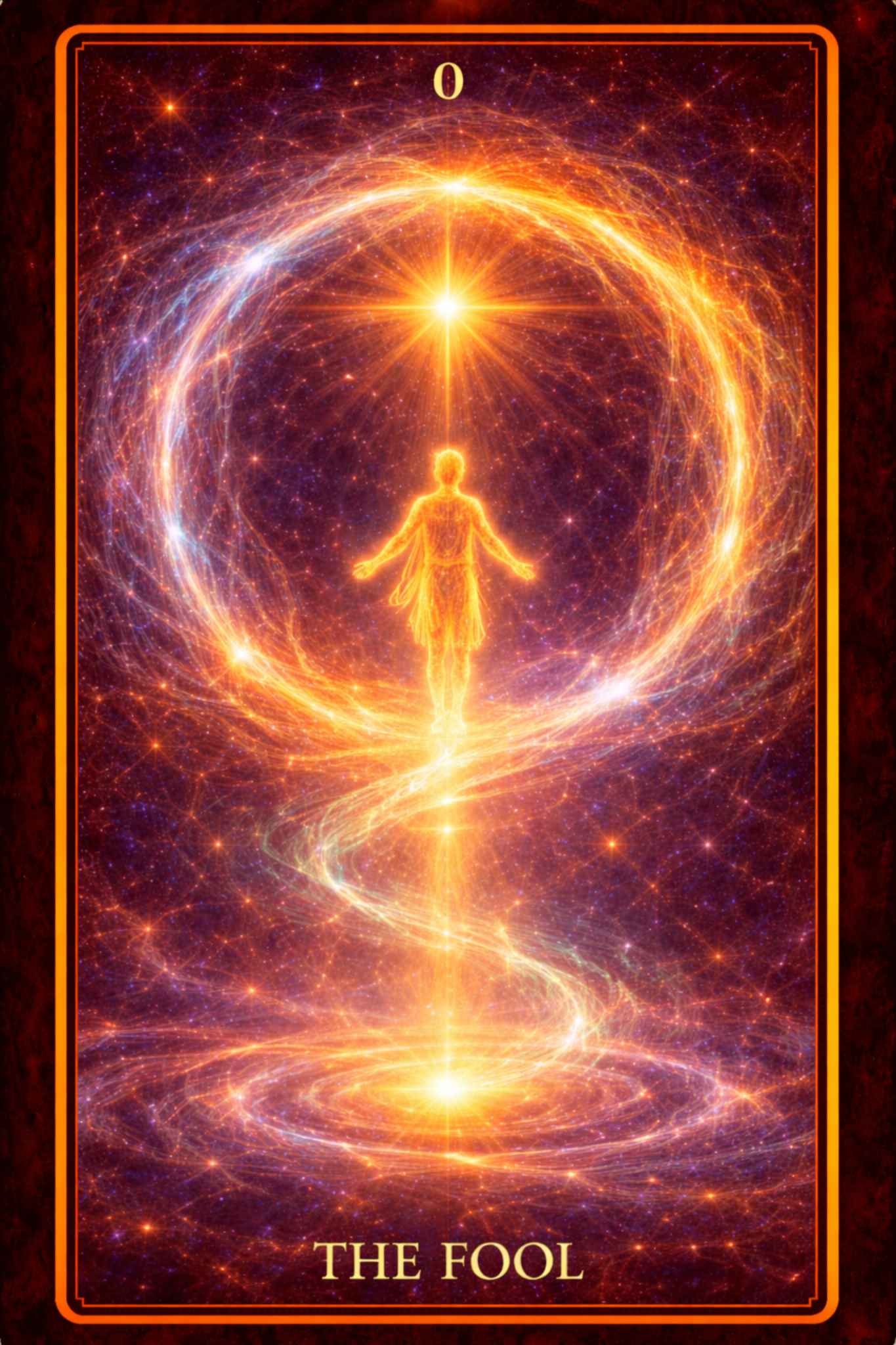
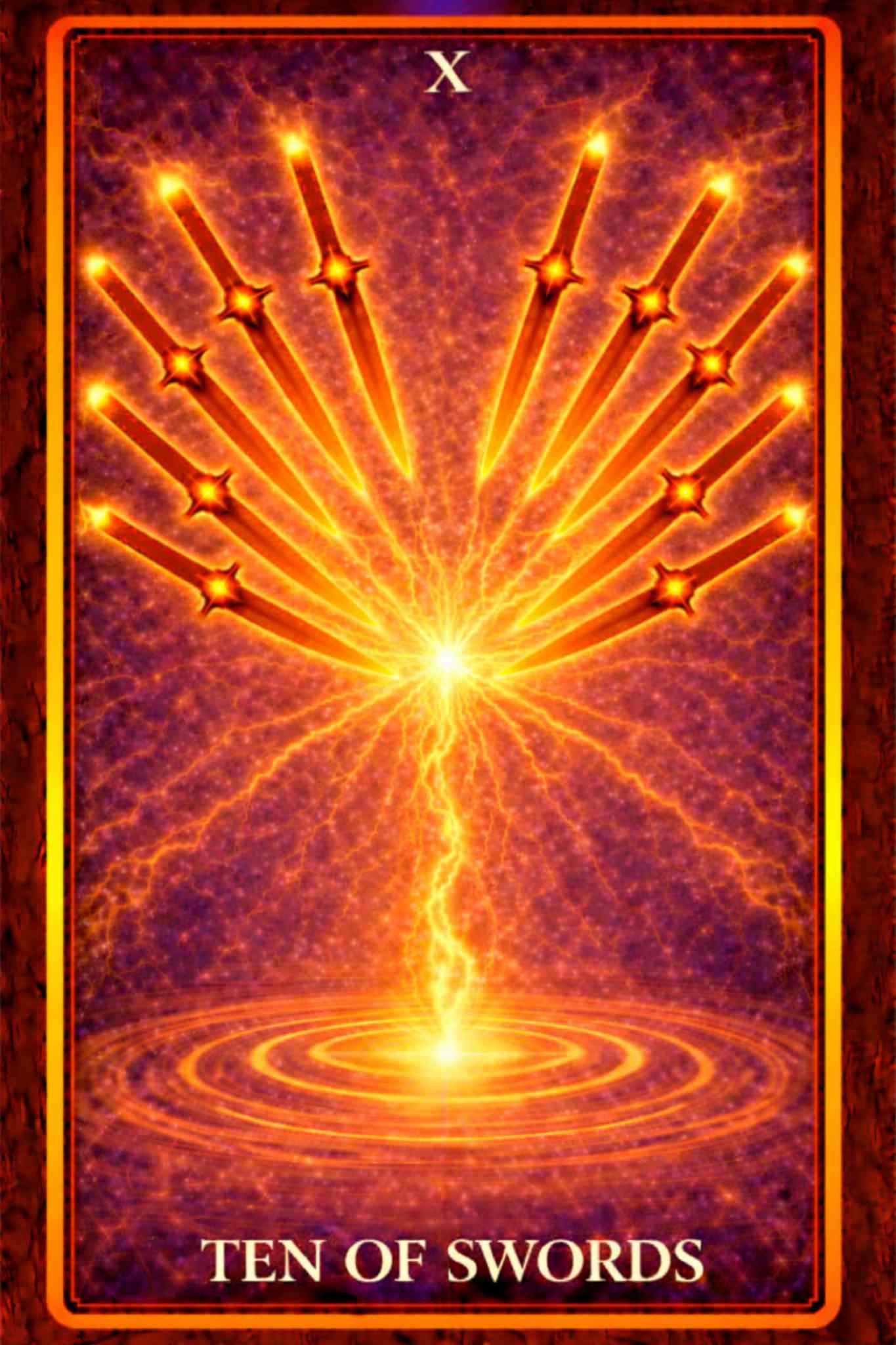
The Fool and Ten of Swords begins after a mental story has reached its final line. Something cannot keep being thought, defended, explained, or endured in the same way. The old narrative may have collapsed through disappointment, exhaustion, betrayal of expectation, prolonged strain, harsh truth, or the simple recognition that a belief has carried the person as far as it can. The Fool appears at this bleak edge, not as instant happiness, but as the small, almost unbelievable fact that a path can exist after a mental ending. The Ten of Swords marks the end of a thought-form; The Fool stands near the first blank space beyond it.
This combination is intense because the beginning does not come before the fall. It comes after the mind has reached the point where continuing the same inner script would feel false. The person may be tired of explaining someone’s behavior, tired of replaying a failure, tired of arguing with reality, or tired of carrying an identity built around defeat. The Fool brings fresh air, but it enters a room where the old words are still lying on the floor. The new road is possible. It simply has to begin without pretending the ending was light.
Compared with The Fool and Judgement, where the open road may begin after a deeper inner call, reckoning, or awakening from an old version of the self, the Ten of Swords has a more exhausted and final feeling. Judgement listens for what must be answered after the past has spoken; the Ten of Swords shows the moment when a mental story has simply reached the end of what it can carry. This does not have to mean a literal ending in every situation. It can mean the end of a mental pattern, the end of denial, the end of self-blame, or the end of believing that one more repetition will create a different inner result.
A beginning that arrives without triumph
The Fool is often imagined as light, open, and unburdened, but next to the Ten of Swords, that openness is humbled. The person may be beginning again because there is no honest way to continue the same way. That does not make the beginning false. It may make it more real. Some thresholds are reached through hope, others through collapse, and this pair belongs to the second kind. A person may not feel inspired yet. They may simply realize that the old thought has ended, and the next breath has to come from somewhere else.
The Ten of Swords can be dramatic in imagery, but the inner experience may be quiet: a final message read without surprise, a belief breaking after years of strain, a plan that can no longer be sustained, or a personal story that stops making sense. The Fool does not demand celebration. It offers the dignity of the first page after the last page. In that space, the person may ask what remains when the mind stops defending the version of reality that hurt it. The answer may be small, but small is enough for a threshold.
The Ten of Swords spirituality meaning can add depth here because the ending may be less about external drama and more about releasing an inner narrative that has become spiritually or mentally unsustainable. The Fool adds the sense that the release opens a field, though not a guaranteed outcome. The soul may not receive a map. It may receive the absence of the old lie.
When the old thought cannot be carried any further
In relationship questions, The Fool and Ten of Swords can speak of reaching the end of a painful mental cycle around love, attachment, rejection, waiting, guilt, or expectation. It may describe the moment when someone stops rehearsing the same explanation because the explanation no longer protects them. It may also describe the fragile first breath after a breakup, a difficult realization, a harsh conversation, or the exhaustion of trying to keep hope alive in a form that has become damaging. The reading should remain careful: it does not guarantee separation, reunion, apology, or permanent closure. It points to the end of a mental pattern and the possibility of a new relationship with reality.
The Fool love meaning brings an important contrast because The Fool in love often carries uncertainty, openness, and the earliest movement toward a new emotional space. With the Ten of Swords, that openness is less innocent. It comes after pain has stripped away a previous version of the story. A person may be open again someday, or they may be open now only to themselves, to truth, to rest, to distance, or to a way of loving that does not require self-abandonment. That is still a beginning.
This pair can also show the need to stop using the past as a weapon against the future. The Ten of Swords may say, this mental chapter has gone as far as it can. The Fool may say, the next chapter does not need to be written from the wound. That does not mean forgetting, excusing, or moving too quickly. It means allowing the mind to recognize completion where it has been trying to force continuation.
The dawn that comes after mental exhaustion
Timing with The Fool and Ten of Swords is rarely fast in an ordinary sense, even though the shift can feel decisive. Movement becomes cleaner after a person has recognized that a thought, story, role, or expectation is finished. Before that recognition, movement may become another attempt to escape pain. After it, movement can become simpler. There is less to argue with. Less to prove. Less to keep alive by sheer mental force.
You may also want to go one step deeper.
The Fool + Ten of Swords can open up differently inside a focused personal reading.
This pairing favors the first step after the ending has been accepted enough to stop being negotiated every hour. That step may be rest, distance, a quiet decision, a new plan, a conversation that no longer tries to resurrect the old pattern, or the first act of self-respect after too much inner defeat. If the question involves a choice, the timing is better when the person can tell the difference between numbness and peace, collapse and release, finality and despair. The Fool brings movement, but the Ten of Swords asks the movement to come from completion rather than from shock.
A reflective past present future tarot spread can fit this energy when the reader wants to understand what mental story has ended, what the present threshold asks, and what kind of new orientation may be forming. Used carefully, such a spread can help organize the inner transition without turning it into a fixed prediction. The point is to see the movement from final thought to first breath.
What remains after the last sword
What becomes clearer in The Fool and Ten of Swords?
The pair highlights the end of a mental pattern and the fragile opening that follows. It may show where continuing the same thought, explanation, or self-story has become too painful or false.
How can this be understood in love?
It may reflect the end of a painful cycle around love, waiting, disappointment, or self-blame. The focus is symbolic and reflective, so it should not be treated as proof of a fixed relational outcome.
What kind of timing fits this combination?
The timing fits the moment after acceptance begins. The first step may be small, quiet, and sober, but it becomes stronger when it comes from completion rather than panic.
Does this pair always show a literal ending?
No. It may describe the ending of an inner narrative, a damaging belief, or a mental cycle. The outer situation needs grounded context beyond the cards.
The self that rises without needing the old script
The spiritual movement here is stark but strangely clean. The Ten of Swords removes the illusion that the old thought can keep saving the person. The Fool brings the possibility of meeting life without that thought as the center. This can feel empty at first, because painful narratives often become familiar homes. A person may have known who they were through what hurt them, what failed, what they feared, or what they kept trying to fix. When that story ends, freedom may initially feel like absence.
Yet absence can become space. The Fool does not rush to fill it with a new identity. It lets the person stand in the first air after mental collapse and notice that they are still here. The body still breathes. The morning still exists. The road may be faint, but it is not imaginary. This pair does not ask for a triumphant reinvention. It asks for the humility to begin without dragging the final sword into every future room.
A related comparison appears in Death and Ten of Wands, where the ending may involve a burden, role, pressure, or responsibility that has become too heavy to carry in the same form. The Fool and Ten of Swords is more concerned with the first movement after a mental endpoint. It is the strange moment when the person realizes that the old story has finished speaking, and silence itself has become a doorway.
Want to place this combination into a wider reading?
If this pairing feels close to something you are experiencing, a simple spread can help you reflect on the surrounding energy with more clarity.
The first page after the mind has no more arguments
The Fool and Ten of Swords is a serious combination, but it is not empty of hope. Its hope is not loud, decorative, or guaranteed. It is the kind of hope that appears when the mind has no more strength to keep a painful fiction alive. A person may not feel ready for a grand beginning. They may only be ready to stop repeating the final chapter. That can be enough.
The closing image is a road at dawn after a long night of endings. The person rises slowly, not because everything has been repaired, but because the old thought has lost its authority. No sword needs to be pulled into the next step as proof of what happened. The memory can remain, the lesson can remain, the dignity can remain. What does not need to remain is the belief that the final wound must also be the final word.
More combinations with The Fool
Continue with The Fool
Explore Related Guides by Topic
If you want to explore this combination through a more specific emotional lens, these tarot guides can help you follow the broader pattern behind the reading.