
The Fool + Three of Swords
Explore how these two tarot cards interact in a reading through symbolic overlap, contrast, and shared narrative. Tarot combinations often reveal meaning that neither card fully expresses on its own.
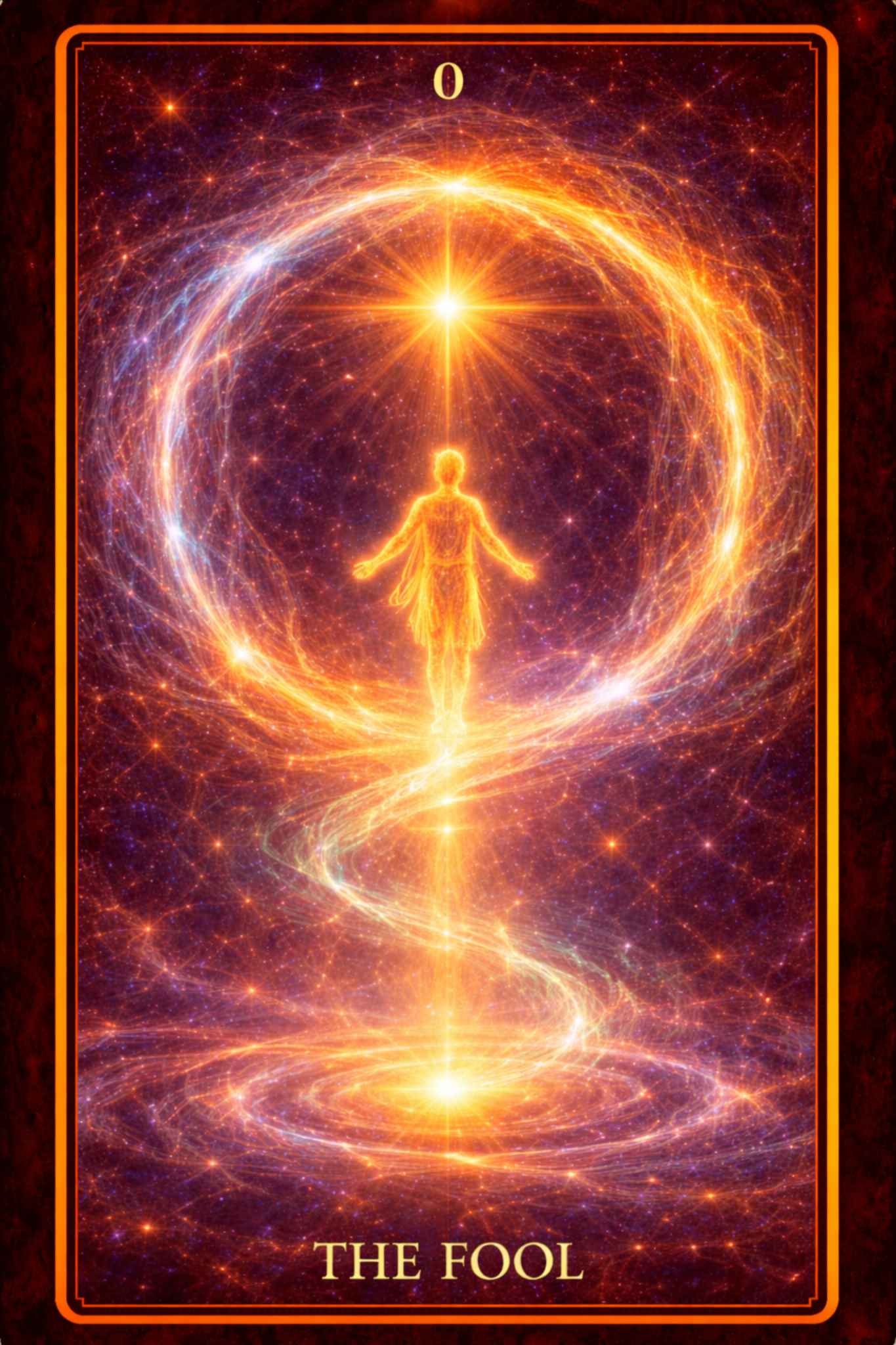
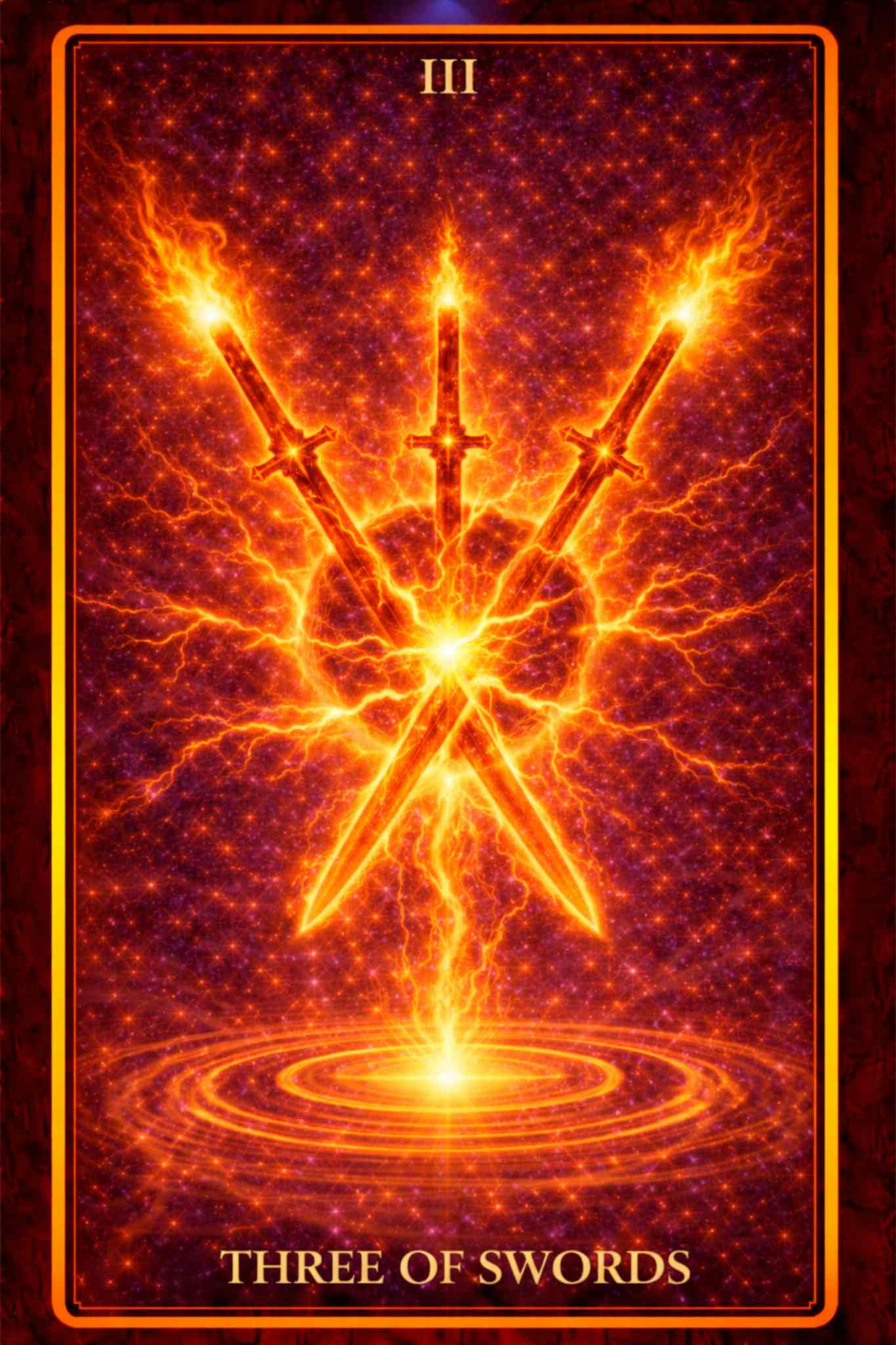
The first step after the sentence that hurt
The Fool and Three of Swords begins in the fragile space after something has already pierced the mind. The road is not untouched here. The threshold is reached with a sore place still open, with words remembered too clearly, with a truth that may have arrived through disappointment, separation, rejection, or a painful recognition. The Fool does not erase that wound. It stands beside it, almost awkwardly, as if the person has discovered that life still opens a door even while the heart is learning how to breathe around the ache.
This is not the bright innocence of a beginning that has never met consequence. It is the more human innocence that returns after a person has been cut by clarity and still senses that they are not finished. The Three of Swords brings the sharp mental form of pain: the words that land, the image that repeats, the conversation that cannot be unheard, the truth that breaks a previous version of the story. The Fool adds the possibility of movement before the wound has become a full philosophy about life. Something hurts, but the hurt does not have to become the whole map.
Compared with The Fool and The Tower, where the open road often begins after a larger structure has cracked, this pairing carries the pain in a more intimate mental and emotional place. The Tower can feel like the collapse of an outer frame, while the Three of Swords feels more like the sentence, memory, or recognition that keeps echoing inside the chest. The Fool still turns toward the unknown, but the turn is quieter, less naive, and more aware that some beginnings are born after an honest break in the old mental picture.
When pain becomes information without becoming identity
The deepest movement in this combination is the difference between learning from hurt and becoming organized around hurt. The Three of Swords can make the mind replay the painful sentence until it becomes a law. The Fool interrupts that process with a strange, tender question: what if this pain is real, but it is not the only truth that can shape the next step? This does not minimize grief or disappointment. It simply keeps the wound from taking over the entire inner horizon.
A person may be standing after a breakup, a difficult message, a betrayal of expectations, a friendship fracture, or an inner realization that makes an old hope impossible to hold in the same way. The Fool does not rush the person into joy. It brings a small gap between pain and identity. That gap matters. In that space, the person can ask what the hurt has revealed, what belief has been broken, what was idealized, what was avoided, and what kind of beginning would be honest rather than reactive.
For relationship questions, the Three of Swords love meaning can deepen the emotional frame, especially when the issue involves heartbreak, painful words, or the mental aftermath of disappointment. The Fool changes the tone by asking how the person might begin again without pretending the wound never happened. This may mean a new relationship with self-trust, a new kind of communication, or a gentler distance from a story that kept cutting the same place.
A beginning that does not need to deny the break
The temptation with The Fool and Three of Swords is to treat movement as proof of recovery. Someone may want to leap out of pain, send a bold message, start a new chapter immediately, or declare themselves free before the person has had time to catch up inwardly. Yet the Fool in this pairing is healthier when it becomes a conscious step rather than an escape route. The Three of Swords deserves to be heard. Its pain may carry information about boundaries, honesty, expectations, emotional dependency, or the way a person has been speaking to themselves.
This is where the combination becomes deeply reflective. The heart may still be sore, but the mind can begin to separate fact from the cruel exaggerations that often follow hurt. A painful ending does not prove that every future opening will repeat the same pattern. A hard conversation does not mean the person is foolish for having cared. A disappointment does not have to become a sentence against desire itself. The Fool gives the inner life a narrow but important opening: begin again, perhaps slowly, from a place that includes the truth instead of running around it.
The shadow of this theme becomes heavier beside Death and Five of Cups, where loss, grief, and emotional ending may require a deeper release before any new direction can be felt. The Fool and Three of Swords is less final in its symbolic posture. It is the person after the cut, standing near the open road, unsure whether they are ready, but beginning to understand that the hurt is part of the story rather than the entire destination.
What can be carried, and what can be left with the old story
There are several useful distinctions inside this pair, and they are worth naming because pain can make every choice feel urgent. The Fool is not asking for a dramatic leap over grief. The Three of Swords is not asking for permanent loyalty to suffering. Together they create a narrow passage where the person can look at what happened without turning the wound into a prophecy. In practical terms, the first step may be emotional, mental, relational, or spiritual, but it needs to be honest about the break that came before it.
- Carry the truth, not the cruelty. The painful recognition may contain something accurate, while the harshest inner commentary around it may be fear speaking in a wounded voice.
- Let the first step be small enough to stay real. A huge declaration may be less useful than one clean boundary, one unsent letter, one calm conversation, or one morning where the old story is not repeated.
- Notice the difference between openness and replacement. The Fool brings possibility, but possibility becomes more grounded when it is not used to cover a place that still needs care.
- Question the story that pain keeps rehearsing. The Three of Swords may repeat the sharpest line; The Fool asks whether another sentence can begin without denying the wound.
This list is not a set of commands. It is a way of listening to the pair without turning it into a prediction. Some situations call for distance, some for careful conversation, some for grieving, and some for a different relationship with the thought that keeps returning. If someone feels unsafe or pressured in a real-life situation, symbolic reflection is not enough on its own; steady support from trusted people or appropriate professional resources matters. Tarot can illuminate inner movement, but lived safety and grounded judgment remain central.
When the mind has cried enough to speak clearly
The timing of The Fool and Three of Swords is delicate because hurt can make speed feel like relief. A person may want to send the message while the wound is hot, leave the room while the sentence is still echoing, or begin something new just to prove that the old pain has lost power. Sometimes a step is needed. Sometimes the first movement should be inward: naming what happened, letting the mind stop spinning around the sharpest point, and waiting until the next word is true rather than merely wounded.
Want to explore this combination in a more personal way?
If this pairing feels important right now, a simple tarot spread can help you reflect on it with more context.
This pair favors action after the pain has become legible. That does not mean the heart must be fully healed. It means the person can tell the difference between a clean recognition and an urge to strike back, escape, or replace the ache with stimulation. A conversation may be useful when the words can carry both honesty and restraint. A boundary may be useful when it protects the tender place instead of punishing someone for touching it. A new beginning may be useful when it grows from self-respect rather than from the need to outrun grief.
For broader inner reflection, the Fool spirituality meaning fits this combination when the question is how to remain open after being hurt. The spiritual layer here is not about pretending pain is a lesson that must be welcomed. It is more intimate than that. It is the moment when the soul discovers that the next page can exist without tearing out the page that made it cry.
Ready to see how this applies to your situation?
A focused tarot reading can help you explore how The Fool + Three of Swords may reflect your current situation, not just the general meaning of the cards.
The new road will still remember the rain
The Fool and Three of Swords is a tender, sharp, and very human combination. It speaks of the first movement after pain has clarified something that could no longer remain vague. The person may be carrying heartbreak, disappointment, or a difficult truth, yet the road has not disappeared. What matters is how the first step is taken: from panic or from presence, from denial or from a clearer relationship with what happened.
This pair does not guarantee reunion, closure, immediate healing, or a perfect new beginning. It offers a symbolic reflection on the moment when hurt becomes part of the path without owning the entire path. The Three of Swords gives the wound a name. The Fool gives the person one breath of future-facing space. Somewhere between the blade and the open road, a quieter sentence can form: I have been hurt, and still I am allowed to meet life without making pain my only compass.
More combinations with The Fool
Continue with The Fool
Explore Related Guides by Topic
If you want to explore this combination through a more specific emotional lens, these tarot guides can help you follow the broader pattern behind the reading.