
The Fool + Nine of Swords
Explore how these two tarot cards interact in a reading through symbolic overlap, contrast, and shared narrative. Tarot combinations often reveal meaning that neither card fully expresses on its own.
The sleepless mind before the open door
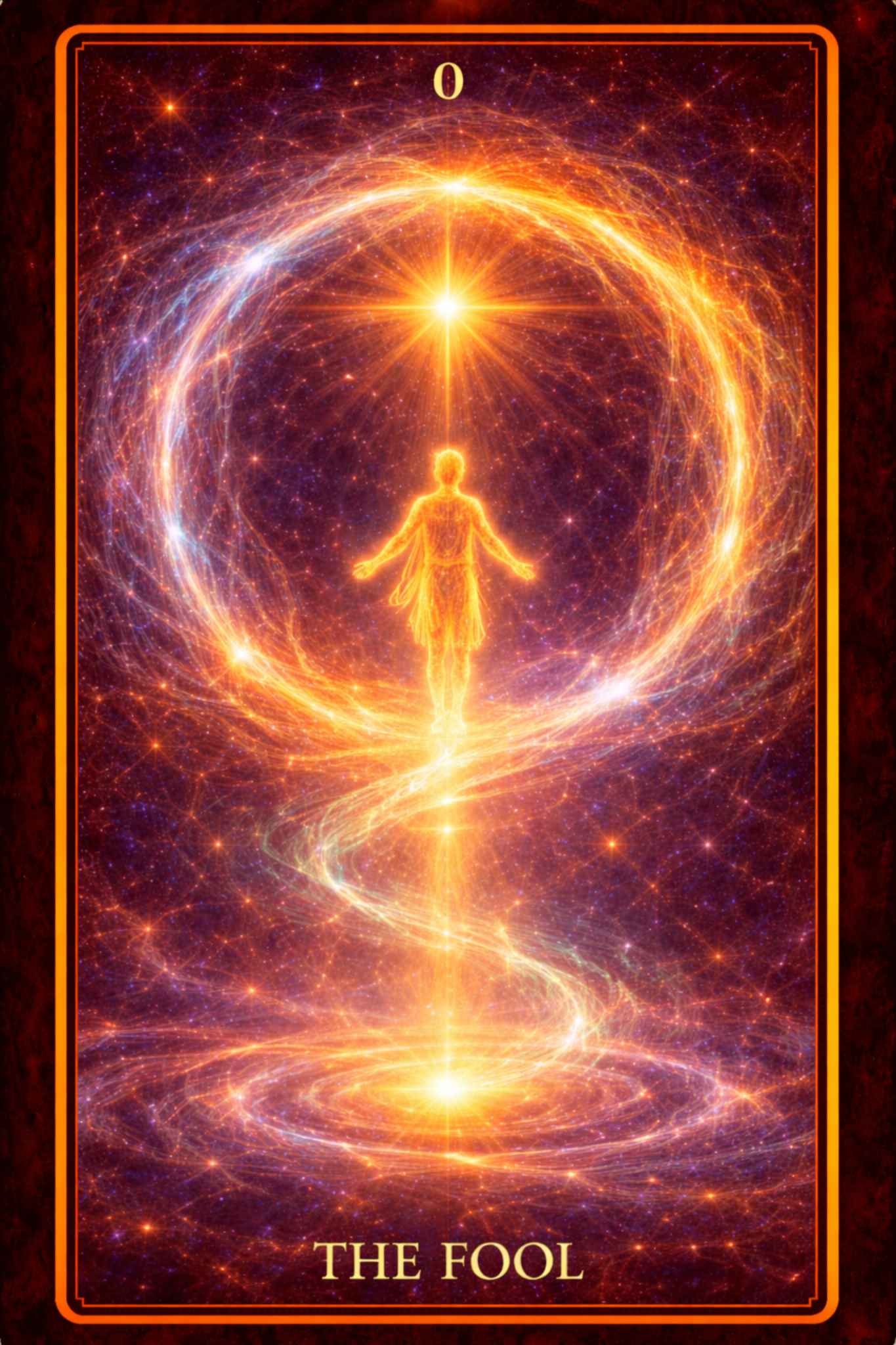
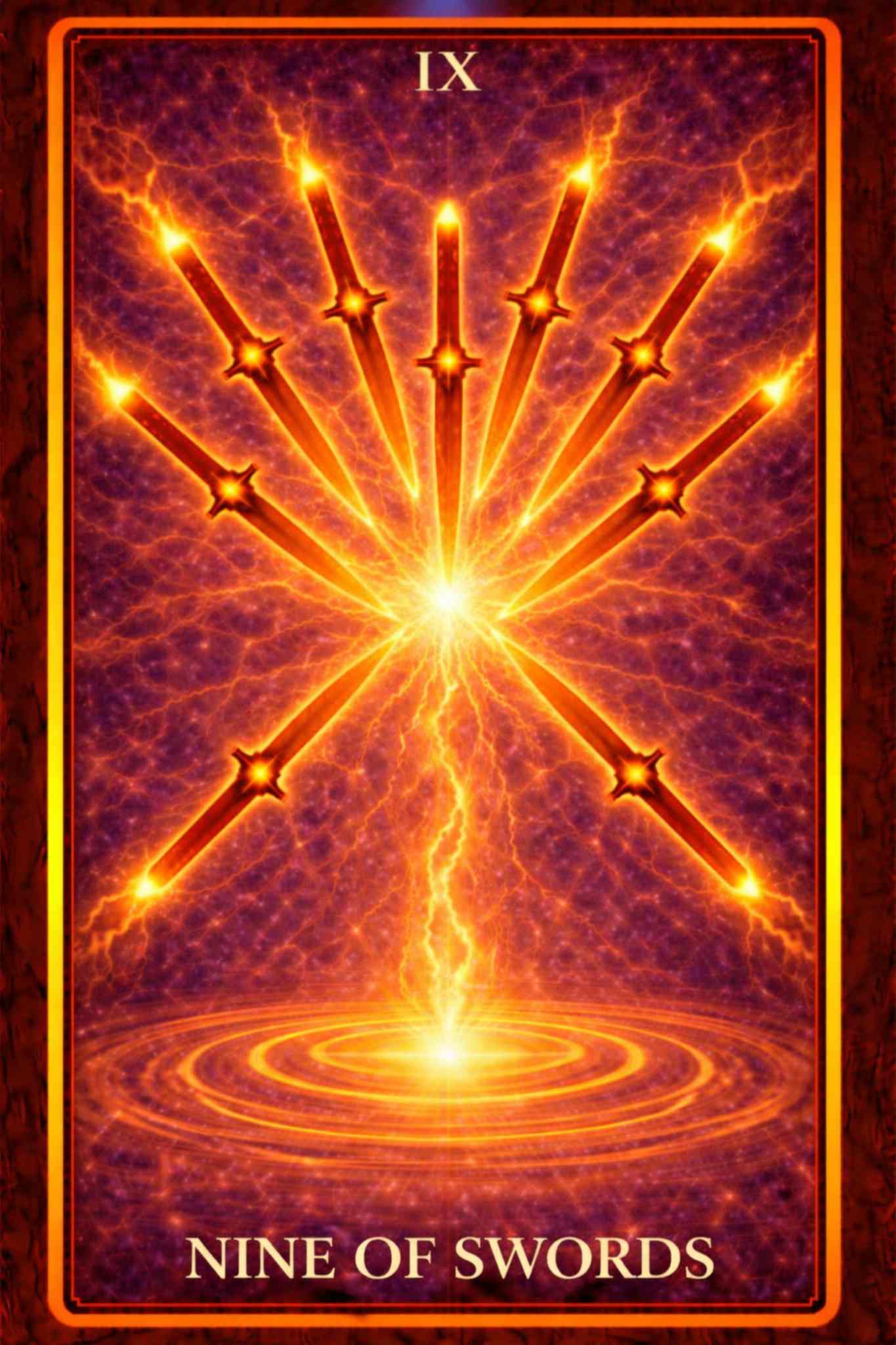
The Fool and Nine of Swords begins in a room where the road is near, but the mind has spent the night imagining every way the step could go wrong. There is a threshold here, a new possibility, a first word, a first move, or a life direction that has not yet taken full shape. Yet the Nine of Swords fills that open space with dread, self-questioning, guilt, anticipated loss, and the private theater of worst-case thoughts. The Fool does not erase the fear. It stands beside the fear and asks whether the whole future should be built from the loudest hour of the night.
This combination can feel deeply human because the new beginning is not blocked by lack of desire. It is blocked by mental suffering around what might happen if desire becomes movement. A person may want to speak, leave, begin, apply, forgive, choose, ask, admit, or try again, while the mind keeps producing images of failure or humiliation. The Fool carries the possibility of untested life. The Nine of Swords carries the exhaustion of thinking too far ahead in a state of alarm. Together they create a threshold where courage may need to be quiet, practical, and very gentle.
Compared with The Fool and The Star, where the open road is touched by quiet hope, renewal, and a gentler trust in what may still unfold, the Nine of Swords feels more nocturnal and intense. The Star brings a soft light after darkness; the Nine of Swords shows the hour when darkness still has the loudest voice. The Fool brings air into that room, but not as a simplistic command to be fearless. It brings one small question: what part of this fear is warning, and what part is the mind punishing itself for wanting to live differently?
Fear may be loud without being complete
The Nine of Swords often speaks in absolute tones. It turns uncertainty into catastrophe, a delayed answer into rejection, a mistake into identity, a conversation into imagined ruin, and a new path into a stage where the self will be exposed. The Fool complicates that harsh inner script by bringing beginner consciousness. It reminds the person that they may be standing before a situation they have not yet experienced, while the mind is already treating it as if it has ended badly. The fear may be sincere. It may also be incomplete.
This is where the combination becomes useful rather than merely heavy. The point is not to dismiss anxiety or shame, especially when real stress, history, or emotional pain has shaped the person’s reactions. The point is to avoid giving the midnight mind full authority over the dawn. A thought can be felt intensely and still need to be checked against the wider reality. A worry can contain useful information and still exaggerate the danger. A first step can be frightening without being wrong. The Fool and Nine of Swords asks the person to listen carefully, but not kneel before every fear as though it were truth.
For questions that become tangled in a yes-or-no frame, the Nine of Swords yes or no meaning can help show how anxiety may compress a complex situation into an urgent demand for certainty. The Fool adds that the unknown is still alive, not already settled by fear. The better reading may begin by asking what the person needs to understand before acting, rather than forcing a fixed answer from a mind that is already overwhelmed.
The first step should not be taken from punishment
In relationship readings, The Fool and Nine of Swords can describe the anxiety that appears before reaching out, opening up, changing a pattern, or entering a new emotional chapter. Someone may be afraid of rejection, afraid of repeating the past, afraid of being naive, or afraid that one vulnerable word will expose too much. This pair does not prove another person’s feelings, intentions, or future action. It focuses on the inner mental climate around the possibility of connection. The heart may be near the doorway, but the mind may be sitting awake with every old fear gathered around it.
Need a little more context around this pairing?
A short reading can help you reflect on the tension, direction, or lesson this combination may be pointing toward.
The Fool feelings meaning adds an important layer here because The Fool’s feelings are often early, unformed, and still learning what they are. With the Nine of Swords, those early feelings can become frightening precisely because they have not yet found shape. A person may worry that openness will make them foolish, that hope will make them vulnerable, or that one uncertain impulse will pull them into the same pain again. The combination asks for tenderness toward that fear, while also asking whether fear has become the only narrator allowed to speak.
There is a difference between a message sent from honest clarity and a message sent to quiet panic. There is a difference between stepping away for self-respect and disappearing because the mind cannot tolerate uncertainty. There is a difference between caution and self-punishment. The Fool and Nine of Swords is especially sensitive to those differences. It may suggest that the next step, if there is one, should come after the person has calmed enough to know whether they are moving toward truth or simply trying to stop the inner noise.
Small ways to separate warning from torment
This combination benefits from practical inner distinctions because the Nine of Swords can make every thought feel urgent. The Fool brings the possibility of movement, but that movement needs a kind relationship with the frightened mind. The person may not need a grand breakthrough. They may need a less punishing way to meet the first step, a calmer frame for the decision, or a more honest separation between reality and imagined disaster.
- Name the fear in one sentence. A fear that can be named often becomes more workable than a cloud of dread pressing on everything.
- Check whether the thought belongs to now. Some worries are about the present situation; others are old pain wearing the clothes of the current question.
- Let the first step be proportionate. The Fool does not require a theatrical leap when one grounded action would be kinder and clearer.
- Avoid using anxiety as a verdict. Feeling afraid does not automatically prove that the path is wrong, impossible, or doomed.
These reflections are symbolic and self-reflective, not medical or psychological treatment. If anxiety, panic, or sleepless distress feels severe or persistent, real support from trusted people or qualified professionals can matter more than any card interpretation. Within a tarot reading, however, the pair can help a person notice how the mind speaks when it is frightened, and whether the next step needs to be smaller, slower, and less shaped by self-blame.
When daylight is needed before the decision
The timing of The Fool and Nine of Swords favors waiting until the thought can be met in daylight. This may be literal or symbolic. A decision made at the height of panic may be less connected to truth than to relief. A message written while the mind is punishing itself may carry unnecessary intensity. A departure made from terror may leave the person unsure whether they followed clarity or fled from an imagined outcome. The pause does not have to last forever, but it should last long enough for the nervous charge to settle and for the mind to regain proportion.
This is a helpful pair for asking whether the first step has to happen now, or whether one night of rest, one conversation with a trusted person, one written draft, or one quiet walk could change the tone of the decision. The Fool wants movement, but the Nine of Swords needs compassion before movement. The timing becomes steadier when the person can still feel fear, yet no longer treats fear as the whole landscape. Courage here is not a blazing certainty. It is the ability to begin from a steadier place than panic.
A related contrast appears in The Moon and Seven of Cups, where uncertainty, projection, desire, and fear can become more dreamlike, diffuse, and difficult to separate from reality. The Fool and Nine of Swords is more threshold-oriented and mentally acute. It asks what happens when the person is afraid, but still standing near a new path. The fear may deserve listening. It does not automatically deserve the steering wheel.
Where fear and freedom speak quietly
What becomes clearer in The Fool and Nine of Swords?
The pair highlights the gap between a real beginning and the fear that forms around it. It asks whether the mind is seeing the present clearly or rehearsing pain from an older story.
How can this pair be read in love?
It may describe anxiety before emotional openness, contact, change, or vulnerability. The reading stays safest when it focuses on inner fear and communication rather than claiming what another person will do.
What kind of timing fits this combination?
A calmer moment fits better than an urgent reaction. The first step may be wiser after rest, reflection, or a clear separation between fear, intuition, and old mental pain.
Explore the next layer of this reading.
This combination can mean different things depending on context. A short tarot reading can help you reflect on the question behind the cards.
A beginning that does not have to defeat the night
The Fool and Nine of Swords is a compassionate image for the person who wants to move but feels haunted by thought. It does not promise that fear will vanish before the path opens. It suggests that the first step may become possible when fear is heard without being crowned. The mind may still tremble. The body may still remember old disappointment. The heart may still ask whether openness is safe. Yet the threshold remains, and one small breath of future can enter the room.
The final image is not a carefree traveler untouched by darkness. It is someone sitting at the edge of the bed, seeing a line of morning under the door. The swords are still on the wall of the mind, but they are no longer the only thing visible. A new path may begin as a quieter relationship with fear: not silence, not surrender, but the first careful movement toward a life that is allowed to be larger than the worst thought of the night.
More combinations with The Fool
Continue with The Fool
Explore Related Guides by Topic
If you want to explore this combination through a more specific emotional lens, these tarot guides can help you follow the broader pattern behind the reading.