
The Devil + Three of Cups
Explore how these two tarot cards interact in a reading through symbolic overlap, contrast, and shared narrative. Tarot combinations often reveal meaning that neither card fully expresses on its own.
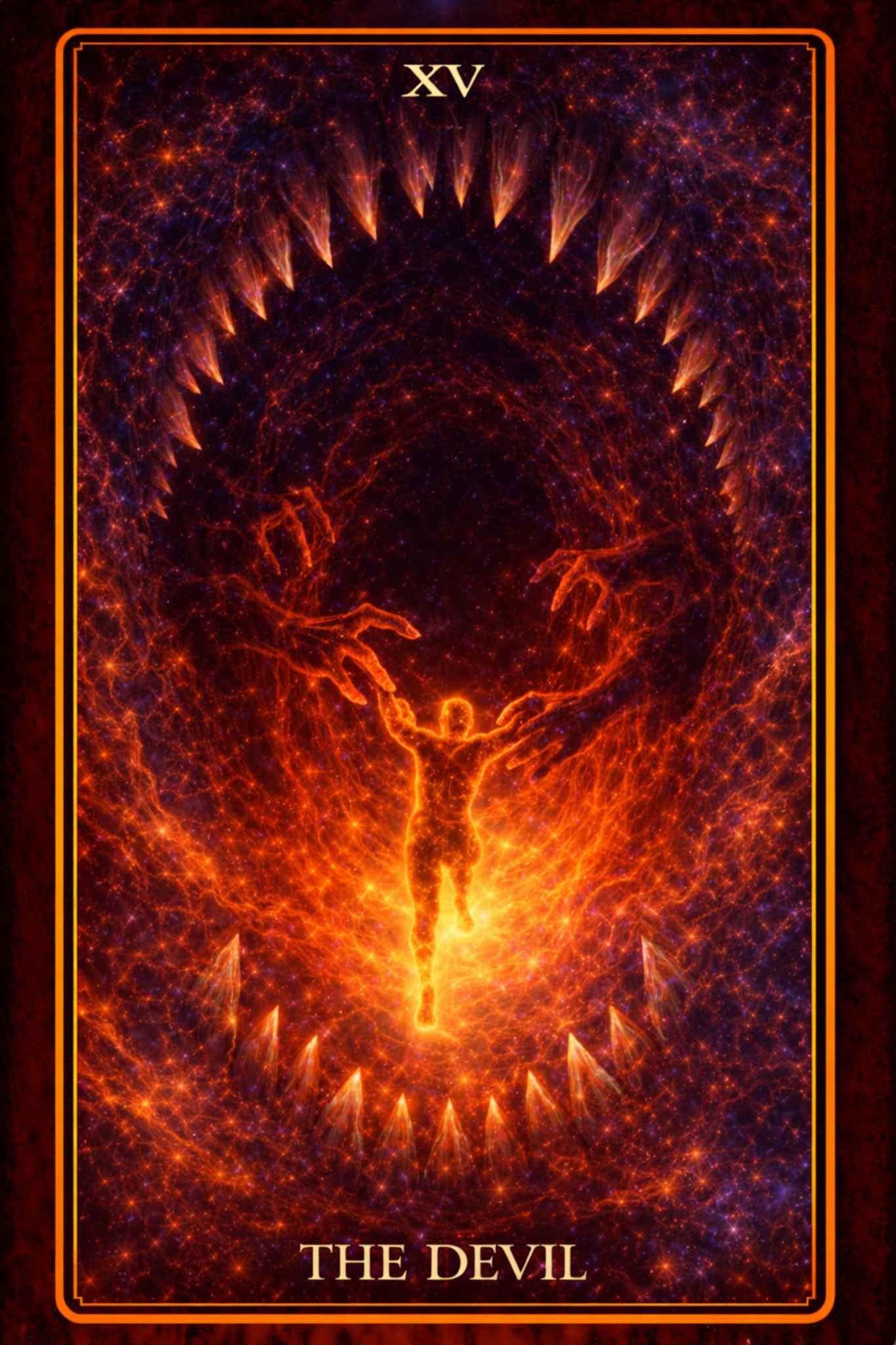
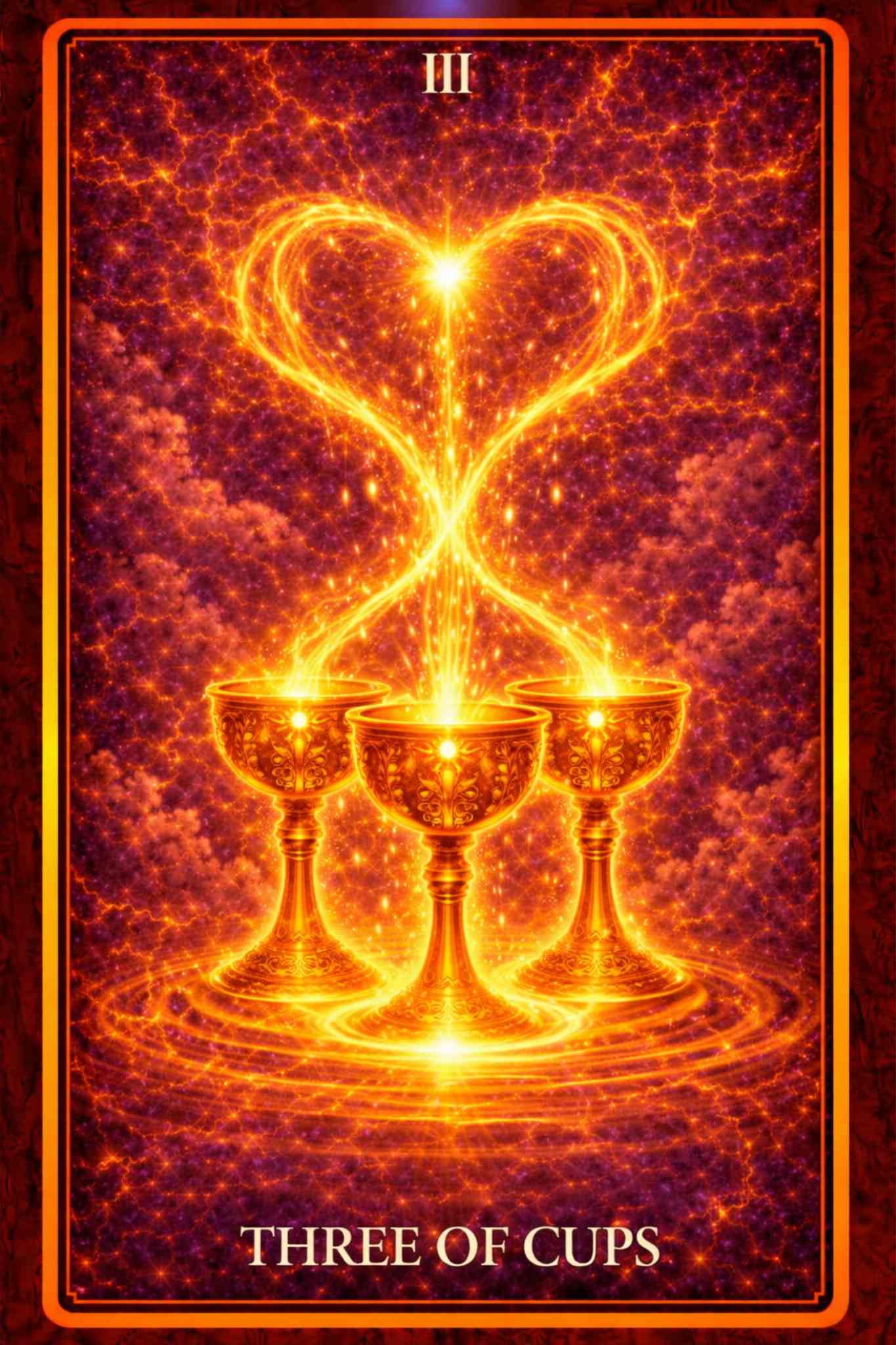
The Devil and Three of Cups Tarot Combination Meaning
Sometimes the chain is made of laughter, shared secrets, late messages, old invitations, and the fear of being left outside the circle. The Devil and Three of Cups brings desire into the social and emotional field. The Three of Cups speaks of friendship, celebration, belonging, shared pleasure, reunion, community, and the emotional relief that comes from feeling included. The Devil adds attachment, craving, pressure, comparison, dependency, and the places where pleasure begins to take more power than the heart intended to give it. Together, these cards explore the moment when belonging becomes charged by need.
This is a very different Devil-Cups dynamic from a private one-to-one bond. The tension is wider. It may involve a friendship group, a romantic triangle, a social pattern, a party atmosphere, emotional validation from others, or the pull of a community that feels exciting but also binding. The Devil here does not turn the Three of Cups into something sinister. It asks a more precise question: where does the need to be wanted, invited, admired, desired, or included begin to weaken inner freedom? A person may genuinely love the people around them, yet still notice how easily their mood becomes controlled by attention, approval, or access to the group.
The Three of Cups on its own can carry warmth, joyful exchange, and the healing power of shared emotional space. The Three of Cups spirituality meaning gives that brighter layer a wider context: connection as nourishment, friendship as medicine, and celebration as a way of remembering that life is not only endured alone. With The Devil beside it, however, the same field becomes more complicated. Belonging may still be real, but it may also become a place where the self starts performing, comparing, pleasing, overindulging, oversharing, flirting for reassurance, or staying attached to a dynamic that leaves a quiet emptiness afterward.
The hunger to belong can wear a beautiful mask
The unique pressure of The Devil and Three of Cups is the emotional dependency that can form around shared pleasure. People often think of dependency as something that happens only in romance, but this pair shows how deeply the heart can attach to being part of a circle. A group may become a mirror of worth. A celebration may become a way to avoid loneliness. A friendship may become a source of identity so strong that the person feels frightened to disagree, step back, or choose a quieter truth. The Devil points toward the moment when participation stops feeling free and starts feeling required.
There may be a strong desire to keep the mood light even when something underneath is tense. The Three of Cups likes emotional flow, laughter, and companionship. The Devil can keep the person tied to the pleasure of the moment because facing the deeper truth would threaten the connection. Someone may say yes when they want rest. Someone may laugh along while feeling uneasy. Someone may keep entering a social pattern that feels intoxicating at night and hollow the next morning. The issue is not pleasure itself. Pleasure becomes heavy when it begins to replace honest choice.
There is a useful contrast with The Devil and Two of Cups, where the chain often forms between two people through intimacy, desire, reassurance, and mutual emotional leverage. Here, the bond spreads through the room. It may be the pull of a friend group, an audience, a romantic possibility inside a social circle, or the feeling of being alive only when others are watching. The Devil and Three of Cups asks whether the shared cup is truly nourishing the heart, or whether it has become a ritual for escaping a private lack.
Social sweetness, shadow pressure
In love readings, this combination can describe attraction that is tangled with social dynamics. There may be chemistry inside a friendship group, a bond that blurs boundaries, emotional comparison, or a situation where desire becomes intensified by who sees it, approves of it, envies it, or competes with it. The cards do not need to declare betrayal or drama. They simply invite awareness around the emotional weather created by shared spaces. Sometimes the strongest pull is not only toward a person, but toward the feeling of being chosen in front of others.
The Devil can also point to the shame that follows pleasure. A person may enjoy a connection, a flirtation, a night out, or a group dynamic, then later feel caught in regret, craving, or self-judgment. The more useful question is not “Was the pleasure wrong?” but “What need was the pleasure trying to answer?” A related reading on The Devil intentions meaning can add useful context here, especially when desire is mixed with need, fear, reassurance-seeking, emotional leverage, escape, or the urge to regain strength in a place where the heart has felt exposed.
For some readers, this pair may also reflect a social pattern that repeats because it offers temporary relief. The person may return to the same conversations, the same kind of gathering, the same kind of romantic tension, or the same approval-seeking loop because it produces a familiar emotional charge. That familiarity can feel like belonging even when it is only habit. The Devil does not shame the need. It reveals the cost of letting the need make every choice. If a situation involves pressure, coercion, or a genuine sense of danger, symbolic interpretation should give way to real support from trusted people or appropriate services.
When the cup is shared, ask who is paying the price
Timing with The Devil and Three of Cups often asks for reflection before saying yes to the atmosphere. The invitation may look harmless. The message may feel exciting. The gathering may promise relief. Yet the cards suggest pausing long enough to sense the inner motive. Am I going because I want to, or because I fear being forgotten? Am I sharing because I feel safe, or because attention feels like medicine? Am I celebrating something real, or trying to outrun an ache that will still be there tomorrow?
You may also want to go one step deeper.
The Devil + Three of Cups can open up differently inside a focused personal reading.
A three-card tarot spread can suit this combination when the question needs a simple but grounded shape: what is the visible pleasure, what is the hidden attachment, and what response would restore choice? The reading may become clearer when it does not focus only on the event or the people involved. The deeper layer is the emotional contract. What do you receive from the circle? What do you give up to remain inside it? Where does belonging become less about love and more about fear?
Another relevant comparison is The Devil and The Star, especially when the need to be seen, admired, included, or emotionally restored becomes tangled with attachment. The Three of Cups may focus on present-time connection and shared pleasure, but The Devil often asks whether the longing for acceptance has started to shape the role a person plays inside the circle.
What becomes clearer after the laughter quiets
After the noise settles, The Devil and Three of Cups asks what the heart honestly feels. Did the shared moment leave warmth, steadiness, and mutual care? Or did it leave comparison, craving, shame, depletion, or the desire for another dose of the same attention? These are not moral questions. They are freedom questions. The cards invite the person to notice the difference between joy that nourishes and pleasure that has to be repeated because it never quite reaches the deeper hunger.
Spiritually, this pair may reveal how the need for belonging can become a substitute for belonging to oneself. The soul may seek itself through the eyes of the group, the reaction of friends, the approval of a lover, or the temporary glow of being included. There is tenderness in that. Humans need connection. The Three of Cups is sacred in that way. Yet The Devil reminds the reader that connection becomes healthier when the self remains present inside it. A person can join the circle without disappearing into it. They can enjoy pleasure without becoming managed by it. They can love their people and still choose their own rhythm.
The Devil and Three of Cups ultimately asks for cleaner joy. It does not reject celebration, friendship, sensuality, or shared emotional life. It asks whether these things are being used freely or compulsively. It asks where the fear of exclusion, loneliness, or invisibility has become too powerful. The healing movement is simple, though often difficult: return to the gathering with eyes open, let pleasure be pleasure, let belonging be mutual, and keep enough inner freedom that the shared cup does not become a chain.
Explore the next layer of this reading.
This combination can mean different things depending on context. A short tarot reading can help you reflect on the question behind the cards.
Frequently asked questions about The Devil and Three of Cups
What does The Devil and Three of Cups mean in love?
The Devil and Three of Cups in love often points to attraction or emotional tension that is shaped by a wider social field. There may be chemistry inside a friendship group, a need to feel chosen in front of others, or a desire for attention, approval, and belonging. This combination does not have to mean betrayal or drama. It asks whether the connection feels freely shared, or whether social pressure, comparison, craving, or fear of exclusion has begun to influence the heart.
Is The Devil and Three of Cups a bad tarot combination?
This is not automatically a bad combination. The Three of Cups can show joy, friendship, celebration, and emotional support, while The Devil reveals where those same pleasures may become harder to leave, question, or hold lightly. The reading is most useful when it looks at the quality of the shared space: does it leave warmth and mutual care, or does it leave comparison, emptiness, pressure, or does it leave comparison, emptiness, pressure, or the wish for repeated attention?
What can The Devil and Three of Cups invite you to consider?
The Devil and Three of Cups can invite reflection on how connection feels when belonging, pleasure, invitation, and group energy become emotionally charged. This pair may point toward the value of enjoying social closeness while still staying aware of personal boundaries, inner freedom, and the quiet pressure to fit in. A more balanced response may involve pausing before saying yes, noticing what a repeated social pattern costs emotionally, and choosing forms of belonging where the self can remain present, clear, and unabsorbed by the circle.
More combinations with The Devil
More combinations with Three of Cups
Continue with The Devil
Explore Related Guides by Topic
If you want to explore this combination through a more specific emotional lens, these tarot guides can help you follow the broader pattern behind the reading.