
The Devil + Six of Wands
Explore how these two tarot cards interact in a reading through symbolic overlap, contrast, and shared narrative. Tarot combinations often reveal meaning that neither card fully expresses on its own.

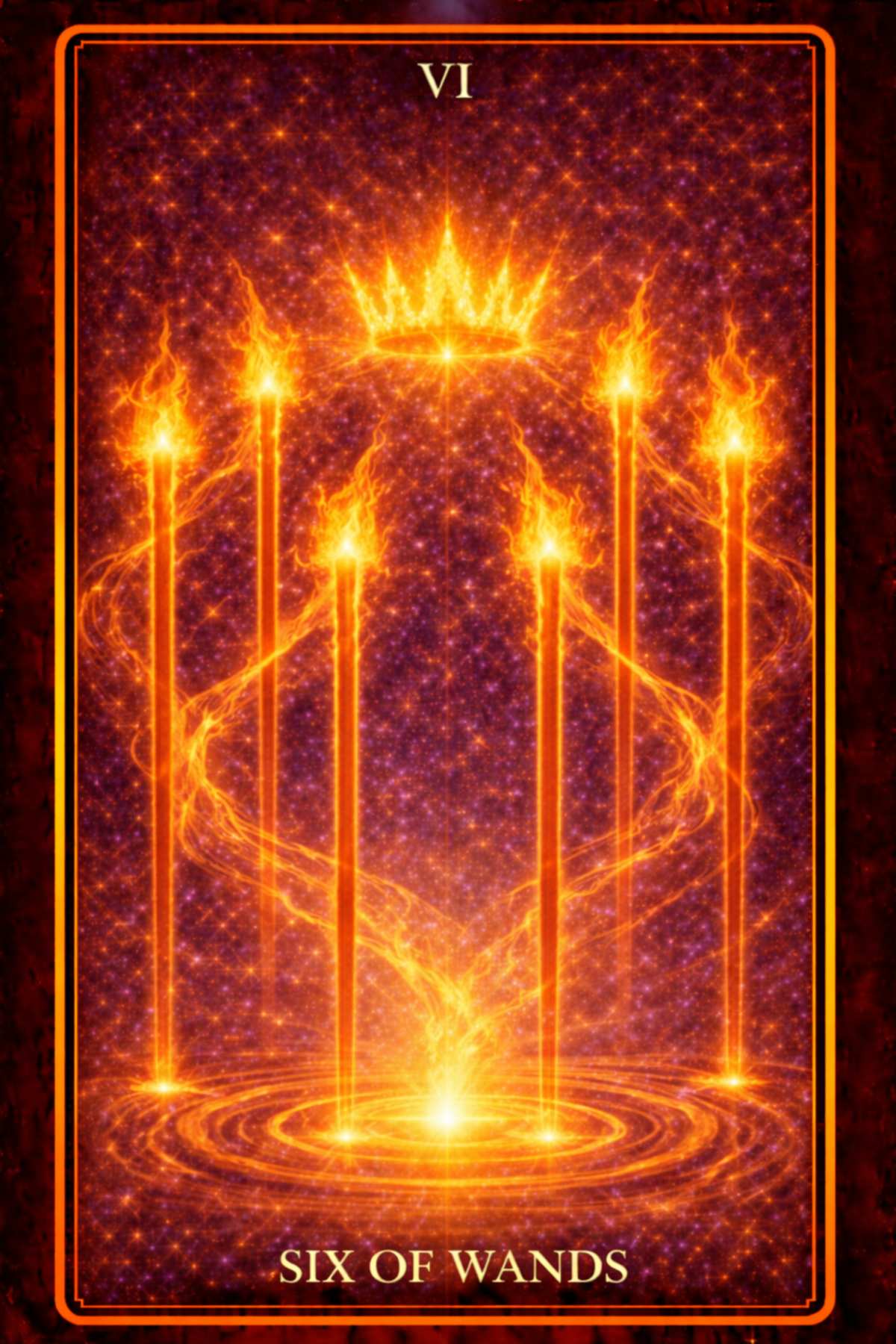
Devil and Six of Wands Tarot Combination Meaning
There are moments when success brings more than applause. It brings heat. Devil and Six of Wands often appear when recognition becomes emotionally charged, when praise, visibility, or public victory begins carrying more weight than the surface moment alone would suggest. The Six of Wands speaks of achievement, acknowledgment, momentum, and the bright lift that comes from being seen after effort has borne fruit. The Devil adds a deeper current. It reveals where success may be binding itself to identity, hunger, image, ego, or the private need to keep feeling elevated through the gaze of others. Together, these cards describe a win that is real, yet psychologically more loaded than it first appears.
This is what gives the combination its depth. Victory may be deserved. Recognition may be meaningful. A person may genuinely have earned the praise, the loyalty, the platform, or the attention now gathering around them. Yet the Devil asks what has begun attaching itself to that success. The question is not whether the achievement matters. It is whether the achievement is starting to function like a substance, a shield, or a mirror that feels increasingly difficult to step away from. At what point does being seen begin to decide who you believe yourself to be? That is the real threshold in this pair.
When recognition becomes more than recognition
The Six of Wands has a radiant quality. It often appears when someone rises above difficulty, receives public support, or experiences the relief of visible progress after sustained effort. It can strengthen confidence and restore faith in one’s path. Beside the Devil, however, visibility becomes more complex. The person may begin leaning on that outer response for more than simple encouragement. Praise may start regulating mood. Public acknowledgment may begin replacing quieter forms of self-trust. The warmth of being seen can slowly become a place where the ego wants to live full time.
This shift is rarely dramatic at first. It can happen through accumulation. One good response leads to another. Recognition becomes familiar. Familiarity becomes expectation. Over time, the nervous system starts anticipating the lift that comes from being admired, confirmed, or applauded. The Devil reveals that subtle dependence. The Six of Wands shows the stage on which it grows. The issue is not success itself. The issue is how easily success can start carrying emotional work that belongs elsewhere.
The burden hidden inside achievement
Another powerful theme in this pairing concerns maintenance. Once a person has tasted visible success, they may feel the pressure to sustain it at any cost. The achievement becomes a standard. The image must hold. The reputation must continue. The applause must keep returning often enough to reassure the inner life that its place is still secure. The Devil can intensify this pressure until success stops feeling like a moment of recognition and starts feeling like a condition of emotional safety.
This is where the pair becomes especially revealing. A person may continue pursuing goals that once felt meaningful while quietly losing contact with why those goals mattered in the first place. They may keep performing because the role has become fused with worth. They may fear slipping from the visible height they have reached, even if staying there requires constant strain. The Six of Wands gives the image of triumph. The Devil asks what private contract has been signed in order to keep that triumph alive.
- Devil reveals attachment, dependency, ego hooks, and the hidden payoff inside a pattern.
- Six of Wands brings success, visibility, praise, and the experience of being publicly affirmed.
- Together they often show recognition becoming emotionally charged and closely tied to identity.
- The key tension lies between healthy confidence and a growing need to keep being validated from outside.
- The deeper invitation is to enjoy success without handing it the authority to define the self.
Love and relationship meaning
In relationship readings, Devil and Six of Wands can point toward a bond where admiration, validation, or being chosen plays a major emotional role. A person may feel uplifted by how the relationship reflects on them, how desired they feel within it, or how much attention and affirmation they receive from their partner. The connection can feel energizing because it offers both attachment and approval. That combination can be powerful, especially for someone who has longed to feel seen, preferred, or publicly claimed.
Want to explore this combination in a more personal way?
If this pairing feels important right now, a simple tarot spread can help you reflect on it with more context.
At its healthiest, this pairing can simply show a relationship that restores confidence and creates a strong sense of mutual appreciation. One person may genuinely help the other feel more alive, more attractive, more capable of standing in their own light. Yet the Devil asks whether that validation has become too central to the bond. Does the connection still feel steady when admiration softens for a moment, or does uncertainty rush in immediately? That distinction matters because some relationships quietly begin organizing themselves around the need to keep proving devotion, desirability, or status inside the partnership.
In more difficult expressions, the pair can describe a dynamic where approval becomes a kind of emotional currency. One person may need constant reassurance. Both people may become invested in how the relationship appears to others. The bond may then depend too heavily on external signs of being special, victorious, envied, or visibly wanted. The Devil is especially clear there. It shows where love is being asked to carry the burden of self-worth, and where the pleasure of being admired may be masking a deeper fragility.
Career, work, and public life
In career readings, Devil and Six of Wands are often highly recognizable. They can describe a moment of real success, public praise, brand growth, leadership visibility, or a professional image that has started attracting attention and loyalty. This can be a strong and well-earned phase. The person may have worked hard for exactly this kind of arrival. The Six of Wands celebrates that openly. The Devil does something more intimate. It asks what relationship the person is now forming with the spotlight itself.
Some people discover that recognition changes the emotional logic of their work. They may become more focused on staying visible than on staying aligned. They may start measuring value through applause, numbers, audience response, reputation, or signs of superiority over others. The work can remain good while the inner posture changes. Success becomes stimulating in a way that is difficult to regulate. Criticism lands harder. Silence feels heavier. Momentum begins to depend on being seen, and that can gradually shift the person away from the quieter center that once guided their effort.
This pairing is also very relevant in public-facing fields, online platforms, leadership roles, and performance-driven environments where attention itself becomes part of the reward system. The Devil shows how easily a person can begin chasing the emotional surge attached to metrics, praise, or influence. The Six of Wands makes that chase look noble because the success is visible and often genuine. Yet the cards still ask whether the person remains in authorship of their ambition, or whether visibility has started becoming the thing that dictates pace, mood, and identity.
Psychological and spiritual meaning
Psychologically, Devil and Six of Wands often explore the bond between self-worth and external response. A person may have learned, consciously or otherwise, that being seen favorably brings safety, relief, and emotional coherence. Recognition then becomes more than encouragement. It becomes regulation. The Six of Wands shows the bright surface of that experience. The Devil reveals how it can persist as a pattern even when the person has already outgrown its deeper premise.
Spiritually, these cards invite a return to inner ground. There is nothing wrong with success, beauty, leadership, admiration, or public affirmation. The question is whether those things are being received as gifts or consumed as proof of existence. A spiritually healthy version of this pair allows praise to pass through without becoming a throne. It allows visibility to serve the path rather than replace it. That is a subtle discipline, especially when the outer world is responding strongly. Yet it is exactly the discipline these cards call forward.
Shadow expression and challenge
The shadow side of this combination appears when a person becomes overly dependent on staying elevated in the eyes of others. They may compare constantly, feel destabilized when attention drops, or reshape their behavior to protect the image that receives praise most easily. The Devil shows how seductive that image can become. The Six of Wands shows why it keeps getting reinforced. A person may start living slightly ahead of themselves, always checking the reflection, always sensing whether the crown still sits in place.
Another challenge appears when authenticity begins bending around approval. A person may gradually adapt their voice, values, or decisions in favor of what gains admiration fastest. This does not always look false from the outside. In fact, it can look highly polished and effective. The deeper cost emerges inwardly. The person may feel increasingly dependent on audience response while becoming less intimate with their own quieter truth. The cards ask whether the victory being protected still belongs to the real self, or mainly to the version that learned how to win applause.
Timing and the moment visibility tests the self
Timing with this pair often relates to a phase of heightened attention or meaningful achievement. Something has landed. A person is being seen more clearly, praised more openly, or elevated in some visible way. This is why the reading can be so valuable at such a moment. It does not arrive to diminish success. It arrives to ask what success is starting to shape beneath the surface.
The most useful timing question here is simple and revealing: who do you become the morning after the applause? When the public moment passes, when the messages slow, when the outer confirmation quiets, what remains inside? If confidence remains grounded, then the recognition has likely strengthened something healthy. If emptiness, agitation, or immediate hunger for the next lift rushes in, then attachment may already be forming around the high of being seen. This pair asks the person to notice that difference before the pattern becomes more demanding.
What this combination is really asking
These cards ask a deceptively quiet question: who are you when recognition is absent, and does that person still feel real to you? The achievement may matter deeply. The praise may be sincere. The success may have opened an important chapter. Yet the cards still want to know whether visibility is serving identity or replacing it. That tension sits at the heart of the pair.
The deeper lesson is that victory can become heavy when it starts carrying the work of self-definition. The Devil brings the chain. The Six of Wands brings the banner, the procession, the bright outer proof that something has been won. Together they show a moment when the person can either enjoy recognition with mature freedom or begin binding themselves to the reflected image of their own success. Awareness at that threshold changes everything.
Want to place this combination into a wider reading?
If this pairing feels close to something you are experiencing, a simple spread can help you reflect on the surrounding energy with more clarity.
Closing reflection
Some victories feel like standing on a sunlit step while people call your name. Others feel more like hearing an echo in a canyon and realizing, with a small shock, how quickly you want to hear it again. Devil and Six of Wands belongs to that second kind of knowing. It understands that praise can enter the bloodstream softly. It does not need to shout in order to take up space. It simply arrives, warms the chest, sharpens the outline of the self, and makes ordinary silence feel thinner by comparison.
That is why the wisdom here is not to reject success, shrink from visibility, or pretend recognition means nothing. It is to keep a room inside yourself that applause never gets to furnish. Let the banners wave. Let the victory be real. Let the world answer what you have done. Then go home inwardly, to the place where worth has no audience and the pulse of your life continues even when the crowd has turned the corner. That is the place this pair is trying to protect, because once it remains intact, success can be bright without becoming a master.
More combinations with The Devil
More combinations with Six of Wands
Continue with The Devil
Explore Related Guides by Topic
If you want to explore this combination through a more specific emotional lens, these tarot guides can help you follow the broader pattern behind the reading.