
Death + Six of Wands
Explore how these two tarot cards interact in a reading through symbolic overlap, contrast, and shared narrative. Tarot combinations often reveal meaning that neither card fully expresses on its own.
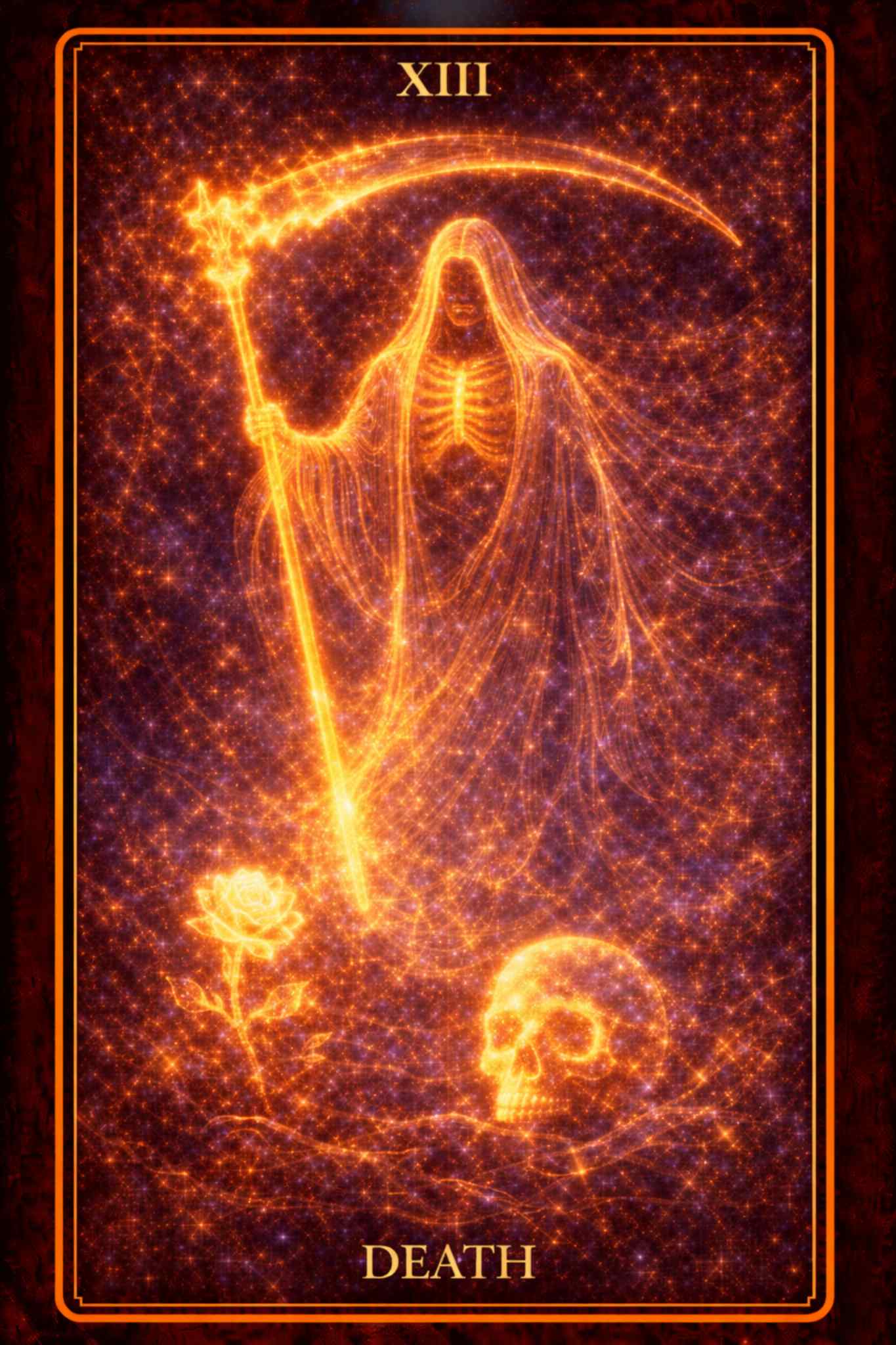
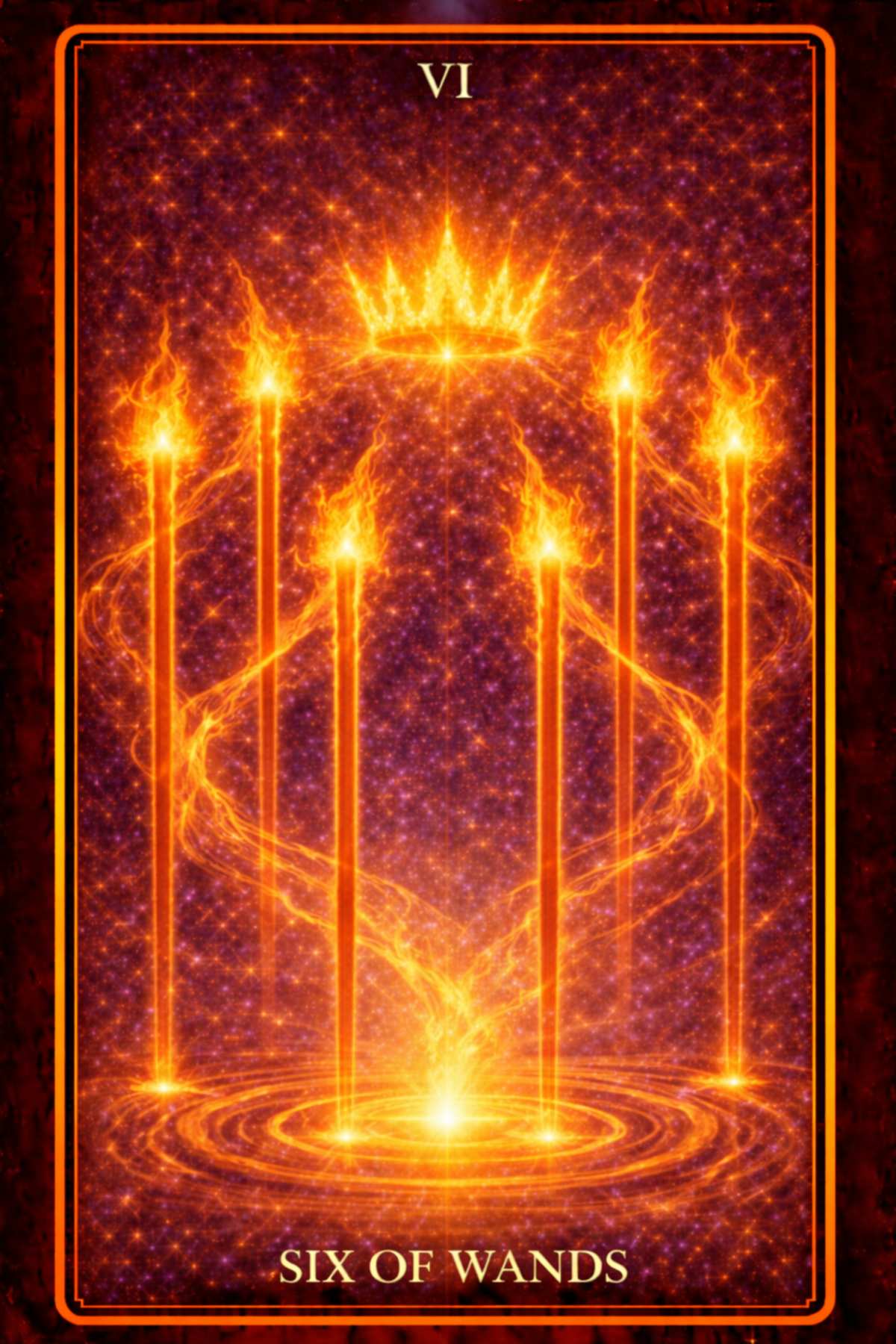
Death and Six of Wands Tarot Combination Meaning
Death and Six of Wands meet where transformation begins to destabilize identity at the level of visibility, recognition, and the roles a person has learned to inhabit in the eyes of others. This is not simply a story of endings followed by success. Death here does not arrive quietly. It disrupts continuity by exposing where an identity has been sustained more by momentum than by living truth. A person may still be moving forward, still being seen, still receiving response, yet something underneath has already shifted. The Six of Wands enters as visible fire — progress that wants acknowledgment, movement that confirms itself through reaction, and the emotional lift of being recognized. Together, these cards often appear when outward success continues, but the inner structure that once made that success meaningful is beginning to fracture.
This creates a very specific tension. The Six of Wands brings confidence, momentum, and the sense of being carried forward by response. Death interrupts that flow at a deeper level. It reveals that the self being affirmed may no longer be the self that is actually alive. The applause may still come. The progress may still register. Yet something within the person no longer organizes itself around those signals in the same way. The cards therefore raise a more demanding question than simple success or failure: what happens when recognition continues, but identity no longer fully aligns with what is being recognized? A more movement-driven version of this threshold appears in The Chariot and Death, where forward will meets deep release and irreversible change.
When visibility outlives its meaning
One of the most subtle dynamics in this pair is the way visible success can persist even as its inner relevance dissolves. A person may still be admired, progressing, or receiving positive response, yet feel a growing distance from what once made those experiences meaningful. The Six of Wands shows movement that is affirmed by the outside world. Death shows that the inner structure supporting that movement is beginning to lose coherence. What once felt energizing may now feel like something being carried forward out of habit, expectation, or familiarity rather than genuine alignment.
This is not failure. It is a shift in meaning. Death does not erase achievement. It exposes where achievement no longer reflects the living direction of the self. The person may notice that continuing in the same way requires maintaining an identity that is already changing. The outer form can still function, but it becomes harder to inhabit it fully. In this sense, the tension is not between success and loss, but between recognition and truth. For a more inward emotional layer of this card, Death feelings can help clarify how transformation may be experienced beneath the visible story.
Success under transformation
The combination can also express a more constructive movement. Sometimes Death destabilizes the old identity so that a more authentic form of visibility can emerge. The person may begin to move away from performing success according to inherited expectations and toward something that feels more aligned with their actual experience. The Six of Wands then becomes a reflection of recognition that meets a transformed self rather than reinforcing an outdated one.
This shift is rarely immediate. There may be a period where the old form still generates response while the new form is still taking shape. During this phase, the person may feel divided between continuing what works and allowing space for what is changing. Death asks for honesty in that space. It does not demand rejection of visibility. It asks whether visibility is still connected to something alive, or whether it is maintaining a structure that no longer carries the same life within it. A more active creative version of transformation appears in The Magician and Death, where conscious will meets release, reinvention, and the need to reshape power at the root.
Love and relationship meaning
In relationships, Death and Six of Wands often point toward changes in how identity is formed through connection. A person may have built part of their relational self around being desired, chosen, admired, or affirmed. The Six of Wands reflects that dynamic clearly. Death enters when that structure begins to lose its integrity. What once provided confidence may no longer feel sufficient or stable in the same way.
This can lead to important shifts. A person may begin to recognize where their sense of worth has depended on response rather than on deeper connection. The relationship itself may change as a result. It may become less performative, less tied to image, and more grounded in what is actually present between the people involved. In some cases, the change reveals that a bond has been sustained more by validation than by mutual growth. In others, it allows the connection to deepen because the need to be seen in a certain way begins to loosen. For a focused relationship layer around recognition and confidence, Six of Wands love meaning can help frame visibility, admiration, and emotional response more directly.
When the process is resisted, the tension can become more visible. A person may continue seeking recognition within the relationship even as the underlying dynamic is shifting. This can create a sense of imbalance, where external affirmation remains important but no longer resolves the deeper question of alignment. Death does not remove connection. It changes the basis on which connection is experienced.
Career, work, and public life
In public and professional life, this pair often appears when a person is still succeeding outwardly while undergoing a deeper shift in identity. The Six of Wands can indicate momentum, recognition, or a positive response from the wider field. Death reveals that the structure supporting that success is no longer fully stable from within. A role may still function, a reputation may still hold, yet the person may feel that continuing in the same way requires sustaining something that has already begun to change.
You may also want to go one step deeper.
Death + Six of Wands can open up differently inside a focused personal reading.
This can be one of the more complex forms of transition. It is easier to release what is no longer working than to release what still brings visible results. The difficulty here is not lack of success, but the gradual realization that success no longer defines the direction of growth. The person may need to reconsider what progress means, not because they have failed, but because they are no longer the same as the one who first pursued it.
At its clearest, this combination supports a shift toward more authentic visibility. Recognition may continue, yet it begins to reflect something more aligned with the person’s current state. The Six of Wands remains active, but its meaning changes. It becomes less about proving and more about expressing what is actually alive.
Psychological and spiritual meaning
Psychologically, this pairing often reflects a transformation in how identity relates to being seen. The Six of Wands represents the natural human response to affirmation, progress, and recognition. Death enters when that structure can no longer carry the full weight of identity. The person may begin to notice how much of their sense of self has depended on response, and how unstable that can feel when inner change begins to take place.
Spiritually, the combination points toward the release of performative identity. Recognition may still exist, yet it no longer functions as the center of meaning. The self begins to reorganize around something deeper than visibility. In this sense, the process is not about rejecting success, but about allowing identity to become less dependent on external confirmation. The Six of Wands becomes quieter, more grounded, and more reflective of alignment rather than reinforcement. A more explicit reckoning with recognition appears in Judgement and Six of Wands, where visibility meets review, accountability, and the call to be seen more truthfully.
Shadow expression and challenge
The shadow of this pair appears when a person continues to operate within a form of success that no longer reflects who they are becoming. The Six of Wands can make this difficult to see, because the feedback loop remains positive. Progress continues. Recognition continues. Yet the internal experience becomes increasingly disconnected. Death reveals that maintaining the same pattern requires holding onto an identity that is already shifting.
There can also be a tendency to reject visibility altogether, as if stepping away from recognition were the only way to remain authentic. This is not necessarily required. The challenge is not visibility itself, but the relationship to it. When identity becomes less dependent on external response, recognition can exist without defining the self.
Timing and identity transition
This combination often appears during a period where outward momentum continues while inward transformation is already underway. The timing question is not simply when something ends, but when identity shifts enough that continuing in the same form no longer feels coherent. The Six of Wands suggests that movement and response may still be present. Death indicates that the foundation of that movement is changing.
This creates a threshold. The person may continue for a time within the existing structure, yet the sense of alignment begins to shift. Eventually, the transition becomes clearer. The form may change, or the way it is inhabited may change. In either case, the movement continues, but from a different center.
What this combination is really asking
Death and Six of Wands ask whether the success being pursued still reflects what is alive. The question is not whether recognition exists, but whether it belongs to the self that is actually emerging. The cards point toward a moment where outward confirmation and inner direction begin to separate, and where clarity comes from recognizing that distinction.
The deeper lesson is that transformation can alter the meaning of success without removing the possibility of being seen. Death reshapes identity at its core. The Six of Wands shows that movement and recognition may continue, yet they begin to reflect something different. Together, they form an image of visibility after change — one that is less about maintaining a role and more about expressing what remains true.
Ready to see how this applies to your situation?
A focused tarot reading can help you explore how Death + Six of Wands may reflect your current situation, not just the general meaning of the cards.
Closing reflection
Some changes do not begin with loss, but with a quiet shift beneath something that still appears to be working. This pairing speaks to that kind of moment, where outward movement continues while inner alignment is already changing.
Death alters the foundation of identity. The Six of Wands shows that movement and recognition can still follow, yet they arise from a different place. When that shift is allowed to unfold, success becomes less about maintaining what once worked and more about expressing what is actually alive now.
More combinations with Death
More combinations with Six of Wands
Continue with Death
Explore Related Guides by Topic
If you want to explore this combination through a more specific emotional lens, these tarot guides can help you follow the broader pattern behind the reading.