
The Devil + Nine of Cups
Explore how these two tarot cards interact in a reading through symbolic overlap, contrast, and shared narrative. Tarot combinations often reveal meaning that neither card fully expresses on its own.

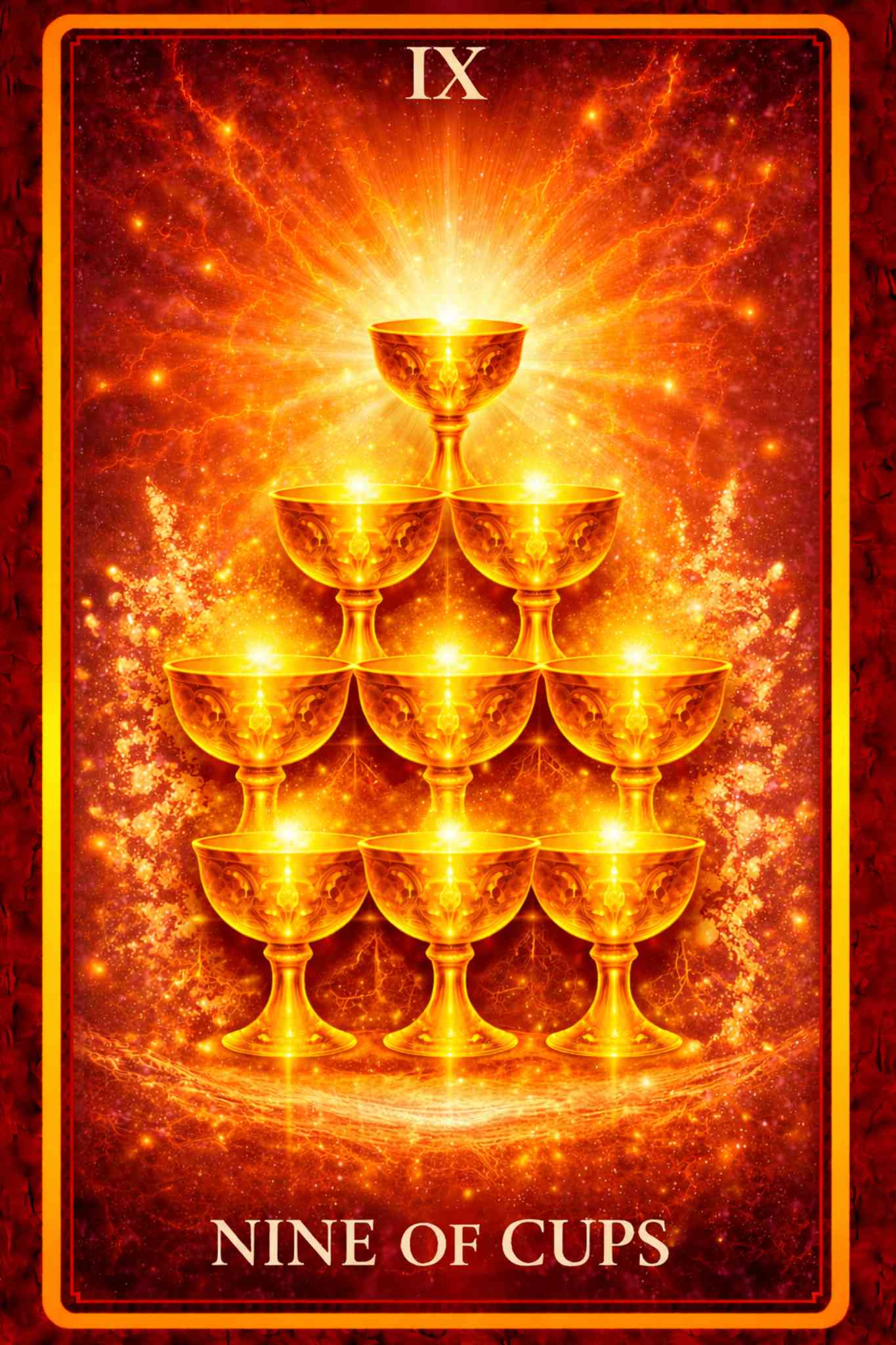
The Devil and Nine of Cups Tarot Combination Meaning
Pleasure can be honest, beautiful, and deeply human, yet it can also become the place where the heart starts asking for more than pleasure can truly give. The Devil and Nine of Cups brings desire into the territory of satisfaction, indulgence, self-worth, emotional appetite, and the private wish to feel full. The Nine of Cups is often connected with enjoyment, emotional fulfillment, sensual comfort, personal satisfaction, and the feeling of having something one wanted. The Devil adds craving, repetition, attachment, excess, inner compulsion, and the subtle loss of freedom that can happen when the wish becomes stronger than the person making it.
This combination is not an attack on joy. It does not say that wanting comfort, love, beauty, sensuality, attention, success, or emotional satisfaction is wrong. The deeper question is whether the heart remains free inside the wanting. The Nine of Cups can enjoy the cup. The Devil can begin to need it, chase it, guard it, repeat it, or measure the self through it. A person may receive something sweet and still feel afraid that it will disappear. They may get what they wanted and immediately feel the hunger for more. They may discover that fulfillment feels good, but it has not answered the older wound beneath the desire.
The Nine of Cups alone can be a generous card of emotional pleasure and personal contentment. The Nine of Cups love meaning explores that warmer layer through affection, satisfaction, and the wish to feel emotionally met. With The Devil, the same pleasure becomes more charged. The reading begins to ask whether desire is being enjoyed consciously, or whether it has become a private throne that demands constant feeding.
The wish that starts asking for too much
The unique tension of The Devil and Nine of Cups is fulfilled desire that still feels hungry. This is different from the Seven of Cups, where the heart may be lost in fantasy, and different from the Eight of Cups, where the person may be walking away from what no longer nourishes. Here, something may actually feel good. There may be attraction, pleasure, attention, intimacy, money, praise, comfort, creative satisfaction, or a private indulgence that creates emotional relief. The shadow appears when the relief becomes the source of identity.
In relationship questions, this pair may describe the pleasure of being wanted, the warmth of romantic attention, or the satisfaction of receiving affection that touches a tender place. Yet The Devil asks whether the person is receiving love, or feeding an inner hunger for validation. The difference matters. Receiving can be soft, mutual, and alive. Feeding a hunger can become restless. It may need more proof, more messages, more desire, more control, more confirmation that the cup still belongs to the self. This is where the Devil love meaning can deepen the interpretation, especially when attraction, dependency, and self-worth are entangled.
There is also a connection with The Devil and Seven of Cups, where fantasy makes desire difficult to read. The Devil and Nine of Cups has a more embodied quality. The cup is closer. The pleasure may be available. The person may already be tasting what they wanted. That makes the shadow more intimate, because the question is not only whether the wish is real. The question is whether the wish still allows freedom once it is being satisfied.
When pleasure becomes proof of worth
One of the deeper layers of The Devil and Nine of Cups is the way pleasure can become tied to identity. The person may not only want the cup; they may begin to need what the cup says about them. Being desired may seem to prove that they are lovable. Being praised may seem to prove that they are valuable. Being chosen may seem to prove that they are safe. Achieving a goal may seem to prove that the old insecurity was wrong. None of these wishes are shameful. They are human. The difficulty begins when the cup is asked to become a mirror that must constantly reflect worth back to the self.
This can make satisfaction strangely fragile. The person may receive affection, attention, success, or pleasure, but instead of resting in it, they may start watching for signs that it is fading. A delayed reply may feel larger than it is. A quiet moment may feel like rejection. A success may need to be repeated quickly before the inner doubt returns. A sensual or romantic experience may be enjoyed in the moment, then followed by the question: was it enough, did it mean enough, did it prove enough, will it happen again? The Nine of Cups can hold the sweetness of having. The Devil shows the fear of losing the feeling that having created.
In this way, the combination can reveal a subtle bargain: “If I can keep this pleasure, I can keep feeling whole.” That bargain may appear through romance, admiration, luxury, achievement, beauty, comfort, food, attention, fantasy, or any experience that briefly fills the emotional space. The issue is not the pleasure itself. The issue is the pressure placed upon it. A cup cannot become the entire foundation of self-worth without becoming heavy. Even a beautiful experience can begin to feel like a demand when the heart believes it must be repeated to stay secure.
The healthier movement is not to reject enjoyment, but to loosen the hidden contract around it. The person can ask: what am I asking this cup to prove? What fear appears when the pleasure fades? What part of me feels full only when I am admired, desired, comforted, or rewarded? These questions do not make the wish wrong. They bring the wish back into proportion. The Devil and Nine of Cups becomes cleaner when pleasure is allowed to be pleasure, not a permanent verdict on the self. Then the cup can be received with more honesty: sweet, meaningful, temporary, human, and no longer responsible for carrying the whole weight of the heart.
Enough is a spiritual question here
The Nine of Cups can look like enough from the outside. There may be comfort, beauty, recognition, sensual enjoyment, or emotional gratification. Yet The Devil beside it asks whether enough is actually being felt inside. A person may have the thing and still feel unsettled. They may achieve the goal and still need another goal to confirm the first one. They may receive affection and still feel threatened by silence. They may enjoy pleasure and still feel shame afterward, as if the desire itself has made them less worthy.
You may also want to go one step deeper.
The Devil + Nine of Cups can open up differently inside a focused personal reading.
This is where the combination becomes more psychologically subtle. Sometimes the issue is excess. Sometimes the issue is deprivation wearing the mask of indulgence. Someone may overreach toward pleasure because some part of them still feels emotionally starved. They may keep returning to a person, fantasy, habit, or situation because it produces a quick sense of being alive. The Devil does not demonize that desire. It asks what the desire has been carrying. What emptiness is being answered for a moment? What part of the self feels real only when the cup is full?
A useful major-arcana comparison appears in The Devil and Strength, where desire, appetite, self-control, tenderness, and inner power can become difficult to separate. The Devil and Nine of Cups is more focused on pleasure after the wish has been touched. The cup may be sweet, satisfying, and deeply wanted, yet the reading asks whether enjoyment is still held with freedom, or whether the desire to keep feeling full has begun to shape the heart too strongly.
When pleasure needs a pause
The delicate moment in The Devil and Nine of Cups often arrives after the pleasure has been received. A beautiful message, sensual connection, personal victory, or emotional high may be worth enjoying fully. Yet the cards invite a pause before satisfaction becomes something the heart must repeat, secure, or turn into proof of worth. What happens when the pleasure passes? What remains when the applause quiets, the reply takes longer, the desire cools, or the cup is no longer in the hand? If the person feels suddenly empty without the pleasure, the pleasure may have been asked to carry more than it can gently hold.
The inner self tarot spread can fit this pair when the reader wants to examine the need behind a wish. The spread can help separate conscious desire from hidden hunger, enjoyment from dependency, and satisfaction from the deeper work of self-worth. This keeps the reading reflective and grounded. It does not turn pleasure into a problem; it simply asks whether pleasure is being used as the only bridge to feeling valuable, chosen, safe, or alive.
Frequently asked questions about The Devil and Nine of Cups
Does The Devil and Nine of Cups mean desire is bad?
No. In this combination, desire is treated as a messenger rather than a moral failure. The cards ask whether the desire is being enjoyed freely or whether it has started to narrow the person’s choices. Pleasure can be healthy when it remains connected to awareness, proportion, and self-respect.
Can this combination be positive in love?
It can point to strong attraction, emotional pleasure, sensual satisfaction, and the feeling of being wanted. The reflective layer asks whether that pleasure supports mutual freedom or becomes tied to control, insecurity, comparison, or the need for constant proof.
What is the deeper message of this pair?
The deeper advice is to enjoy what is real without asking it to repair every older hunger. The cup may be sweet, but it does not need to become the whole source of identity. The heart stays clearer when pleasure is received with gratitude and held with enough space to remain free.
Explore the next layer of this reading.
This combination can mean different things depending on context. A short tarot reading can help you reflect on the question behind the cards.
The cup can be enjoyed without becoming the master
On a deeper level, The Devil and Nine of Cups turns the question toward enoughness. The heart may think it needs more pleasure, more approval, more beauty, more romance, more attention, or another visible sign of success before it can finally rest. Yet the real issue may be where the self has begun to place its value outside itself. The Nine of Cups wants to receive life’s sweetness. The Devil asks whether that sweetness has become something the person must keep chasing in order to feel whole. One kind of enjoyment opens the heart to gratitude. The other keeps the heart hungry even while the cup is full.
The closing message of this pair is not to shrink desire or treat pleasure as something suspicious. It is to meet enjoyment with awareness. The cup can be sweet without becoming the whole measure of the self. Fulfillment can be welcomed without being forced to repair every older hunger. The person is invited to notice where a wish has gained too much authority, where satisfaction begins to turn into craving, and where the present moment is being asked to prove that the heart is finally enough. When the chain loosens, the cup does not lose its beauty. It simply becomes easier to receive. The heart can enjoy what is given without being ruled by the fear of losing it.
More combinations with The Devil
More combinations with Nine of Cups
Continue with The Devil
Explore Related Guides by Topic
If you want to explore this combination through a more specific emotional lens, these tarot guides can help you follow the broader pattern behind the reading.