
Death + Nine of Cups
Explore how these two tarot cards interact in a reading through symbolic overlap, contrast, and shared narrative. Tarot combinations often reveal meaning that neither card fully expresses on its own.
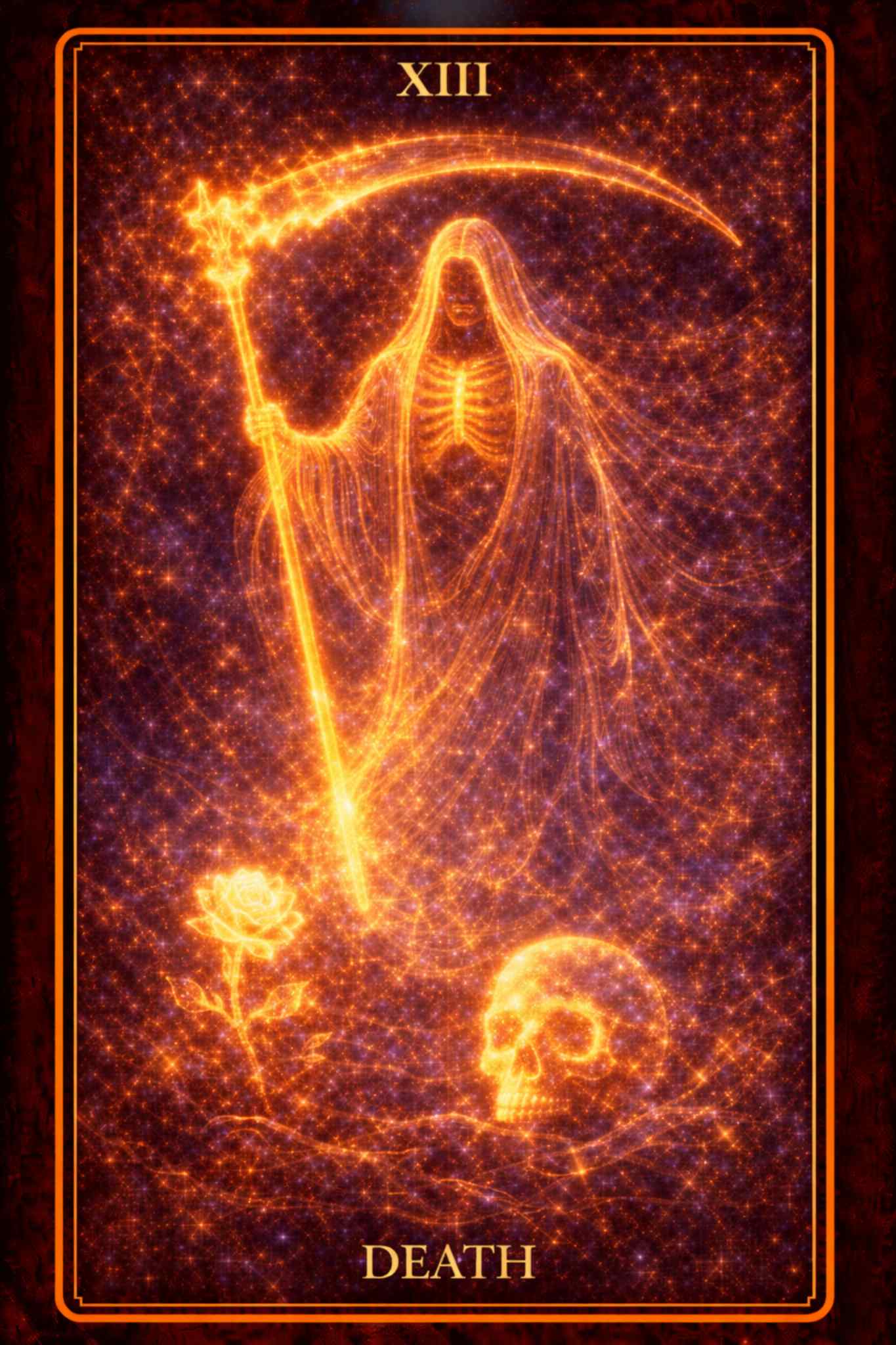
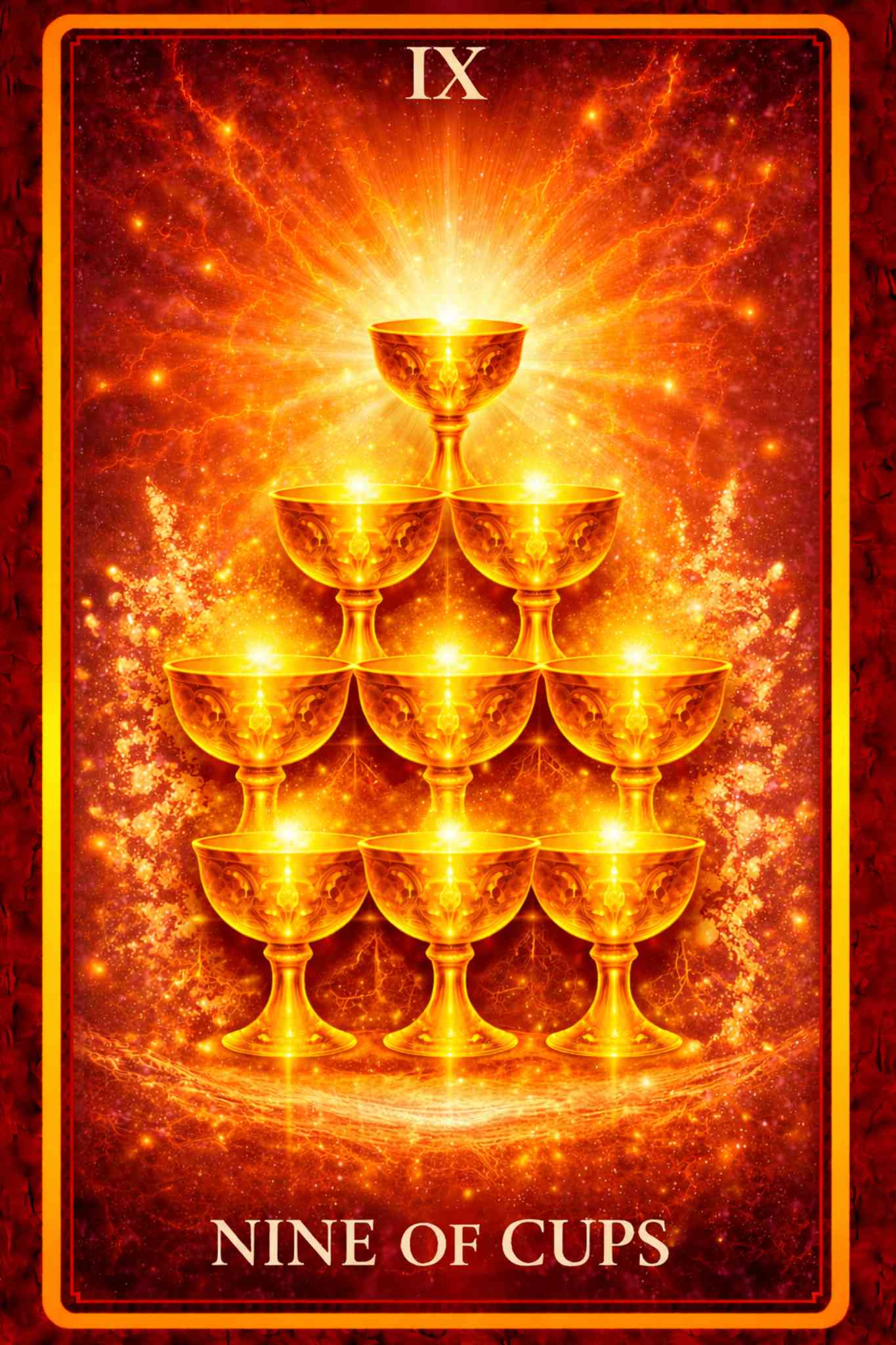
Death and Nine of Cups tarot combination meaning
Fulfillment can become strange when the heart realizes it no longer wants the same thing in the same way. Death and Nine of Cups enters through that quiet shift. The Nine of Cups carries desire, satisfaction, emotional pleasure, personal wishes, and the private sense of having received something the heart once wanted. Death brings completion, release, and the natural end of an old emotional form. Together, they describe the transformation of desire itself: a wish may have been fulfilled, delayed, outgrown, or revealed as less nourishing than expected, and the heart is now learning what remains after the old wanting changes shape.
This combination should not be read as a simple denial of happiness. The Nine of Cups is still a card of emotional richness, and Death does not erase that richness. Instead, Death asks whether the old image of fulfillment still contains life. Sometimes a person reaches a goal and discovers that the self who wanted it has changed. Sometimes a wish comes closer, but the emotional meaning around it has altered. Sometimes what once looked like happiness now feels too small, too private, too self-contained, or too tied to an earlier version of the heart. The pair asks for honesty about desire, because desire is one of the places where the soul can hide from itself most beautifully.
The unique tension here is between satisfaction and release. The Nine of Cups wants to enjoy, receive, and rest inside emotional pleasure. Death asks what has completed its purpose inside that pleasure. This may be the end of an old fantasy of success, the release of a wish that no longer reflects the present self, or the recognition that fulfillment without inner renewal can become a polished room with stale air. The cards do not shame desire. They refine it. They ask what kind of happiness still feels alive after illusion, habit, and old identity fall away.
When a wish no longer belongs to the same self
The Nine of Cups often reflects the personal heart: what someone wants, what they hope will satisfy them, what they imagine will bring relief or emotional completion. Death changes the relationship to that want. A wish may still be visible, but it may belong to a former self. The person may realize that they have been carrying an old desire because it once gave direction, not because it still gives life. This can be disorienting. It is easier to release pain than to release a dream that once felt like proof of happiness.
- A possible sense that a long-held desire no longer creates the same emotional response
- A quiet recognition that fulfillment has changed meaning over time
- The feeling of holding onto a wish out of memory rather than present truth
- A subtle distance from goals that once felt deeply personal
- An emerging awareness that satisfaction may require a different direction
This is the deeper work of the combination. Death and Nine of Cups may show that the heart has matured past a previous definition of success, love, pleasure, or emotional security. What once felt like enough may now feel like a symbol rather than a living answer. The question becomes: do you still want this because it nourishes you now, or because you remember wanting it so intensely that letting it go feels like betraying your former self?
A related change of emotional meaning appears in Death and Ace of Cups, where release opens the heart to a new current of feeling. With the Nine of Cups, the process is more private and more focused on satisfaction. The new beginning may not arrive as a fresh cup, but as a changed understanding of what the old cups were meant to give.
Love, longing, and the end of idealized happiness
In love readings, Death and Nine of Cups can describe the transformation of romantic desire. A person may have wanted a relationship, reconciliation, emotional validation, or a specific outcome so strongly that the wish became part of their identity. Death asks whether the wish still reflects the truth of the heart, or whether it has become a preserved image. The Nine of Cups may say that the desire is real; Death asks whether the form of that desire is still alive.
This can appear when someone receives affection but realizes it does not heal what they thought it would heal. It can also appear when a long-held romantic hope begins to lose its emotional charge. The heart may still care, yet the old fantasy of being completed by a person, answer, apology, or return begins to dissolve. This is not cynicism. It is emotional adulthood. The person becomes less willing to call something fulfillment if it requires them to remain attached to an outdated version of themselves.
For the love layer, Nine of Cups love meaning adds useful context because it explores emotional satisfaction, personal desire, and the pleasure of receiving. With Death beside it, that pleasure becomes more discerning. The heart is not simply asking whether the wish can come true; it is asking whether the wish still deserves to guide the life.
The cup that was full, but no longer fresh
There is an unusual metaphor at the center of this pair: a cup can be full and still need to be poured out. The Nine of Cups often suggests fullness, but Death asks whether the contents remain living. An old satisfaction can ferment into stagnation when the person keeps drinking from it long after its season has passed. This may be emotional comfort, attention, achievement, pleasure, independence, or the private enjoyment of having something desired. The issue is not whether the cup once mattered. It did. The issue is whether it still carries clean water.
Death and Nine of Cups may therefore describe the end of self-satisfaction that has become too enclosed. The person may need to move from “this is what I wanted” toward “this is what is true now.” That transition can be humbling. It may involve admitting that a former goal has lost its pulse, that a pleasure has become repetitive, or that a wish was partly shaped by loneliness, pride, fear, or the need to feel chosen. Death does not strip away joy; it removes what joy has outgrown.
This differs from The Magician and Nine of Cups, where desire may be actively shaped, pursued, or sustained through intention and personal will. Death and Nine of Cups is quieter and cleaner. It asks for release because the old satisfaction has completed itself, not because pleasure is wrong.
Timing: when fulfillment needs to be redefined
Timing with Death and Nine of Cups often marks a phase where a wish is changing meaning. Something may be arriving, ending, losing charge, or becoming clearer through experience. The person may notice that anticipation felt stronger than possession, or that the imagined result was more emotionally powerful than the lived reality. This is a time to pause before chasing the next symbol of happiness. The cards suggest that the deeper process involves redefining fulfillment from the inside.
Need a little more context around this pairing?
A short reading can help you reflect on the tension, direction, or lesson this combination may be pointing toward.
This timing can also appear after a success, an emotional win, a reunion, or a period of self-focus. The outer situation may look satisfying, but the inner self may be shifting. Death says the old measure of happiness is completing. The Nine of Cups asks what kind of pleasure remains when it is no longer used to cover emptiness, prove worth, or preserve a former dream. What remains may be simpler, quieter, and more honest.
A reflective tool such as the inner self tarot spread fits this combination well because the issue is often internal rather than external. It can help explore whether the desire is living truth, old identity, emotional compensation, or a wish that has already served its purpose.
Career, self-worth, and the completed ambition
Although Cups speak primarily through the emotional body, Death and Nine of Cups can also be meaningful in career or personal achievement readings. The Nine of Cups may show a goal, recognition, comfort, or the pleasure of reaching a desired place. Death asks whether the ambition still feels alive after being pursued, reached, or re-evaluated. A person may discover that the role, project, income level, audience, or status they once wanted no longer defines fulfillment. The wish may have been real and still be complete.
This is where Death career meaning becomes relevant. Death in career matters often concerns a role, path, or professional identity reaching the end of its old form. With the Nine of Cups, the shift is tied to satisfaction. The person may be learning that success must evolve with the self, or it turns into a decorated shell.
The pair does not suggest rejecting achievement. It suggests allowing the meaning of achievement to mature. Sometimes the next step is to enjoy what has been gained with gratitude while releasing the belief that it must remain the center of life. Sometimes the next step is to admit that a goal has fulfilled its teaching and can be gently set down. The heart becomes free to want from the present, not from an old hunger.
Want to place this combination into a wider reading?
If this pairing feels close to something you are experiencing, a simple spread can help you reflect on the surrounding energy with more clarity.
The deeper wish after the old wish ends
Death and Nine of Cups ultimately asks what the heart wants after it stops wanting through the old story. This is a subtle but powerful question. The answer may be love with less fantasy, pleasure with more presence, success with more soul, solitude without defensiveness, or simplicity after a long season of chasing symbols. The old wish may die, but desire itself does not have to die. It becomes clearer, less performative, and more aligned with the person who is emerging.
The final message is that fulfillment is alive only when it can change. A wish that once guided the heart may become a memory, a teaching, or a completed cup. Pouring it out can feel like loss, yet it may also be the first honest act of a renewed self. Death and Nine of Cups is the quiet moment after celebration, when the room is still, the cup is in hand, and the heart finally admits what it wants now rather than what it learned to want long ago.
More combinations with Death
More combinations with Nine of Cups
Continue with Death
Explore Related Guides by Topic
If you want to explore this combination through a more specific emotional lens, these tarot guides can help you follow the broader pattern behind the reading.