
Judgement + Four of Cups
Explore how these two tarot cards interact in a reading through symbolic overlap, contrast, and shared narrative. Tarot combinations often reveal meaning that neither card fully expresses on its own.

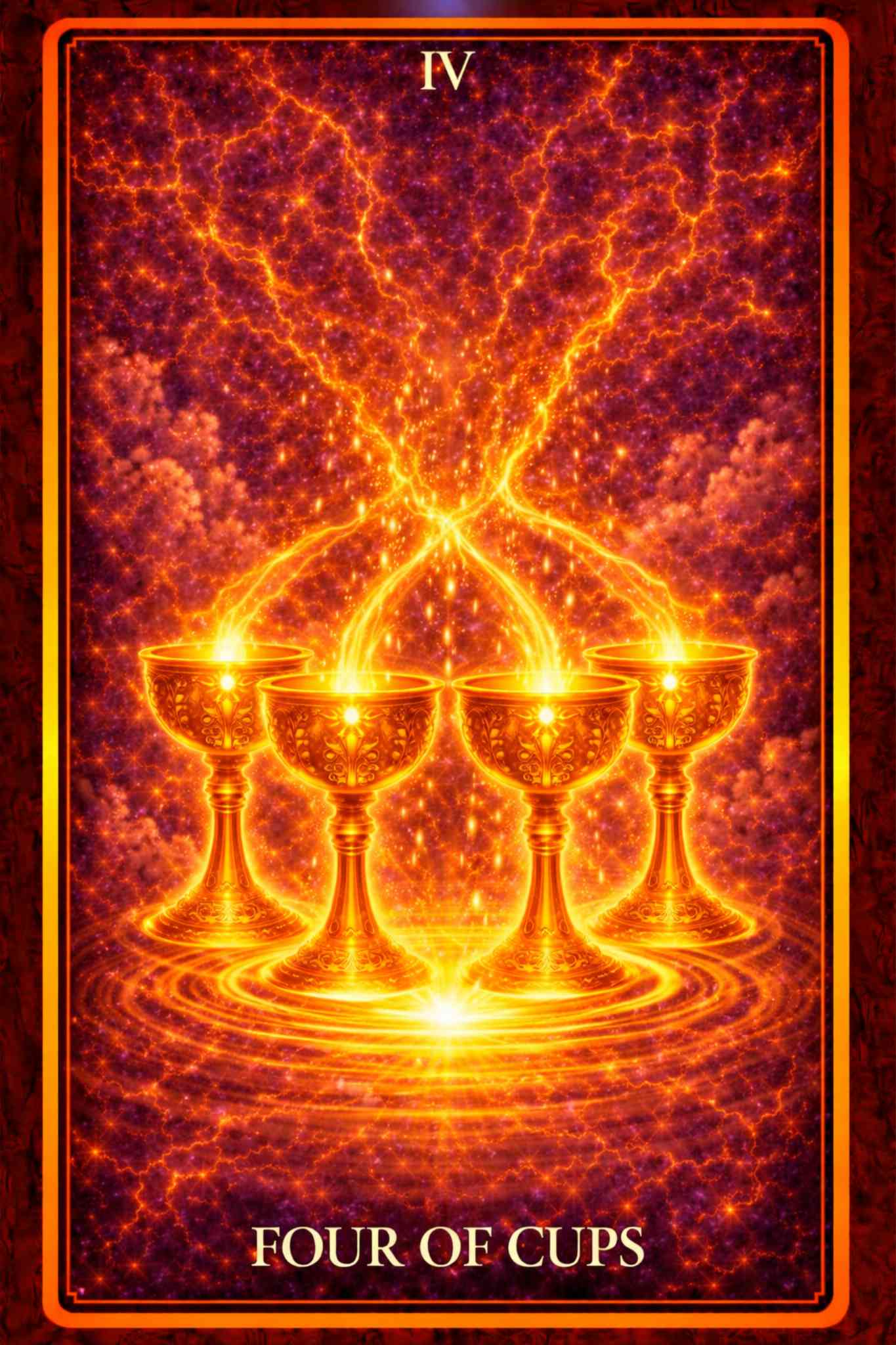
Judgement and Four of Cups Tarot Combination Meaning
The cup may have been offered before, but the heart was too tired, guarded, distracted, or disappointed to recognize what it meant. Judgement and Four of Cups brings a deep inner wake-up into the still, withdrawn, emotionally saturated space of the Four of Cups. This is a pairing of delayed recognition. Something that once felt uninteresting, unreachable, unsafe, or emotionally flat may begin to look different after reflection. The awakening here is quiet, almost uncomfortable: the person realizes that their numbness, refusal, boredom, or emotional retreat may have been carrying a message all along.
The Four of Cups is not simply rejection. It can be the inner room where the heart sits after too much disappointment, too many repeated offers, or too much emotional noise. Judgement enters that room like a sound from outside the closed window. It asks the person to look again. What was ignored? What was protected? What feeling was dismissed because it arrived at the wrong time? What opportunity, apology, affection, or inner truth did the person set aside because they did not yet have the energy to receive it?
This combination is more inward than The Hanged Man and Judgement, where the call rises after surrender, suspension, and a long pause that has changed the person’s relationship with time. Judgement and Four of Cups is more emotionally resistant and more private. The person may be alone with their own refusal, numbness, or delayed recognition. The cup outside the frame may be love, help, forgiveness, a new perspective, or a feeling that has been waiting patiently at the edge of awareness. Judgement does not shame the refusal. It asks whether the refusal still belongs to the present.
The feeling that was missed before
The unique tension of Judgement and Four of Cups is awakening after emotional closure. A person may begin to understand that what they called indifference was actually exhaustion, fear, grief, resentment, or the need to feel safe before receiving anything new. This can appear in love, friendship, family, creativity, or spiritual life. Someone may have turned away from an offer, avoided a conversation, ignored a sign of care, or refused to engage with their own longing. Now the inner call returns, and the question becomes whether the heart is ready to look again with less defensiveness.
The Four of Cups career meaning is useful when this pair appears outside romance, especially around emotional disengagement from work, purpose, or opportunity. Judgement can reveal that apathy may have been a signal rather than laziness. A person may need to reassess whether they are truly uninterested, quietly burned out, waiting for a more meaningful path, or avoiding a choice that has been calling for attention. The Four of Cups withdraws; Judgement asks what the withdrawal has been trying to say.
In relationship questions, this pair may describe someone who finally recognizes the emotional weight of something they once minimized. A message, apology, offer of affection, invitation, or chance for conversation may have been met with silence or distance. Later, the person may understand the situation differently. Still, the cards avoid turning recognition into guaranteed repair. Seeing what was missed is meaningful, but it does not erase the experience of the other person. Judgement asks for accountable awareness, while the Four of Cups asks why the heart closed when the cup was near.
When the inner room starts to open
There is a strong emotional honesty in this combination because it does not pretend that people are always ready when life offers something gentle. Sometimes the heart is too full of old disappointment to recognize a good thing. Sometimes it refuses care because care feels like another risk. Sometimes it ignores love because love would require feeling again. Judgement and Four of Cups does not punish that response, but it does invite review. The person may need to ask whether the old protective posture is still protecting them, or whether it has begun to keep them from life.
A relevant contrast appears in The Hanged Man and Four of Cups, where pause, suspension, and emotional stillness can create a long inward waiting period. Judgement and Four of Cups has more of a ringing quality. The pause is being questioned. The stillness is no longer only rest; it has become a place where a decision, feeling, or recognition begins to press upward. The person may remain quiet, but the quiet is no longer empty.
The Judgement yes or no meaning can help when this pair appears around a decision, because the answer may depend on whether the person is responding from present clarity or old withdrawal. A yes that comes from sudden guilt may be unstable. A no that comes from numbness may need review. The strongest response is usually the one that can admit what has changed inside. The cards ask for a decision born from awareness, not from emotional sleep.
Signs that the closed cup is speaking
- A delayed realization: something once dismissed may now feel more meaningful because the person is seeing it with a clearer heart.
- Emotional withdrawal under review: distance, silence, or apathy may need to be understood rather than simply repeated.
- A missed offer: affection, help, apology, or opportunity may return to awareness after the original moment has passed.
- Need for gentle timing: the heart may be waking, but it still needs enough space to respond with steadiness.
- Accountability without shame: recognition is most useful when it leads to maturity rather than self-punishment.
These signs do not mean a person must act immediately. They help separate genuine awakening from the discomfort of realizing that something was avoided. A missed cup may still be unavailable, or it may need to be approached differently. The point is not to chase every old opportunity. The point is to understand what the refusal revealed. Sometimes the answer is repair. Sometimes it is closure. Sometimes it is the simple but profound admission that the heart was not ready then, and it wants to be more awake now.
You may also want to go one step deeper.
Judgement + Four of Cups can open up differently inside a focused personal reading.
When recognition arrives after numbness
The timing of Judgement and Four of Cups is delicate because the first spark of recognition can feel urgent after a long period of stillness. A person may suddenly want to reach out, explain, accept, apologize, or reclaim something. Yet the Four of Cups asks for emotional digestion. Has the person truly understood what happened, or are they reacting to the discomfort of delay? Is the new openness stable enough to become behavior, or is it a brief wave after a lonely evening? The best timing usually comes when the person can hold the feeling calmly enough to act without demanding an immediate emotional reward.
This pair is especially important around second chances. Judgement can awaken the desire to revisit something, while the Four of Cups may reveal why it was refused in the first place. If the refusal came from fear, exhaustion, or unresolved grief, there may be value in a more honest conversation. If the cup was refused because the situation was unhealthy, dismissive, or unsafe, the awakening may be about trusting that refusal with more clarity. The cards ask for discernment. Returning to a cup only because it is familiar can keep the heart inside the same closed room.
For questions that involve uncertainty, the situation advice outcome tarot spread can fit this combination well. It gives the person a way to separate what is happening, what response may feel more grounded, and what emotional direction could develop if the pattern is handled consciously. Judgement and Four of Cups often needs that separation because the inner call and the old withdrawal may speak at the same time. A structured spread can help the reader hear which voice is clearer.
What the heart asks after the missed cup
Does Judgement and Four of Cups mean someone regrets rejecting an offer?
It can describe delayed recognition, regret, or a new understanding of something once refused. Still, it should be read as symbolic reflection rather than proof of another person’s private feelings. The safer reading is that the emotional meaning of the missed cup is being reconsidered.
Can this pair show emotional awakening after withdrawal?
Yes, that is one of its strongest themes. The person may begin to see that withdrawal protected them for a time, but now the heart wants a clearer relationship with feeling, choice, and response.
Is it time to reach out?
It may be time when the message can be simple, respectful, and free from pressure. If the urge comes mainly from guilt, panic, or loneliness, the cards suggest waiting until recognition becomes steadier.
Want to place this combination into a wider reading?
If this pairing feels close to something you are experiencing, a simple spread can help you reflect on the surrounding energy with more clarity.
The cup at the edge of the room
The spiritual layer of this pair is about waking from emotional sleep without attacking the self for having needed rest. The Four of Cups may have been a refuge. It may have given the person space to avoid overwhelm, protect a tender place, or survive disappointment. Judgement does not tear that refuge down. It opens a window inside it. Fresh air enters, and the person begins to notice what has been waiting outside the old mood.
There is compassion in this reading. People miss things. They decline offers before they understand them. They confuse tiredness with truth, or mistake emotional shutdown for wisdom. Judgement and Four of Cups says that recognition can still matter even if it arrives late. It may lead to repair, a careful conversation, a changed choice, or a quieter kind of closure. What matters is that the person does not use the past as a courtroom. The past becomes useful when it becomes a teacher.
The image that remains is simple: a person sitting with three cups of old feeling, while a fourth waits in the air and a distant call asks them to look up. They do not have to grab it. They do not have to reject it again. They only have to become honest enough to see what it is. From there, the next response can be less numb, less automatic, and more alive.
More combinations with Judgement
More combinations with Four of Cups
Continue with Judgement
Explore Related Guides by Topic
If you want to explore this combination through a more specific emotional lens, these tarot guides can help you follow the broader pattern behind the reading.