
Death + Seven of Wands
Explore how these two tarot cards interact in a reading through symbolic overlap, contrast, and shared narrative. Tarot combinations often reveal meaning that neither card fully expresses on its own.
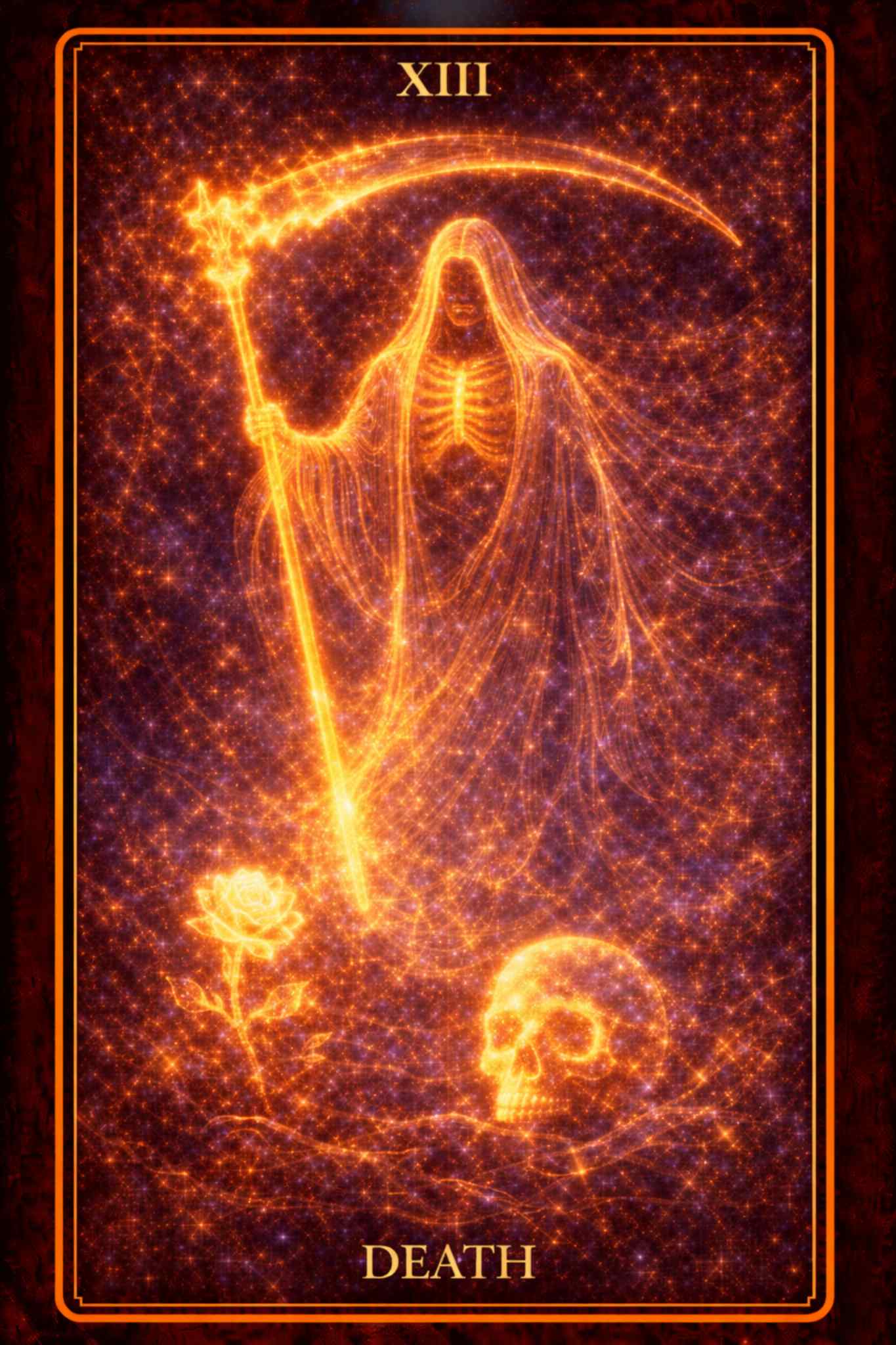
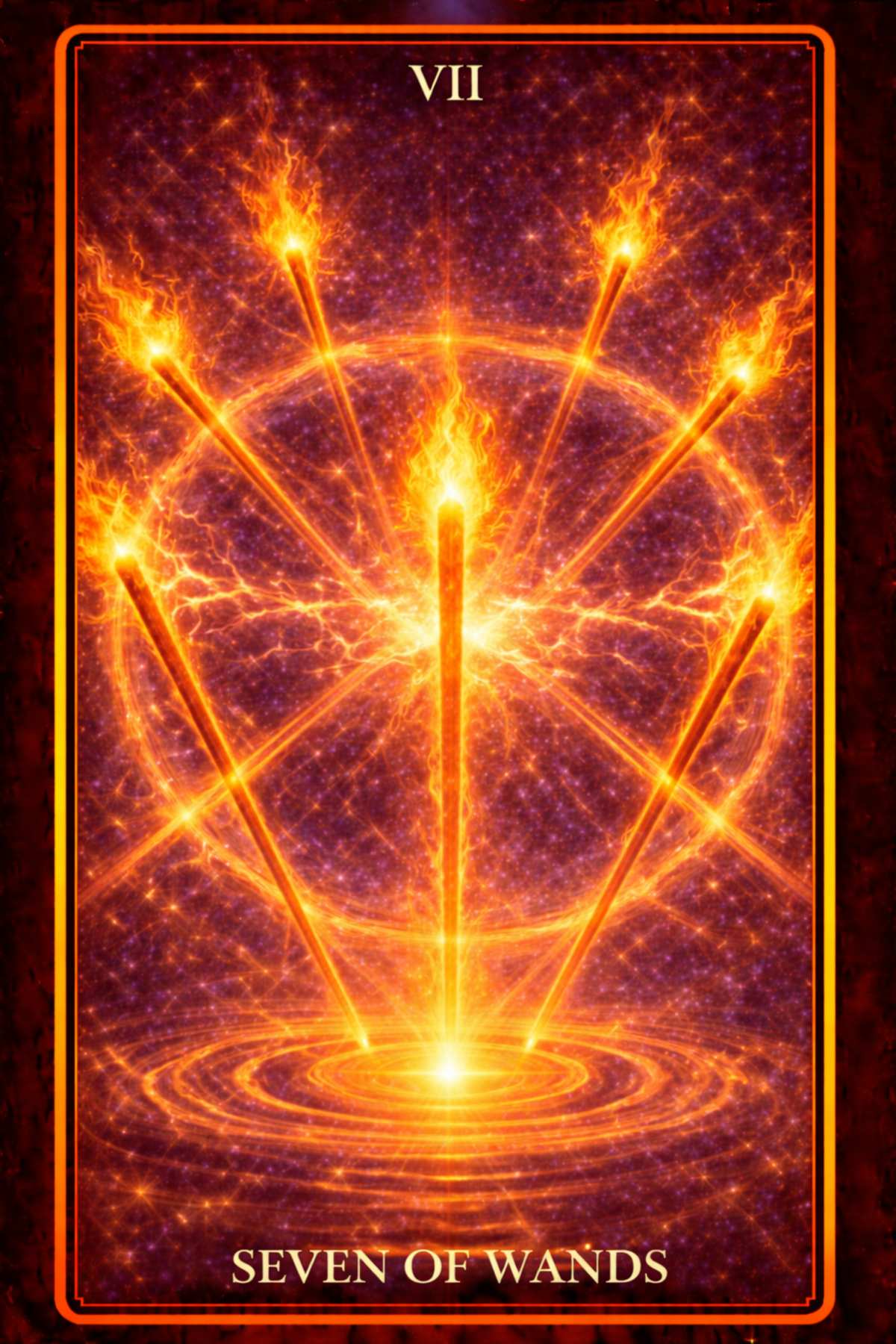
Death and Seven of Wands Tarot Combination Meaning
Death and Seven of Wands meet where transformation no longer remains internal and begins to press against identity with enough force that resistance becomes visible. This is not a quiet ending. Death here acts as pressure — a shift that destabilizes the ground a person has been standing on, exposing where a role, attachment, or identity can no longer hold together in the same way. The Seven of Wands responds with instinctive defense: holding position, pushing back, asserting space, refusing to yield under pressure. Together, these cards often appear when change is already underway, yet the immediate reaction is to protect, brace, or fight to maintain continuity. The tension is not accidental. It reveals the exact point where transformation meets the instinct to preserve what once provided stability.
This is what gives the pair its intensity. Death does not ask gently. It alters the structure from within until the old position becomes harder to sustain, even if it still appears intact on the surface. The Seven of Wands then shows the moment where the self tightens around that position. Effort increases. Boundaries sharpen. The sense of being challenged or pushed becomes more pronounced. Yet the central question remains precise and unavoidable: is the stance protecting something that still carries life, or is it reinforcing a position that is already losing coherence? The same strength can either serve truth or delay it.
When pressure reveals what cannot hold
The Seven of Wands often appears when a person feels tested, as if they must justify their place or defend their ground. Beside Death, that experience becomes more complex. The pressure may not come only from outside forces. It may arise because the structure itself is shifting. What once felt stable begins to require more effort to maintain. What once felt natural now feels like something that must be actively defended. Death does not create the pressure randomly. It exposes where something has already begun to give way.
This is why the experience can feel like being under attack, even when no clear opponent is present. The person may interpret the discomfort as something to overcome, when in fact it is revealing that the position itself is no longer fully supported. The Seven of Wands brings the instinct to hold on. Death asks whether holding on still serves life. Sometimes it does. Often, it shows exactly where energy is being spent trying to stabilize what has already started to change.
Boundary or resistance
A central theme in this pair is the distinction between boundary and resistance. The Seven of Wands is a card of strength, of refusing to be overrun, of protecting what has been earned or realized. During transformation, that quality can be essential. A person may need to defend their changing direction against expectations that try to pull them back into a former role. In that case, the stance is aligned with life. The pressure is real, and the defense serves something that is actively emerging.
Yet the same stance can become resistance when it is used to preserve familiarity rather than truth. The person may continue defending an identity, relationship, or direction simply because it once defined them. The effort feels justified, even noble, yet the underlying structure is already shifting. Death reveals that the struggle is no longer about protecting something living, but about delaying the moment of release. The distinction is subtle, but decisive.
- Death destabilizes what has already begun to lose coherence
- Seven of Wands asserts position under pressure
- Boundary protects what is actively alive and emerging
- Resistance reinforces what is already shifting away
- Discernment determines where strength should be applied
Love and relationship meaning
In relationships, Death and Seven of Wands often point toward a dynamic where pressure is increasing and defensiveness is becoming more visible. One or both people may feel the need to hold their ground, assert their position, or protect themselves from change. The tension can be sharp, even if the underlying issue remains unspoken. What appears as conflict may be the visible edge of a deeper transformation already underway.
At its clearest, this combination can reflect a person protecting their growth. They may begin to set firmer boundaries, refuse old dynamics, or stop participating in patterns that no longer feel aligned. The Seven of Wands becomes a necessary strength here. It allows the person to remain steady while the Death process reshapes the relationship. This can be difficult, especially when the other person resists the change, but it is often the only way transformation can take root.
In more difficult expressions, the relationship may become a field of ongoing defense. One person may keep fighting for a version of the connection that no longer has the same life in it. Arguments may repeat without resolution. Effort increases, yet clarity does not. The Seven of Wands can make this feel like perseverance, but Death asks whether the bond is being protected or whether its ending is being postponed through constant effort.
Career, work, and external pressure
In work and public life, this pair often appears when a person feels challenged to maintain their position while something deeper is shifting. They may face competition, expectations, or demands that require them to assert themselves more strongly. At the same time, Death indicates that the structure supporting that position is changing. What once felt stable now requires sustained effort to defend.
Need a little more context around this pairing?
A short reading can help you reflect on the tension, direction, or lesson this combination may be pointing toward.
This can lead to an important realization. A person may continue to push forward, defend their role, or prove their relevance, yet feel increasing strain in doing so. The effort itself becomes a signal. The question shifts from “how do I hold this position?” to “why does holding this position require so much force now?” Death suggests that the underlying structure is no longer the same.
At its best, the combination supports protecting a new direction against pressure from the old. At its most difficult, it reflects continued struggle inside a space that has already begun to close. The difference lies in whether the effort is aligned with emergence or attached to continuity.
Psychological and spiritual meaning
Psychologically, this pairing often reflects the experience of defending identity during transformation. The Seven of Wands brings vigilance, effort, and the sense of needing to justify one’s place. Death reveals that the identity being defended is already changing at its core. This can create a powerful inner tension. The person may feel both compelled to hold on and increasingly aware that holding on is becoming less coherent.
Spiritually, the combination invites a shift in how strength is understood. Strength here is not only the ability to stand firm, but the ability to recognize when firmness serves truth and when it serves fear. Death reshapes the ground. The Seven of Wands shows how the self responds to that shift. When the response becomes aligned, effort decreases and clarity increases. When it remains misaligned, effort intensifies without resolution.
Shadow expression and challenge
The shadow appears when defense becomes automatic. A person may interpret every sign of change as something to resist. They may take pride in endurance, in not yielding, in holding their ground no matter what. Yet the ground itself may already be changing. The more they defend it, the more effort is required to maintain it. Death reveals that the struggle is no longer about protecting something vital, but about avoiding the vulnerability of letting it transform.
There can also be a tendency to abandon boundaries entirely, assuming that transformation means yielding in every direction. This is not the case. The challenge is not to stop standing, but to stand in the right place. The Seven of Wands becomes effective when it protects what is alive, not when it reinforces what has already begun to dissolve.
Timing and the moment of release
This combination often appears at a point of heightened pressure. The person may feel that action is required immediately, that they must defend, respond, or assert themselves without delay. Sometimes this instinct is correct. If something living is under pressure, the stance is necessary. But at other times, the urgency comes from the discomfort of transition itself.
Death shifts the timing question. Instead of asking when to push harder, it asks when to stop pushing in the same direction. The Seven of Wands shows where effort is concentrated. Death reveals whether that effort is still connected to something that can continue. When the answer becomes clear, the need to defend either strengthens or falls away naturally.
What this combination is really asking
Death and Seven of Wands ask what you are defending, and whether it is still alive. The pressure may feel external, yet the deeper question is internal: does this position still belong to you, or are you holding it because it once did? The cards invite a more precise form of strength — one that is able to distinguish between protecting truth and protecting familiarity.
The deeper lesson is that transformation does not remove strength, but redirects it. Death changes the structure. The Seven of Wands determines how energy responds to that change. When they align, effort becomes purposeful and clear. When they do not, effort becomes repetitive and draining. The difference lies in where the fire is placed.
Explore the next layer of this reading.
This combination can mean different things depending on context. A short tarot reading can help you reflect on the question behind the cards.
Closing reflection
There are moments when standing firm is the right response. There are also moments when the ground beneath that stance has already begun to shift. This pairing exists at that exact edge, where strength must become more conscious.
Death alters the structure beneath you. The Seven of Wands shows how you respond to that change. When you recognize what is still alive and what is already moving away, your strength becomes more precise. It no longer needs to defend everything — only what is real.
More combinations with Death
More combinations with Seven of Wands
Continue with Death
Explore Related Guides by Topic
If you want to explore this combination through a more specific emotional lens, these tarot guides can help you follow the broader pattern behind the reading.