
Death + Ten of Cups
Explore how these two tarot cards interact in a reading through symbolic overlap, contrast, and shared narrative. Tarot combinations often reveal meaning that neither card fully expresses on its own.
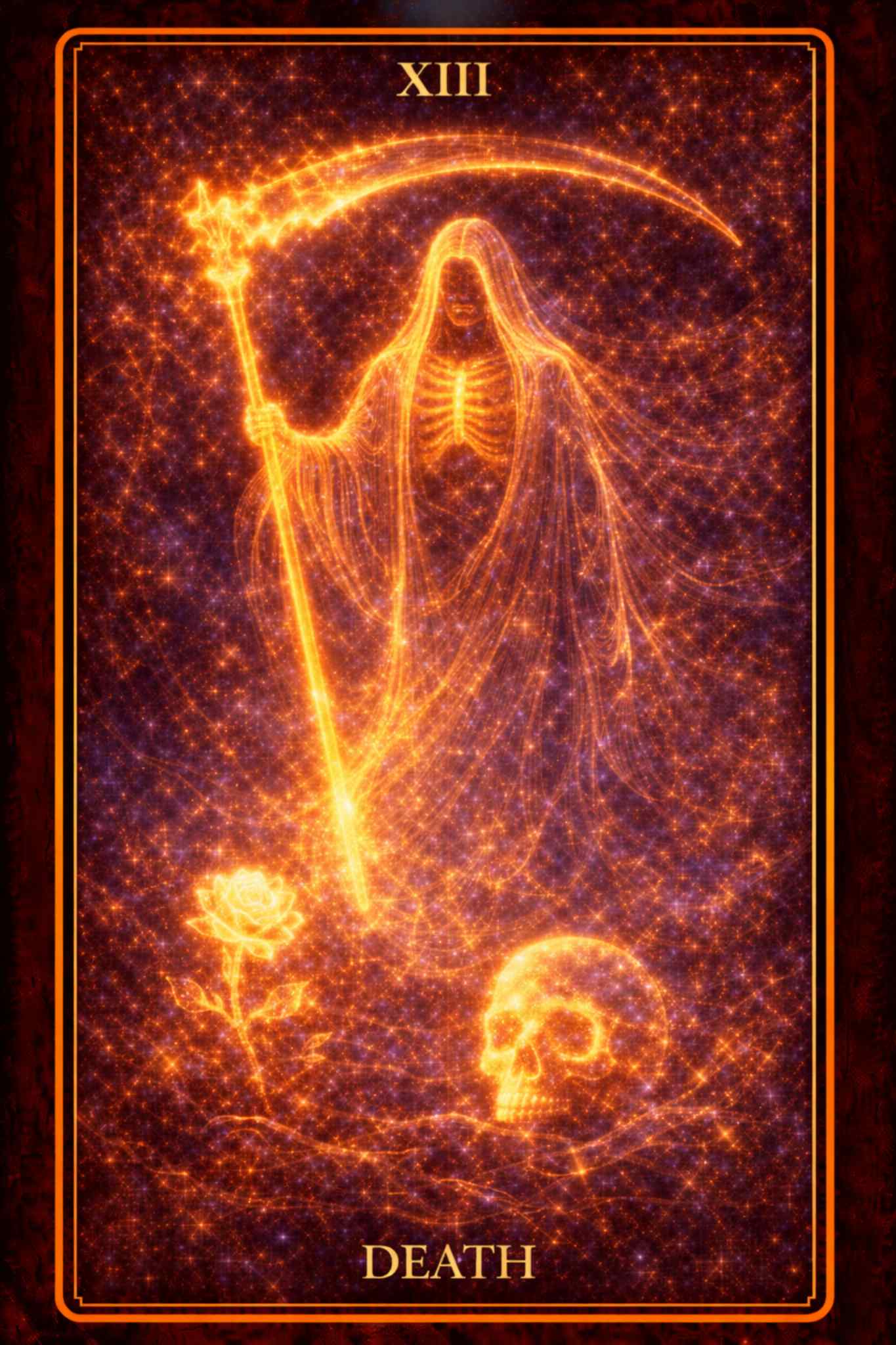
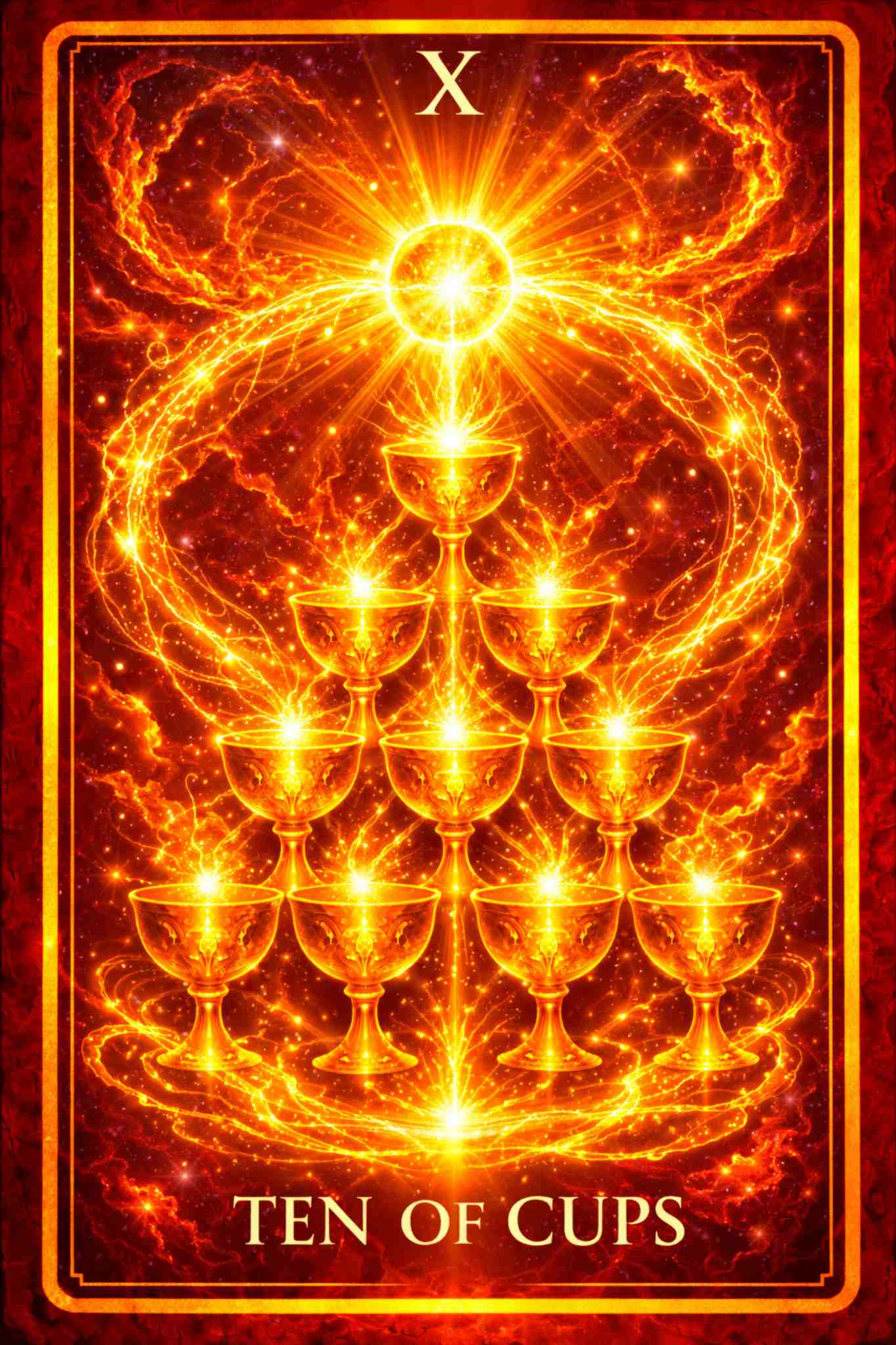
Death and Ten of Cups tarot combination meaning
The picture of happiness can become outdated before the heart knows how to admit it. Death and Ten of Cups speaks to that tender and serious realization. The Ten of Cups carries harmony, belonging, family, shared emotional fulfillment, long-term love, and the dream of a life that feels whole with others. Death brings the completion of an old cycle, the dissolution of a former shape, and the inner certainty that something cannot continue exactly as it has been. Together, they describe the transformation of shared happiness: the old dream of emotional completion may be ending, changing, or becoming more truthful than the image that once represented it.
This is not a simple “happy ending ruined” combination. That would be too shallow for both cards. The Ten of Cups is not only joy; it is an emotional ideal, a vision of togetherness, and often the story people carry about what love, family, or belonging should look like. Death does not attack that vision. It asks whether the vision is still alive. Sometimes a family system changes. Sometimes a relationship matures beyond a previous dream. Sometimes the ideal of happiness must die so real happiness can breathe. The emotional shift can be profound because the person may be releasing not only a bond, but an entire picture of what their life was supposed to become.
The unique tension in this pair is between the collective dream and the soul’s need for truth. The Ten of Cups wants emotional wholeness with others. Death asks what must end for that wholeness to be real rather than performed. A household, relationship, chosen family, marriage ideal, friendship circle, or long-held vision of contentment may be changing form. The question is not whether happiness is possible. The question is whether the old definition of happiness still has life in it.
When the old image of “together” no longer holds
The Ten of Cups often presents a beautiful emotional image: people connected, hearts aligned, the sense that life is held within love. Death introduces the moment when that image cracks open and reveals something more honest underneath. This may happen gently through maturity or more painfully through recognition. The people involved may still care. The dream may still be meaningful. Yet the previous version of togetherness can no longer contain the truth of who everyone has become.
Want to explore this combination in a more personal way?
If this pairing feels important right now, a simple tarot spread can help you reflect on it with more context.
This can describe family changes, relationship transitions, children growing, a home life evolving, an old emotional agreement dissolving, or the release of an idealized future. It can also describe inner change around belonging. A person may realize that the life they once imagined as perfect would now require self-denial. They may love their people deeply while needing a new structure around closeness. Death and Ten of Cups asks for the courage to let the emotional picture change without treating that change as failure.
This has a different emotional architecture from Death and Two of Cups, where the focus is the bond between two hearts. The Ten of Cups expands the field into shared life, family narratives, future visions, and the wider emotional ecosystem around a relationship. Death here changes the landscape, not only the exchange.
Love, family, and the end of the perfect story
In love readings, Death and Ten of Cups can point to the transformation of a long-term relationship ideal. This may involve the end of a fantasy about forever, a shift in family structure, a redefinition of commitment, or the realization that the old version of emotional harmony has become too polished to be honest. It does not automatically mean separation. It may describe a relationship growing out of an idealized stage and into something more truthful, where old expectations must be released for real intimacy to survive.
The Ten of Cups can make people hold tightly to the image of happiness because the image carries so much emotional meaning. Death asks whether the image protects love or traps it. A couple, family, or emotional unit may need to grieve the old version of itself. That grief can be delicate: the dream may have been sincere, and the love may still be present. Yet preserving the dream at all costs can create a half-living harmony, where everyone performs peace while something vital remains unspoken.
For the relational layer, Ten of Cups love meaning gives useful context because it explores emotional fulfillment, harmony, and shared happiness. With Death beside it, those themes become more adult. Harmony is no longer a picture to maintain; it becomes a living truth that must be allowed to evolve.
The family myth and the soul beneath it
Death and Ten of Cups can also speak to family patterns and inherited ideals. The Ten of Cups may represent the story a family tells about itself: that everything is fine, that loyalty means silence, that love must look a certain way, that belonging requires agreement, or that happiness means keeping the image intact. Death begins to dissolve the parts of that story that no longer carry life. This can be liberating and sorrowful at once.
The metaphor here is a family portrait whose frame has become too tight. The faces still matter. The history still matters. The love may be real. Yet the frame no longer fits the living people inside it. Death does not tear away the meaning of family or belonging. It loosens the frame so a truer arrangement can emerge. Sometimes that means healing. Sometimes it means distance. Sometimes it means a new kind of honesty that changes the emotional weather of the entire system.
This deeper family-pattern layer can be compared with The Emperor and Ten of Cups, where the ideal of happiness may be shaped through structure, expectation, or a fixed vision of how life together should look. Death and Ten of Cups is less about maintaining that structure and more about allowing it to change. A family myth, relationship dream, or emotional framework may have reached the end of its old usefulness, not because it lacked meaning, but because life within it has continued to evolve.
Timing: when harmony must be remade
Timing with Death and Ten of Cups often points to a life-cycle change in shared emotional life. Something may be ending in the old family pattern, relationship structure, home atmosphere, or long-term vision. The change may already be happening internally before it becomes visible outside. People may still speak as if the old dream is intact, while the emotional truth has begun moving in another direction. This is a time to listen carefully to what feels alive, what feels performed, and what feels ready to be released.
The cards suggest that real harmony cannot be restored by forcing everyone back into the old arrangement. If renewal is possible, it must come through changed terms. If closure is needed, it should be given dignity. If grief arises, it may need space before any new version of happiness can be built. Death and Ten of Cups asks for patience because collective emotional structures often change more slowly than individual realizations.
The relationship tarot spread is the most natural option for exploring how each person, the shared bond, and the wider emotional pattern are being reshaped.
Spirituality, belonging, and the release of inherited happiness
Spiritually, Death and Ten of Cups asks whether belonging has become a living truth or an inherited performance. Many people carry an image of happiness long before they know themselves deeply enough to choose it. They inherit dreams from family, culture, romance, religion, childhood, or the longing to finally feel safe. The Ten of Cups holds that beautiful human longing. Death asks which parts of it still belong to the soul and which parts are ready to fall away.
This is where Death spirituality meaning supports the interpretation. Death as a spiritual card often concerns the release of old identity and the acceptance of life-cycle change. With the Ten of Cups, the identity may be tied to being the happy family, the perfect partner, the loyal child, the peaceful household, or the person who keeps the emotional picture intact.
Releasing that identity can be painful because it may feel like stepping outside the dream of safety. Yet the deeper movement is toward a more truthful form of peace. The soul may be learning that belonging does not require self-erasure. Love does not need the old picture to remain sacred. Happiness does not become less real when it changes form. In fact, it may become more real when it no longer has to pretend.
The new shape of emotional wholeness
Death and Ten of Cups ultimately describes the end of one version of emotional wholeness and the possibility of another. The old rainbow may fade, but the sky itself remains. What changes is the meaning placed upon happiness, family, love, and shared life. The cards ask for reverence toward what has been, honesty about what has completed, and openness to a form of belonging that can hold the present more truthfully.
The final message is mature and compassionate: a dream can end without making the love inside it false. A family story can change without erasing its sacred parts. A relationship ideal can dissolve so a more honest connection can grow. Death and Ten of Cups is the moment when the heart stops protecting the picture and begins listening to the living people beneath it. What follows may be quieter than the old dream, but it can also be cleaner, freer, and more deeply alive.
Want to place this combination into a wider reading?
If this pairing feels close to something you are experiencing, a simple spread can help you reflect on the surrounding energy with more clarity.
FAQ
Does Death and Ten of Cups always mean the end of a relationship or family?
Not necessarily. This combination often reflects a shift in the emotional structure rather than a fixed external outcome. A bond, family dynamic, or shared life may be changing form, even if the connection itself still exists. The cards invite attention to what feels alive within the relationship, rather than assuming that change must mean loss.
Can happiness still exist when this combination appears?
Yes, although it may not look the same as before. The Ten of Cups represents a vision of harmony, and Death suggests that this vision may be evolving. What remains can still carry love, connection, and meaning, but it may require releasing an older image of what happiness was supposed to be.
What is the difference between real harmony and performed harmony?
Real harmony tends to feel flexible, honest, and responsive to change. Performed harmony may look peaceful on the surface while requiring emotional suppression to maintain it. Death and Ten of Cups often appears when this difference becomes more visible, asking whether the shared emotional space reflects truth or expectation.
Is this combination about loss or transformation?
It may include elements of both, depending on how the situation unfolds. From a deeper perspective, it often points to transformation. Something in the shared emotional story may be completing its cycle so a more truthful form of connection or belonging can emerge over time.
More combinations with Death
More combinations with Ten of Cups
Continue with Death
Explore Related Guides by Topic
If you want to explore this combination through a more specific emotional lens, these tarot guides can help you follow the broader pattern behind the reading.