
Death + Five of Cups
Explore how these two tarot cards interact in a reading through symbolic overlap, contrast, and shared narrative. Tarot combinations often reveal meaning that neither card fully expresses on its own.
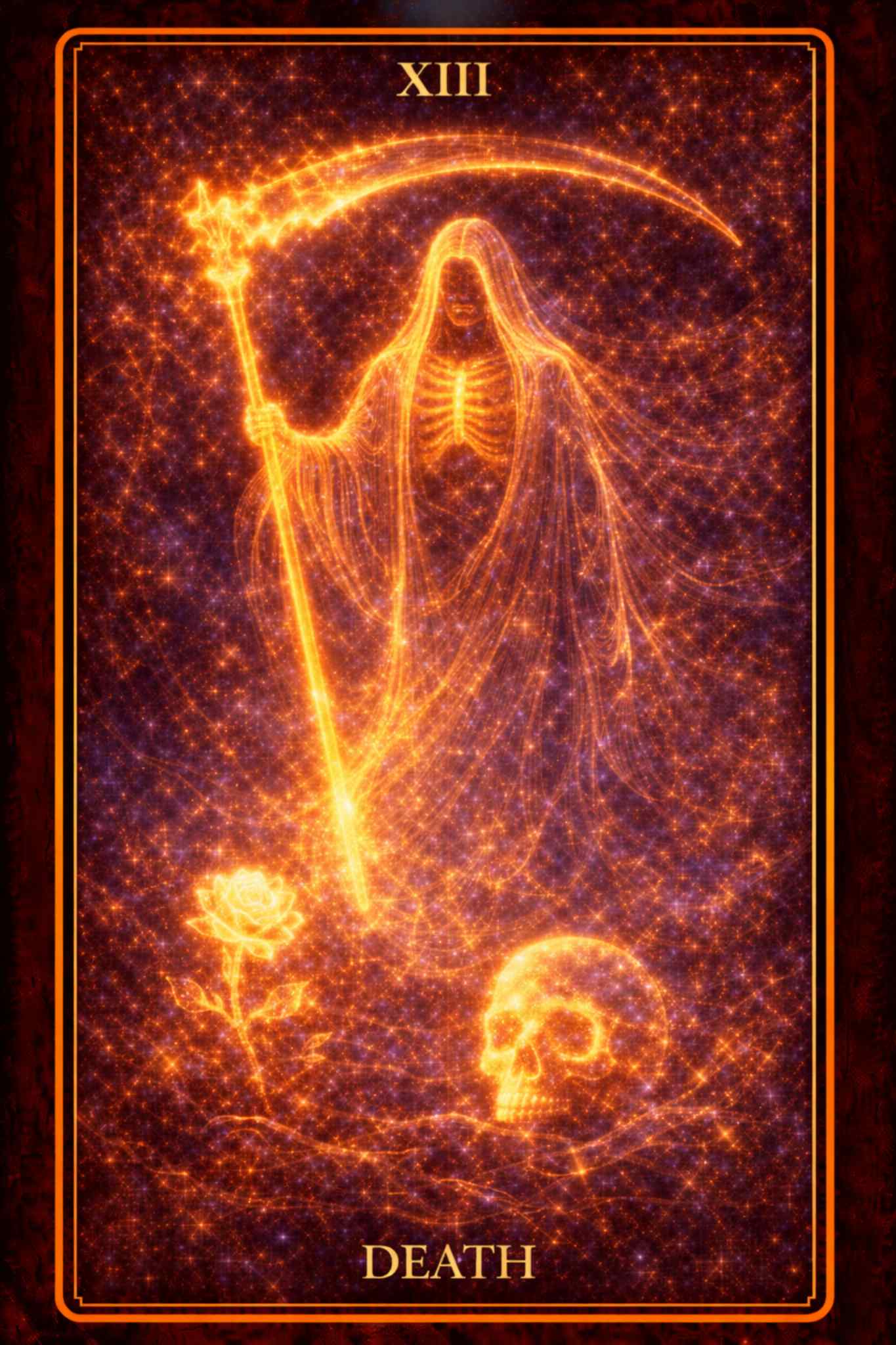
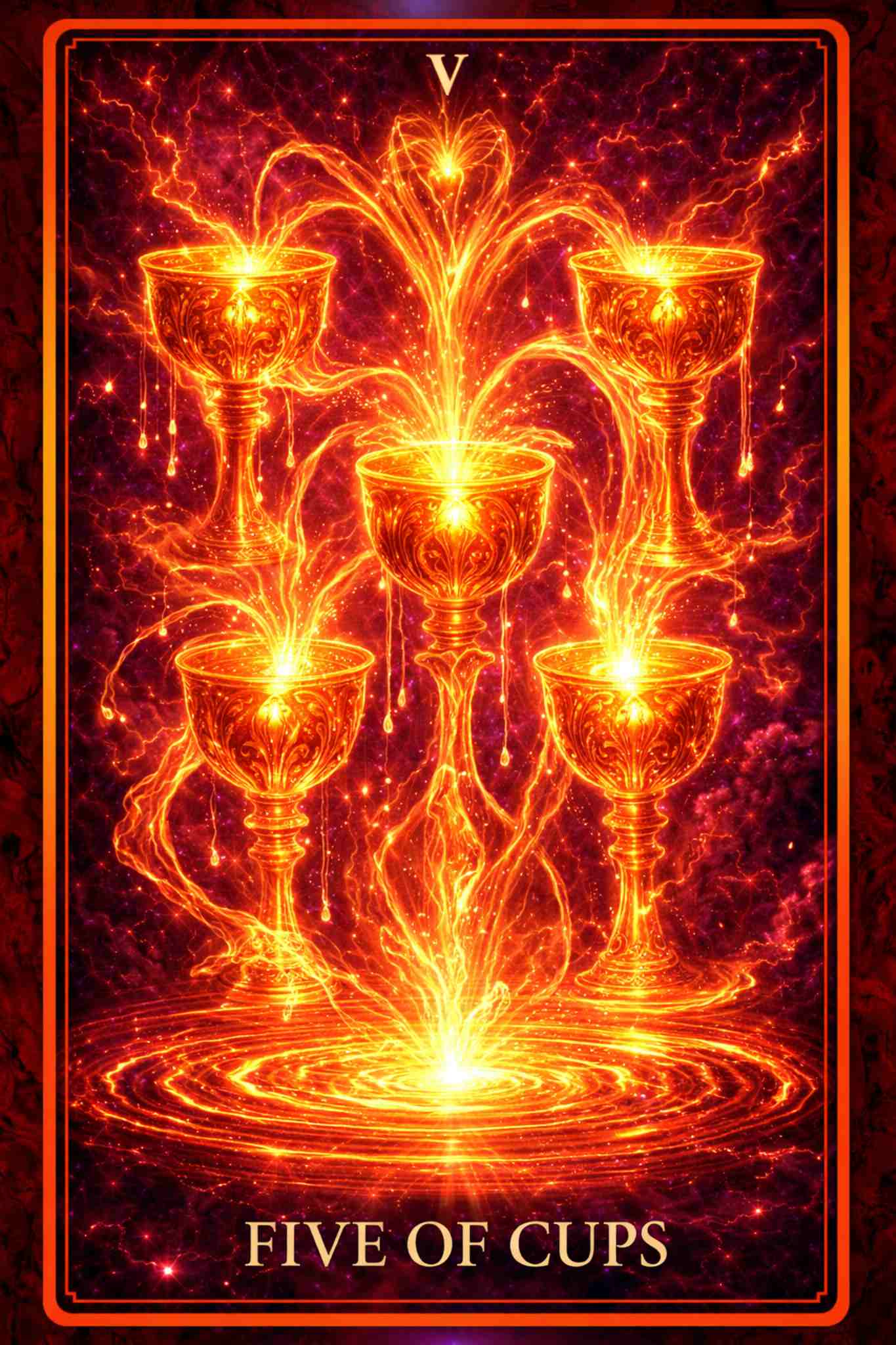
Death and Five of Cups tarot combination meaning
Some grief begins as pain over what happened, then slowly reveals itself as grief for the version of life that can no longer continue. Death and Five of Cups belongs to that deeper layer. The Five of Cups brings sorrow, regret, disappointment, emotional fixation, and the ache of looking at what has spilled. Death brings the natural completion of a cycle, the moment when an old story can no longer remain alive in the same form. Together, they describe grief that is not only about loss, but about the transformation of meaning after loss. Something has changed so fully that the heart cannot go back to its previous interpretation.
This pair can feel heavy, but it should not be treated as fatalistic or frightening. Death is not here as punishment. The Five of Cups is not here to trap the reader in sorrow. Their shared field is emotional truth: the recognition that something has ended, shifted, or lost its old shape, and that the heart needs time to understand what remains. The grief may concern a relationship, a hope, a mistake, an old identity, a missed chance, or a dream that no longer fits the present. Yet the cards do not ask for despair. They ask for honest mourning, because mourning is often the bridge between attachment and release.
The unique tension in this combination is between the part of the heart that keeps staring at what is gone and the deeper life process that is already moving beyond the old form. The Five of Cups may keep attention fixed on the spilled cups. Death knows the entire emotional landscape is changing. The question becomes whether sorrow is helping the heart honor what mattered, or whether it is preserving a past state that no longer contains life. This is not about rushing away from grief. It is about letting grief become cleansing instead of repetitive.
When regret becomes a doorway rather than a room
The Five of Cups often carries the weight of regret: words that were not said, choices that cannot be reversed, hopes that did not become reality, or emotional investments that ended differently than expected. Death changes the function of that regret. Instead of asking the person to replay the loss, it asks what has completed itself through the experience. Regret may reveal where the old self was still learning, where the heart was attached to an image, or where a relationship carried meaning even after its form became unsustainable.
This is where the pair becomes emotionally mature. The sadness is real, but it is not the whole truth. Death asks whether the person is grieving the actual connection or the imagined future built around it. It asks whether the pain belongs to love, pride, identity, disappointment, fear, or a mixture of all of them. The Five of Cups may initially blur these layers together. Death separates them slowly, like sediment settling in dark water, until the heart can see what it is truly mourning.
A related kind of emotional threshold appears in Death and The Moon, where uncertainty, fear, and inner images dissolve under the pressure of change. With the Five of Cups, the fog is more sorrowful than mysterious. The person may already know something has changed; the difficulty lies in allowing that knowledge to reach the emotional body.
Love, loss, and the changing meaning of attachment
In love readings, Death and Five of Cups can describe the painful recognition that a relationship, feeling, or hope cannot remain in its previous state. This does not automatically mean a permanent separation. It can also describe the end of a fantasy, the collapse of an old pattern, or the moment when a person stops seeing a bond through the same emotional lens. The relationship may continue in another form, but the old story around it has reached its limit. If there has been heartbreak, the cards suggest that the heartbreak is not only about the person or event; it is also about the loss of an identity built around wanting, waiting, forgiving, proving, or hoping.
The Five of Cups can make the heart linger around what went wrong. Death asks what has become clear because it went wrong. This distinction matters. Grief can become a sacred process when it reveals truth, restores dignity, and clears emotional self-deception. It becomes draining when it keeps the person loyal to a version of the past that no longer breathes. This pair asks for compassion without self-abandonment. It allows tears, but it also asks the heart to notice when tears begin washing something clean.
For the emotional love layer, Five of Cups love meaning gives useful context because it explores disappointment, sorrow, and the difficult process of turning toward what remains. With Death, that process becomes more final and more cleansing. The question is no longer only how to cope with disappointment, but what old emotional form must be released so the heart can live more honestly.
The part of grief that quietly frees the heart
There is a quiet mercy hidden in Death and Five of Cups. The combination can mark the point where grief stops being only pain and begins becoming release. This may happen slowly. A person may still feel sadness, but the sadness starts to loosen its grip. The story becomes less sharp. The regret becomes less central. The memory remains, yet it no longer controls the entire emotional field. Death does not erase what happened; it changes the relationship to it. The past becomes something integrated rather than constantly relived.
This can be seen as the moment when the heart stops kneeling beside the spilled cups as if devotion to loss could bring them back. The image is not cold. It is tender and deeply human. The person may need to bless what was spilled, admit what hurt, and recognize what cannot be restored in the same form. Only then can the remaining cups become visible without feeling like a betrayal of the grief. The movement is not from sadness to instant happiness. It is from emotional fixation to emotional truth.
This inner passage has a different texture from The Hanged Man and Five of Cups, where sorrow often lingers in suspension, asking for a shift in perspective before it can release. Death and Five of Cups is usually quieter. The ending may have been known for some time. The sorrow may come from finally accepting what the soul has already understood.
Timing: when mourning needs space before renewal
Timing with Death and Five of Cups should be handled with care. This is rarely a moment for immediate replacement, forced optimism, or quick emotional conclusions. If something has ended internally, the heart may need time to mourn the old meaning before it can engage with what remains. The cards suggest that grief should be allowed to complete its work. This includes sadness, regret, tenderness, anger, relief, and sometimes the strange calm that comes after a truth is finally accepted.
Want to explore this combination in a more personal way?
If this pairing feels important right now, a simple tarot spread can help you reflect on it with more context.
The pair also marks the timing of emotional irreversibility. Something may have changed so deeply that returning to the old form would only create a half-living version of the past. This does not mean every door is closed in an external sense. It means the old way of feeling, interpreting, or attaching has completed itself. If renewal happens later, it needs to be built from a changed emotional reality rather than from panic over loss.
A spread such as the problem solution tarot spread can fit this pair when the question is less about prediction and more about understanding the emotional knot: what is being grieved, what is ready to be released, and what form of healing can begin after the old story is acknowledged.
Explore the next layer of this reading.
This combination can mean different things depending on context. A short tarot reading can help you reflect on the question behind the cards.
The spiritual honesty of letting sorrow finish
Death and Five of Cups carries a spiritual lesson that is grounded rather than abstract. It teaches that grief has a purpose when it is allowed to move. Sorrow can reveal what was loved, what was imagined, what was unfinished, and what can no longer be carried in the same way. Death gives that process a direction. It says that the heart is not meant to live forever inside the first shape of its pain. The old wound may remain part of the story, but it does not have to remain the whole story.
This is supported by Death feelings meaning, where the emotional side of Death can be understood as a shift in attachment, perception, and inner availability. With the Five of Cups, this shift often comes through tears. The person may begin by grieving what was lost, then gradually realize that an old self is also passing away: the self that waited, blamed, hoped in one fixed direction, or believed the story could only have one meaningful ending.
The final message of this combination is not that loss defines the future. It is that honest grief changes the heart. It clears what repetition cannot heal. It allows memory to become softer, regret to become wisdom, and attachment to become truth. Death and Five of Cups is the old water draining through the stones after rain: sorrow moving downward, slowly cleansing the ground, leaving behind a place where something living may eventually take root again.
More combinations with Death
More combinations with Five of Cups
Continue with Death
Explore Related Guides by Topic
If you want to explore this combination through a more specific emotional lens, these tarot guides can help you follow the broader pattern behind the reading.