
The Emperor + Five of Cups
Explore how these two tarot cards interact in a reading through symbolic overlap, contrast, and shared narrative. Tarot combinations often reveal meaning that neither card fully expresses on its own.
The Emperor and Five of Cups Tarot Combination Meaning
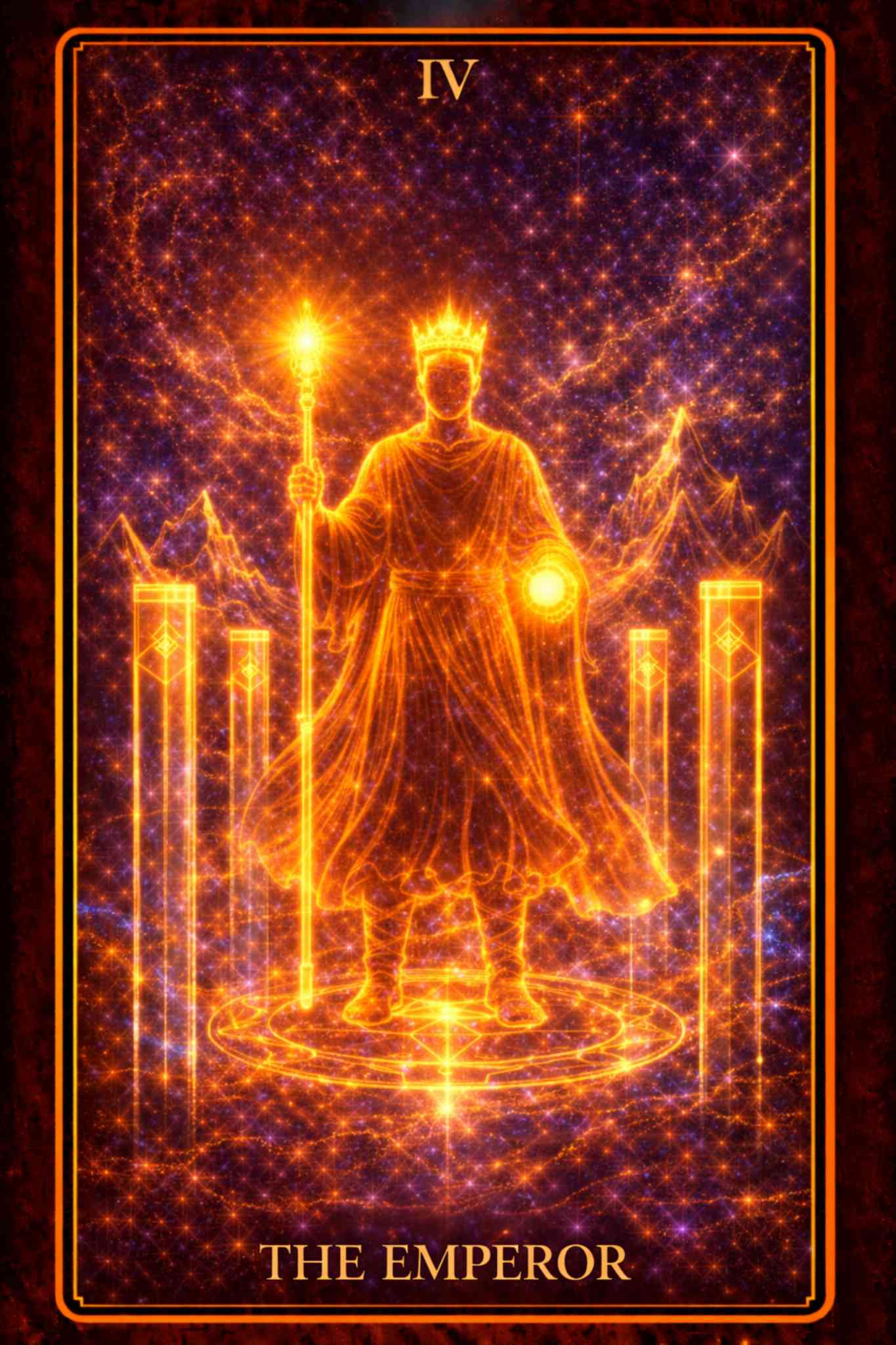
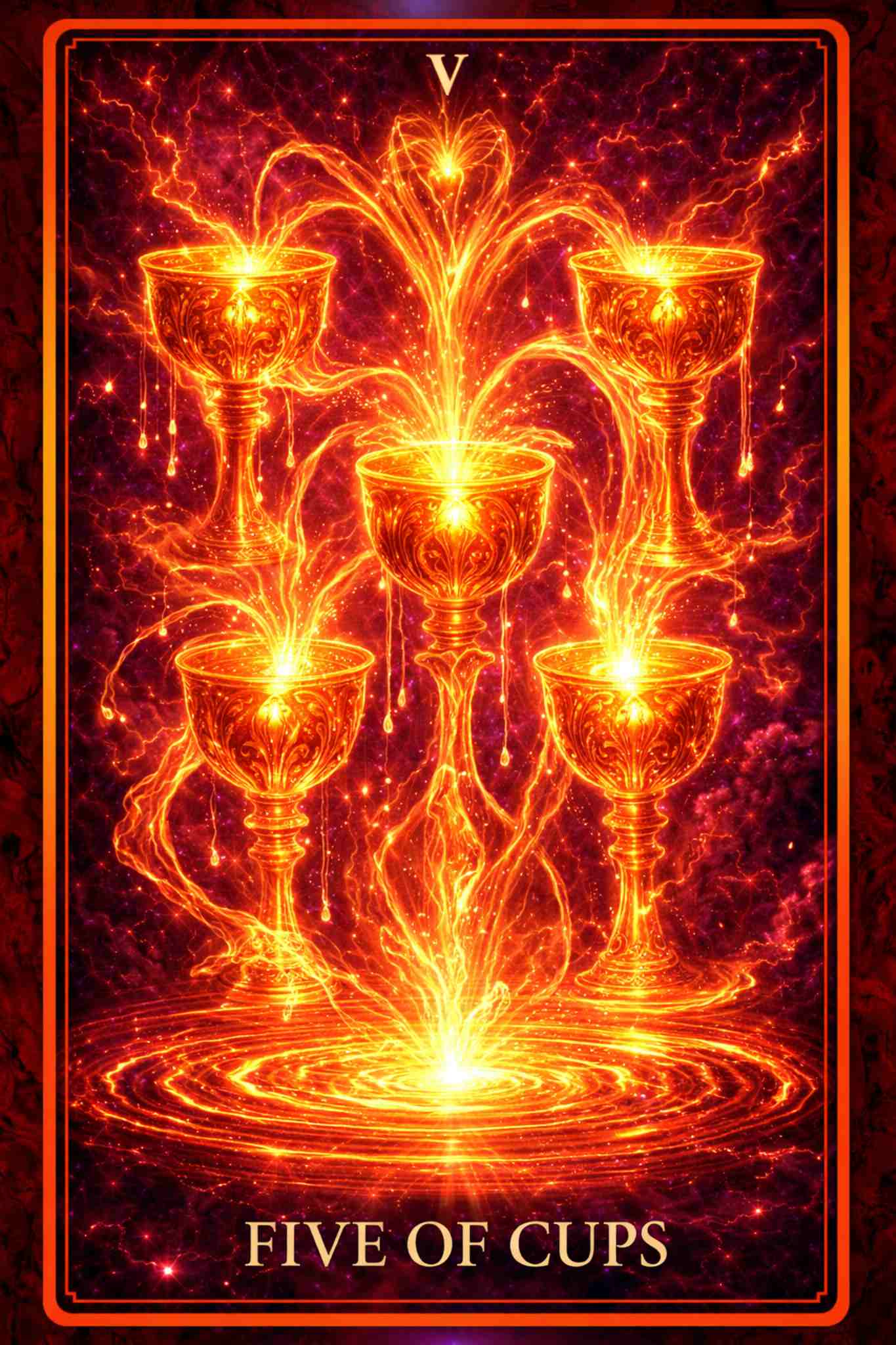
Some forms of disappointment leave a person emotionally scattered. The loss itself hurts, yet what follows can hurt in a different way: inner order weakens, perspective narrows, and the mind keeps returning to what should have gone differently. Other disappointments bring a more demanding task. The pain is still real, the grief is still real, though alongside that grief comes the need to govern oneself carefully, to keep life from collapsing around the wound, and to carry sorrow with enough steadiness that it does not become the whole language of the self. The Emperor and Five of Cups belongs to that second kind of experience. This pair speaks of grief that calls for inner leadership, regret that asks for form, and emotional pain that must be held with dignity if recovery is to begin on solid ground. The Five of Cups brings sadness, disillusionment, remorse, and the ache of seeing what has spilled or failed to remain. The Emperor brings discipline, containment, inner posture, and the capacity to keep standing inside the disappointment rather than dissolving into it. Together, these cards describe a hard emotional season in which strength is measured less by suppression and more by the ability to remain structurally intact while something painful is being mourned.
This is what gives the combination its gravity. The Five of Cups does not merely show sadness. It shows the emotional fixation that often follows sorrow, when the heart circles the loss again and again because what has fallen away still feels more vivid than what remains. The Emperor enters that atmosphere without denying its truth. He does not try to brighten the scene or rush the person toward optimism. He asks a sterner and more useful question: who is holding you while this is happening? If the grief is real, what within you is stable enough to carry it? If regret is active, what structure will keep regret from becoming your ruler? In that sense, the pairing is less about controlling sorrow than about refusing to let sorrow become the only authority in the room.
That distinction matters because many people imagine that emotional honesty requires full surrender to pain. They assume composure must mean avoidance, or that boundaries during grief must mean emotional distance from what matters. The Emperor offers another possibility. He suggests that pain can be fully acknowledged while the self remains responsible for the life surrounding it. Meals still matter. Sleep still matters. Conduct still matters. Decisions still matter. Self-respect still matters. The wound is given room, though it is not given the keys to the whole house. This is why the pair feels both sober and deeply compassionate. It treats grief as real while also protecting the person who has to live through it.
When pain needs leadership from within
The Five of Cups often appears when emotional attention is drawn almost entirely toward what is missing. Something has ended, disappointed, broken, or failed to fulfill the hope attached to it. The heart may replay the moment of loss, the missed possibility, or the version of reality that never arrived. Beside The Emperor, the reading becomes concerned with what happens next. How is the person managing themselves inside this pain? Are they giving the grief enough respect while also maintaining enough structure to prevent emotional collapse? Are they holding the sorrow, or has the sorrow begun arranging the whole inner world around itself?
This is where The Emperor becomes invaluable. He brings form to a field that otherwise risks becoming emotionally loose and mentally repetitive. He encourages the person to take themselves seriously at a time when they may feel least capable of doing so. That can sound simple, though it is often a profound turning point. To rise at a reasonable hour while grieving, to keep one promise, to maintain one boundary, to decline one degrading impulse, to choose one steady action instead of one dramatic reaction — these are Emperor responses. They do not erase the hurt. They stop the hurt from swallowing the architecture of daily life.
There is also a very important difference here between emotional control and emotional governance. Control often comes from fear of feeling. Governance comes from respect for the impact feeling can have when left entirely uncontained. The Emperor at his best represents governance. He does not ask the person to stop mourning. He asks them to remain answerable to themselves while they mourn. That shift keeps grief from becoming chaotic. It turns survival into something active rather than accidental.
Regret grows heavier when it has no frame around it
One of the deepest insights in this combination is that regret expands to fill empty space. When a person loses structure after disappointment, the mind often begins revisiting the same territory in harsher and harsher ways. What should have been said, what should have been seen sooner, what should have been protected, what should have been refused, what should have mattered less — these loops can become their own secondary suffering. The Five of Cups carries that tendency. The Emperor interrupts it by restoring form. He does not promise immediate relief. He provides rails for the mind and body so the pain has somewhere to move besides endless repetition.
This is why the pair can be surprisingly constructive, even while it is heavy. It suggests that grief is entering a phase where the person needs more than feeling. They need standards for how they will move through the loss. They need to decide what they will protect, what they will refuse, and what kind of posture they want to maintain while life is hurting. The Emperor helps turn sorrow into a site of character rather than self-erosion. That does not make the suffering noble or desirable. It simply means the suffering becomes a place where integrity can still exist.
At times, the pair can show the danger of hardening too much. A person may decide that strength means emotional lockdown, and they may begin treating their own pain with excessive severity. That is one imbalance. Another is letting the grief become so central that every stabilizing effort feels hollow by comparison. The healthiest expression of the combination avoids both extremes. Feel the loss honestly. Keep your standards alive. Let the wound speak. Keep your life from falling into disorder around its voice. This is the middle path the pair keeps pointing toward.
- grief needs containment if it is to remain honest without becoming destructive
- regret becomes heavier when daily structure falls apart
- self-governance helps protect dignity in the aftermath of disappointment
- pain can be real while the self still chooses discipline and steadiness
- recovery often begins through small acts of order rather than dramatic emotional release
Love and relationship meaning
In love readings, The Emperor and Five of Cups often points to heartbreak, relational disappointment, or the painful recognition that a bond has failed to become what the heart hoped it would become. There may be genuine grief here. A connection may have broken, trust may have weakened, an apology may have arrived too late, or one person may be carrying the weight of what was promised emotionally but never anchored in reality. The Five of Cups shows the ache. The Emperor shows what the person now needs in order to survive that ache without losing themselves inside it.
Need a little more context around this pairing?
A short reading can help you reflect on the tension, direction, or lesson this combination may be pointing toward.
This pairing often appears when the emotional injury is serious enough that impulse would only make it worse. The desire to chase, plead, explain, reopen, revisit, or demand different closure may be strong. The Emperor rarely rewards that kind of immediate movement when the wound is still in command. He favors a slower and more dignified response. Stabilize first. Protect your boundaries first. Let the first storm of feeling pass through a stronger inner structure before deciding what, if anything, deserves action. This does not make the love less real. It simply keeps pain from dictating choices that add further damage.
At its healthiest, the combination supports heartbreak handled with self-respect. The person may still cry, still mourn, still deeply wish the story had gone another way. Yet they begin refusing behaviors that would make the sorrow more degrading. They stop trying to force mutuality where none is being carried responsibly. They stop negotiating with what has already shown its weakness. They begin drawing firmer lines around access, contact, fantasy, and repetition. The Emperor becomes the force that says: this hurt matters, and so does the way you carry yourself now.
The pair can also describe someone whose pain is tightly contained. From the outside, they may seem collected or even distant. Inside, however, there may be great sadness, regret, or emotional mourning. The reading then asks whether this containment is serving repair or merely postponing it. The answer depends on the quality of the Emperor energy. If it is clean, the person is giving their grief a strong vessel. If it is rigid, they may be turning heartbreak into a private fortress. Either way, the Five of Cups confirms that something important has been emotionally altered, and the heart is still working to understand the cost.
The deeper relational questions here go well beyond simple sadness. What exactly has been lost — the relationship, the imagined future, the self-trust that was tied to it, or the hope that care would be enough to make it hold? What standards need to rise now because the disappointment exposed a weakness in the structure of the bond? If repair is possible, what would have to become stronger, clearer, and more accountable? If repair is finished, what form of self-command will keep the grief from rewriting the whole sense of who you are? These are the questions that make the pair so mature and so sharp.
Recovery, authority, and life after emotional breakage
Outside romance, this combination can point to any loss that creates emotional destabilization and then demands reconstruction. It may relate to family sorrow, friendship fracture, career disappointment, trust betrayed in practical life, or a private season in which old hopes finally fall away. The Five of Cups brings the break in the emotional field. The Emperor brings the principle of reconstruction. He is not sentimental about the work. He understands that rebuilding often begins through simple, almost plain acts of order repeated consistently enough to restore trust in the self.
This gives the pair a strong psychological dimension. A person may be learning that emotional pain does not remove the need for inner authority. In fact, it may make inner authority more necessary than ever. They may need to become more careful with exposure, more selective with who gets access to the wound, more disciplined with time and energy, and more willing to protect the parts of life that still function well. The Emperor helps them do this without denying the depth of what hurts. He reminds them that when disappointment enters, some part of the self must become sturdier rather than more diffuse.
There is something deeply reparative in that realization. Many people once learned grief through chaos. They learned that pain meant collapse, disorganization, emotional flooding, or the loss of all stable ground. The Emperor teaches a different pattern. He shows that sorrow can move through a life that still has beams, walls, and load-bearing structure. That image matters. It means the person is no longer at the mercy of every wave. They are beginning to build an interior strong enough to hold weather without becoming weather.
Timing and the next right movement
In timing, this combination often appears when the first need is stabilization rather than resolution. The person may still be too close to the emotional impact to make clean decisions. The wiser movement is often to restore order, simplify choices, reduce unnecessary emotional exposure, and let the wound stop being the loudest force in the system. This creates the conditions for clearer judgment later. The Emperor and Five of Cups rarely favors dramatic declarations in the center of fresh disappointment. It favors stronger ground first, meaning later.
There is also a very practical timing lesson here. Grief often demands to be understood immediately. The mind wants explanation, sequence, fairness, closure, and emotional completion before the body has even regained steadiness. This pair suggests another rhythm. Build stability first. Let interpretation come later. Let the life regain shape before asking the pain to reveal its final lesson. That order of operations can protect the person from making permanent meaning out of a temporary state of overwhelm.
Ready to see how this applies to your situation?
A focused tarot reading can help you explore how The Emperor + Five of Cups may reflect your current situation, not just the general meaning of the cards.
Closing reflection
There is something quietly formidable in this pairing because it shows sorrow meeting inner authority. The Five of Cups says that something mattered, and its loss still hurts. The Emperor says that what hurts must be carried in a way that keeps your life from bowing around it permanently. Together, they describe the difficult dignity of remaining present to grief while refusing to let grief become your ruler.
The deeper wisdom of these cards is that recovery rarely begins with inspiration. It often begins with posture. With one clear boundary. One structured day. One decision that keeps self-respect alive. One refusal to let regret narrate the whole future. The Emperor and Five of Cups often appears in exactly that territory, where the heart is grieving something real and the next act of healing begins through the steady reconstruction of inner command.
More combinations with The Emperor
More combinations with Five of Cups
Continue with The Emperor
Explore Related Guides by Topic
If you want to explore this combination through a more specific emotional lens, these tarot guides can help you follow the broader pattern behind the reading.