
The High Priestess + Five of Cups
Explore how these two tarot cards interact in a reading through symbolic overlap, contrast, and shared narrative. Tarot combinations often reveal meaning that neither card fully expresses on its own.
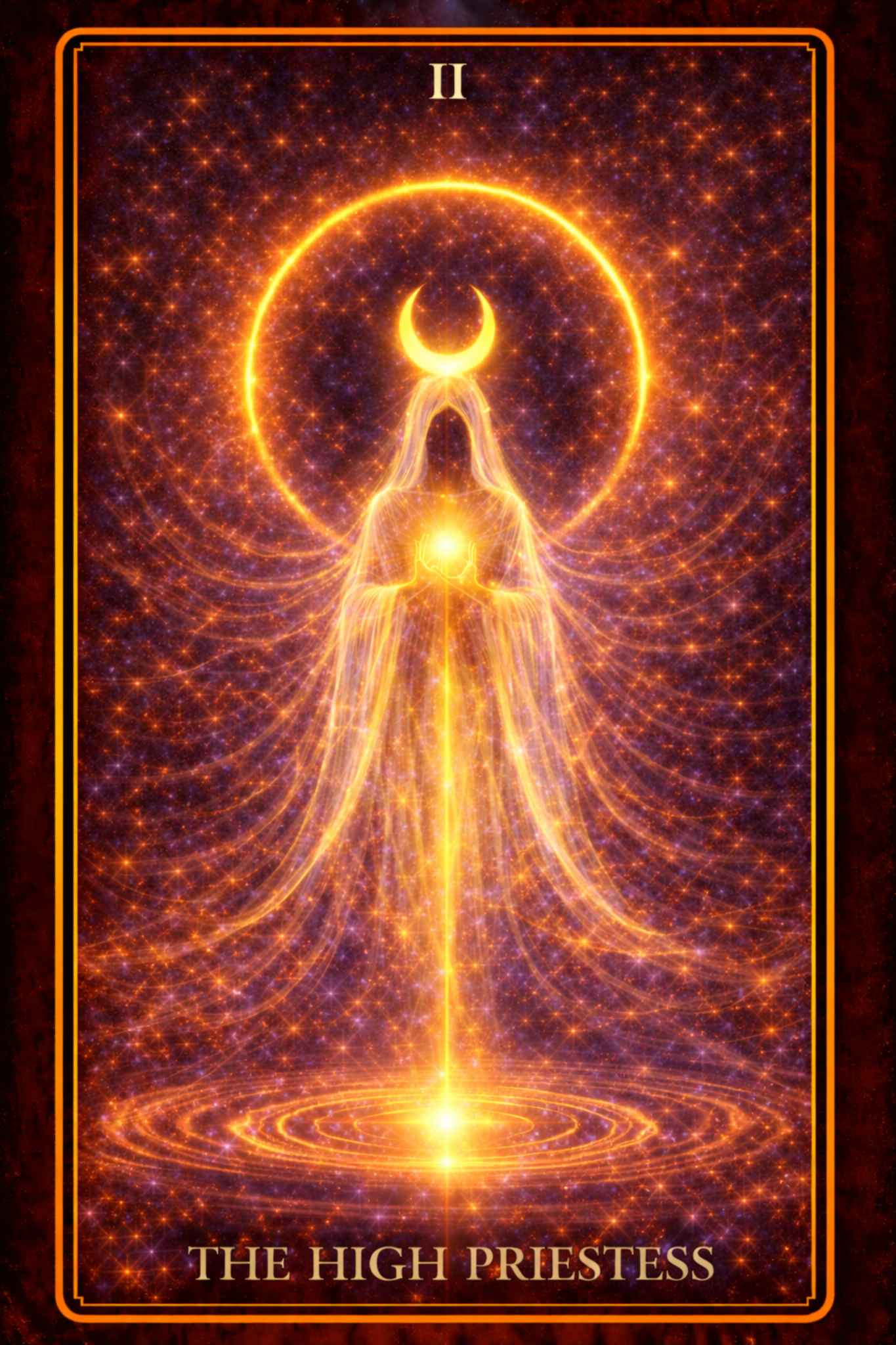
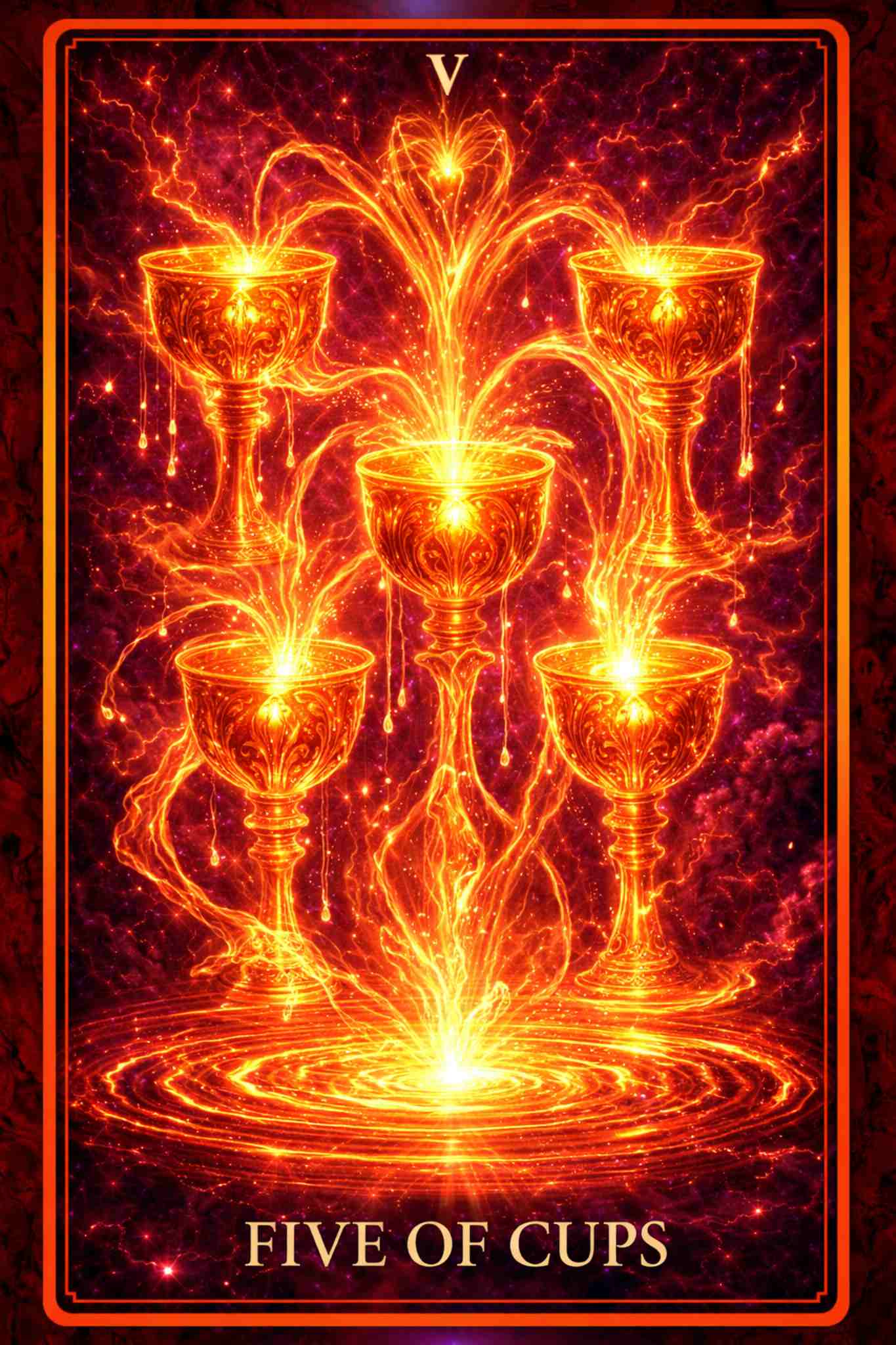
The High Priestess and Five of Cups Tarot Combination Meaning
Some grief arrives as a clear event. It has a visible cause, an identifiable wound, and a form the conscious mind can recognize without much delay. Other grief moves more quietly. It settles beneath the surface, shapes perception before it is named, and begins influencing how the heart reads the world long before the person fully understands that sorrow has become part of their inner lens. The High Priestess and Five of Cups speaks to that second kind of emotional reality. This pair is less about dramatic loss than about hidden interpretation. Something painful has entered the inner world, and now the deeper emotional body is quietly assigning meaning to everything that follows.
The Five of Cups brings disappointment, mourning, regret, emotional fixation on what has fallen away, and the instinct to orient around what feels damaged, absent, or irretrievable. The High Priestess does not remove that pain, though she changes the way it is understood. She turns the person inward, toward the chamber where loss becomes belief. In her presence, the real question is no longer only what ended, failed, or hurt. The deeper question becomes what the heart has started concluding because of that pain, what hidden emotional assumptions are now active beneath the surface, and whether those assumptions reflect truth, partial truth, or grief speaking in a voice that sounds wiser than it really is.
This is what gives the combination such emotional depth. A person may feel sadness without fully knowing how deeply it has already shaped their interpretation of the present. They may think they are simply being realistic, when part of what is happening is that sorrow has narrowed their field of perception. They may believe they are seeing clearly, while grief is quietly drawing the eye toward absence, fragility, and emotional risk. The High Priestess becomes essential here because she asks for discernment inside pain. She helps the person hear the hidden life of disappointment before it becomes the unquestioned authority within the emotional world.
When grief starts speaking before it is named
One of the most important truths in this pair is that grief often becomes active before the conscious self is ready to acknowledge it directly. The Five of Cups can certainly point to obvious loss, though beside The High Priestess the wound is often more submerged, more atmospheric, and more interpretive. A person may say they are only tired, detached, uncertain, or unusually reflective. Yet beneath those descriptions, a sorrow process may already be moving through the emotional body, changing the tone of inner life and influencing how every new experience is received.
This can happen after heartbreak, emotional betrayal, a broken expectation, a quiet disillusionment, the fading of a hoped-for future, or the realization that something once cherished cannot return in the same form. The rational mind may still be trying to stay composed. The outer personality may still be moving through daily life with apparent stability. Yet the hidden self has already registered the wound. The High Priestess listens at that depth. She senses what the person has not yet fully admitted: something meaningful has hurt, and the pain is already shaping what feels believable, reachable, and safe.
That is why this combination can feel so psychologically accurate. Many people do not first meet grief as visible crying or direct mourning. They meet it as altered perception. Colors dim slightly. Future possibilities seem less convincing. Connection feels harder to trust. Emotional warmth may still exist, though it no longer reaches the same depth in quite the same way. The Five of Cups describes the ache. The High Priestess reveals how the ache has begun interpreting reality from within. Once that becomes visible, the person can start distinguishing between what is actually present and what pain has trained them to expect.
The emotional mind after loss
At a deeper psychological level, this pair reveals what happens when disappointment enters the intuitive system itself. The High Priestess is usually associated with inner knowledge, subtle perception, and truth that rises before it becomes verbal. Yet when the Five of Cups stands beside her, that inner knowing may be carrying a grief tone that has not yet been separated from discernment. The person may feel certain that they are sensing the truth, while part of what they are sensing is the lingering atmosphere of emotional injury.
This does not mean their perception is false. It means it may be sorrow-inflected. A disappointed heart becomes exquisitely alert in some directions and less available in others. It may notice absence faster than presence. It may register what failed more intensely than what remains. It may become deeply sensitive to fragility while losing some contact with endurance, repair, and the quiet forms of love that still exist in the room. The High Priestess does not correct this with shallow positivity. She asks for a more mature intimacy with the wound. What exactly is grief teaching the heart to believe? Which of those teachings are true, and which are the emotional habits of hurt?
This is where the pair becomes genuinely profound. It does not ask the person to bypass pain or perform resilience before the deeper emotional process is ready. Instead, it asks grief to become conscious enough that it no longer needs to masquerade as pure intuition. Once sorrow is recognized as sorrow, it loses some of its power to define every corner of reality. Then the person can begin asking more exact questions. What was truly lost? What is still here? What part of me is grieving an actual ending, and what part is grieving an imagined future that never came into form? The High Priestess and Five of Cups creates the silence in which those distinctions can finally emerge.
- This combination often points to a period when sorrow is shaping inner perception more deeply than the person has yet consciously recognized.
Love and relationship meaning
In love readings, The High Priestess and Five of Cups often points to hidden hurt within a relational situation. There may be visible disappointment, though just as often the more powerful element is unspoken grief. Someone may already know inwardly that something has changed, thinned, broken, or become unreachable, even if the outer relationship has not yet fully declared that truth. The Five of Cups brings the ache of loss, regret, or emotional diminishment. The High Priestess reveals how quietly that ache is being carried and how deeply it may already be shaping the emotional atmosphere between two people.
At its healthiest, this pairing supports emotional honesty before reaction. A person may need to admit that they are grieving something real, whether that is the relationship itself, the trust that once lived inside it, the innocence that made closeness feel easier, or the hoped-for version of the bond that never fully arrived. The High Priestess helps separate those layers. Without that separation, sorrow can spread across the whole connection and make every part of it feel equally damaged. With that separation, the grief becomes more precise, and the heart becomes more capable of knowing what truly hurts and what may still remain intact.
This pair can also describe relationships in which sorrow is present beneath silence. One or both people may be carrying pain that has not been fully spoken. There may be distance, hidden regret, or the feeling that something emotionally meaningful has already been lost even if the bond continues in outer form. The cards do not favor dramatic forcing. They favor deeper listening first. What is the grief here? What exactly is being mourned? What remains unspoken because the pain itself feels too vulnerable, too intimate, or too destabilizing to name directly? The High Priestess suggests that the person may already know the answer beneath the surface. The Five of Cups suggests that the answer may be emotionally costly to face.
The shadow form of this pair appears when grief begins writing the entire story of the relationship by itself. Someone may assume that because they feel loss, all love is gone. They may assume that because disappointment is real, the whole bond is empty. The Five of Cups can narrow the field like that. The High Priestess gently resists the narrowing. She does not deny the wound, though she asks whether pain has become too tightly fused with interpretation. Sometimes sorrow is accurate. Sometimes it is incomplete. The pair asks for enough stillness that the difference can be heard with greater honesty.
Grief, memory, and the hidden creation of meaning
One of the subtler dynamics in this pairing is the way memory and sorrow begin collaborating in the dark. The Five of Cups does not only feel the present wound. It also rearranges memory around the wound. The heart may begin revisiting what happened, replaying key moments, re-reading old exchanges, or returning again and again to the place where something felt as if it slipped out of reach. The High Priestess reveals that this inner process is not random. The emotional body is trying to create meaning. It is searching for a pattern, a hidden cause, a symbolic truth that might explain why the pain hurts in the way it does.
You may also want to go one step deeper.
The High Priestess + Five of Cups can open up differently inside a focused personal reading.
This search for meaning can be sacred when it is conscious. It can become distorting when it remains hidden. A person may begin to treat a painful story as fate, or a disappointment as proof of some larger truth about love, worth, trust, or the reliability of life itself. They may think they are drawing wise conclusions, while in reality they are still inside the first architecture of grief. The High Priestess helps by slowing the process down. She asks the person to notice where pain is still speaking through symbol, memory, and emotional association before those layers harden into lasting belief.
There is compassion in that pause. Meaning born too quickly from grief often becomes too absolute. Meaning allowed to ripen through deeper listening becomes more nuanced, more human, and more accurate. The High Priestess and Five of Cups therefore asks the person to let sorrow reveal itself fully before turning it into worldview. It asks for patience with emotional interpretation. It asks for enough inward honesty that grief can become wisdom over time rather than becoming the hidden author of every future expectation.
Healing and the quiet work of inner repair
Outside romance, this combination can be profound in mourning, emotional healing, and private processes of repair that have not yet become outwardly visible. The Five of Cups may describe a person carrying more pain than others realize. The High Priestess suggests that much of the real healing must begin in private recognition rather than immediate explanation. There may be tears that have not yet come, disappointments that have turned inward, or a sorrow tone that keeps disguising itself as seriousness, intuition, fatigue, or emotional distance. In such moments, the cards ask for inward truthfulness more than outer performance.
This can be deeply compassionate. The pair does not demand that grief become dramatic in order to be valid. It does not ask the person to display pain before they have understood it. Instead, it invites them to become intimate with what the hidden emotional body has already known for some time. What quiet loss has been shaping the inner climate? What sorrow has been living beneath the surface long enough to affect trust, imagination, or openness? What interpretation of reality has formed in secret because the wound was never fully brought into awareness? The High Priestess helps make the hidden legible. The Five of Cups gives that hidden pain emotional shape.
In spiritual, creative, or contemplative life, this pair can also describe a period in which beauty and sorrow are intertwined. A person may write, pray, reflect, or create from a place where something in them has already been altered by disappointment. The task is not to erase that wound. It is to hear it clearly enough that it no longer has to speak through every mood, every perception, and every new beginning. Grief that becomes conscious tends to soften in its authority, even while remaining deeply real.
FAQ
Is The High Priestess and Five of Cups always a negative combination?
It is emotionally heavy, though its deeper purpose is clarity. The pair often reveals hidden sorrow that needs to be understood before healing or clearer perception can begin.
Does this combination mean a breakup?
It can appear around heartbreak or relational disappointment, though it also speaks more broadly about grief, regret, and unspoken emotional loss inside a connection.
Why does this pair feel so inward?
The High Priestess turns attention toward the hidden emotional body, while the Five of Cups brings pain that may already be shaping perception before it is openly named.
What is the main lesson of this combination?
To recognize grief clearly enough that it becomes truth rather than distortion, and to separate real loss from the conclusions pain may be creating in the dark.
Timing and the need to hear what hidden grief believes
Timing matters strongly with this pair because it often appears when the emotional field is being shaped by loss, whether that loss has been fully acknowledged or only partially felt. This may be a period for deeper listening rather than rapid conclusion. The Five of Cups says hurt is present. The High Priestess says the hurt may be quieter, older, and more interpretive than it first appears. Something inside the person has already started drawing meaning from disappointment, and those meanings deserve examination before they become the unquestioned truth of the moment.
A useful reflection here is both exact and compassionate: what am I truly grieving beneath the surface, and what in me has started treating that grief as a final truth about life, love, or possibility? That question can shift the whole inner atmosphere. It does not erase sorrow. It allows sorrow to become more conscious. Once that happens, the person can begin separating the emotional fact of pain from the wider conclusions pain has been whispering in the background. The High Priestess and Five of Cups supports exactly that deepening of awareness.
Want to place this combination into a wider reading?
If this pairing feels close to something you are experiencing, a simple spread can help you reflect on the surrounding energy with more clarity.
Closing reflection
There is something hushed, tender, and deeply serious in this pairing. The Five of Cups says the heart has known disappointment, diminishment, or emotional loss. Something important has hurt, and the sorrow deserves respect. The High Priestess says that sorrow has an inner life of its own. It creates meanings, assumptions, symbolic conclusions, and quiet beliefs that can shape reality from the inside long before they are consciously named. Together, these cards describe grief beneath the surface and the subtle work of discovering how pain has been reading the world on the heart’s behalf.
The deeper wisdom here is to let hidden grief come into awareness gently and truthfully. There is no need to turn it into spectacle, and no wisdom in letting it silently govern every perception either. Listen to what the sorrow knows. Then listen further, until you can tell the difference between the wound itself and the worldview the wound has been forming in the dark. The High Priestess and Five of Cups often appears exactly there, where emotional loss is shaping inward interpretation and the real task is learning how to hear grief clearly enough that the heart can become truthful again without losing its depth.
More combinations with The High Priestess
More combinations with Five of Cups
Continue with The High Priestess
Explore Related Guides by Topic
If you want to explore this combination through a more specific emotional lens, these tarot guides can help you follow the broader pattern behind the reading.