
The Tower + Five of Cups
Explore how these two tarot cards interact in a reading through symbolic overlap, contrast, and shared narrative. Tarot combinations often reveal meaning that neither card fully expresses on its own.
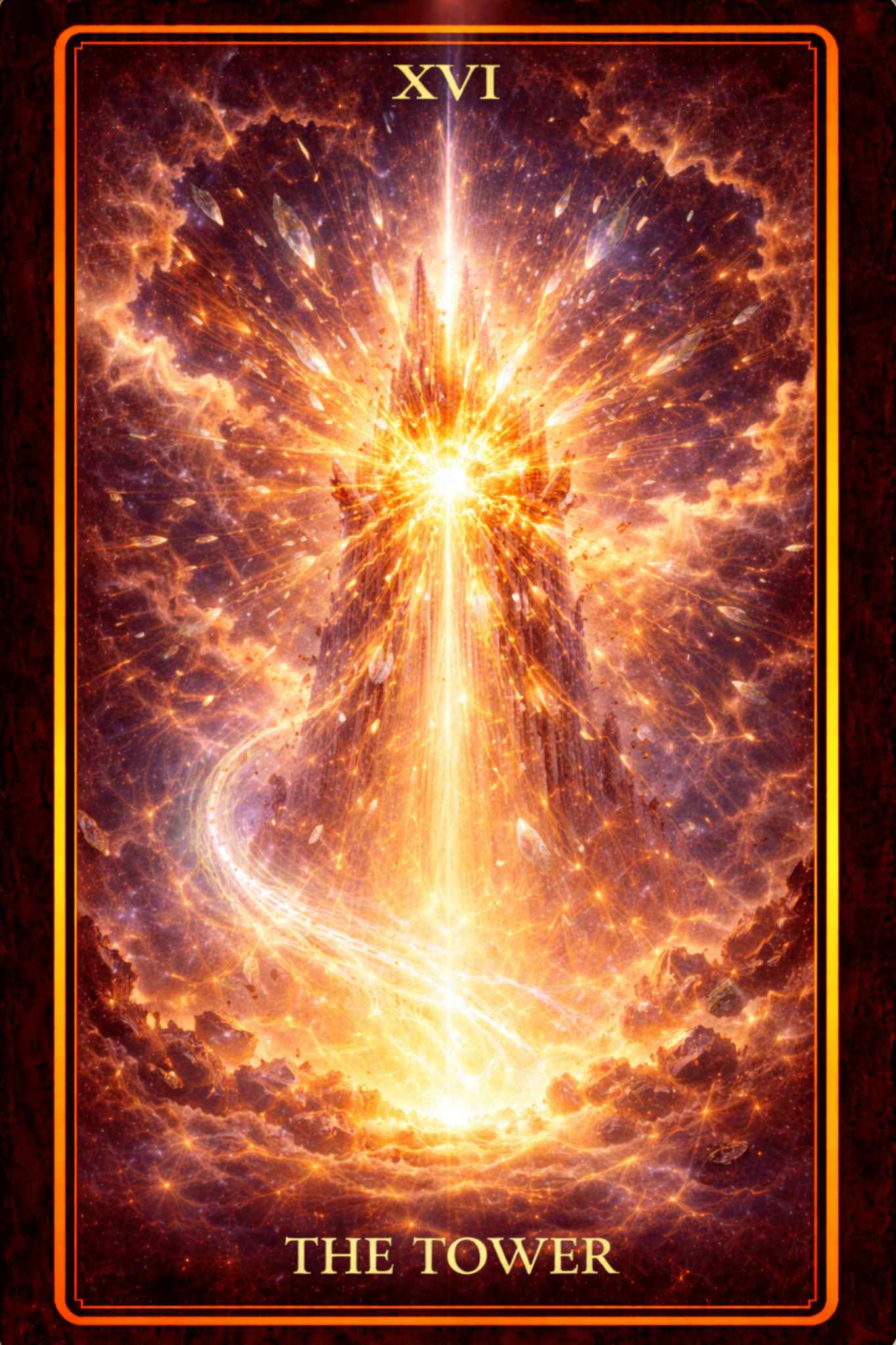
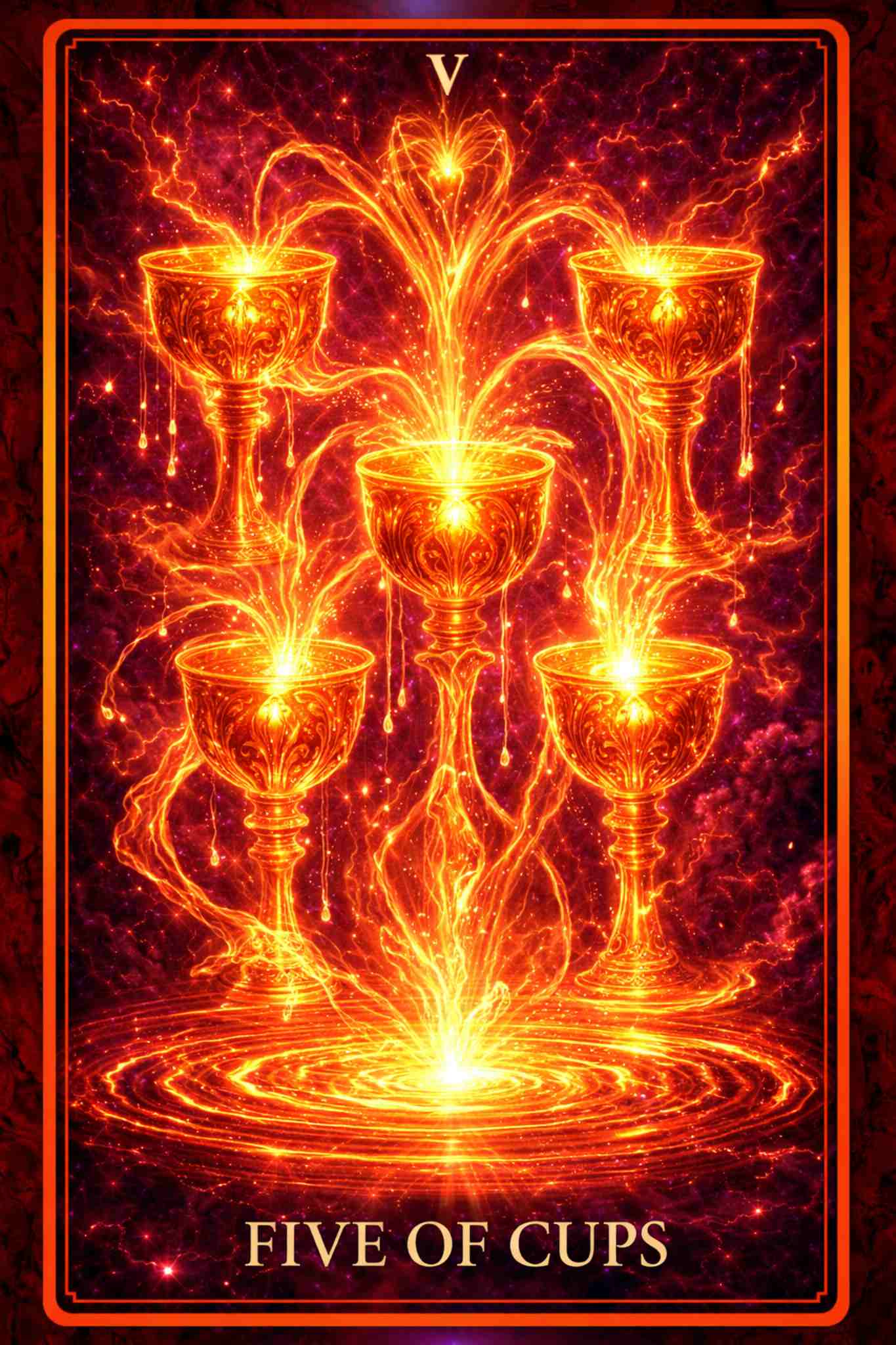
The moment grief stops being theoretical
The Tower and Five of Cups can feel like the instant when a person finally understands what has been lost, altered, neglected, or emotionally damaged by a truth that can no longer be softened. The Five of Cups already carries sorrow, regret, disappointment, and the difficult gaze toward what has spilled. The Tower adds the suddenness of recognition. Something becomes clear all at once, and the heart may need time to absorb the emotional weight of that clarity.
This pair should be handled with care because it can easily be overdramatized. It does not have to mean that everything is ruined. It does not have to turn grief into prophecy. More often, it describes the collapse of an illusion around a painful feeling. A person may realize how deeply something affected them. A relationship may reveal the cost of avoidance. A private regret may surface with unusual force. The Tower opens the hidden place; the Five of Cups shows the ache that was already there.
The difficult beauty of this combination is that grief can become more honest after the shock. Before The Tower, the person may have been explaining things away, staying busy, minimizing disappointment, or holding onto a version of the story that made the loss easier to manage. After The Tower, the emotional truth is harder to deny. That truth may hurt, but it can also end the exhausting work of pretending that the spilled cups did not matter.
What broke may be the illusion of being unaffected
The Five of Cups often looks toward what has fallen, and The Tower makes that gaze unavoidable. A conversation, memory, message, absence, or realization may suddenly reveal the depth of regret. Someone may see that an apology was delayed too long, that a bond changed while they were trying to hold it still, that a hope was built on an unstable emotional foundation, or that they have been mourning something without fully admitting it. The cards do not assign blame. They ask for emotional truth without self-punishment.
Want to explore this combination in a more personal way?
If this pairing feels important right now, a simple tarot spread can help you reflect on it with more context.
In love, this pairing can speak to the moment when disappointment becomes undeniable. A person may recognize that they accepted too little, expected too much from an illusion, or held a painful story in place because facing grief felt harder than maintaining hope. If the question is relational, The Tower feelings meaning adds a helpful layer because the feeling under The Tower can arrive abruptly after being contained for too long. The Five of Cups gives that feeling a sorrowful shape.
A related contrast appears in Death and Five of Cups, where grief may unfold through a longer process of ending, transition, and emotional acceptance. The Tower and Five of Cups feels more immediate. It is the moment the emotional structure cracks and the person sees the spilled cups clearly. The grief may not be new. The recognition is new. That distinction matters because it keeps the reading from becoming fatalistic.
The Five of Cups also contains the two cups still standing behind the figure. With The Tower, those standing cups may be hard to notice at first. Shock narrows attention. Regret can pull the eyes toward what cannot be changed. Yet the pair does not erase what remains. It asks for enough time to let the initial wave pass so the person can eventually see whether there is still care, wisdom, support, self-respect, or a more truthful path available after the illusion breaks.
Regret, responsibility, and the difference between pain and punishment
The Tower and Five of Cups can bring a strong sense of emotional consequence. This does not need to become harsh or moralizing. Consequence here means that the heart recognizes the impact of what happened. A person may see how an avoided conversation created distance, how a repeated pattern hurt trust, how a fantasy covered a mismatch, or how silence allowed grief to grow. The cards invite responsibility, but responsibility is different from shame.
When shame takes over, the Five of Cups can become a closed circle: looking only at what went wrong, replaying the same moment, turning pain into identity. The Tower interrupts that circle by revealing the structure around the grief. It asks what was unstable before the loss became visible. Was the relationship built on assumptions? Was the emotional need unspoken? Was the disappointment old, layered, and never properly named? Was the peace actually a way of avoiding the truth?
For a more focused emotional layer, the Five of Cups intentions meaning can help when the reading involves regret, remorse, or the wish to repair something after disappointment. The Tower adds urgency to that reflection. A person may want to act quickly because the truth hurts. Yet an intention formed in the first shock may need grounding before it becomes a helpful response.
Another useful comparison is The Tower and Four of Cups. There, the breakthrough interrupts numbness or refusal. Here, the breakthrough enters grief itself. The Four may ask why the cup was not received. The Five asks how to face the cups that have already spilled without losing sight of what can still be held. The Tower makes both readings sharper, but the emotional center is different.
Timing: grief needs space before it becomes clarity
Timing with this pair often points to the period after an emotional realization lands with force. It may be tempting to decide everything immediately: to apologize, withdraw, confront, return, leave, confess, or close the door. Some action may eventually be appropriate, but the Five of Cups asks for respect toward the grief itself. The first wave may contain truth, but it may also contain shock, regret, fear, and the mind’s attempt to fix pain quickly.
The healthiest timing is usually one step slower than the emotional intensity demands. Let the nervous system settle enough to distinguish remorse from panic, clarity from self-blame, and genuine responsibility from the urge to punish oneself. If another person is involved, an honest conversation may be needed, but it should be held with care rather than accusation. The Tower has already opened the wound. The response does not have to tear it wider.
There may also be a point when the old story cannot continue. This is one of the clearer messages of the pair. If the grief has revealed that something was unstable, dismissing the realization would only rebuild the same fragile wall. The question is not how to pretend the cups are full again. The question is how to honor what spilled, understand why it mattered, and notice what still stands behind the first field of loss.
After the shock, what can still be loved?
The deeper layer of The Tower and Five of Cups is not only grief; it is the honesty that grief can bring when it is no longer hidden. A person may discover what they valued by feeling the pain of its absence. They may understand a relationship more clearly after the idealized version cracks. They may see where their own silence, longing, fear, or expectation shaped the emotional outcome. This is tender work. It requires courage without self-cruelty.
Spiritually, this combination can mark the moment when sorrow becomes a teacher rather than only a wound. The Tower strips away the false shelter. The Five of Cups asks the person to stand before the emotional truth and grieve what needs grieving. In that space, something quieter may become possible: humility, compassion, repair, release, or a more honest way of loving. None of that erases pain. It gives pain a place to move instead of becoming frozen.
The Tower and Five of Cups ultimately speaks of grief after clarity. It may be the moment when a person sees what was lost, what was avoided, or what could no longer survive inside the old emotional structure. Yet the reading is not a sentence. It is an invitation to face the truth without turning it into despair. The spilled cups matter. The shock matters. So do the cups still standing, even if they can only be seen after the first wave of sorrow begins to settle.
Want to place this combination into a wider reading?
If this pairing feels close to something you are experiencing, a simple spread can help you reflect on the surrounding energy with more clarity.
When grief becomes honest enough to soften
The Tower and Five of Cups does not ask the heart to pretend that the spilled cups do not matter. It also does not ask the person to live forever inside the moment of spilling. Its deeper invitation is to stand close enough to the truth to feel it, without turning that truth into a final judgment on the self, the relationship, or the future. Something may have cracked. Something may have been seen too late, named too suddenly, or felt more deeply than expected. Still, the meaning of the moment is not only found in what fell. It is also found in what the heart can understand once the first shock begins to quiet.
This is where the pair becomes more compassionate than it first appears. The Tower gives the painful clarity. The Five of Cups gives the emotional weight of what that clarity touches. Together, they can show the moment when a person stops managing grief from a distance and finally lets it become real. That can feel heavy, but it can also be the beginning of a more truthful relationship with the past. Regret may reveal what mattered. Sorrow may reveal where love, hope, effort, or trust once lived. Disappointment may show where the soul expected more honesty than the old structure could hold.
The important thing is not to rush grief into a lesson before it has been allowed to exist. Some feelings need room before they become clear. A person may need to acknowledge what hurt, what changed, what was missed, or what can no longer be restored in the same form. That acknowledgement is not weakness. It is emotional contact. The Tower breaks the shelter that kept the feeling abstract. The Five of Cups asks the person to meet the feeling without making it the whole story.
After the first wave, the two standing cups may slowly become visible again. They may not erase what spilled. They may not return the situation to what it was. But they can represent the parts of life, love, self-respect, compassion, or wisdom that remain available after the shock. The gentlest reading of this combination is not that everything is lost. It is that grief deserves honesty, and honesty may eventually reveal what can still be carried with care.
More combinations with The Tower
More combinations with Five of Cups
Continue with The Tower
Explore Related Guides by Topic
If you want to explore this combination through a more specific emotional lens, these tarot guides can help you follow the broader pattern behind the reading.