
The Hierophant + Ten of Wands
Explore how these two tarot cards interact in a reading through symbolic overlap, contrast, and shared narrative. Tarot combinations often reveal meaning that neither card fully expresses on its own.
The Hierophant and Ten of Wands Tarot Combination Meaning
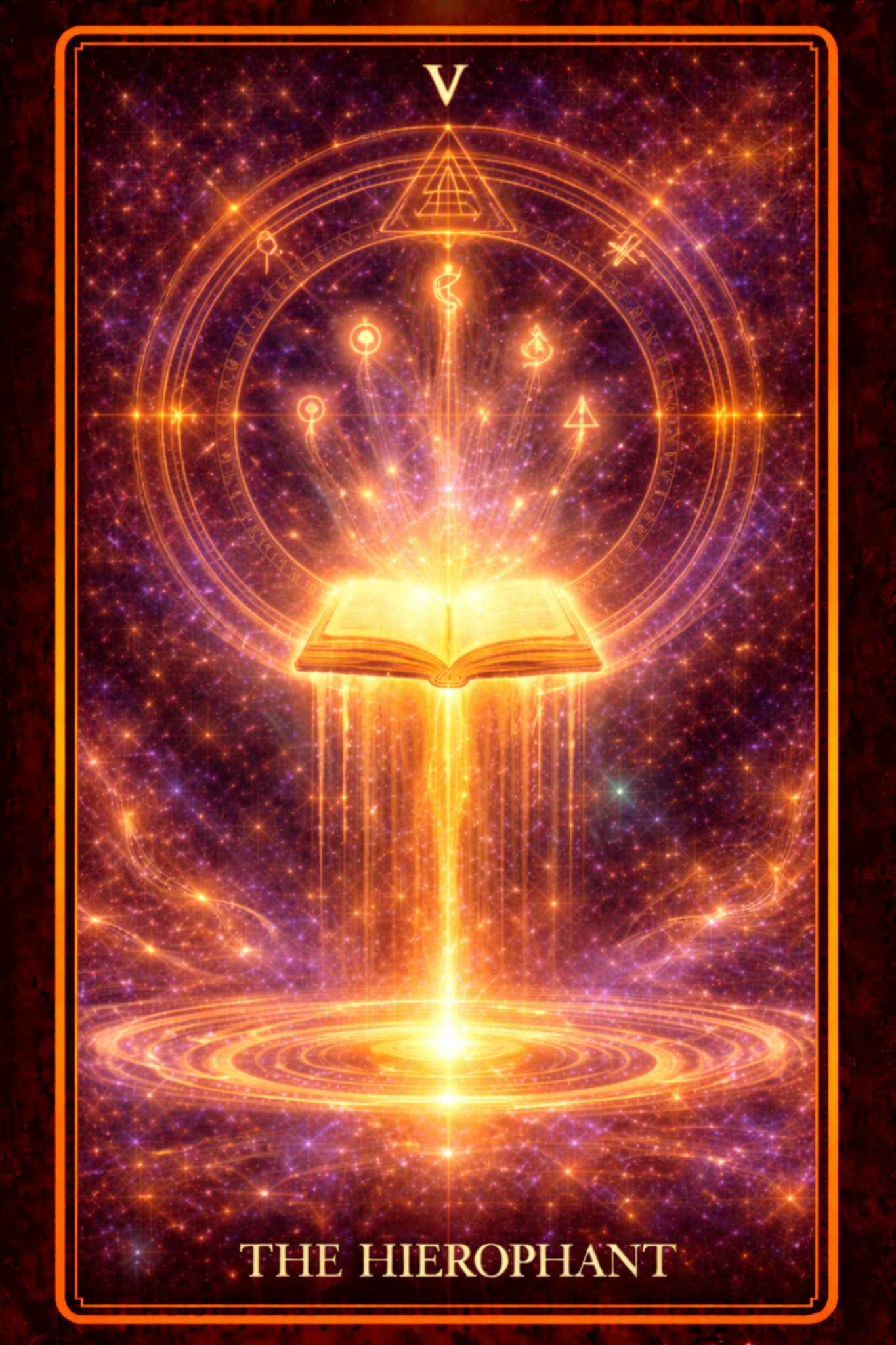
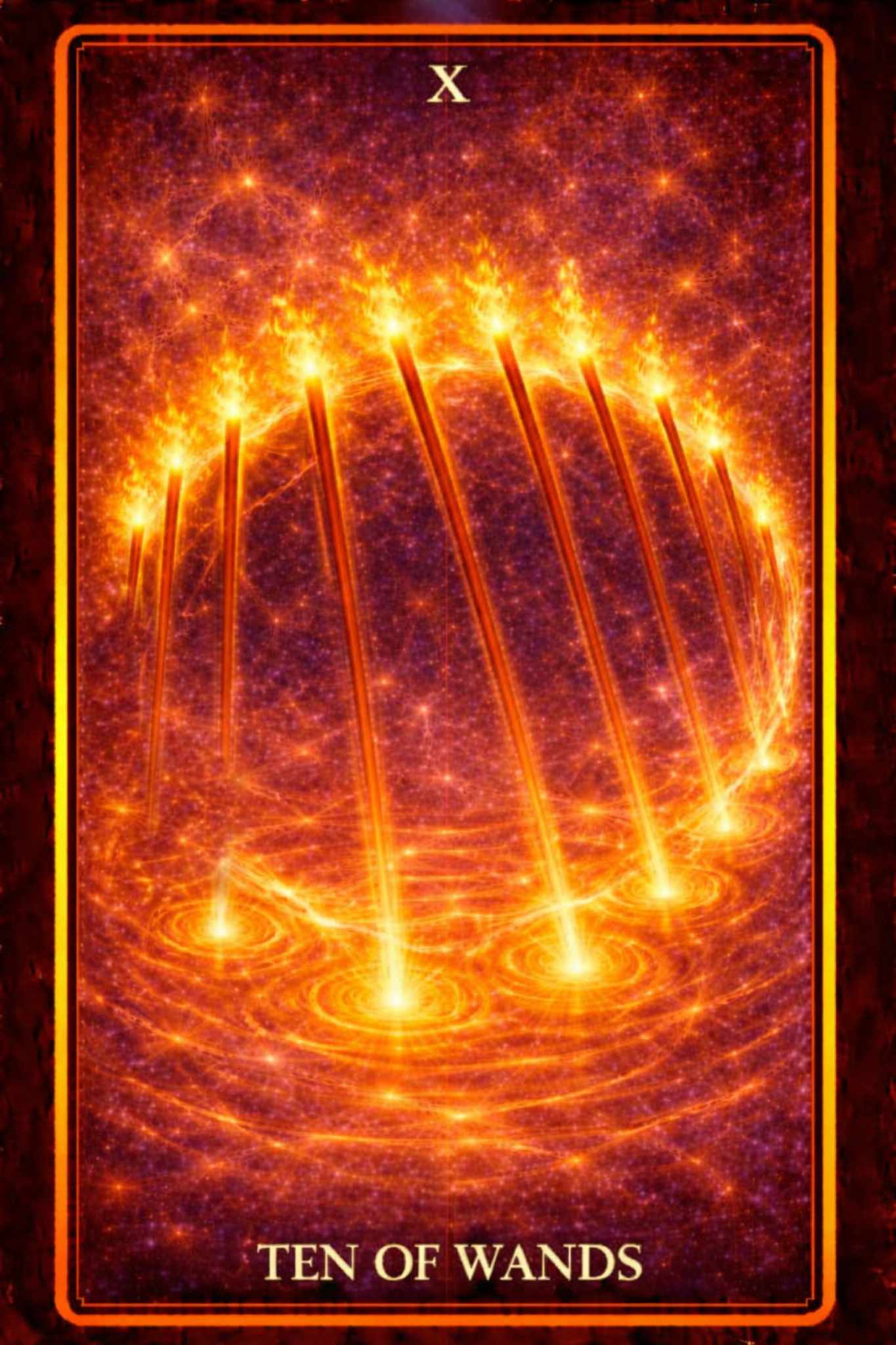
The Hierophant and Ten of Wands create a combination about responsibility that has grown heavy over time. Not simply a busy period, and not just stress in the everyday sense, but a deeper condition in which duty, values, expectations, or inherited roles have accumulated to the point where they begin shaping how a person moves through life. The Ten of Wands shows effort at its most compressed. It is the feeling of carrying, managing, pushing forward under weight that no longer distributes itself easily. The Hierophant gives that weight structure. He brings teachings, obligations, roles, traditions, and the quiet authority of what a person believes they should uphold. Together, these cards often appear when the burden is not random. It is tied to identity, to conscience, and to the sense that putting something down might mean failing something important.
This is what makes the pairing serious. The Ten of Wands alone can describe overload or exhaustion. The Hierophant turns that into a question of meaning. Are you carrying what is truly yours, or what has attached itself to you through expectation, habit, or moral identity? Are you serving something alive, or functioning as the support structure of something that depends on your endurance? This is not simply about doing too much. It is about whether your sense of duty has expanded beyond what can remain healthy or sustainable.
Core symbolic dynamic
At a symbolic level, The Hierophant and Ten of Wands bring obligation into direct contact with lived strain. The Hierophant represents the systems that define what people owe, protect, or preserve. These may be family roles, professional ethics, spiritual commitments, or deeply internalized ideas about what it means to be responsible. The Ten of Wands shows what happens when too much of that meaning concentrates in one place. It is not theoretical. It is the body tightening, the mind narrowing, the sense of moving through life in a constant state of effort rather than presence.
There is dignity here, but also distortion. Some responsibilities are real and worthy. Others have expanded quietly, reinforced by habit or expectation until they no longer reflect balance. The cards ask not only how much you are carrying, but what story has made that weight feel unquestionable. When responsibility becomes identity, it can be difficult to see where it has exceeded its purpose.
Love and relationship meaning
In relationships, this pairing often reflects commitment that has become uneven in its weight. The Hierophant brings seriousness, shared values, and the desire for a bond that means something. The Ten of Wands shows what happens when maintaining that meaning becomes effort-heavy. One person may feel they are carrying the emotional labor, the stability, or the responsibility of holding everything together. The issue is rarely a lack of care. More often, care has taken a form that is no longer balanced.
This can be especially present in relationships shaped by strong expectations. Cultural, familial, or internalized ideas about loyalty and duty may make it difficult to admit that something needs to change. Yet the cards suggest that commitment alone does not justify strain. A relationship should not rely on one person absorbing the majority of its weight. When effort becomes silent and constant, connection can slowly turn into endurance.
The question here is not whether the relationship matters. It is whether the way it is currently being held allows both people to remain present within it, rather than simply responsible for it.
Career, vocation, and institutional pressure
In work, this combination often appears where responsibility has become concentrated. The Hierophant may represent a role that carries trust, authority, or expectation. The Ten of Wands shows the cost of holding that role without sufficient support. This can look like taking on too much, but more precisely, it often looks like becoming the person others rely on without questioning how much is being placed on you.
This is common in environments where reliability is rewarded with more responsibility rather than better structure. The more capable and conscientious you are, the more likely it becomes that others defer to you, consciously or not. Over time, this can lead to a quiet imbalance where the system depends on your effort instead of distributing it properly.
The deeper question is not whether the work matters. It often does. The question is whether the way it is currently structured respects the limits of the person doing it. Responsibility should be sustainable. When it is not, the issue is not always personal capacity. It is often structural imbalance.
Spiritual and psychological lesson
On a deeper level, this pairing speaks to the relationship between identity and responsibility. Some people learn early that being dependable is what makes them valuable. Over time, this can become a moral framework rather than just a behavior. The Hierophant reinforces it through meaning. The Ten of Wands reveals the cost of carrying that meaning without limits.
Need a little more context around this pairing?
A short reading can help you reflect on the tension, direction, or lesson this combination may be pointing toward.
There may be a sense that putting something down would mean becoming less reliable, less worthy, or less aligned with who you believe yourself to be. Yet these cards suggest that responsibility loses its integrity when it removes all space for life around it. A value that cannot be lived sustainably begins to distort itself.
This is not a call to abandon responsibility. It is a call to refine it. What is truly yours to hold, and what has been absorbed without reflection? Where does devotion support life, and where has it become a form of pressure you no longer question?
Shadow expression and challenge
The shadow of this combination appears when burden becomes normalized and even praised. The Hierophant can become rigid expectation or inherited pressure. The Ten of Wands can become chronic overextension. Together, they can create situations where carrying too much is seen as strength, even when it is quietly unsustainable.
There is also a more subtle dynamic. When a person is capable of carrying a great deal, others may stop noticing how much they are carrying. The focus shifts from whether the load is fair to whether it is still being managed. This can create a pattern where imbalance continues simply because it is not being challenged.
The cards ask you to interrupt that pattern. Capability does not automatically equal responsibility. Strength does not mean everything belongs on your shoulders.
What this combination is really asking
Which responsibilities are truly yours, and which have become attached to your identity over time?
This is not a simple question, because many of the responsibilities you carry may feel meaningful. Yet meaning alone does not guarantee balance. The cards suggest looking carefully at what is being sustained, and at what cost.
Responsibility becomes more truthful when it includes proportion.
FAQ
Does this combination always mean burnout?
Not necessarily. It points more to accumulated responsibility than immediate collapse. Burnout becomes a risk when the weight continues without adjustment.
Is this about external pressure or internal expectation?
Often both. External roles and expectations may be real, but internal identity can make them harder to question or redistribute.
Should something be let go?
Sometimes. More often, the message is about redistributing weight, clarifying boundaries, or changing how responsibility is held rather than abandoning it entirely.
Want to place this combination into a wider reading?
If this pairing feels close to something you are experiencing, a simple spread can help you reflect on the surrounding energy with more clarity.
Closing reflection
The Hierophant and Ten of Wands describe a situation where responsibility has become heavy enough to deserve attention. There may still be integrity, commitment, and genuine care present. But there is also a need to recognize when those qualities are being carried in a way that is no longer sustainable.
The most grounded response is to carry what is truly yours, and to release what no longer belongs to you. Let responsibility remain meaningful, but not overwhelming. Let structure support life, rather than depend on its depletion. When these two cards work well together, the result is not exhaustion. It is balance — responsibility that can endure because it is held with clarity rather than strain.
More combinations with The Hierophant
More combinations with Ten of Wands
Continue with The Hierophant
Explore Related Guides by Topic
If you want to explore this combination through a more specific emotional lens, these tarot guides can help you follow the broader pattern behind the reading.