
Strength + Ten of Wands
Explore how these two tarot cards interact in a reading through symbolic overlap, contrast, and shared narrative. Tarot combinations often reveal meaning that neither card fully expresses on its own.
Strength and Ten of Wands Tarot Combination Meaning
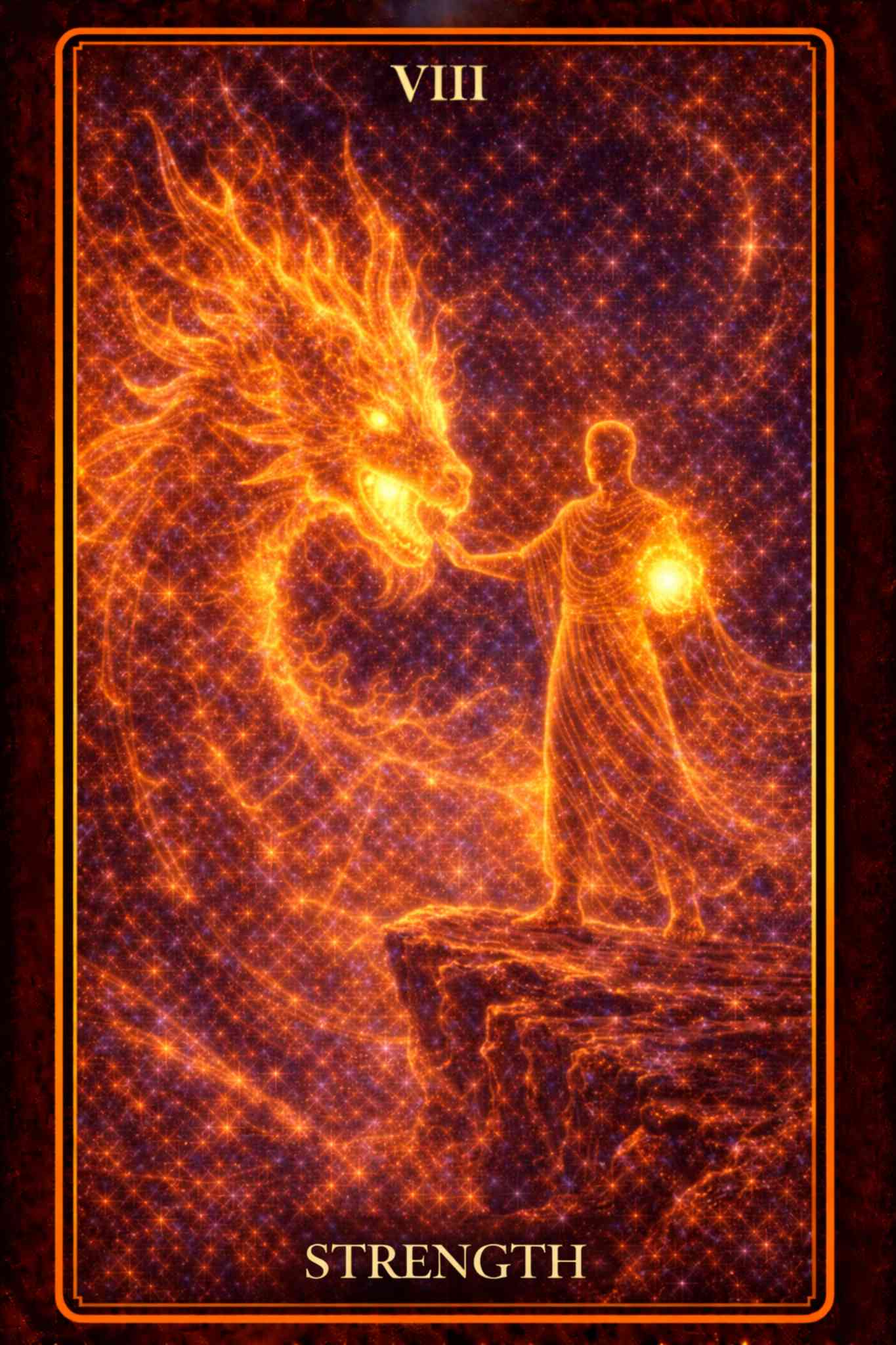
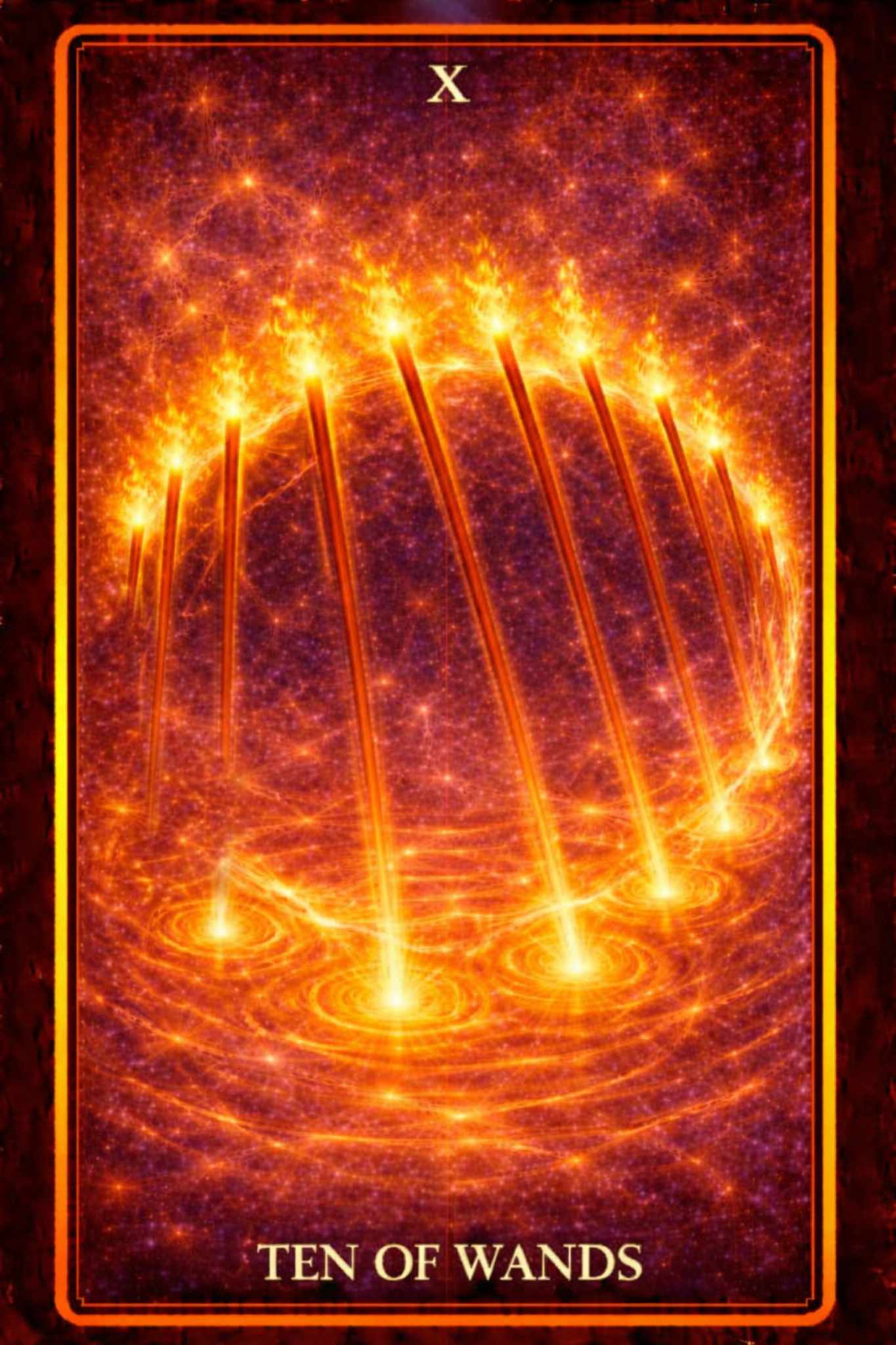
Strength and Ten of Wands speak about power under burden. This is a pairing that often appears when responsibility has become heavy, when endurance is real but increasingly taxed, and when the question is no longer whether you are capable, but whether the way you are carrying everything is still sustainable. Strength represents emotional maturity, gentle self-command, instinct guided rather than crushed, and the kind of inner steadiness that allows a person to remain calm under pressure. The Ten of Wands represents overload, accumulated obligation, strain, overextension, and the weight that gathers when effort continues long past the point of ease. Together, these cards do not deny resilience. In fact, they often confirm it. But they also ask whether resilience has quietly become an excuse for carrying more than should be carried.
This pairing is especially important because it reveals one of the shadows of strength itself. People who are capable often become the ones who keep carrying. People who stay calm under pressure are often given more pressure. People who do not collapse outwardly may not be recognized as nearing inner exhaustion. The Ten of Wands shows the visible and invisible weight of this pattern. Strength asks whether your power is being used wisely or simply consumed by obligation. The deeper lesson is not that you must become less responsible. It is that real strength does not always say yes to more. Sometimes real strength says enough, reorders the load, or admits that what was once manageable is now too much to carry cleanly.
The deeper symbolic dynamic
Strength and Ten of Wands both relate to endurance, but they meet at a critical threshold. Strength knows how to hold intensity with grace. It supports regulation, patience, and the refusal to let raw instinct dominate the self. The Ten of Wands shows what happens when fire has been tasked with carrying too much for too long. It is the suit of Wands reaching a point where its own energy becomes burden rather than inspiration. Desire becomes duty. Momentum becomes weight. Capacity becomes overuse. Together, these cards ask not only whether you can keep going, but whether you should keep going in the same way.
This is what makes the pairing psychologically rich. It may describe people who are outwardly competent and inwardly tired, who have become experts at staying composed while the total load keeps increasing. It may also reveal a pattern of identifying with strength so deeply that asking for help, simplifying, or setting down part of the burden feels almost like weakness or betrayal. Strength corrects that misunderstanding. It reminds us that mastery is not measured only by how much the self can absorb. It is also measured by the wisdom to guide energy before it reaches collapse. The Ten of Wands shows the weight. Strength asks for a more conscious relationship to weight.
There is also something almost invisible about the tension in this pair. On the surface, a person may still look functional, reliable, and composed. The structure is still standing. The duties are still being met. The deadlines are still being handled. Yet internally, life may have become narrower, heavier, and more effortful than it should be. This is often how the Ten of Wands operates. It does not always announce itself through failure. It can appear through gradual compression, through the quiet loss of ease, spontaneity, rest, and emotional range. Strength enters here as a form of truthfulness. It asks whether the outer performance of capability has started to cost too much inwardly.
Love and relationship interpretation
In love readings, Strength and Ten of Wands can indicate a relationship carrying strain, responsibilities that are affecting intimacy, or a dynamic in which one or both people are trying very hard to hold everything together without fully acknowledging how heavy it has become. There may still be care here. There may even be real devotion. But devotion alone does not remove burden. The Ten of Wands suggests that pressure has accumulated, whether through practical obligations, emotional labor, repeated stress, family responsibilities, conflict left unprocessed, or the general weight of trying to keep a connection functional while too much else is also being carried.
You may also want to go one step deeper.
Strength + Ten of Wands can open up differently inside a focused personal reading.
Strength enters as the possibility of holding this phase with maturity rather than breaking under it or turning it into blame. Yet it also warns against excessive silent endurance. One of the central questions in this pairing is whether love is being expressed through healthy support or through overfunctioning. Are you carrying the relationship with care, or carrying more than belongs to you because your instinct is to absorb strain rather than redistribute it? These cards often encourage calm honesty. The bond may need more tenderness, but it may also need practical rebalancing, clearer boundaries, and the courage to admit that exhaustion is present. Sometimes the strongest relational move is not to keep carrying everything quietly. It is to speak before quiet strength becomes silent resentment.
This pairing can also describe the emotional atmosphere that forms when two people are still trying, but the ratio between effort and nourishment has become distorted. One or both may still be devoted, still loyal, still willing, yet there is less room for warmth because so much energy is being spent on maintenance, logistics, repair, survival, or emotional containment. In that situation, Strength does not advise dramatic collapse. It advises conscious rebalancing. The cards suggest that love needs not only sincerity, but breathable space. If the connection is carrying too much without release, then tenderness alone may not be enough. Structure may need to change as well.
For singles, the pairing may suggest that the heart is tired from having carried too much alone or too much for others. There may be desire for connection, but also limited emotional bandwidth. Strength supports emotional dignity and self-respect, yet the Ten of Wands suggests that part of the healing may involve putting down burdens that are not helping you love more wisely. Love becomes more possible when the self is no longer overburdened by old roles, chronic responsibility, or the habit of enduring more than is necessary. Sometimes the issue is not that love is absent, but that there is too little room left for it to enter cleanly.
Career, work, and overload
In career readings, Strength and Ten of Wands often speak with striking directness. This can indicate heavy workloads, too much responsibility, pressure carried with professionalism, or the accumulation of tasks and expectations that have outgrown what one person should reasonably continue to absorb. The Ten of Wands rarely appears where the load is imaginary. It usually points to real weight. You may be competent enough to keep handling it, but competence is not the same as sustainability. Strength reflects the inner discipline, patience, and self-command that have likely kept things from falling apart already. Yet it also suggests that this capacity may now need protection.
This is an especially important pairing for those who are valued precisely because they do not dramatize burden. You may be the one others trust to stay calm, to solve problems, to keep carrying, to absorb pressure without much outward complaint. These are real strengths. But if they are not balanced, they can turn into a pattern of chronic overextension. The cards often advise reassessment. What truly belongs to you? What is being held out of duty rather than alignment? What have you mistaken for strength simply because you have been doing it for a long time?
Creatively, the same message can apply. Passion projects can become heavy when they stop being shaped by inspiration and start being driven by relentless self-pressure. The Ten of Wands does not say abandon the path. It says the way the path is being carried may need to change. Strength suggests that a calmer, more intelligent use of power can restore meaning where strain has begun to dominate.
There is often a hidden grief in this work-related version of the pairing. Something that once felt energizing may now feel obligatory. A role once chosen freely may now feel difficult to step away from because so much depends on you. The cards do not trivialize that reality. They recognize that sometimes overload is tied not only to poor boundaries, but to real stakes, real dependency, and real commitment. Even so, they ask for honesty. Endurance can be admirable and still need revision. The question is not whether the work matters. The question is whether the current form of carrying it is slowly consuming the person doing the carrying.
Spiritual and psychological lesson
Spiritually, Strength and Ten of Wands can describe the lesson of discerning between sacred responsibility and unnecessary burden. Many people are taught, directly or indirectly, that worth comes from carrying a great deal without complaint. This pairing questions that pattern. It suggests that endurance has value, but not when it becomes an unquestioned virtue detached from actual well-being. Strength knows how to remain centered under pressure. The Ten of Wands asks whether pressure has now exceeded what centeredness alone should be expected to manage.
Psychologically, the cards may reveal a personality structure built around containment, control, and the refusal to trouble others with one’s own load. This can look admirable, and sometimes it is. But it can also leave a person chronically overburdened, emotionally isolated, and disconnected from the instinct that knows when enough is enough. Strength offers a healing shift here. It reframes self-command not as endless suppression, but as wise stewardship of energy. It says that real maturity includes noticing when the weight is becoming distortive. It also includes allowing support, simplification, or release before collapse becomes the only available language left.
This pairing can be especially meaningful for people who have long equated composure with silence. If you have learned to stay functional no matter what, then burden may only become visible to you once it has already become extreme. Strength invites a more compassionate form of awareness. It asks whether you can notice overload before your body, mood, creativity, or relationships are forced to signal it for you. The deeper wisdom here is preventative, not merely restorative. It teaches that inner authority includes intervention. Waiting until the self is nearly broken is not the highest form of discipline. Sometimes it is simply what happens when burden has been normalized for too long.
Potential shadow expression
The shadow of this combination appears when strength becomes self-overriding. Then the Ten of Wands grows heavier while Strength becomes the demand to keep functioning regardless. A person may continue carrying everything with outward grace while inwardly growing brittle, numb, resentful, or quietly desperate for relief. In this state, self-control can become disconnection from one’s own needs. The burden may still be managed, but at increasing cost to tenderness, creativity, health, and honest emotional life.
This can manifest as saying yes automatically, taking responsibility for other people’s instability, confusing exhaustion with virtue, or believing that asking for help would somehow invalidate your identity as the one who can handle things. In relationships, it may look like doing too much in silence. In work, it may become burnout hidden inside high function. The cards are not accusing. They are illuminating. They suggest that the burden has become too central, and that the next movement of wisdom may involve reduction rather than further proof of stamina.
Another shadow form appears when a person becomes so practiced at carrying weight that lightness itself begins to feel unfamiliar or unsafe. Rest may trigger guilt. Simplicity may feel undeserved. Delegation may feel like loss of control. In that version, the burden is no longer only external. It has become woven into identity. Strength tries to loosen that knot. It suggests that power does not become less real when it chooses proportion over excess. In fact, that may be where power becomes most refined.
What these cards ask in practice
Strength and Ten of Wands ask you to become more conscious about what you are carrying and why. They ask whether your current load reflects love, purpose, and aligned responsibility, or whether it also includes fear, guilt, habit, and the inability to set things down. They ask whether your calm is protecting your center or merely hiding the fact that you are overloaded. Most importantly, they ask whether your power can now be expressed through wiser distribution rather than greater endurance.
In practical reading terms, these cards often advise simplifying, setting boundaries, delegating where possible, speaking honestly about strain, and refusing the false nobility of carrying everything alone. Strength supports responsibility. The Ten of Wands asks for proportion. Together, they suggest that the strongest move may not be to hold more. It may be to hold what is truly yours more cleanly.
Ready to see how this applies to your situation?
A focused tarot reading can help you explore how Strength + Ten of Wands may reflect your current situation, not just the general meaning of the cards.
Closing reflection
There are times when strength looks less like triumph and more like the quiet ability to keep moving under a weight that others may not fully see. This pairing understands that reality. It does not mock endurance, and it does not deny the dignity of carrying what matters. But it also refuses to flatter burden simply because it has become familiar.
Something in this combination asks for a change in relationship, not only to responsibility, but to self-worth. You do not become more valuable because the load is heavier. You do not become wiser because you waited longer to admit strain. What matters more is whether what you carry is still in right proportion to the life carrying it.
When that question is answered honestly, strength begins to change shape. It becomes less about proving how much can be endured and more about protecting what is still alive, still human, and still worth preserving inside the one who bears the weight.
More combinations with Strength
More combinations with Ten of Wands
Continue with Strength
Explore Related Guides by Topic
If you want to explore this combination through a more specific emotional lens, these tarot guides can help you follow the broader pattern behind the reading.