
The Fool + Five of Wands
Explore how these two tarot cards interact in a reading through symbolic overlap, contrast, and shared narrative. Tarot combinations often reveal meaning that neither card fully expresses on its own.
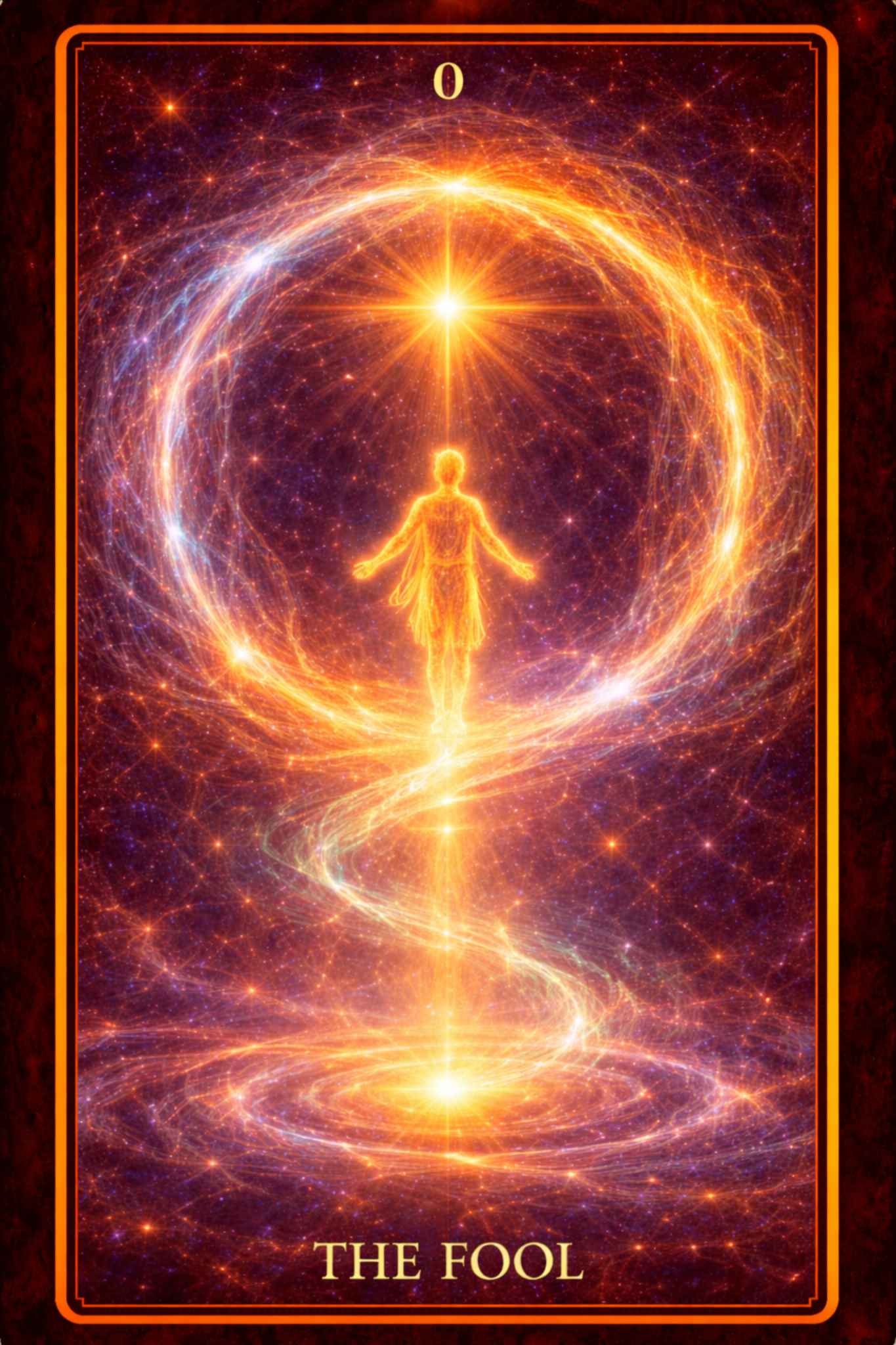
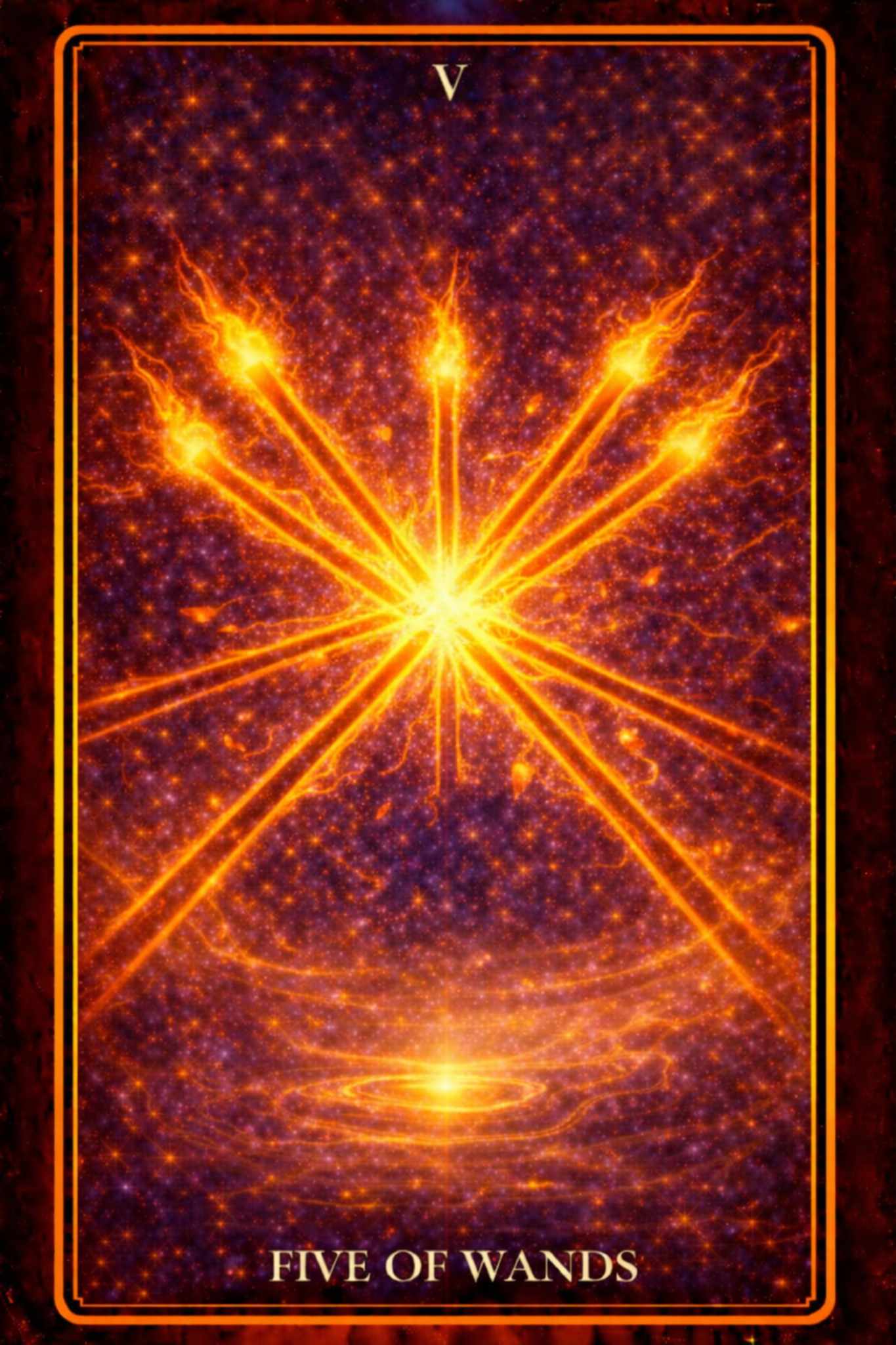
The Fool and Five of Wands Tarot Combination Meaning
Not every beginning feels smooth. Some start in movement, noise, and a kind of friction that is difficult to immediately understand. The Fool with Five of Wands often appears when something new has already begun, but instead of clarity or support, it meets resistance — from others, from circumstances, or sometimes from within.
This does not necessarily mean something is wrong. It means the beginning is interacting with reality.
The Fool brings openness and willingness to step forward without a fixed plan. Five of Wands introduces competing forces, different directions, and a lack of alignment. Together, they describe a situation where movement exists, but cohesion does not. Something is happening, but not everyone — including you — may be moving in the same way.
When movement meets friction
This combination often shows up when an idea, connection, or decision enters a space where other perspectives, expectations, or agendas are already present. What felt simple at the start becomes more complex as it meets other people or external conditions.
That friction can look like disagreement, mixed signals, competition, or simply a sense that things are not landing as cleanly as expected. The energy is active, but not unified. And that lack of unity is the point.
Five of Wands is not always about direct conflict. It can be about misalignment. People talking past each other. Effort without coordination. Movement without shared direction. When paired with The Fool, this tends to happen early, before roles, expectations, or boundaries have had time to settle.
In that sense, the friction is not an interruption. It is part of the beginning.
Not all tension is a problem
It is easy to interpret resistance as a sign that something should stop. But in this pairing, tension often carries information rather than a clear yes-or-no answer. It shows where things are not yet aligned, where assumptions differ, or where the situation is still finding its shape.
The risk is reacting too quickly. Either by pushing harder to force clarity, or by stepping back entirely before understanding what the friction is actually revealing.
A more useful approach is to stay with the movement, but become more precise. What exactly is not matching? Where is the misunderstanding? Is the tension coming from external circumstances, or from something internal that has not yet been named?
Not all conflict needs resolution immediately. Some of it needs to be understood first.
When confusion is created, not discovered
There is a subtle difference between a situation that is unclear by nature and one that becomes unclear through interaction. The Fool with Five of Wands often points to the second. The confusion is not always inherent in what is happening. It can emerge through how people respond to it.
Want to explore this combination in a more personal way?
If this pairing feels important right now, a simple tarot spread can help you reflect on it with more context.
Different expectations, different pacing, different interpretations of the same moment — these can create a kind of noise that did not exist at the start. What began as a simple movement becomes layered with reactions, assumptions, and competing directions.
This is where things can feel more chaotic than they actually are. Not because the situation itself is unstable, but because too many interpretations are being applied at once.
In this dynamic, clarity does not come from adding more effort or more explanation. It often comes from stepping back just enough to separate what is directly observable from what has been added on top of it.
What actually happened? What was said, done, or demonstrated? And what meaning was attached afterward?
This distinction matters. Without it, the situation can quickly feel more complicated than it needs to be. With it, the movement becomes easier to read, even if it is still not fully aligned.
Relationships and mixed signals
In relationships, this pairing often reflects early-stage interaction where interest exists, but alignment does not. There may be attraction, communication, or shared energy, but also inconsistency, crossed signals, or subtle competition between different expectations.
This is not necessarily a sign of incompatibility. It can simply mean the connection has not yet found a stable rhythm. The Fool keeps the interaction open and in motion, while Five of Wands shows that different approaches or intentions are still present.
The challenge is not to interpret every moment as definitive. A mixed signal does not always mean rejection. At the same time, intensity does not always mean clarity. Both can exist at once.
What matters more is pattern. What repeats? What stabilizes over time? And what continues to create confusion without moving toward resolution?
Work, direction, and competing priorities
In practical situations, this combination often appears when a new direction enters an environment that is already active. There may be multiple ideas, competing goals, or unclear leadership. The result is movement, but not necessarily progress.
This can feel frustrating, especially if the initial impulse behind The Fool was clean and direct. But once that impulse meets a more complex system, it has to adjust. Not by losing itself, but by becoming more aware of its context.
Sometimes the most useful move here is not to push forward harder, but to observe. Who is doing what? Where is effort being duplicated or wasted? What is actually needed, rather than assumed?
Clarity often comes through engagement, not before it.
Early-stage conflict versus real incompatibility
One of the more difficult aspects of this combination is knowing what kind of tension you are dealing with. Not every disagreement points to a deeper incompatibility. At the same time, not every active connection is meant to stabilize over time.
Five of Wands can represent the natural friction of something new finding its form. People adjust, roles shift, expectations become clearer through interaction rather than through planning. In these cases, tension is part of development.
But there is another version of this energy as well. One where the same points of friction repeat without movement. Where communication circles back without resolving anything. Where effort increases, but alignment does not.
The difference between the two is not always obvious in the moment. It becomes clearer through pattern.
Is something gradually becoming more understandable, even if imperfect? Or is it staying just as unclear despite continued engagement?
The Fool keeps the door open. Five of Wands shows what happens inside that openness. Whether the space begins to organize itself over time, or whether it remains scattered.
Recognizing that difference is what allows you to stay engaged without becoming stuck. Not every beginning needs to be pushed forward. Some need to be observed long enough to reveal what they actually are.
The internal layer
On a personal level, this combination can reflect inner contradiction. Part of you is ready to move. Another part is uncertain, distracted, or pulled in multiple directions. Thoughts compete. Motivations overlap. The result can feel like energy without focus.
This does not mean you are unprepared. It means the decision has not fully integrated yet.
Instead of forcing clarity, it can help to slow down just enough to notice what each part is actually saying. Not to resolve it immediately, but to recognize the different impulses at play. Often, what looks like confusion is simply unprocessed movement.
What this combination is really pointing toward
The Fool and Five of Wands do not ask you to stop. They also do not suggest pushing forward blindly. They point toward awareness inside movement. The ability to stay engaged while recognizing that not everything is aligned yet.
This is not a clean beginning. It is a real one.
The strength here is not in avoiding friction, but in learning from it without becoming defined by it. To see where adjustment is needed, where patience is required, and where something may need to be clarified before it can continue.
Ready to see how this applies to your situation?
A focused tarot reading can help you explore how The Fool + Five of Wands may reflect your current situation, not just the general meaning of the cards.
Closing reflection
Some beginnings feel effortless. Others feel alive because they are not. The Fool and Five of Wands belong to the second kind.
Something has started, but it has not settled. That does not make it wrong. It makes it active.
The question is not whether there is friction. The question is how you respond to it. With reaction, avoidance, or attention.
Because attention is what turns scattered movement into direction.
More combinations with The Fool
More combinations with Five of Wands
Continue with The Fool
Explore Related Guides by Topic
If you want to explore this combination through a more specific emotional lens, these tarot guides can help you follow the broader pattern behind the reading.