
The Empress + Ten of Wands
Explore how these two tarot cards interact in a reading through symbolic overlap, contrast, and shared narrative. Tarot combinations often reveal meaning that neither card fully expresses on its own.
The Empress and Ten of Wands Tarot Combination Meaning
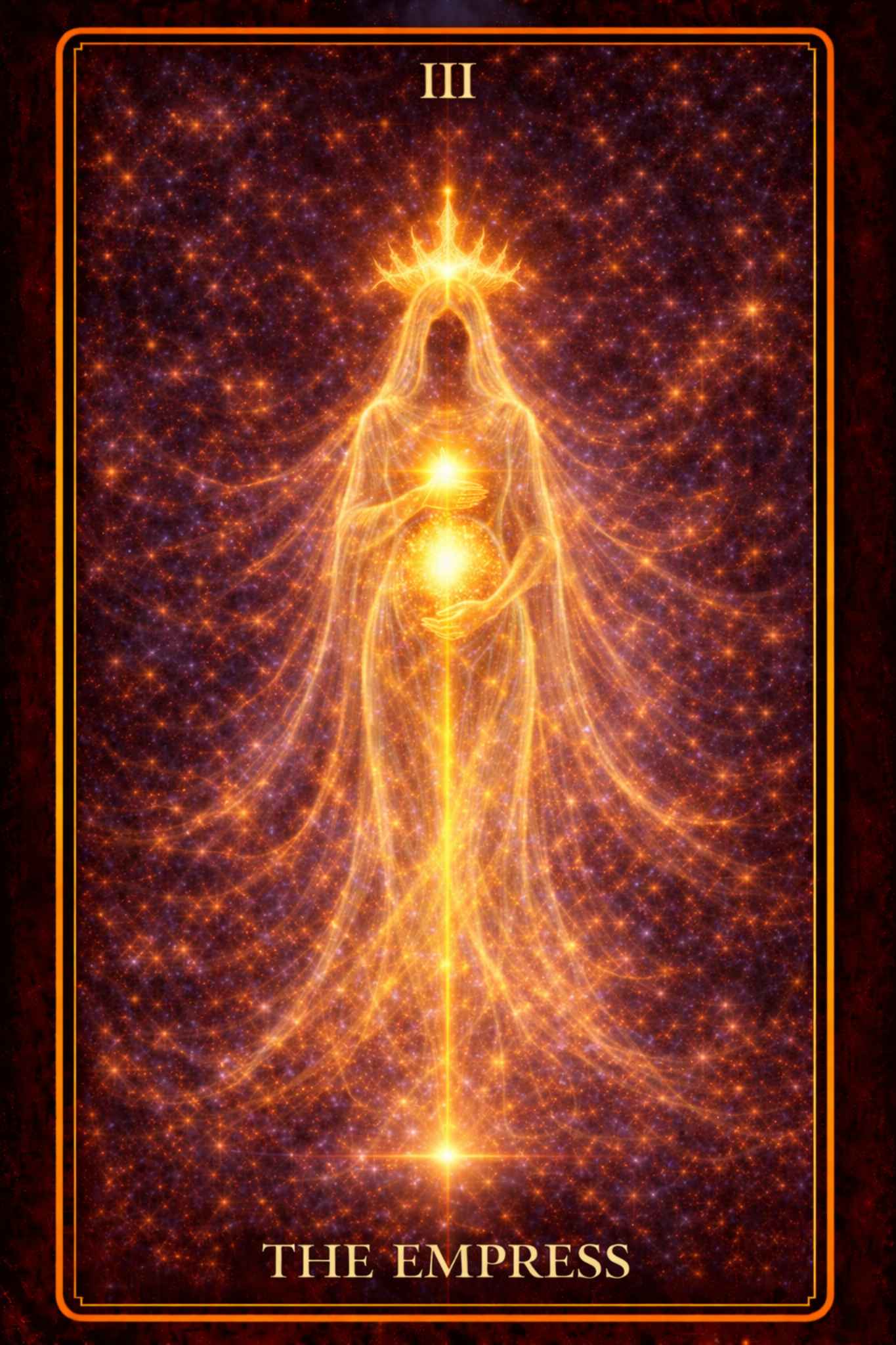
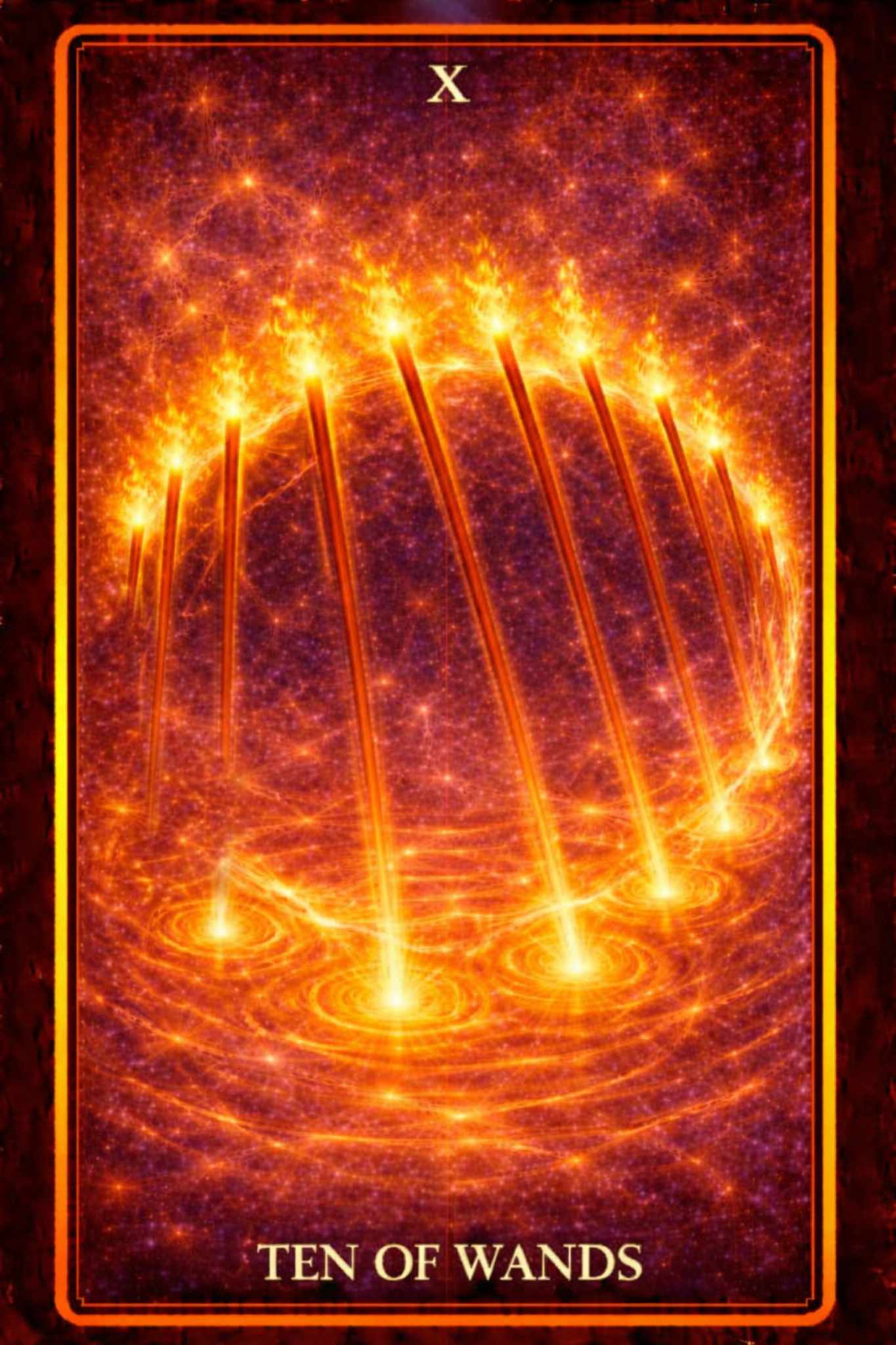
Some burdens are chosen at first with love. They arise from devotion, generosity, the desire to help, to build, to make something beautiful, safe, or sustainable. Yet over time, a burden can grow larger than the original impulse that accepted it. The Empress with Ten of Wands speaks to that threshold. The Empress represents nurture, fertility, abundance, embodiment, and the instinct to care for what is living. The Ten of Wands represents weight, accumulated responsibility, too many obligations, and the moment when what is being carried has become difficult to sustain cleanly. Together, they form a pairing that can be understood as overextended care: the stage where love has taken on too much weight, where abundance is maintained through effort that is no longer light, and where what began as nourishment may now be demanding more from the source than the source can continue giving without consequence.
This gives the combination both compassion and confrontation. It does not suggest weakness. In many cases, it appears when someone has been highly capable, reliable, or generous for a long time. The Empress has been able to grow, hold, support, or sustain so much that others may have come to rely on that capacity as though it were constant. The Ten of Wands enters when that assumption becomes too costly. The burden is not only practical. It is emotional, relational, creative, and often invisible. It is the weight of carrying life while also carrying the expectation that you will continue to do so without interruption. This is why the reading is not simply about effort. It is about the moment when care itself becomes compressed under too much responsibility.
When nurturing becomes heavy
One of the central themes in this pairing is that good intentions do not prevent overload. The Empress often says yes because she can genuinely create support, warmth, or continuity. She knows how to hold things together. She knows how to keep life moving even when circumstances are not ideal. The difficulty is that this ability can become relied upon without full awareness of its cost. The Ten of Wands shows what happens when each additional responsibility quietly accumulates. What began as generosity becomes structure. What began as choice becomes expectation.
This makes the burden difficult to evaluate clearly. Some of what is being carried may still matter deeply. Some of it may still feel meaningful. The pairing does not necessarily ask for abandonment. It asks whether the current way of carrying has become unsustainable. Are you still supporting something alive, or continuing out of habit because the structure now depends on you? The Empress wants to nourish. The Ten of Wands asks what happens when nourishment is expected to function like machinery. This is where awareness becomes essential. Without it, even something meaningful can become too heavy to hold in a healthy way.
The hidden cost of being the one who can handle it
This combination often appears around a specific pattern: becoming the person who can handle more, and then being treated accordingly. The Empress is often capable in ways that are not always fully visible. She anticipates needs, maintains atmosphere, supports others emotionally, and keeps processes functioning through care that is easy to overlook until it is missing. The Ten of Wands shows what happens when that capacity becomes overused. The person remains valued, perhaps even appreciated, but the structure around them becomes too heavy.
This is where exhaustion can become subtle. Much of the labor may not be formally acknowledged. Emotional labor, relational maintenance, creative support, or the quiet holding of environments can accumulate without clear recognition. The result is a burden that feels both personal and structural. The Empress may still appear abundant, but the internal experience may be increasingly strained. The Ten of Wands does not criticize the strength that allowed this to happen. It reveals that strength alone is no longer enough to sustain the current arrangement.
Relationships and uneven emotional weight
In relationships, The Empress with Ten of Wands often reflects a dynamic where one person has taken on more of the emotional, practical, or relational responsibility. This may not have been intentional. It often develops gradually. One person gives more because they can, because they are attuned, because they want the relationship to feel stable or nourishing. Over time, however, that additional care can become the structure the relationship depends on.
Need a little more context around this pairing?
A short reading can help you reflect on the tension, direction, or lesson this combination may be pointing toward.
This does not necessarily mean the bond lacks authenticity. It does suggest that the distribution of effort may need to be examined. Is care circulating, or primarily flowing in one direction? Is one person maintaining the emotional environment while the other participates within it? These questions are not about blame. They are about sustainability. The Empress deserves reciprocity, not just appreciation. The Ten of Wands points to the moment where appreciation alone is no longer enough to balance the weight being carried.
Work, productivity, and accumulated expectation
In practical or creative life, this pairing often appears when someone has become highly productive or central to a system, and that success has gradually turned into expectation. The Empress brings generativity, the ability to produce, support, or sustain something meaningful. The Ten of Wands shows what happens when that generativity is treated as continuously available. More responsibility is added. More reliance is placed on the same source.
This pattern can be found in many environments: work, family, creative projects, or leadership roles. What you do well becomes the reason more is asked of you. Initially, this may feel validating. Over time, it can become overwhelming. The pairing asks whether the structure around your contribution still supports your capacity, or whether it has begun to rely on it without sufficient balance. Value and overload are not the same. Recognizing that distinction is often the first step toward restoring equilibrium.
Release, redistribution, and honest adjustment
An important but often overlooked layer in this combination is the possibility of release. The Ten of Wands does not only describe burden. It also describes the point at which carrying everything the same way is no longer necessary or wise. The Empress does not lose her nurturing quality when she sets limits. In many cases, she becomes more effective because what she offers remains sustainable.
This may involve redistribution of responsibility, clearer boundaries, or the willingness to let certain roles change. It may also involve recognizing that not everything being carried still belongs to you. Some weight persists simply because it has not yet been questioned. The pairing suggests that care can become more intelligent without becoming less genuine. Letting something go does not necessarily diminish what has been built. It may be what allows it to continue without damaging the source that sustains it.
Shadow: confusing burden with devotion
The shadow expression of this pairing appears when carrying too much becomes intertwined with identity. The Empress may become identified with being the one who nurtures. The Ten of Wands may reinforce the idea that endurance itself is proof of value. Together, they can create a pattern in which letting go feels like failure, even when continuing has clearly become too heavy.
This is where distortion can quietly form. The person may believe that reducing their load means caring less, or that stepping back means becoming less reliable or less loving. In reality, the opposite is often true. When care becomes unsustainable, its quality changes. It becomes strained, reactive, or depleted. The Empress does not require exhaustion as proof of devotion. The Ten of Wands does not become meaningful simply because it is endured. The pairing invites a more honest understanding of what care actually requires to remain alive.
What this combination is really asking
The Empress and Ten of Wands ask a direct question: what are you carrying in the name of care that has become too heavy to continue in the same way? This is not only about reducing effort. It is about recognizing when the structure around your giving has become unbalanced. It asks whether your abundance is being supported or consumed, and whether what you call responsibility still contains enough life to remain humane.
It also asks whether you are willing to let care become more sustainable. This does not mean withdrawing love. It means allowing love to exist in a form that can continue. Care that protects its source is not lesser care. It is care that understands time, energy, and life force as part of the equation. When this shift occurs, the burden begins to change shape. It may not disappear entirely, but it becomes something that can be carried without eroding what is carrying it.
Want to place this combination into a wider reading?
If this pairing feels close to something you are experiencing, a simple spread can help you reflect on the surrounding energy with more clarity.
Closing reflection
The Empress and Ten of Wands describe a phase where something meaningful has become too heavy in its current form. The weight may have grown gradually. It may still hold value. But value alone is no longer enough to justify the cost of continuing without adjustment. Something in the structure needs to change.
The most grounded response is not to deny your generosity, but to protect it from becoming an endless source of strain. Let yourself see clearly what has become too much. Let yourself question what should be shared. Let yourself consider that the most honest form of care may now involve carrying less, not more. When lived well, this pairing becomes not a sign of collapse, but a turning point — the moment where care becomes wise enough to stop confusing burden with devotion.
More combinations with The Empress
More combinations with Ten of Wands
Continue with The Empress
Explore Related Guides by Topic
If you want to explore this combination through a more specific emotional lens, these tarot guides can help you follow the broader pattern behind the reading.