
The Emperor + Ten of Wands
Explore how these two tarot cards interact in a reading through symbolic overlap, contrast, and shared narrative. Tarot combinations often reveal meaning that neither card fully expresses on its own.
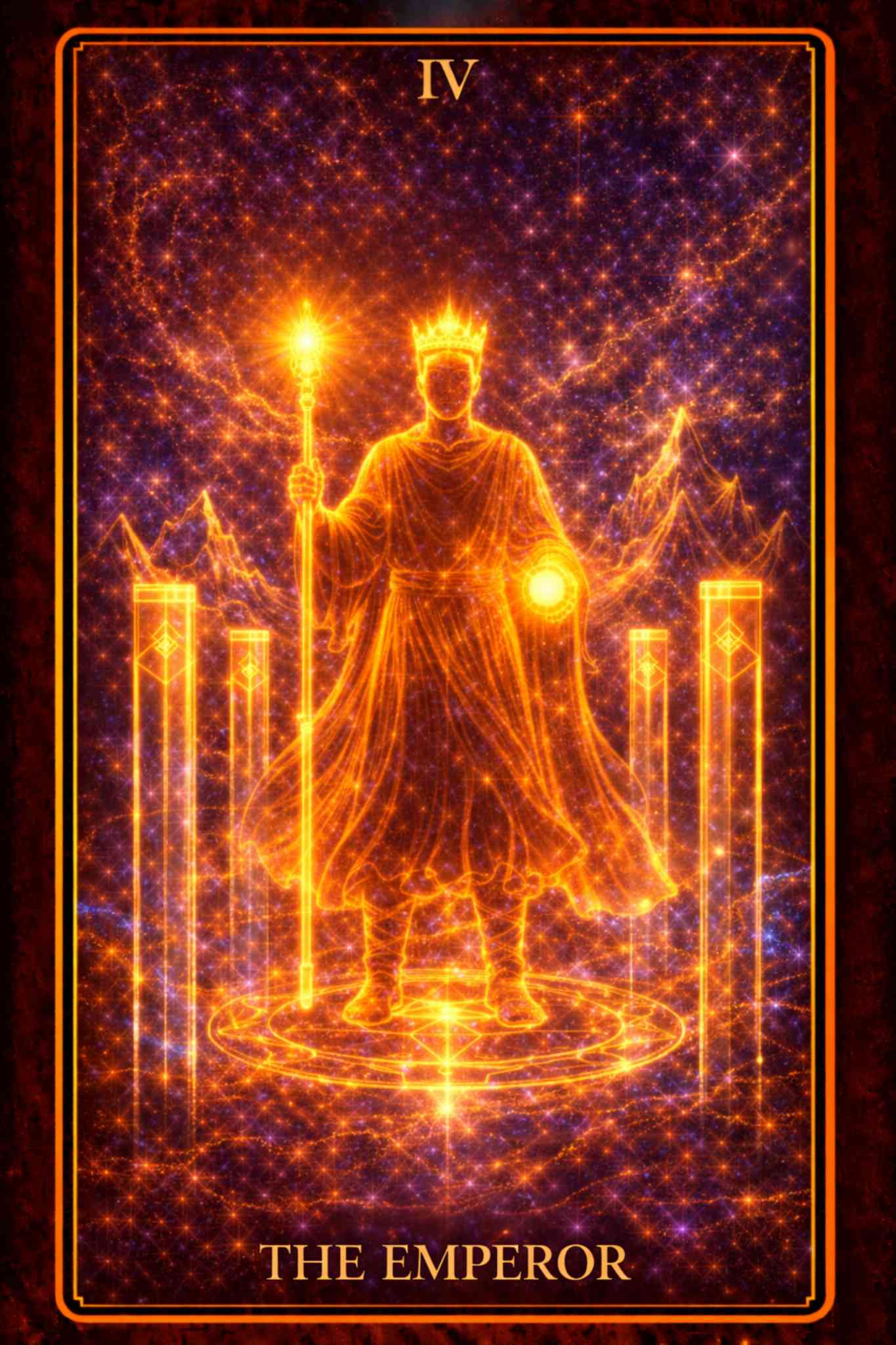
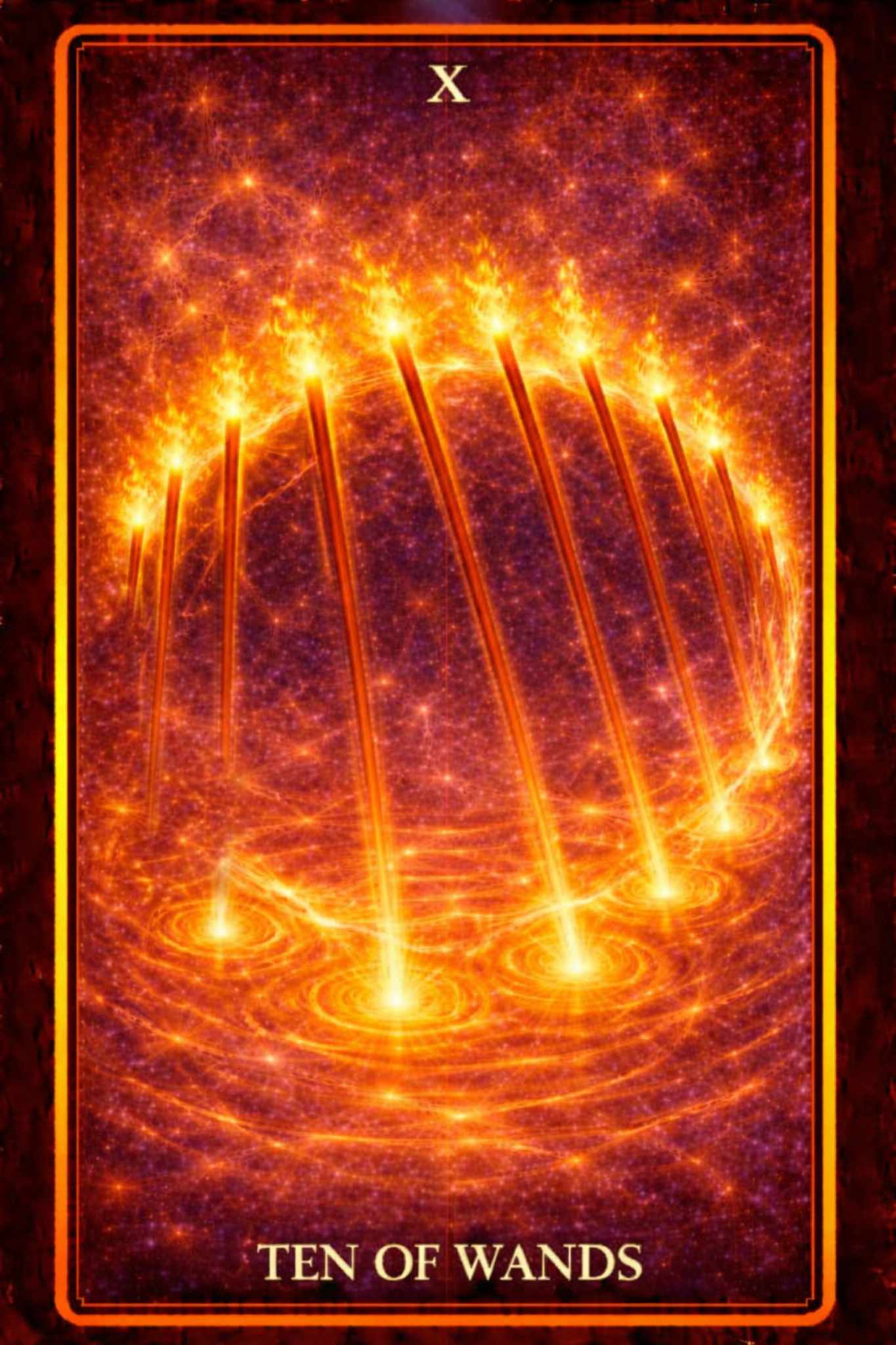
The Emperor and Ten of Wands Tarot Combination Meaning
There comes a point when structure no longer feels like support, but like weight. The Emperor with Ten of Wands describes exactly that threshold. This is not the collapse of responsibility, and not the absence of strength. It is the moment when strength has been used for so long, and responsibility has been carried so continuously, that what once created stability now begins to feel heavy in the body, heavy in the mind, and heavy in the shape of daily life. Something has been built, organized, protected, and maintained, but the cost of holding it has grown beyond what can be sustained in the same form forever.
The Emperor represents structure, authority, discipline, duty, and the act of keeping important things from falling into disorder. The Ten of Wands represents burden, accumulation, pressure, and the experience of carrying too much for too long. Together, they form a combination where strength becomes strenuous not because it is weak, but because it has become overloaded. The system still stands. The role still exists. The responsibility is still being carried. But the person carrying it can no longer pretend the weight is light.
Core meaning of The Emperor and Ten of Wands
At the core of this pairing is overloaded responsibility. The Emperor creates systems meant to support order, continuity, and control. The Ten of Wands shows what happens when those same systems are held in a way that becomes excessive, rigid, or unsustainably personal. This is not necessarily about failure. It is about imbalance. The structure may still be functioning, but the method of carrying it has become too heavy for one person, one role, one pattern, or one stage of life to sustain cleanly.
Need a little more context around this pairing?
A short reading can help you reflect on the tension, direction, or lesson this combination may be pointing toward.
This can appear in many forms. A person takes on more than is truly theirs because they believe it is their duty. A structure becomes so dependent on constant effort that it stops feeling like support and starts feeling like permanent strain. A role that once required intense control continues to be managed with the same force even after circumstances have changed. The common thread is not effort alone. It is accumulation without recalibration.
This is what gives the combination its seriousness. The Emperor is not careless, and the Ten of Wands is not trivial discomfort. Together, they suggest that the current burden did not appear overnight. It was built piece by piece, responsibility by responsibility, standard by standard, until the weight stopped feeling temporary and started becoming part of the structure itself.
The illusion of “I must carry this”
One of the most important psychological elements in this combination is the belief that everything currently being carried is necessary, unavoidable, or morally required. The Emperor can create a strong sense of duty. He can make a person feel that if they do not hold the line, everything will loosen, fail, or become chaotic. The Ten of Wands turns that duty into visible strain. Together, they can produce a mindset where releasing anything feels irresponsible, even when release, redistribution, or redesign is exactly what is needed.
This is where the pairing becomes more complex than a simple message about hard work. It is not criticizing effort. It is questioning whether all current effort is still aligned with present reality. Sometimes the structure has changed, but the method of carrying it has not. Sometimes the responsibility is real, but the person has become so identified with holding everything together that they can no longer tell the difference between stewardship and overfunctioning. The Ten of Wands does not say that all burden is meaningless. It asks what is actually yours, what has simply accumulated, and what has gone unquestioned for too long.
There is often a hidden fear inside this pattern. If I stop carrying this, who will? If I loosen control, will everything fall apart? If I ask for support, does that mean I am failing the role? The Emperor understands why those questions arise. But paired with the Ten of Wands, he also reveals their cost. A structure that depends entirely on one exhausted center may still look stable from a distance, but it is not truly healthy. It is simply being held together by force.
When stability becomes too expensive
One of the more painful truths in this combination is that a person can build something real and still become burdened by the very thing they worked hard to create. Stability is valuable. Responsibility matters. Order protects what chaos would easily waste. But there is a point where the cost of maintaining the structure starts to exceed the support the structure provides. That is where these cards often appear.
This can feel confusing because nothing may look obviously broken from the outside. The work still gets done. The relationship still functions. The obligations are still being met. The role is still being fulfilled. But inwardly, the experience has changed. What once felt strong now feels relentless. What once felt purposeful now feels compressed under its own accumulated demands. The Emperor with Ten of Wands often belongs to that exact phase: when the outer form still stands, but the inner carrying of it has become too heavy to ignore.
The cards do not say that order was a mistake. They say that order must remain alive enough to adapt. If a structure cannot be adjusted, shared, or rebalanced, it stops serving life and begins consuming it.
The Emperor and Ten of Wands in love and relationships
In relationship readings, this pairing often reflects an imbalance in emotional or practical responsibility. One person may feel they are carrying more than they should, either visibly or quietly. The structure of the relationship may still exist, and may even appear stable to others, but inside it there is strain. Duties may be uneven. Emotional labor may be lopsided. Expectations may be rigid enough that what was meant to provide security is now generating exhaustion instead.
The Emperor wants commitment, defined roles, consistency, and a structure that can hold the bond over time. The Ten of Wands shows what happens when that structure becomes too heavy to carry in its current form. Sometimes this appears when one person becomes the stabilizer, organizer, problem-solver, or emotional container for both people. Sometimes it appears when both partners are maintaining a framework that looks strong but no longer feels breathable. The relationship may still matter deeply. That does not automatically mean the way it is being carried is sustainable.
There is an important distinction here between commitment and burden. Commitment can be weighty, yes, but it is not meant to become chronic overstrain. If the relationship is to remain healthy, its structure has to support both people rather than leaning permanently on one. The deeper question is not whether the bond has value. It is whether the way it is organized allows that value to remain livable over time.
In some cases, these cards appear when love is being confused with endurance alone. The connection survives, responsibilities are met, and loyalty is real — but joy, ease, or reciprocity may have become too thin. The pairing does not dismiss loyalty. It asks whether the bond still contains enough shared support to justify the amount of carrying it requires.
The Emperor and Ten of Wands in work, duty, and leadership
In practical life, this is one of the clearest combinations for burden inside authority. It often appears when someone has taken on more than they can realistically sustain, either because they feel obligated, because the system has become dependent on them, or because they no longer trust anyone else to carry the responsibility properly. The Emperor may believe the structure depends on his consistency. The Ten of Wands shows the cost of letting that belief go unquestioned for too long.
This can apply to management, long-term projects, family responsibility, administration, caregiving, business ownership, or any environment where stability is being maintained through sheer ongoing effort. It may describe a person who is competent enough to keep everything functioning, which paradoxically makes them more likely to be overloaded. Others rely on them because they are reliable. Systems begin leaning toward them because they are capable. Over time, capability turns into accumulation.
This is where leadership must evolve. Mature authority is not about carrying everything personally. It is about creating systems that distribute weight intelligently. When that does not happen, the structure becomes dependent on constant strain from one center, and that is not genuine stability. It is a temporary solution being lived as if it were a permanent design.
The cards often raise a hard but necessary question in work contexts: are you leading, or are you compensating for a structure that has not been built well enough to function without overloading you? Those are not the same thing. The Emperor wants order. The Ten of Wands asks whether the current order is being sustained by integrity or by exhaustion.
The deeper lesson: structure must evolve
The deeper lesson in this pairing is that structure cannot remain static if reality keeps changing around it. What worked at one stage may become too rigid, too centralized, or too demanding at another. The Emperor represents stability, but stability is not meant to be confused with frozen form. The Ten of Wands often appears when something that once worked is now being maintained beyond its natural capacity.
This is why recalibration matters so much here. Not abandonment, and not reckless dismantling. Recalibration. The structure itself may still be valuable. The role itself may still matter. The commitment itself may still be right. But the way it is being held needs to shift. The burden needs to be redistributed, the method needs to be updated, or the standards need to become more realistic if the whole thing is going to remain sustainable.
There is wisdom in recognizing that control is not always the same as stewardship. Sometimes people keep tightening because things feel heavy, when the real answer is not tighter control but a better design. These cards often arrive to expose that difference.
The Emperor and Ten of Wands in personal growth
On an inner level, this combination can reflect a life that has become too organized around carrying. You may have built strong discipline, clear standards, and a serious relationship to responsibility. Those things are not the problem. The problem appears when the self becomes identified with being the one who holds everything together. The Emperor then turns inward as self-command. The Ten of Wands shows what happens when self-command becomes overburdened by too many expectations, too much pressure, or an inability to release tasks that no longer need to be carried in the same way.
This can create an inner atmosphere where rest starts feeling suspicious, delegation feels unsafe, and softening feels like failure. A person may be functioning well externally while feeling chronically compressed inwardly. They are not collapsing, but they are not receiving enough support from their own structure either. The life they built may still be respectable, even admirable, but it has become difficult to inhabit without tension.
The cards do not insult that effort. They respect it. But they also ask whether strength has become too entangled with burden. If your identity depends on being the one who carries more than everyone else, then the weight is no longer just circumstantial. It has become part of the self-concept. That is where the pairing becomes especially important, because it asks not only what you are carrying, but who you believe you are if you stop carrying it in the same way.
Shadow side of The Emperor and Ten of Wands
The shadow side appears when duty hardens into martyr-like control or when burden becomes normalized to the point that imbalance stops being questioned. An unbalanced Emperor may become rigid, domineering, or unable to trust others with responsibility. An unbalanced Ten of Wands may create chronic overextension, resentment, silent exhaustion, and the belief that suffering is simply part of what it means to be the strong one. Together, these distortions can create a life where structure remains standing, but vitality is slowly drained out of it.
In relationships, this may show up as one person carrying the emotional and practical center while becoming increasingly depleted. In work, it may show up as leadership that cannot delegate, systems that rely on burnout, or responsibility taken so personally that the structure can no longer breathe. In the inner life, it can become the habit of turning every obligation into a personal burden even when another arrangement is possible.
The warning here is not against responsibility itself. It is against allowing responsibility to become so overloaded that it starts destroying the very stability it was meant to protect.
Want to place this combination into a wider reading?
If this pairing feels close to something you are experiencing, a simple spread can help you reflect on the surrounding energy with more clarity.
Closing reflection
The Emperor and Ten of Wands ask a sober question: what are you still holding in a way that no longer has to be held like this? That question matters. Not because the responsibilities are fake, and not because effort is wrong, but because strength is not only the ability to keep carrying. It is also the ability to recognize when the structure must change if it is going to remain humane, sustainable, and real.
When this combination is lived well, it becomes a sign of mature authority learning not to confuse burden with value. It points toward responsibility that is still meaningful, but no longer carried in a way that slowly crushes the one carrying it. The lesson here is not to abandon what matters. It is to refuse forms of maintenance that have become too heavy to remain wise.
More combinations with The Emperor
More combinations with Ten of Wands
Continue with The Emperor
Explore Related Guides by Topic
If you want to explore this combination through a more specific emotional lens, these tarot guides can help you follow the broader pattern behind the reading.