
Death + Knight of Cups
Explore how these two tarot cards interact in a reading through symbolic overlap, contrast, and shared narrative. Tarot combinations often reveal meaning that neither card fully expresses on its own.
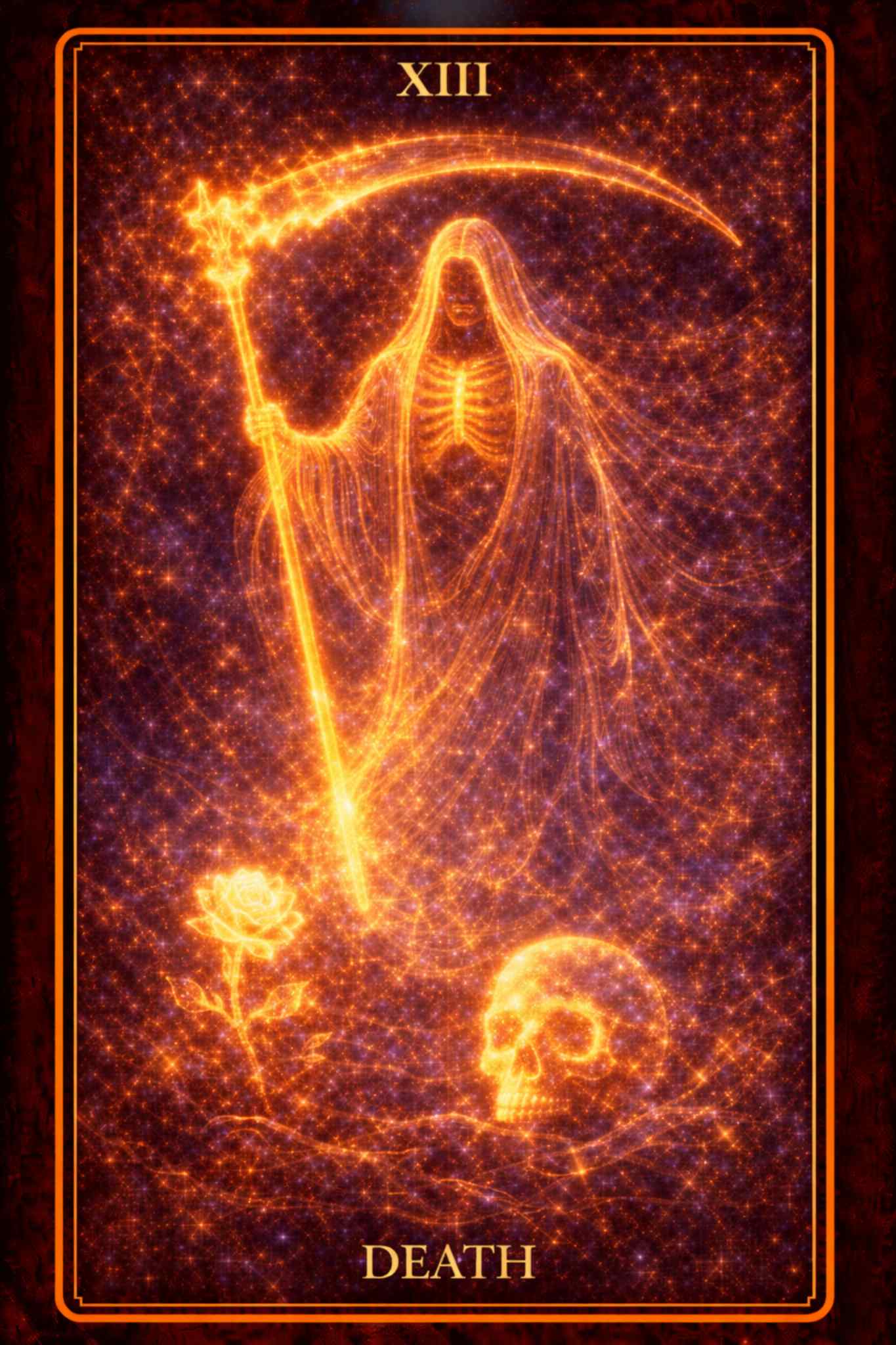
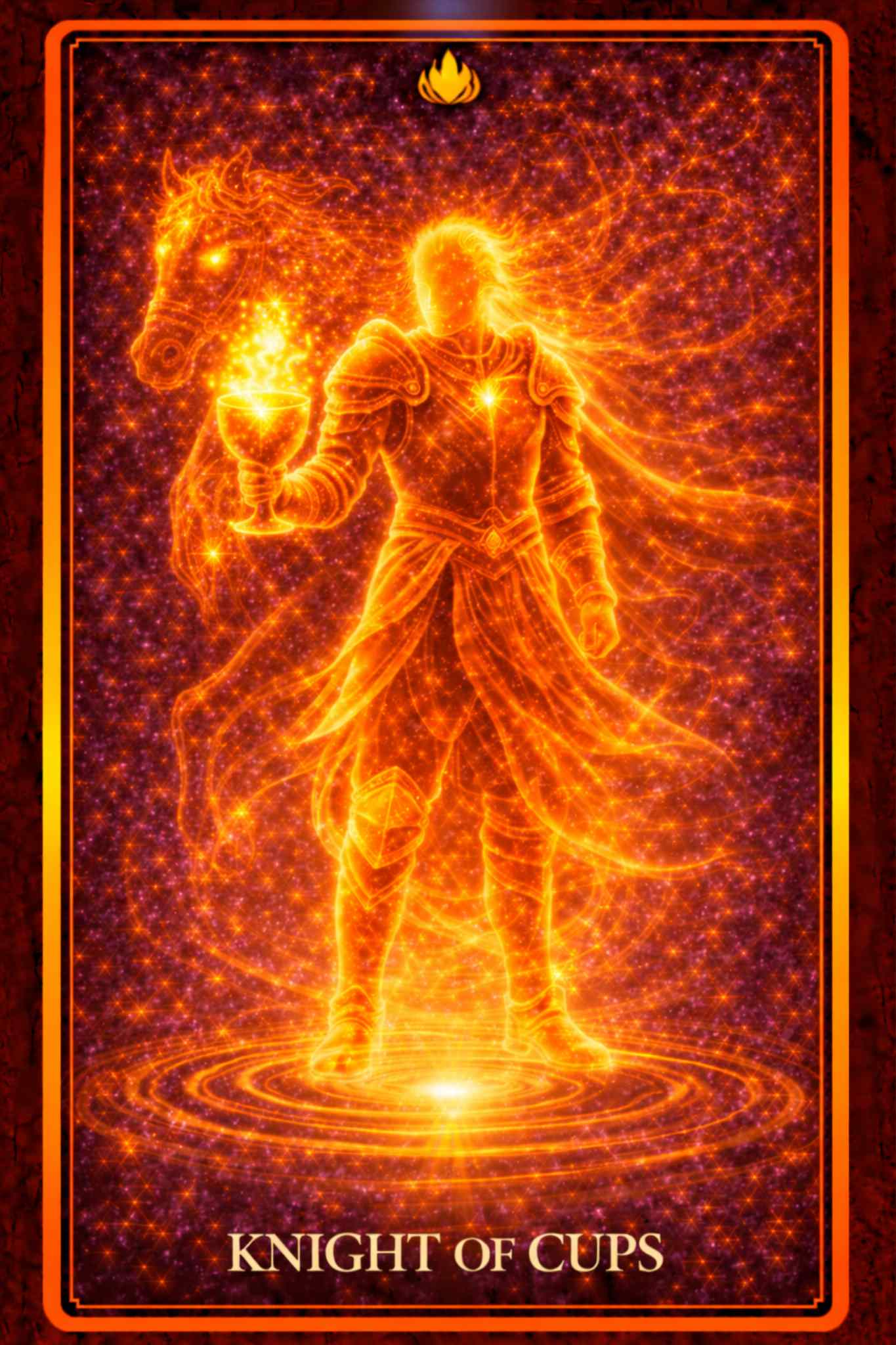
Death and Knight of Cups tarot combination meaning
Desire can keep moving long after the old dream behind it has ended. Death and Knight of Cups examines that movement with unusual honesty. The Knight of Cups brings pursuit, romantic offering, emotional idealism, longing, poetic movement, and the desire to follow the heart toward something meaningful. Death brings completion, release, and the end of an old emotional form. Together, they describe a desire that is being transformed: the heart may still move, but it can no longer ride toward the same fantasy in the same way.
This combination can appear when a romantic pursuit, emotional mission, creative longing, or idealized dream has reached a turning point. The Knight of Cups wants to approach, express, invite, or follow an inner feeling. Death asks what part of that feeling has already changed. Is the pursuit still alive, or is it powered by memory? Is the offer sincere, or is it an attempt to revive an old emotional identity? Is the heart moving toward truth, or toward a beautifully decorated version of what is already complete?
The unique tension here is between movement and finality. The Knight of Cups does not like stillness. It wants to carry the cup forward, to confess, to seek, to charm, to believe. Death slows that movement by placing it before a deeper threshold. Some quests need to end because the person who began them has changed. Some romantic gestures need to become more truthful before they can be meaningful. Some longings need to lose their old image before the heart can discover what it is actually seeking.
When the romantic quest changes direction
The Knight of Cups often travels with an image in mind. It may be an image of love, reconciliation, beauty, emotional rescue, artistic fulfillment, or the person who seems to embody the heart’s dream. Death enters when that image begins to lose life. This does not necessarily mean the feeling disappears. It may mean the feeling has to mature beyond projection. The Knight may still have love to offer, but the offering needs to come from the present self, not from an old storyline.
This can be a tender realization. The person may have pursued something sincerely, only to discover that sincerity alone does not keep a path alive. A romantic vision may have expired. A creative dream may need a new form. A desire for emotional union may need to release the fantasy of being completed by another person. Death and Knight of Cups does not mock idealism. It asks idealism to pass through truth so it can become more grounded, less performative, and more capable of real intimacy.
A similar refinement of desire appears in Death and Nine of Cups, where personal wishes and emotional satisfaction change shape. The Knight of Cups is more active. It is not only asking what the heart wants; it is asking where the heart is going, and whether that direction still belongs to the living self.
Love, pursuit, and the end of old romantic scripts
In love readings, Death and Knight of Cups can describe a major change in romantic behavior. Someone may stop pursuing in an old way, release a fantasy of rescue, end a pattern of chasing unavailable love, or approach a connection from a more honest emotional place. It can also show a love offer emerging after transformation, but that offer must be read carefully. The key is whether the old dynamic has truly completed. If the Knight rides back with the same cup, same words, and same avoidance, Death suggests the gesture may belong to the past. If the approach carries real inner change, the cup may hold something cleaner.
You may also want to go one step deeper.
Death + Knight of Cups can open up differently inside a focused personal reading.
This pair often asks whether romance has been used as movement away from grief. The Knight of Cups may seek beauty, affection, or emotional intensity because stillness would reveal what has ended. Death asks the heart to stop long enough to know the difference between genuine love and the need to keep a dream moving. A relationship may still be possible, but only if the pursuit becomes less about fantasy and more about presence.
For the romantic layer, Knight of Cups love meaning gives direct context because it explores emotional pursuit, romantic expression, and the heart’s movement toward connection. With Death, that movement becomes a test of authenticity. The question is whether the heart is moving because something is alive, or because it is afraid to admit that an old dream has ended.
The cup carried across a boundary
The image of this combination is a rider reaching a river that cannot be crossed in the old way. The cup is still in hand, but the road has changed. Death is that boundary. It may require the Knight to dismount, empty the cup, or understand that the destination once imagined is no longer the destination that matters. This is not defeat. It is the transformation of longing into discernment.
When this pair appears around emotional communication, it can suggest that the words need to change because the person speaking has changed. A confession may be more meaningful when it includes closure. An apology may be more honest when it releases expectation. A romantic gesture may become cleaner when it does not demand that the other person restore an old story. Death matures the Knight of Cups by asking: can you offer feeling without trying to revive the version of yourself that first needed it?
This differs from The Emperor and Knight of Cups, where emotional movement meets structure, boundary, and grounded reality. Death and Knight of Cups is less about being contained and more about desire undergoing a necessary ending. The longing may remain, but its old costume is coming off.
Timing: when the heart must pause before moving
Timing with Death and Knight of Cups suggests that emotional movement needs to be re-evaluated before it continues. This is not a call to rush toward expression simply because feeling exists. It is a call to ask what has changed inside the feeling. If a message, offer, pursuit, or creative step is being considered, the cards suggest waiting until it comes from a transformed place rather than from panic, nostalgia, or the desire to undo an ending.
The timing may also mark a period when someone stops chasing an emotional image that once guided them. This can feel like loss at first, especially if the pursuit gave life a sense of poetry or direction. Yet Death suggests that the old quest has completed its teaching. The Knight of Cups may later move again, but toward something more real, less dependent on projection, and more aligned with the present emotional truth.
The love tarot spread can fit this pair when the issue involves romantic movement, emotional offering, or the difference between sincere love and idealized pursuit. It allows the feeling to be explored without turning it into a fixed prediction.
Intentions, creativity, and the maturing of longing
Death and Knight of Cups can also speak strongly to intentions. The Knight of Cups may intend to approach, charm, express, create, or follow a desire. Death asks what those intentions are made of. Are they rooted in present truth, or in an old emotional script? Is the person offering love, or offering a role they have performed before? Are they creating from a living inner current, or from attachment to an identity as the romantic, the rescuer, the dreamer, or the wounded poet?
This is where Death intentions meaning adds a useful layer. Death in intentions often speaks of release, closure, deep change, or the inability to continue from the same inner position. With the Knight of Cups, the intention may still be emotional, but it needs to pass through honesty. The person may intend to offer something, yet the offer becomes trustworthy only when it no longer depends on preserving the old dream.
Creatively, this pair can mark the end of one artistic vision and the beginning of another. The Knight of Cups carries imagination and expression; Death clears away the sentimental forms that no longer speak. A person may stop creating to please an old audience, stop performing beauty in a familiar style, or release a project that once held great feeling but no longer carries life. The next work may be less ornate and more honest.
Explore the next layer of this reading.
This combination can mean different things depending on context. A short tarot reading can help you reflect on the question behind the cards.
The desire that survives by becoming truthful
Death and Knight of Cups ultimately teaches that desire does not need to die, but it may need to change direction. The heart can still move, but it cannot move honestly while clinging to a finished fantasy. A romantic offer can still matter, but only if it comes from the present. A creative dream can still grow, but only if its old form is allowed to fall away. A longing can remain sacred while its previous destination is released.
The final message is emotionally mature: do not confuse motion with life. Sometimes the most important act is to stop riding toward the old image and listen to what the heart has become. Death and Knight of Cups is the rider at the edge of changed water, holding the cup differently now. What is poured out may be the old dream. What remains may be less dramatic, but it can finally be true.
More combinations with Death
More combinations with Knight of Cups
Continue with Death
Explore Related Guides by Topic
If you want to explore this combination through a more specific emotional lens, these tarot guides can help you follow the broader pattern behind the reading.