
Temperance + Ten of Wands
Explore how these two tarot cards interact in a reading through symbolic overlap, contrast, and shared narrative. Tarot combinations often reveal meaning that neither card fully expresses on its own.
Temperance and Ten of Wands Tarot Combination Meaning
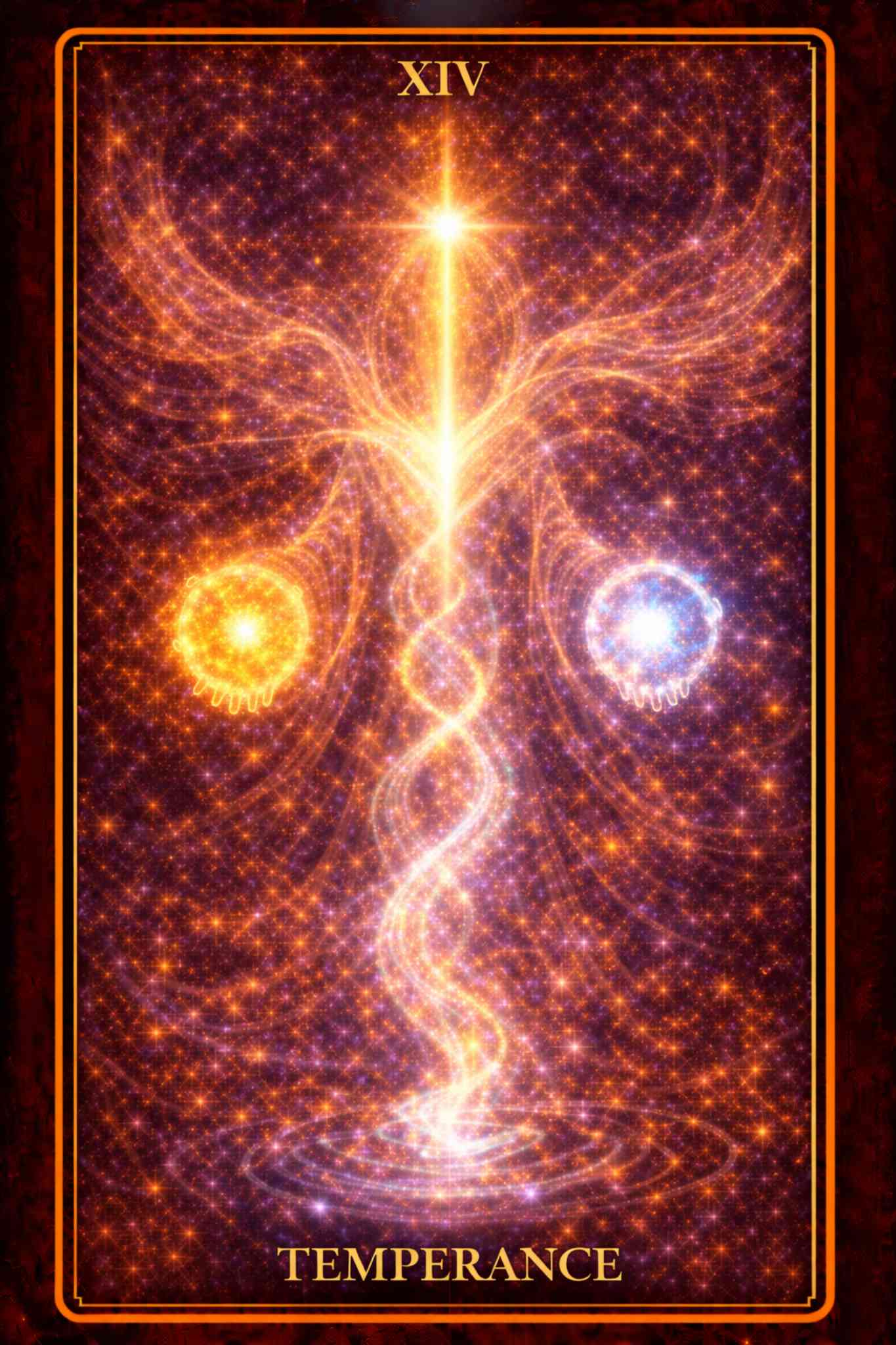
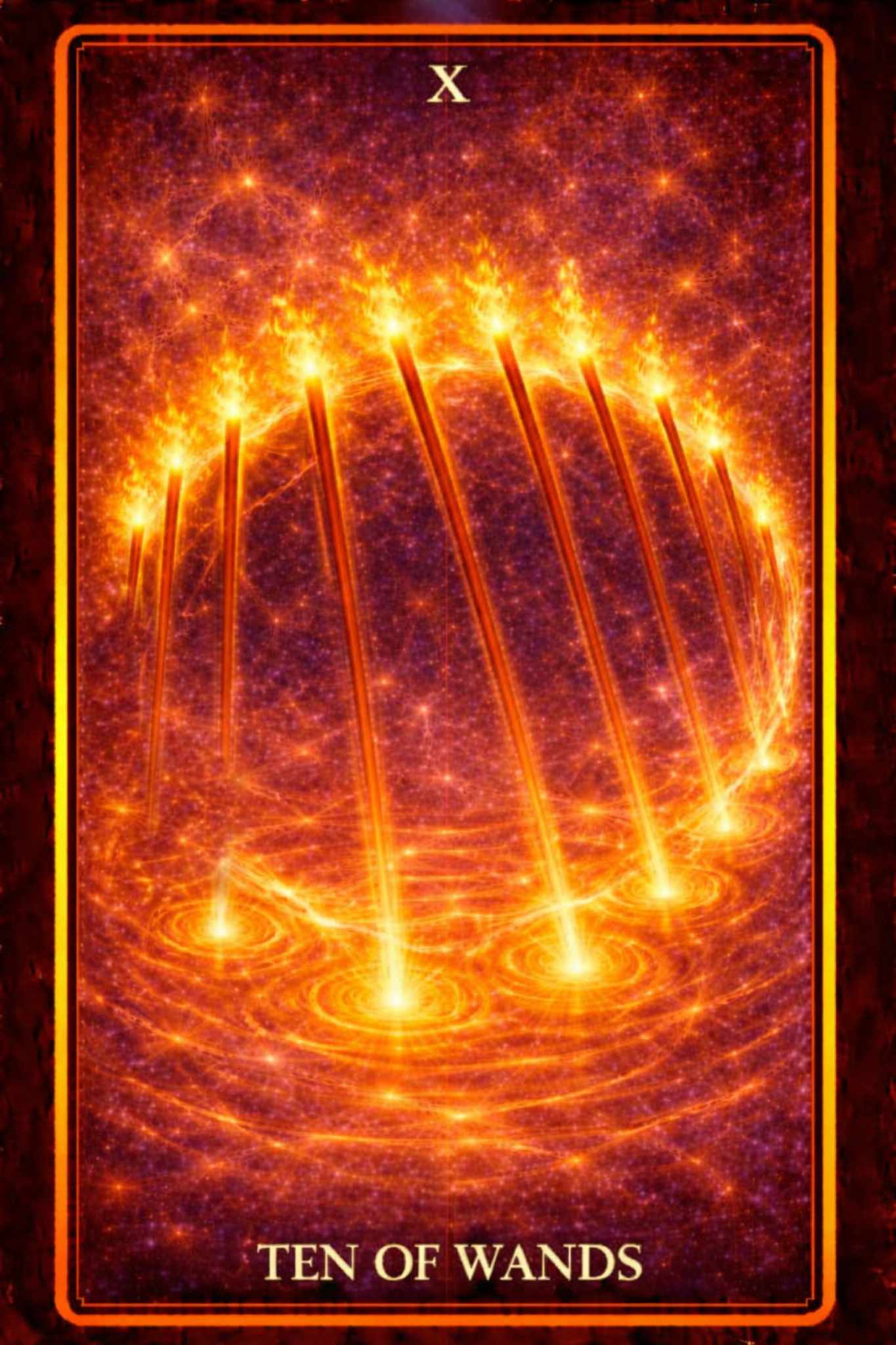
Temperance and Ten of Wands meet where effort has crossed into excess, and the deeper question is no longer whether you are strong enough to carry the load, but whether the load itself still belongs in the shape you have given it. This pairing is far more precise than a general message about stress. Temperance brings healing, proportion, integration, and the clear inner intelligence that can feel when a system has gone out of balance because too much weight has been forced through one channel. The Ten of Wands brings accumulation, overburden, responsibility, visible strain, and the kind of effort that keeps functioning long after ease has disappeared. Together, these cards often appear when a person is still holding everything together on the surface, yet the deeper arrangement has already become too heavy for harmony to survive in its current form.
That is what gives the pair its seriousness. Temperance does not arrive here as a polite suggestion to rest a little more. In the presence of the Ten of Wands, it becomes almost diagnostic. It shows that some duty, expectation, structure, or pattern of self-management has exceeded workable proportion. A person may still be trying to hold healing and overload inside the same life at the same time, but the cards ask whether those aims can continue under the same arrangement. Can the body, emotions, relationships, and inner life keep compensating without cost? Can balance keep surviving when the system has already been trained to carry too much? This is a pair about the correction of excess before excess becomes identity.
When burden stops looking temporary
The Ten of Wands is powerful because it often reflects something real rather than exaggerated. There is actual weight here. Responsibilities may be substantial. Emotional labor may be substantial. Workload, pressure, self-expectation, obligation, or silent maintenance may all be pressing on the same structure at once. Many people reach this card through competence. They took on more because they could. They kept going because they were capable. They carried what others dropped because someone had to. Beside Temperance, however, the reading changes direction. Strength is no longer the central issue. Proportion is.
This matters because overburden easily disguises itself as devotion, maturity, reliability, or love. A person may feel morally attached to carrying as much as possible. They may believe that reducing the load would mean failure, selfishness, weakness, or a loss of value. Temperance sees further than that. It asks whether the whole can remain whole under the current design. If the body is strained, the emotions flattened, the relationships thinned, and the quieter parts of life starved so that one overloaded function can continue, then the system is already out of alignment. The Ten of Wands makes that visible. Temperance interprets it as a call for rebalancing rather than admiration of endurance for its own sake.
The difference between devotion and overcarrying
One of the deepest teachings in this pair is that commitment and excess are not the same thing, even though they can look very similar from the outside. There are seasons when sustained effort is appropriate, meaningful, and even necessary. Yet the Ten of Wands often marks the point where effort has gone beyond meaningful stretch and become chronic weight. Temperance helps make this distinction with unusual clarity. It asks whether the person is carrying what truly belongs to the moment, or carrying in a way that has simply become habitual, identity-driven, or structurally unquestioned.
This is where the pairing becomes especially mature. It does not romanticize release, and it does not romanticize endless endurance. It asks for accurate measurement. What genuinely needs to be held? What needs to be shared? What belongs to a different pace? What could be approached with less intensity and still remain intact? What is being preserved only because the person has trained themselves to survive unsustainable arrangements? The Ten of Wands reflects visible effort. Temperance determines whether that effort is still serving life or whether life is being bent around the effort itself.
- Temperance brings healing, proportion, integration, and the wisdom of correcting imbalance.
- Ten of Wands brings burden, overextension, heavy responsibility, and accumulated strain.
- Together they suggest that balance cannot return without addressing what has become too much.
- The caution is against glorifying overload because it feels familiar, admirable, or necessary.
- The gift is the possibility of a more livable rhythm through redistribution, reduction, or release.
Love and relationship meaning
In relationship readings, Temperance and Ten of Wands often point toward a bond or emotional pattern that is carrying more strain than it can gracefully absorb in its current form. One or both people may be doing too much emotional labor, management, repair, translation, or accommodation. The relationship may still matter deeply, yet its rhythm has become heavy enough that harmony cannot simply be wished back into existence. Temperance reveals that balance here requires structural change. The Ten of Wands shows that the present arrangement is asking too much from the heart, the nervous system, or the practical life surrounding the bond.
Need a little more context around this pairing?
A short reading can help you reflect on the tension, direction, or lesson this combination may be pointing toward.
At its healthiest, this pair can lead to profound relational honesty. A person may realize that what they have been calling commitment has also contained overcarrying, overcompensating, or trying to hold the whole connection together through personal effort. Or a couple may understand that the relationship is not lacking care so much as lacking better proportion. Too much may be resting on one person. Too much unresolved pressure may be compressed into ordinary contact. Temperance does not automatically say the bond must end. It says the imbalance must be addressed if the bond is to become genuinely breathable again.
In more difficult expressions, the Ten of Wands can create a relationship atmosphere where weariness slowly replaces warmth. One person may feel responsible for everything. The connection may continue through discipline rather than flow. Temperance then asks a simple but serious question: is there any willingness to reduce, share, simplify, or reconfigure the burden? Without that willingness, longing for harmony can become painful, because the actual conditions for harmony remain unchanged.
Career, work, and overloaded systems
In work and practical life, Temperance and Ten of Wands often describe overloaded systems, whether those systems are external or internal. A person may be managing too many roles, too many deadlines, too much hidden maintenance, too much emotional responsibility, or too many active priorities competing for the same limited energy. They may still be getting things done, which is part of what makes the pattern hard to interrupt. Competence masks cost. The Ten of Wands shows the load. Temperance shows that the load has become disproportionate relative to what the whole life can actually sustain.
This is especially relevant for those who have built identity around being dependable, productive, or able to absorb what others cannot. Such people often reach the Ten of Wands through strength stretched too far. Temperance does not scold that strength. It redirects it. True mastery here may mean redesign, delegation, pacing, reduction, or refusing to keep proving worth through chronic overfunctioning. The healthier fire of the Wands suit is being buried under sheer quantity. Temperance aims to restore the original vitality by correcting the burden that is smothering it.
At its best, this is a highly practical combination. It can point toward restructured workflow, better limits, more distributed responsibility, and the return of a steadier professional rhythm. The cards suggest that healing will not come only through mindset change. It requires change in what the system is actually being asked to hold day after day.
Psychological and spiritual meaning
Psychologically, Temperance and Ten of Wands often describe the inner consequences of prolonged overcarrying. A person may no longer remember what natural regulation feels like because so much of their identity has organized itself around effort, responsibility, or sustained compensation. They may believe that value is proven through burden, or that rest risks failure in some invisible moral test. Temperance challenges this gently but firmly. It asks whether the psyche has become arranged around imbalance, and whether the person is ready to allow a different form of worth to emerge.
Spiritually, this pair can be profoundly clarifying. Many people quietly assume that the meaningful path must also be the heaviest one. Yet the cards suggest a subtler truth. Some burdens are sacred for a season. Others remain only because the arrangement that created them has gone unquestioned for too long. Temperance is the card of alchemy, and true alchemy depends on proportion. The Ten of Wands shows what happens when the mixture becomes overloaded. Spiritually, the lesson is not to reject responsibility. It is to stop confusing overburden with virtue.
Shadow expression and challenge
The shadow side of this combination appears when the Ten of Wands becomes a source of identity. A person may unconsciously need to be the one who carries, fixes, absorbs, or keeps everything moving because that role has become entwined with self-respect. Then even the idea of redistribution can feel threatening. Temperance identifies that as imbalance. One part of the psyche is being overfed through burden while other parts are being starved of spaciousness, replenishment, play, and quieter forms of meaning.
There is an opposite distortion as well, and it matters just as much. Temperance can be idealized as though balance could return without real sacrifice. A person may want harmony, but still keep every responsibility, every habit of control, every emotional obligation, and every pattern of overmanagement intact. The Ten of Wands corrects that illusion immediately. Some burdens remain heavy because nothing concrete has changed. The challenge is to stop treating sustainability as a feeling and begin treating it as a structural choice.
Timing and the moment to reduce the load
Timing is crucial in this pair because it often appears at the point where burden has already been tolerated too long. The Ten of Wands suggests the pressure is current, embodied, and asking for attention now. Temperance asks how much longer the system should wait before making meaningful correction. Sometimes the answer is immediate simplification. Sometimes it is staged rebalancing. Sometimes it is the honest recognition that a present form cannot continue indefinitely even if the person can force it through one more cycle.
The right timing here often begins with acknowledgment rather than another heroic push. A person may think they need to finish one more thing, carry one more season, or prove one more level of endurance before they have earned relief. Temperance challenges that logic. Relief is not always a reward granted after collapse. It can be part of wisdom applied before collapse arrives. The Ten of Wands shows that the burden is already speaking. Temperance asks whether the person will listen while listening can still prevent deeper distortion.
FAQ — Temperance and Ten of Wands
Is this a difficult combination? It can feel heavy because it often points to real overextension, though it is also highly clarifying. It shows where healing and balance require concrete reduction of what has become too much.
What does it mean in love? It often speaks to a relationship burdened by too much emotional labor, management, or one-sided carrying, and suggests that harmony depends on structural rebalancing rather than patience alone.
Can it apply to work? Very strongly. It can reflect workload overload, hidden responsibility, chronic overfunctioning, and the need to redesign how effort is distributed and sustained.
Does Temperance remove the Ten of Wands burden? It does not erase it by itself. It shows how the burden can be understood and corrected, though the rebalancing usually requires real choices, real limits, and real change in structure.
What is the main lesson here? Balance cannot fully return while too much remains on the system. Something must be reduced, shared, softened, or released for healing to become lived reality rather than private intention.
What this combination is really asking
Temperance and Ten of Wands ask: what are you still carrying that balance cannot survive? That is the heart of the pair. You may be capable. You may be responsible. You may have reasons for every piece of the burden. Yet the cards want to know whether the whole of your life can keep functioning in a healthy way under the present weight. They ask whether your strength is supporting life, or merely postponing the rebalancing life has already started requesting.
The deeper lesson is that healing is not only an inner state. It is proportion made visible. Temperance brings the wisdom of correct measure, the art of sensing when the mixture has gone off and what needs recalibration. The Ten of Wands brings the visible consequence of too much gathered in one place. Together, they form one of tarot’s clearest images of overloaded imbalance and its remedy: not denial, not glorified endurance, but the deliberate restoration of a rhythm the whole self can actually inhabit.
Explore the next layer of this reading.
This combination can mean different things depending on context. A short tarot reading can help you reflect on the question behind the cards.
Closing reflection
There is a particular moment that arrives before collapse, and it rarely looks dramatic from the outside. The emails are still answered. The promises are still kept. The day still runs. Yet somewhere underneath, life has started narrowing around weight. Color drains from it. Music becomes logistics. Even tenderness begins arriving through duty. This pairing speaks to that moment with unusual honesty.
Temperance stands there like someone quietly setting objects down on a table, one by one, asking no grand question except this: which of these is truly yours, and which have you carried so long that your hands forgot they were allowed to open? The Ten of Wands does not shame the burden. It shows its shape. And sometimes that is the beginning of grace — not a dramatic escape, not a perfect reinvention, but the first evening when the shoulders lower half an inch and the room around you starts to feel like a place you might actually live in again.
More combinations with Temperance
More combinations with Ten of Wands
Continue with Temperance
Explore Related Guides by Topic
If you want to explore this combination through a more specific emotional lens, these tarot guides can help you follow the broader pattern behind the reading.