
The Fool + Two of Swords
Explore how these two tarot cards interact in a reading through symbolic overlap, contrast, and shared narrative. Tarot combinations often reveal meaning that neither card fully expresses on its own.
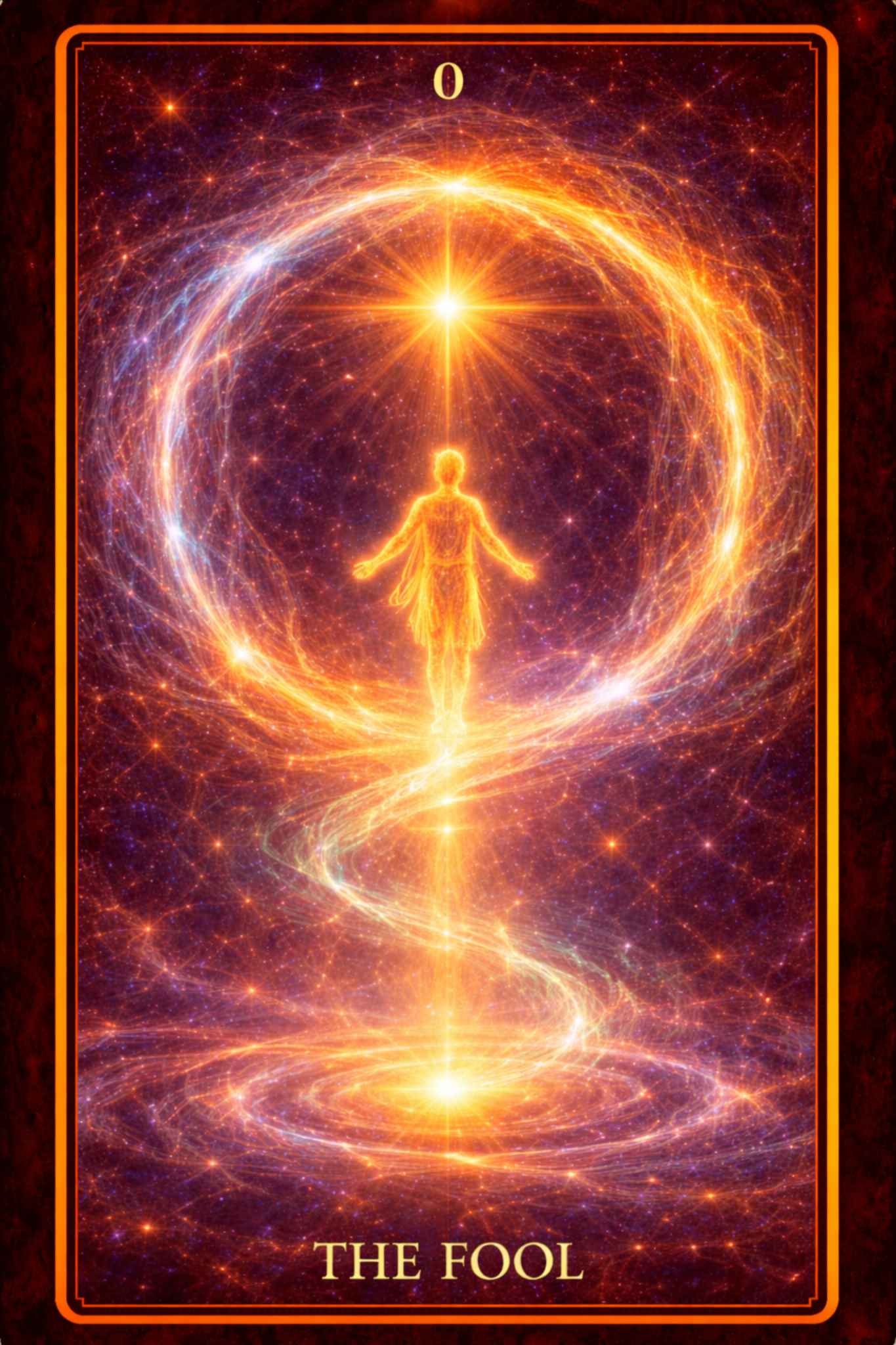
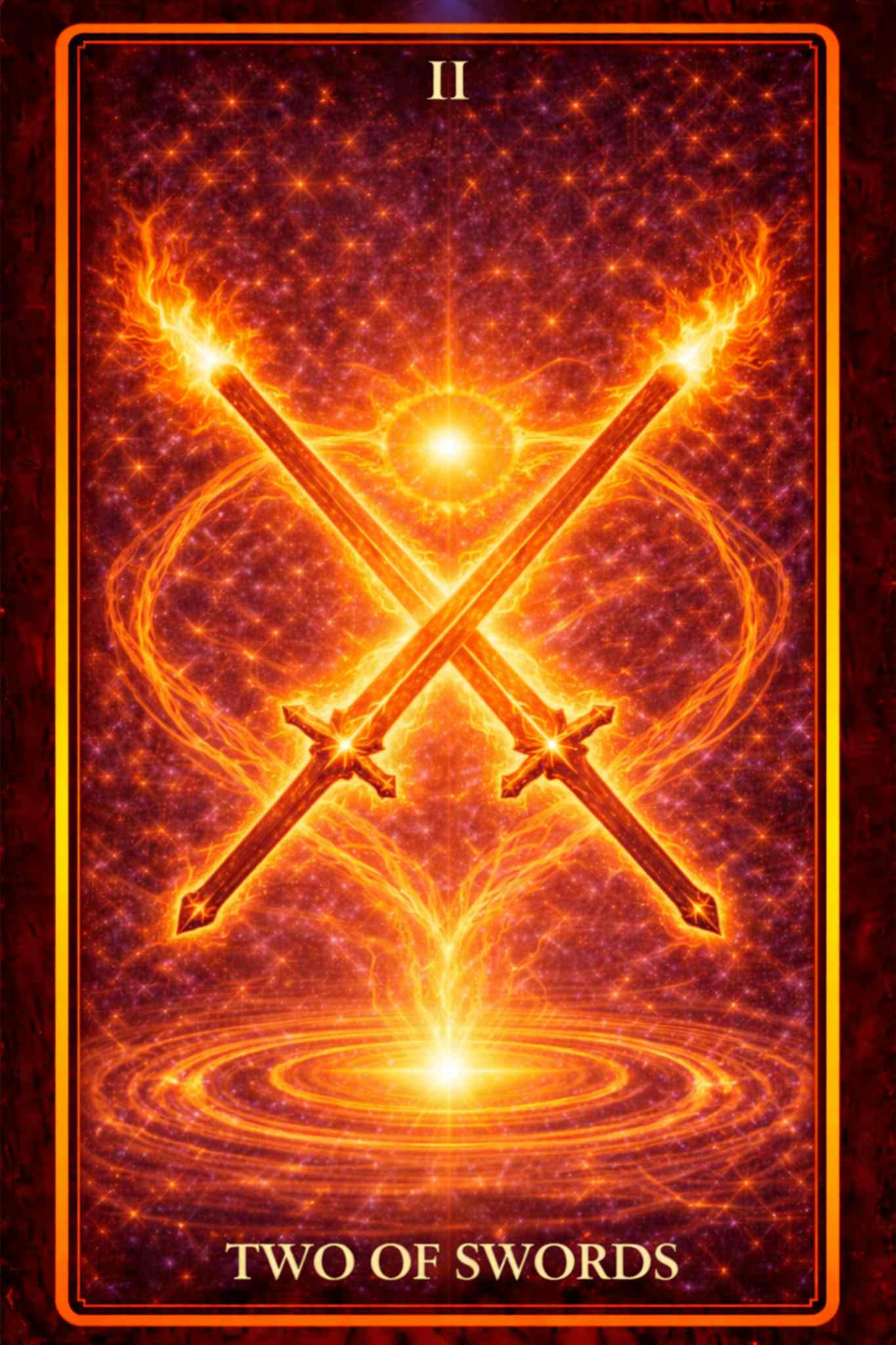
The open door and the crossed blades
What happens when part of a person is ready to step forward, while another part keeps both swords raised across the chest? Together, these two cards create a threshold where the wish to move meets the need to pause. The door is open, the road is near, the old identity may already feel too narrow, yet the mind is holding itself in suspension. This is not simple laziness or lack of courage. It is the strange stillness before a choice, where freedom is felt as possibility and threat at the same time. The Fool looks toward the unknown; the Two of Swords asks why the eyes are still closed.
This combination often appears around the pause before a new path takes form. A person may sense that movement is needed, but the mind is split between options, loyalties, fears, or versions of the self. The Fool brings an instinctive yes to life, yet the Two of Swords places that yes inside a chamber of hesitation. The result can feel like standing at the edge of a bridge with both feet awake and the mind refusing to look down. The path may exist, but the inner permission to choose has not fully arrived.
The Two of Swords is subtle because it rarely looks dramatic from the outside. Someone may seem calm, polite, or balanced, while inwardly they are avoiding the one perception that would make the decision real. The Fool complicates that silence by bringing a quiet pull toward the next chapter. The person may not be ready for a full declaration, yet they may also struggle to remain where they are. For emotional questions, the Fool feelings meaning can help frame this as early openness, uncertainty, and a feeling that has not yet learned its own shape.
The choice that has not been allowed to breathe
The heart of this pairing is not the choice itself, but the mental atmosphere around it. The Two of Swords may protect a person from rushing, which can be valuable. It can also protect them from seeing what they already know, which becomes costly over time. With The Fool nearby, the issue is especially delicate because the new path may be real but still unformed. A person might sense that something wants to begin, change, or be spoken, while the mind keeps asking for more certainty than the situation can provide.
This is where caution and avoidance begin to look similar. Caution says, let me understand enough before I move. Avoidance says, let me keep the decision suspended so I never have to meet the consequence. This pairing asks the reader to feel the difference. The first protects the beginning. The second freezes it. A wise pause gives the mind space to separate fear from perception. A frozen pause keeps the soul at the threshold until the threshold itself becomes a room.
A related contrast appears with The Fool and Two of Wands, where the open road begins to meet vision, planning, and the first sense of a wider horizon. The Fool and Two of Swords is more inwardly divided. It has less of the outward gaze of the Two of Wands and more of the quiet tension before the mind allows a choice to become visible. Something wants to move, but the person has not yet lowered the crossed blades enough to see the road clearly.
When silence protects and when it delays
In relationship readings, this combination can describe the uneasy place before a conversation, choice, or emotional opening. Someone may feel curious, drawn, or ready to see what could happen, while still blocking the full truth of what they feel or fear. The Two of Swords can show silence used as a shield. The Fool can show the part of the person that wants to approach with less armor. Together, they create a relational field where the next step may depend less on grand passion and more on whether someone can admit what they are avoiding.
This does not need to become a forced confession. The better movement may be a careful question, a small honest sentence, or a boundary that allows the connection to breathe without being pushed into an outcome. In love, the Two of Swords may speak of emotional indecision, mental self-protection, or the fear of choosing too soon. The Two of Swords feelings meaning gives a more focused lens for those moments when affection, fear, and uncertainty sit very close together.
The risk is pretending that silence is always wisdom. Sometimes silence is needed because the person still needs time to catch up with what the heart has noticed. Sometimes silence becomes a wall that saves nobody. The Fool and Two of Swords asks for enough honesty to know which kind of silence is present. If a person is delaying only because every option contains uncertainty, the pause may eventually turn into a hidden choice for the old pattern. If they are waiting because they need one more clean look at the facts, the stillness can protect the first step from becoming a reaction.
Before freedom turns into a stalemate
Timing with this pair is rarely about rushing. The Two of Swords asks for a pause, yet The Fool reminds the person that pausing forever can become its own form of refusal. This is the time to gather enough clarity to move responsibly, not to demand perfect certainty from an unfinished road. If the choice involves a message, conversation, move, relationship decision, or personal change, the mind may need a little space before words are spoken. Still, the pause should have a purpose. A pause that never looks at the truth becomes a closed room with a painted door.
The most supportive timing comes when fear and intuition have been given separate names. Fear often repeats itself in loops and asks for guarantees. Intuition tends to become quieter when it is heard, even if the message is uncomfortable. This pair works best when the mind has enough quiet to tell the difference between these two inner voices. Once that difference appears, the first step may still feel uncertain, but it will be less likely to come from panic, people-pleasing, or the wish to escape pressure.
For practical or professional questions, this combination may show hesitation before choosing a new direction, applying for something, leaving a familiar role, or naming an idea that has been quietly forming. The Two of Swords career meaning can deepen this layer when the issue involves blocked decisions, competing options, and the mental weight of choosing a path without full proof. The Fool adds the sense that a new chapter may be calling, but the choice needs clearer eyes before it becomes movement.
The mind at the threshold still has questions
What becomes clearer in The Fool and Two of Swords?
The clearest theme is the tension between wanting to begin and feeling mentally blocked. The pair invites attention to the thought, fear, or unspoken truth that keeps the first step suspended.
You may also want to go one step deeper.
The Fool + Two of Swords can open up differently inside a focused personal reading.
How can this be understood in love without forcing an outcome?
It can describe curiosity, attraction, or a possible opening held back by uncertainty. The healthiest reading stays reflective: what needs to be named, what needs time, and what silence is protecting.
What kind of timing fits this combination?
The timing favors a purposeful pause. It is useful to wait long enough to separate fear from clear perception, then avoid turning the pause into a permanent hiding place.
A blindfold is sometimes a boundary, sometimes a delay
The deeper spiritual image here is the soul at the edge of a new story while the mind holds two blades in balance. The blindfold can be protective. It can create a small chamber of quiet before the world rushes in with demands. Yet it can also become a way to avoid seeing that the old road and the new one no longer carry the same truth. The Fool does not shame the blindfold. It simply stands nearby, reminding the person that life cannot be met only through refusal to look.
This is a subtle combination for inner work because it respects the pause while questioning its honesty. A person may need rest before choosing. They may need more information. They may need to recognize that both options carry loss as well as possibility. The Two of Swords can hold complexity without collapsing into chaos. The Fool brings air into that mental chamber, suggesting that the decision does not need to be perfect in order to be sincere. It needs to come from a mind willing to see.
The contrast softens and deepens beside The Fool and The High Priestess, where the open threshold meets silence, inner knowing, and the kind of perception that has not yet become speech. The Fool and Two of Swords is more tense and more mentally divided. It is not only a mystery waiting to be felt; it is a person standing before the unknown, trying to understand whether they are being careful, afraid, loyal to an old pattern, or genuinely unready. The distinction matters because one pairing listens beneath the surface, while this one asks what happens when listening turns into suspended choice.
Want to place this combination into a wider reading?
If this pairing feels close to something you are experiencing, a simple spread can help you reflect on the surrounding energy with more clarity.
Where fear and freedom meet before the first step
The Fool and Two of Swords speaks of a beginning held in suspension. The new path may be near, but the mind has not opened enough space for choice to become real. This can be frustrating, especially when part of the person already feels the call of movement. Yet the pause has meaning if it helps clarify what fear is saying, what truth has been avoided, and what kind of freedom is actually being sought.
The final image is quiet: an open road, a covered gaze, two blades crossed over the heart. No one needs to tear the blindfold away with violence. No one needs to leap only to prove courage. The movement begins more honestly when the person lets the eyes adjust, lowers one sword at a time, and asks the simple question that the threshold has been holding all along: what am I afraid I will see if I choose?
More combinations with The Fool
Continue with The Fool
Explore Related Guides by Topic
If you want to explore this combination through a more specific emotional lens, these tarot guides can help you follow the broader pattern behind the reading.