
The Fool + Nine of Wands
Explore how these two tarot cards interact in a reading through symbolic overlap, contrast, and shared narrative. Tarot combinations often reveal meaning that neither card fully expresses on its own.
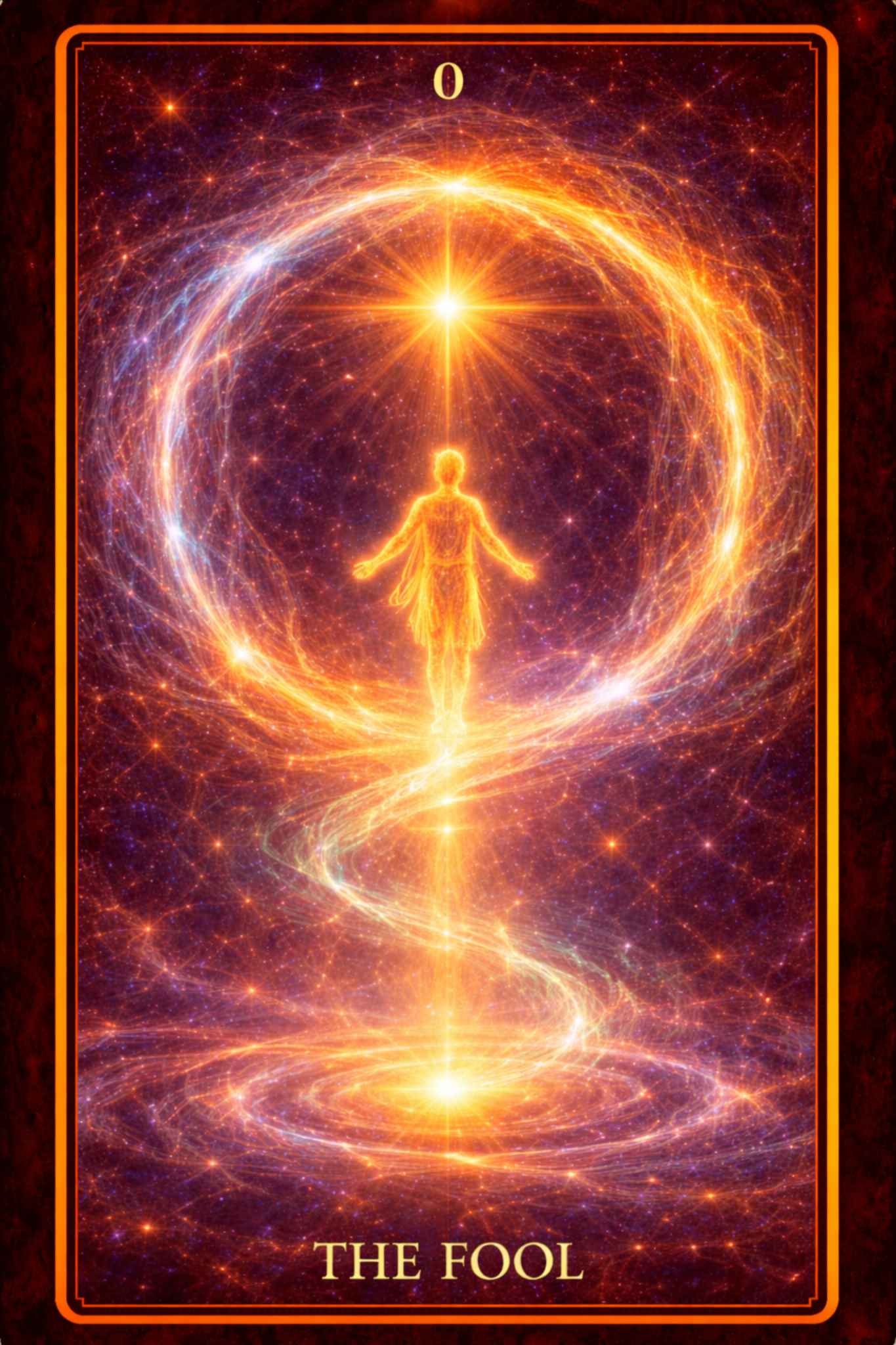
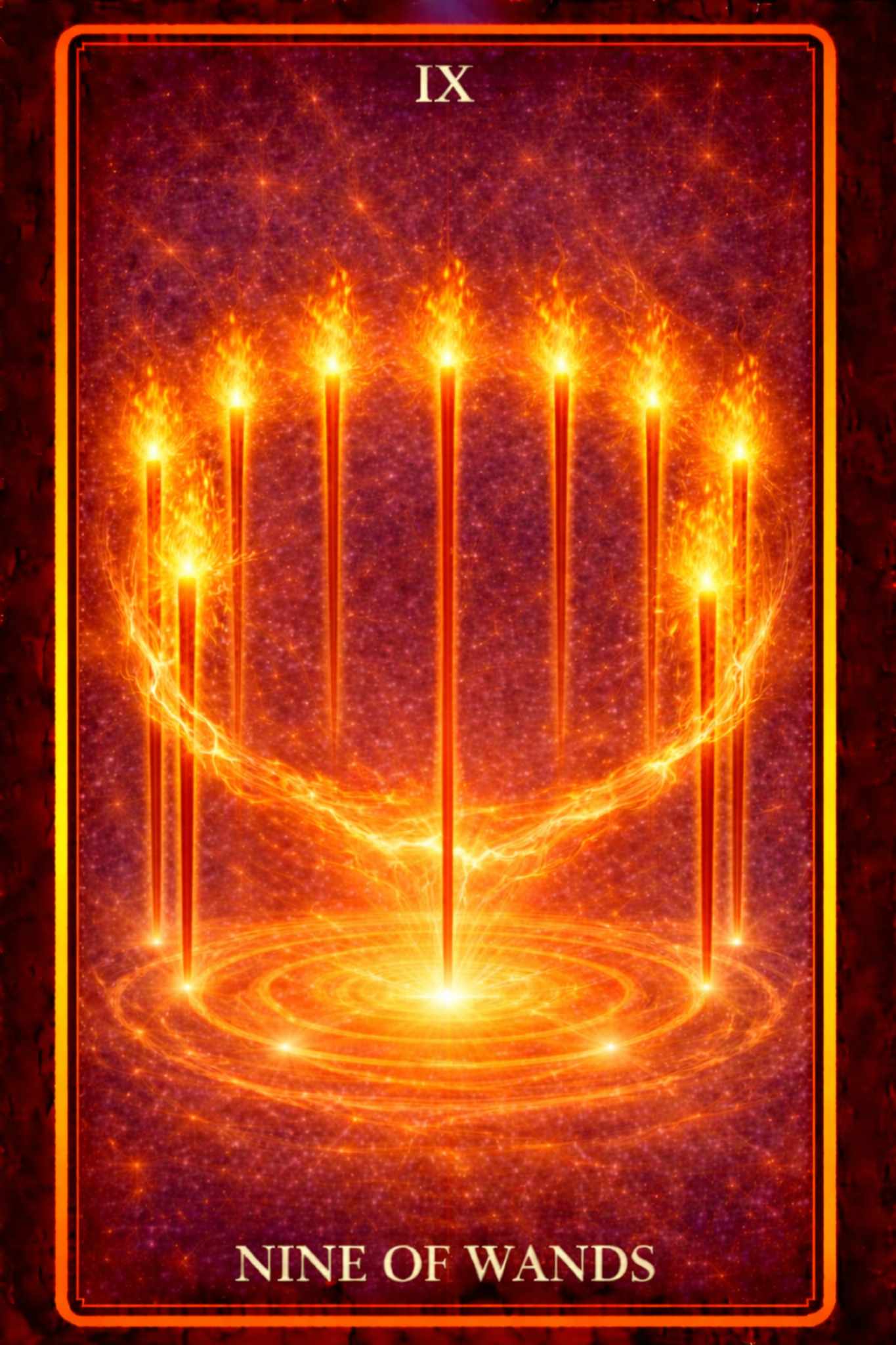
The Fool and Nine of Wands Tarot Combination Meaning
Some beginnings feel light at first, almost effortless. There is movement, openness, and a sense that stepping forward does not cost much. Then, without any clear turning point, something changes. The energy does not disappear, but it becomes heavier, more demanding, and less forgiving. The Fool with Nine of Wands often appears at that exact stage — not at the beginning itself, but at the moment when continuing starts to require something more than curiosity.
What once felt natural now asks for presence. What once felt obvious now needs to be chosen again. The situation itself may not have shifted dramatically, yet your experience of it has. The Fool still carries openness and willingness, but Nine of Wands introduces something that was not part of the initial step: fatigue, pressure, and the awareness that staying engaged is no longer automatic.
This is where the nature of the process becomes clearer. Beginnings do not usually reveal everything at once. They open the path, but they do not carry you through it. At some point, the energy changes, and what replaces the initial spark is not excitement, but steadiness — or the lack of it.
When the beginning is no longer easy
In real-life situations, this combination often shows up when something you have already started begins to test your consistency. A connection that felt simple now requires more attention. A direction that seemed clear becomes less certain, even though nothing specific has gone wrong. The shift is subtle, but it is enough to change how you relate to the experience.
This stage is often misunderstood. Many people expect that if something is right, it will continue to feel as easy as it did at the beginning. When that ease fades, they assume something has broken. But in many cases, nothing is broken. The situation has simply moved beyond its initial phase.
The Fool begins without needing proof. Nine of Wands continues even when proof is not fully visible. That difference defines the entire dynamic of this pairing.
The weight of staying
Nine of Wands carries a very specific kind of energy — not collapse, not defeat, but a quiet sense of having already given something to the situation. There is an awareness of effort, of time, of attention already invested. Continuing is still possible, but it is no longer effortless.
In combination with The Fool, this creates an unusual tension. Part of you still wants to move freely, without pressure, without needing to justify or maintain anything. Another part recognizes that something now depends on your persistence. Not in an external, forced way, but in a more internal sense: if you step away now, you leave something unfinished.
This is where interpretation becomes important. Effort is not automatically a sign of misalignment, just as ease is not automatically a sign of correctness. What matters more is whether there is still something real beneath the effort — something that continues to hold, even if it no longer carries you forward on its own.
When persistence becomes a decision
There is a point in many situations where continuing stops being automatic and becomes intentional. The early movement that carried the beginning forward no longer does the work on its own. What remains is a quieter choice: to stay with something, not because it is easy, but because it still feels worth engaging with. The Fool with Nine of Wands often reflects that shift.
You may also want to go one step deeper.
The Fool + Nine of Wands can open up differently inside a focused personal reading.
This is where the experience becomes more revealing. At the beginning, you move because something feels right or alive. Later, you continue because you have seen enough to recognize what you are actually involved in. That recognition is rarely dramatic. It does not arrive as certainty or as a clear conclusion. It shows up more subtly, as a sense that even though the energy has changed, something real is still present.
At the same time, not everything that becomes difficult is meant to be continued. That is what makes this combination more complex than it first appears. It does not automatically validate persistence, and it does not automatically question it either. Instead, it brings attention to the difference between staying out of clarity and staying out of habit — between continuing because something still has direction, and continuing simply because you have already invested time or energy into it.
That distinction is not always easy to make, especially when fatigue is involved. Tiredness can blur perception. It can make something meaningful feel heavier than it actually is, or make something misaligned feel harder to leave than it should be. This is why awareness matters more here than effort. The cards are not asking how much you can carry. They are asking whether what you are carrying still makes sense to you as you move forward.
Sometimes the answer becomes clearer when you stop looking at the intensity of the beginning and start looking at what remains now. What is still consistent? What still holds, even in a quieter form? What continues to show up without being forced? These details tend to reveal more about the situation than the original spark ever could.
Relationships and emotional endurance
In relationships, this pairing often reflects a stage where initial openness meets reality. The connection may still be present, but it no longer feels as effortless as it did at the start. There may be moments of doubt, distance, or emotional fatigue, not necessarily because something is wrong, but because the dynamic is becoming more real.
Attraction and early movement can carry a connection only so far. Beyond that point, what matters is consistency. Are both people still showing up when the energy is less immediate? Is there continuity, not just intensity? Is the connection supported by actions, not only by moments?
This is where relationships either deepen or become unstable. If everything depends on ease, the first sign of effort can feel like failure. But if there is something genuine underneath the changing energy, the connection can begin to take on a more grounded form. Less projection, more presence. Less assumption, more observation.
Work, direction, and sustained effort
In practical life, The Fool with Nine of Wands often appears when a new direction starts to require endurance. A project that began with enthusiasm now asks for consistency. An opportunity that felt open now requires follow-through. The initial movement has already happened. What remains is the question of continuation.
This can feel frustrating if you expected the process to remain as light as it was at the beginning. But beginnings are not designed to sustain themselves. They initiate movement, not completion. What happens after that depends on how the situation develops and how you relate to it as it evolves.
The presence of Nine of Wands suggests that something is still in progress, but not yet resolved. Stopping now would not necessarily be wrong, but it would mean leaving before the situation has fully revealed its direction. Continuing, on the other hand, requires a more conscious form of engagement.
The most useful approach here is not to push harder, but to look more clearly. Is there still movement beneath the fatigue? Is something still building, even if slowly? Or has the situation become static in a way that no longer supports you? Those distinctions matter more than the amount of effort being applied.
The internal experience
Internally, this combination often feels like a mix of willingness and hesitation. Part of you remains open, still connected to why you started. Another part feels tired, less certain, or less convinced than before. This is not a contradiction. It is a natural stage in many processes.
The initial energy that carries a beginning forward does not always remain. When it fades, something else takes its place. That “something else” is usually awareness — the ability to recognize what is still real, even when it is no longer exciting.
This does not mean forcing yourself to continue. It means noticing whether what you are continuing still has meaning. Whether it still connects to something genuine, even if it now requires more from you than it did at the start.
Want to place this combination into a wider reading?
If this pairing feels close to something you are experiencing, a simple spread can help you reflect on the surrounding energy with more clarity.
Closing reflection
The Fool and Nine of Wands describe a beginning that has reached its first real test of endurance. Something has started, and now it is asking whether it can continue. Not through momentum, but through presence.
This is not about proving anything, and it is not about pushing yourself beyond your limits. It is about recognizing what is still there beneath the effort. If something remains real, even when it is no longer easy, that tells you something important about its nature.
The most grounded response is to stay aware of both your energy and the situation itself. Not everything needs to be carried forward. But what is worth continuing often reveals itself not at the beginning, but at the point where continuing becomes a conscious choice.
More combinations with The Fool
More combinations with Nine of Wands
Continue with The Fool
Explore Related Guides by Topic
If you want to explore this combination through a more specific emotional lens, these tarot guides can help you follow the broader pattern behind the reading.