
Temperance + Nine of Wands
Explore how these two tarot cards interact in a reading through symbolic overlap, contrast, and shared narrative. Tarot combinations often reveal meaning that neither card fully expresses on its own.
Temperance and Nine of Wands Tarot Combination Meaning
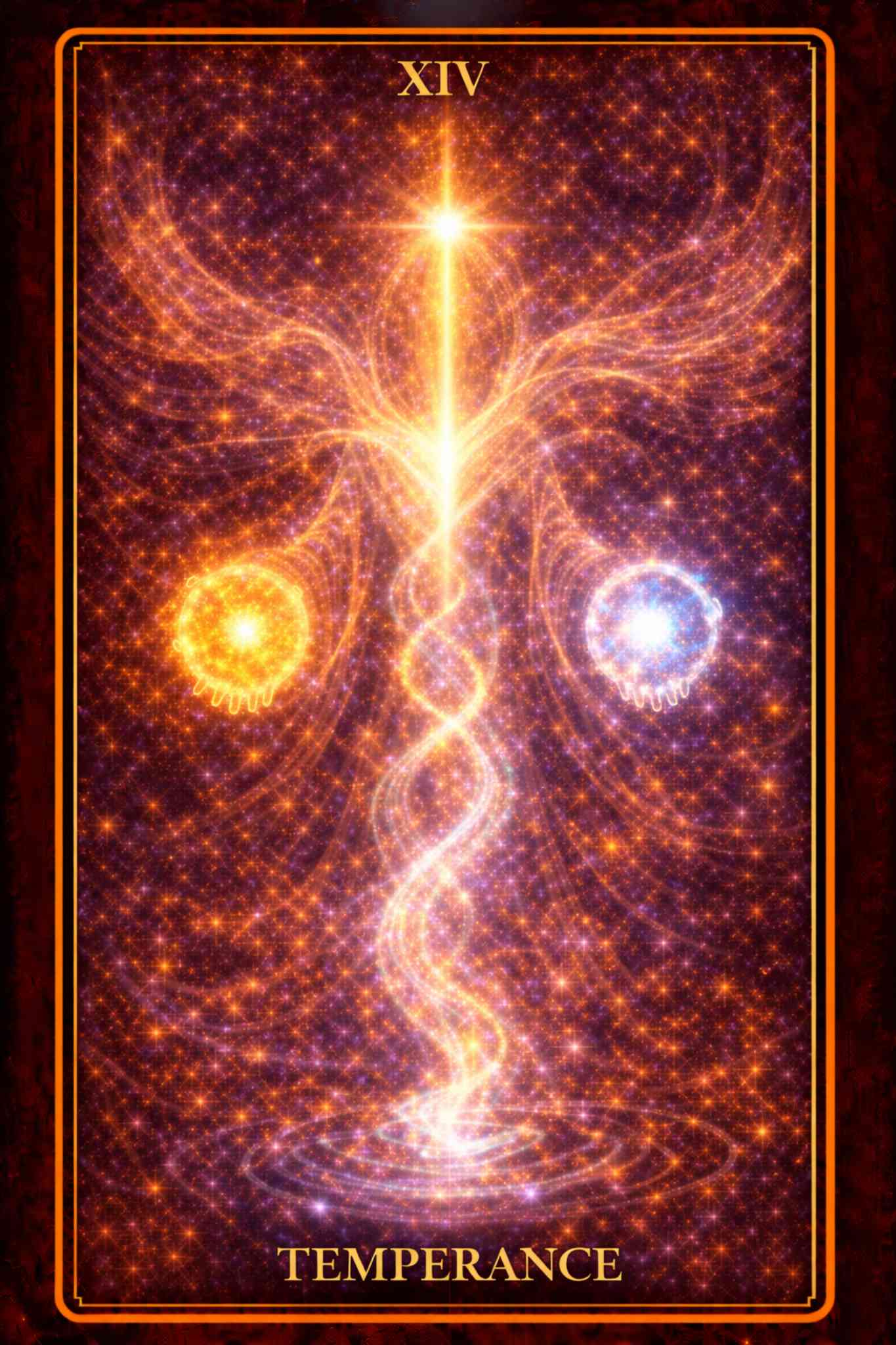
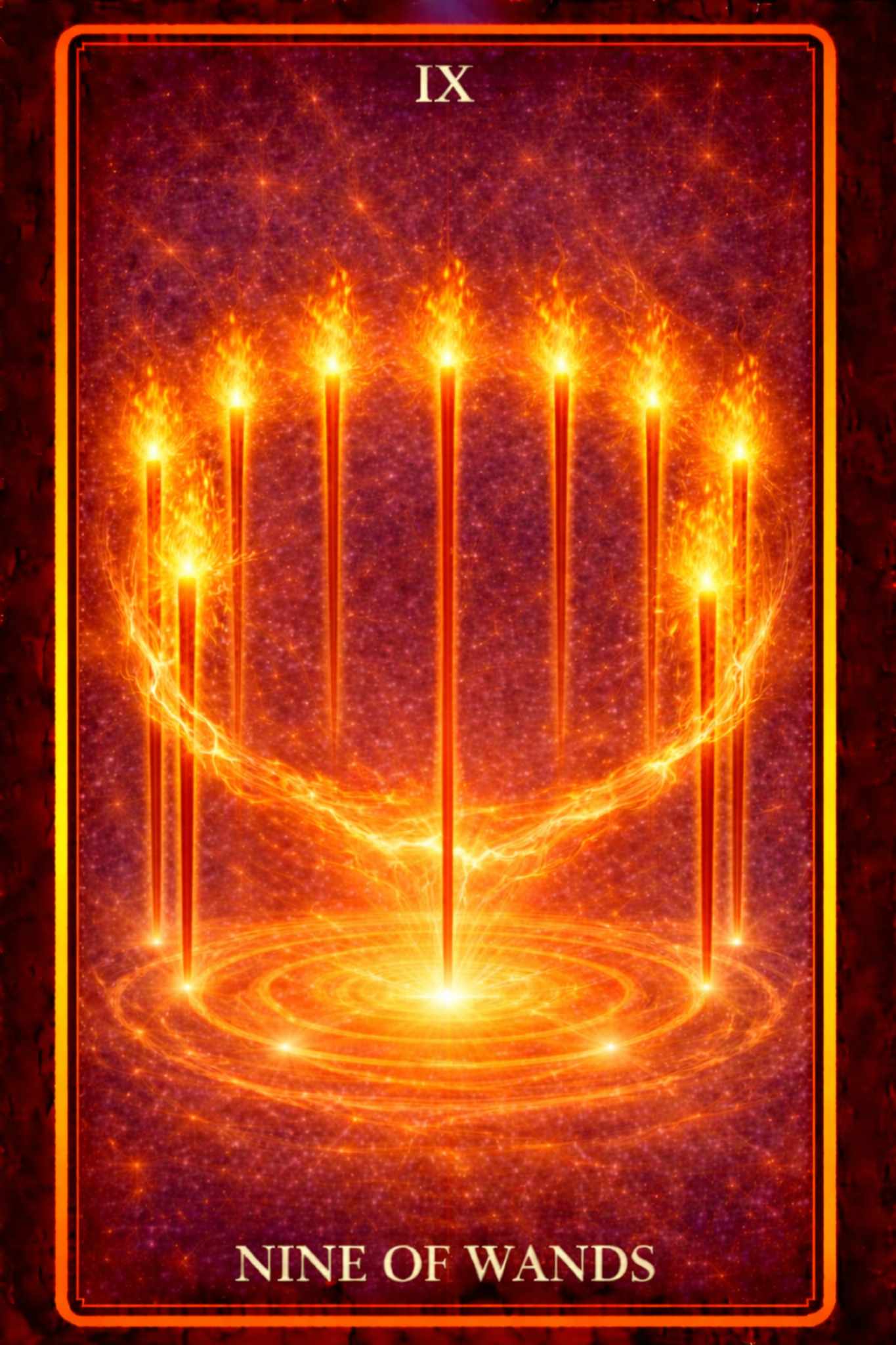
Temperance and Nine of Wands meet where healing is real, yet so is exhaustion, and the deeper work lies in learning how to protect what has been hard won without letting protection harden into a permanent way of living. This pairing carries a very specific emotional atmosphere. Temperance brings balance, integration, proportion, and the quiet intelligence that knows how to blend forces that do not naturally settle on their own. The Nine of Wands brings guarded endurance, accumulated strain, tested resilience, and the instinct to stay alert because experience has taught the body and psyche that pressure can return. Together, these cards often appear when a person has already come through a difficult stretch and is no longer in the first chaos of it, yet still cannot fully exhale. Something is improving, though the system remembers the cost of getting here.
That makes the combination especially nuanced. Temperance leans toward restoration, while the Nine of Wands does not release vigilance easily. It has learned through repetition. It knows balance cannot simply be declared into existence because peace is desired. A person may be trying to regulate, soften, rebuild healthier pacing, and trust a more stable rhythm, while still keeping part of themselves braced. They may protect their energy carefully, hesitate to believe improvement fully, or remain quietly prepared for interruption. Temperance does not dismiss that caution. It asks whether the caution is still serving life well or whether it has started lingering past the moment that formed it. This is a pair about the long middle stage where healing has to live beside nervous-system memory.
When endurance becomes a way of life
The Nine of Wands is often respected for its strength, and rightly so. It shows the ability to remain standing after repeated stress, to keep going when easier responses would have been collapse, retreat, or surrender. It reflects experience, toughness, learned discernment, and the refusal to abandon what matters simply because the road has been draining. Beside Temperance, however, endurance is asked to evolve. It is no longer enough only to withstand. The person is being invited to discover whether all that endurance can now enter a healthier relationship with balance. Can they keep the wisdom strain taught them without remaining trapped inside the posture of constant defense?
This matters because many people know how to survive more easily than they know how to recover. Recovery can feel surprisingly exposed. When life starts becoming steadier, the braced self may not know how to read the calmer rhythm. It may stay suspicious, scanning for the next burden, the next disappointment, the next reason to tighten again. Temperance reads this with unusual precision. It does not demand naive openness. It suggests a slower rebalancing in which the defended self is respected, but also gently shown that every future moment does not need to be met as though another blow is already on its way. The Nine of Wands holds the memory of effort. Temperance teaches how to live beyond effort without betraying what effort once protected.
Healing after prolonged strain
One of the deepest themes in this pair is the question of what healing looks like after repeated overextension, disappointment, conflict, or emotional burden. Temperance often appears when the soul is trying to find a middle way after extremes. The Nine of Wands shows that this attempt may be unfolding in someone who is already tired, already tested, already carrying scar tissue of one kind or another. That does not make balance unreachable. It simply changes the rhythm of how balance returns. It may come slowly. It may come in increments. It may require more careful dosing of openness, effort, and expectation than another person would need in the same situation.
Want to explore this combination in a more personal way?
If this pairing feels important right now, a simple tarot spread can help you reflect on it with more context.
This is why Temperance is such a strong companion to the Nine of Wands. It understands dosage. It knows healing is not merely a beautiful ideal. It is a matter of proportion. Too much pressure can reopen what has barely begun to settle. Too much withdrawal can preserve exhaustion rather than restore life. Too much forced brightness can feel invalidating, while too much vigilance can become its own prison. Temperance helps calibrate this middle zone with great care. It asks what amount of rest, contact, work, effort, and protection truly supports recovery now, rather than what pride, habit, or older expectation says the person should still be able to carry.
- Temperance brings healing, balance, proportion, and gradual energetic integration.
- Nine of Wands brings endurance, guardedness, tested resilience, and the aftereffects of sustained pressure.
- Together they suggest recovery that must respect both strength and fatigue.
- The caution is against letting vigilance become a permanent identity.
- The gift is learning how to remain protected without remaining trapped inside strain.
Love and relationship meaning
In relationship readings, Temperance and Nine of Wands often point toward a bond or emotional field in which care, patience, and healing are needed because one or both people are carrying accumulated defensiveness. This does not automatically mean the relationship itself is failing. Very often it means the emotional atmosphere has passed through enough strain, mixed signals, disappointment, or earlier wounds that softness no longer arrives easily. Temperance enters as the art of relational calibration. It asks how much openness is genuinely possible, what pace creates safety, and whether the connection can support trust-building without pushing either person into renewed bracing.
At its healthiest, this pair can be deeply constructive. It may describe two people learning how to move more gently with each other after turbulence, or one person learning how to stay present in love without exposing themselves too quickly. Temperance favors consistency over dramatic repair, and the Nine of Wands often responds better to that than to grand gestures. Reliable steadiness, clean communication, and the absence of emotional whiplash tend to do more healing here than intensity ever could. If warmth is to return, it often returns through proportion and repetition rather than through spectacle.
In more difficult expressions, the relationship may become dominated by guardedness. One person may keep one foot back, always prepared for disappointment. Small tensions may be filtered through the memory of older pain. Even sincere care may struggle to land because the protective reflex is still doing too much of the listening. Temperance becomes essential in such moments. It asks whether the bond can create enough emotional moderation that defense softens over time. When the answer is yes, this pairing can describe slow but genuine repair. When the answer remains uncertain, the Nine of Wands may continue shaping too much of the atmosphere.
Career, work, and sustainable resilience
In practical life, Temperance and Nine of Wands often describe someone who has been carrying a long stretch of pressure and is now trying to rebuild a healthier working rhythm without discarding everything their endurance helped them preserve. They may still be standing, still competent, still productive, still responsible, yet also tired in ways that no short pause fully resolves. The Nine of Wands reflects this clearly. It shows capability under strain, though it also reveals the cost of staying braced for too long. Temperance enters not to deny that cost, but to answer it with method. What needs rebalancing? What can be reduced? What pacing must change if the person is to continue without turning work into a permanent state of defended output?
This can be especially relevant for people who take pride in pushing through. They may have built success through stamina, responsiveness, loyalty, and the willingness to keep carrying what others would have dropped. Yet the cards ask whether that very identity now needs refinement. Temperance often points toward the redesign of effort itself. Resilience does not always need to remain heroic in style. Some of it can become quieter, more intelligent, less punishing, and more sustainable. The goal is no longer only to withstand. It is to create a rhythm that can preserve both the work and the worker.
At its best, this pair is excellent for mature recalibration after difficulty. It suggests that real strength has already been developed, and that the next stage involves allowing that strength to support balance rather than endless defense. Discipline does not need to disappear here. It simply stops being asked to carry everything by itself when healing is ready to share more of the load.
Psychological and spiritual meaning
Psychologically, Temperance and Nine of Wands often describe the delicate negotiation between openness and self-protection. A person may know some softening is needed, yet still feel the body tighten before the mind agrees. They may long for peace while still carrying the reflexes of prolonged stress. This is not contradiction in any shallow sense. It is the complexity of healing after repeated activation. Temperance understands this beautifully because it works with process instead of fantasy. It asks how trust, flexibility, and flow can be reintroduced in amounts the system can truly absorb, rather than in idealized doses that sound good but land too hard.
Spiritually, this pairing can mark the stage where the soul is no longer learning primarily through collapse or excess, but through the subtler discipline of restoration. The Nine of Wands has already passed through ordeal. Temperance now asks whether that ordeal will become wisdom or lifelong hardening. The invitation is not to forget what required strength. It is to let the lessons of endurance be integrated into a gentler, roomier form of power. Real balance here is not innocence restored. It is composure earned through experience and then refined through care.
Shadow expression and challenge
The shadow side of this combination appears when the Nine of Wands refuses all modulation and turns understandable caution into fixed identity. Then a person may keep living as though every new demand, relationship, or opportunity is another test they must brace against. Temperance shows that this is no longer only protection. It is imbalance shaped by memory. The self remains overorganized around resistance even when some of the original pressure has already passed. In that state, healing becomes much harder because vigilance keeps consuming the very energy restoration would need in order to deepen.
There is also an opposite distortion in which Temperance is interpreted too idealistically, as though the person should already be calm, open, or gracefully balanced simply because a lot of inner work has been done. That expectation can become another burden. The Nine of Wands corrects this by showing that some phases of recovery still contain fragility, fatigue, and hesitation. The challenge is to avoid both errors: glorifying guardedness on one side and shaming it on the other. The wiser path is careful calibration, where protection is respected while also being gently updated to match the life that exists now.
Timing and the pace of recovery
Timing is central to this pair because it often appears in a phase that is neither full crisis nor full ease. Something has improved, or wants to improve, yet the system cannot be rushed into deep relaxation simply because the mind is tired of vigilance. Temperance honors that reality. It often suggests that restoration will happen through repeated adjustment, deliberate pacing, and respect for the person’s actual threshold rather than through one decisive breakthrough that changes everything overnight. The Nine of Wands reminds us that what has been long carried may need a long gentling.
The right timing here often feels modest but deeply meaningful. A little more trust may be possible now. A little less force may be needed. A little more rest, delegation, or emotional softness may finally be tolerable. From the outside, the changes may look small. Internally, they can be profound. Temperance measures those shifts carefully. The Nine of Wands asks that the person not mistake gradual healing for insufficient healing. Very often, what lasts is what returns slowly enough to remain real.
FAQ — Temperance and Nine of Wands
Is this a difficult combination? It can feel heavy because it often speaks to healing after strain, though it is also deeply constructive. It suggests that balance is possible even when the system still feels tested and guarded.
What does it mean in love? It often points to a relationship field where trust, pacing, and emotional steadiness matter because one or both people are carrying accumulated defensiveness or fatigue.
Can it apply to work? Very much so. It can reflect resilience after prolonged pressure, the need for healthier pacing, and the redesign of effort so that endurance does not become chronic depletion.
Does Temperance weaken the Nine of Wands? No. It softens and refines it. Temperance helps resilience become more sustainable and less organized around permanent tension.
What is the main lesson here? Strength after hardship is real, though it does not need to remain forever in braced form. Healing asks for boundaries, yes, and also for the gradual loosening of what no longer needs to stay clenched.
What this combination is really asking
Temperance and Nine of Wands ask: can you let healing teach your strength a new shape? That is the heart of the pair. You may have every reason for your caution. The fatigue may be earned. The defenses may have protected something important. Yet the cards want to know whether those defenses can now become more flexible, more intelligent, and less costly to maintain. They ask whether resilience can evolve beyond simple bracing.
The deeper lesson is that restoration does not erase what strain has taught. It integrates it. Temperance brings proportion, healing, and the quiet discipline of recalibration. The Nine of Wands brings experience, stamina, and the awareness that pressure leaves real consequences. Together, they form a mature image of guarded healing: a self that still knows how to protect what matters, yet is slowly learning how not to live as though every moment must be survived in the same old way.
Want to place this combination into a wider reading?
If this pairing feels close to something you are experiencing, a simple spread can help you reflect on the surrounding energy with more clarity.
Closing reflection
There are seasons when balance does not look like serenity. It looks like someone slowly learning how to unclench after carrying too much for too long. This pairing belongs to those seasons. It does not romanticize exhaustion, and it does not shame caution. It simply asks whether the wisdom gained through endurance can now be brought into a kinder relationship with life.
Temperance mixes the elements with patience. The Nine of Wands keeps watch over what was hard won. Between them is a subtle but powerful promise: strength does not disappear when it softens. Sometimes it becomes more trustworthy precisely because it no longer needs to remain on guard in the same old way.
More combinations with Temperance
More combinations with Nine of Wands
Continue with Temperance
Explore Related Guides by Topic
If you want to explore this combination through a more specific emotional lens, these tarot guides can help you follow the broader pattern behind the reading.