
Death + Two of Cups
Explore how these two tarot cards interact in a reading through symbolic overlap, contrast, and shared narrative. Tarot combinations often reveal meaning that neither card fully expresses on its own.
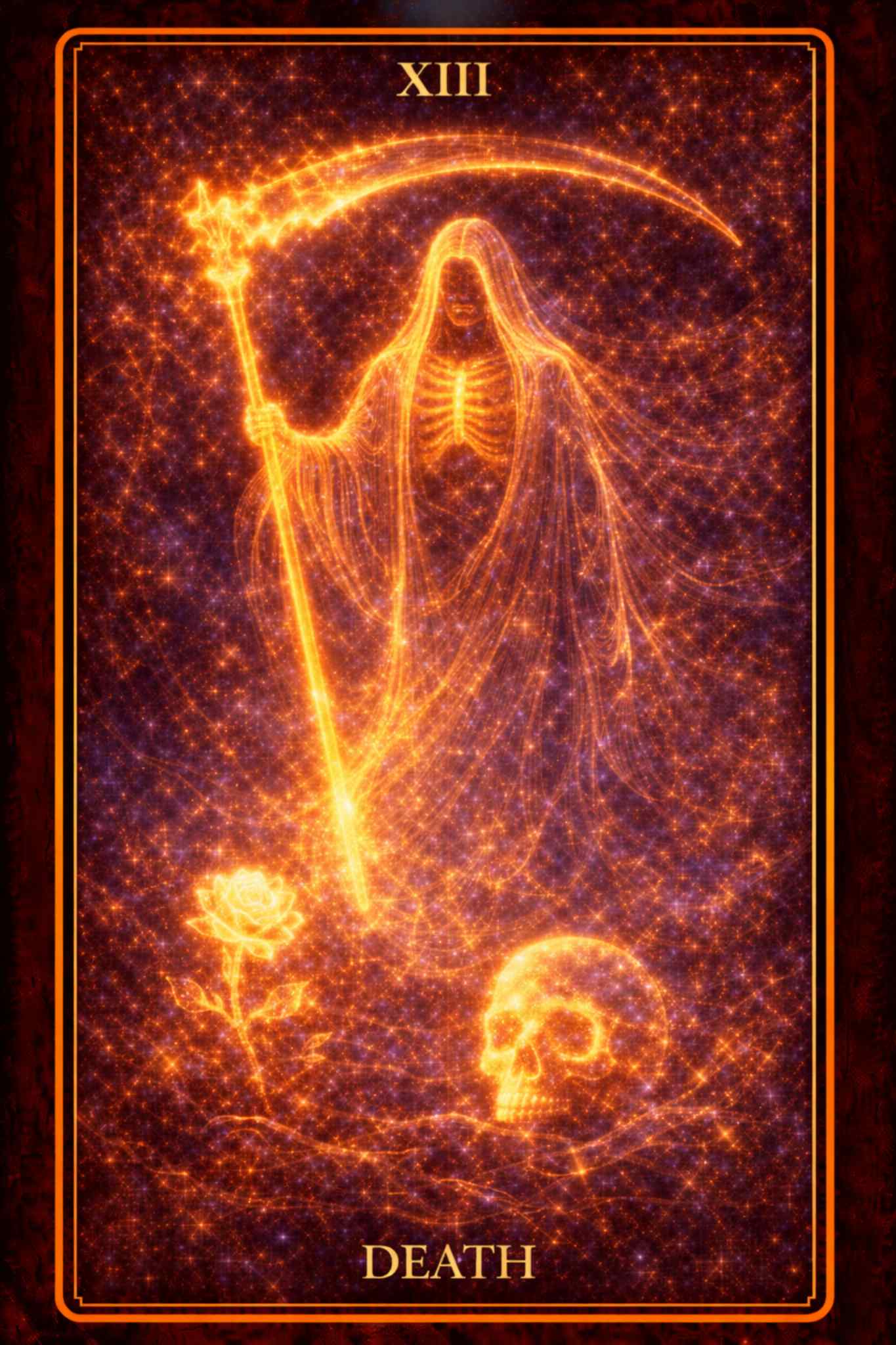
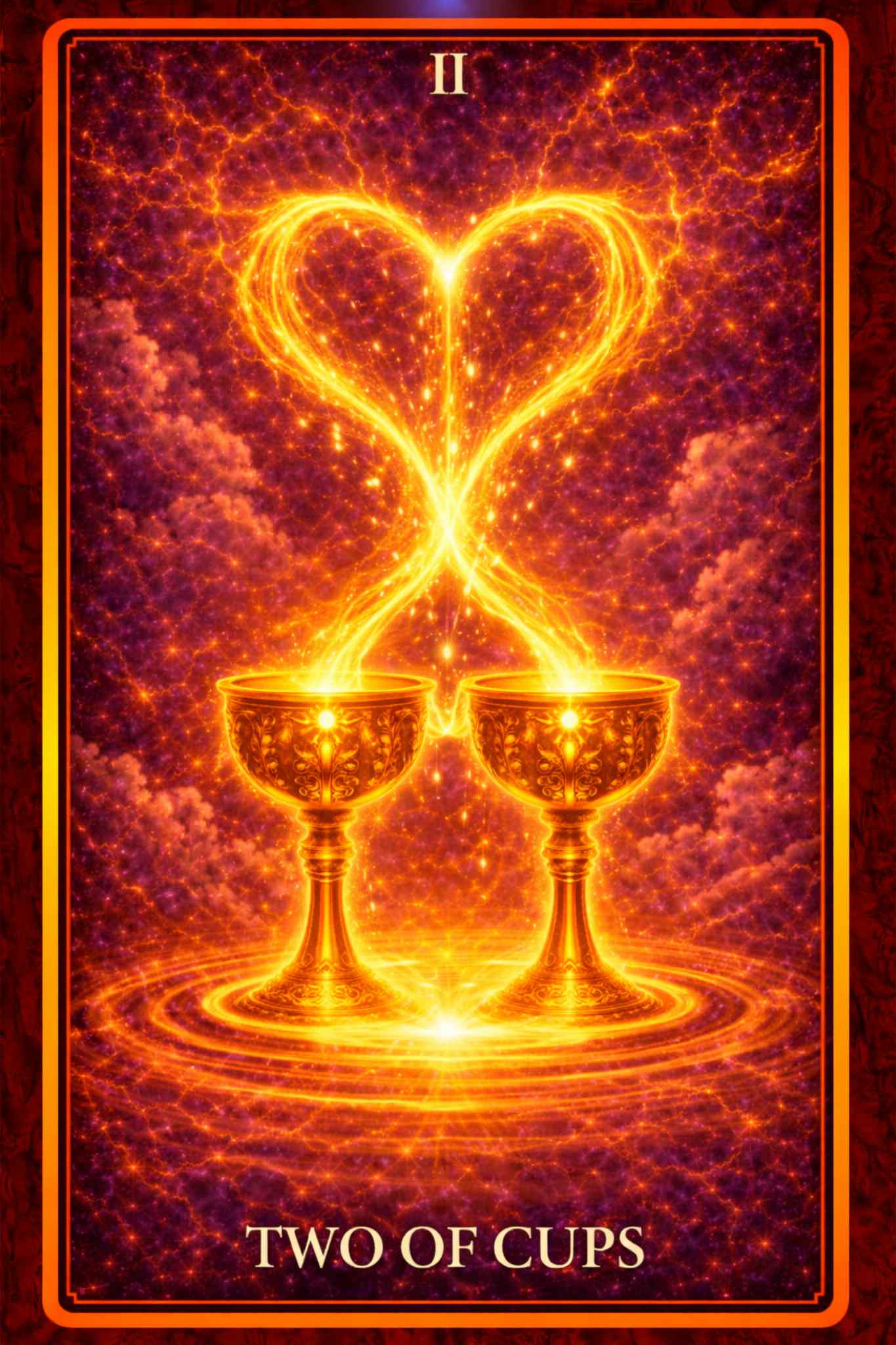
Death and Two of Cups tarot combination meaning
What happens when two people still matter to each other, but the form that held them begins to fall away? Death and Two of Cups lives inside that question. The Two of Cups speaks of mutual recognition, emotional exchange, affection, agreement, and the delicate space where one heart meets another. Death brings the completion of an old cycle, the ending of a relational shape, or the deep inner knowledge that something between people cannot continue in the same way. Together, they create a reading about connection under transformation: love, care, attraction, friendship, or emotional agreement may still exist, but the old container is no longer strong enough, honest enough, or alive enough to hold it unchanged.
This is a very different energy from sudden rupture. Death here is slow, organic, and final in the way autumn is final. It does not need to shout in order to change everything. The Two of Cups keeps the focus intimate. The matter is not only what one person feels, but what happens in the shared space between two people when the old pattern loses life. Sometimes this pairing appears when a relationship is moving toward a clearer ending. Sometimes it appears when a bond is ready to transform into a more mature form. Sometimes it shows that two people can still care, but the meaning of that care is changing. The essential issue is whether the connection can honor what has been true while allowing the old version of itself to complete.
There is an emotional dignity in this pair when it is handled consciously. Death does not automatically cancel the Two of Cups. It purifies the question of connection. What remains when expectation drops away? What remains when the old promise, role, label, rhythm, or emotional contract no longer describes the living truth? If the connection has a deeper life, it may re-form in a cleaner shape. If its life belonged mainly to the past, then release may become the most honest form of respect. The pair asks for maturity because it recognizes that mutual feeling and mutual future are related, yet they are not always the same thing.
The bond after the old agreement expires
The Two of Cups often carries the image of meeting: two people turning toward each other with some level of openness, affection, or emotional recognition. Death asks what happens after the first agreement has run its course. Every relationship has forms: the way people speak, the way they repair, the way they avoid, the way they define loyalty, the way they imagine the future. When Death enters the field, one of those forms may have finished its usefulness. It may have once protected the bond, but now it restricts it. It may have once named the connection accurately, but now the people inside it have changed.
This can be tender and uncomfortable at the same time. The Two of Cups may still feel the pull of closeness. Death may feel the truth of completion. The heart then stands between gratitude and release, wanting to preserve what was meaningful while sensing that preservation alone cannot keep something alive. A person may ask whether the relationship wants to transform or simply survive. That distinction matters. Transformation requires honesty, grief, and a willingness to meet each other differently. Survival can become the effort to keep a familiar shape breathing after the living current has moved elsewhere.
That deeper relational crossroads echoes Death and The Lovers, where choice, truth, and emotional alignment meet a cycle of profound change. The Lovers brings a larger moral and personal decision into view, while the Two of Cups stays closer to the intimate exchange itself. In this pairing, the question is less grand but often more immediate: can two people keep meeting each other honestly when the old way of meeting has ended?
Love, reconciliation, and changed emotional terms
In love readings, Death and Two of Cups can describe a relationship moving through a decisive emotional transition. This may be a breakup, a reconciliation, a redefinition, or a shift from one kind of closeness into another. The cards avoid a single fixed outcome because their real concern is the integrity of the bond. If two people come back together, they have to return in a changed way. If they part, the parting may carry love rather than hatred. If they remain connected, the connection may need a new emotional agreement. Death clears the old terms; the Two of Cups asks whether mutual care can survive the clearing in a truthful form.
You may also want to go one step deeper.
Death + Two of Cups can open up differently inside a focused personal reading.
This pairing is especially strong when a relationship has been held together by memory, hope, fear, guilt, or the beautiful image of what it once was. The Two of Cups remembers the moment of recognition. Death asks whether that recognition is still living in the present. A past bond can be sacred and still complete. A current bond can be wounded and still capable of renewal. The difference lies in whether both people can meet what is actually here. If only one person is changing while the other clings to the old contract, the pair can feel painful. If both are willing to let the old skin fall away, the connection may become more honest, even if its outer form changes.
For the emotional texture of mutuality, Two of Cups feelings meaning gives a direct companion layer. It explores the sense of being met, mirrored, and emotionally recognized. Death complicates that recognition by asking whether the mirror still reflects the present, or whether both people are looking at an older image and calling it truth.
When care remains but the story changes
One of the most human insights in Death and Two of Cups is that care can remain after a story changes. The end of an old relational form does not always mean the feeling was false. Sometimes the feeling was real enough to reveal where the form could no longer carry it. A friendship may need distance to remain clean. A romance may become a memory with dignity. A partnership may require a new rhythm. An apology may open the heart without restoring the previous arrangement. This pair allows for complexity because love itself often changes shape before the people involved know how to name the change.
The metaphor here is less like a broken cup and more like two rivers reaching a place where the old channel splits. The water may still be water. The movement may still be meaningful. Yet the banks have shifted, and forcing the rivers back into the former channel would create flooding rather than harmony. Death asks for the courage to see the changed terrain. The Two of Cups asks for enough tenderness to avoid turning that truth into cruelty. Together they suggest that relational honesty can be both firm and compassionate.
A related but more emotionally suspended version of this dynamic can be found in The Hanged Man and Two of Cups, where a bond pauses for perspective before action becomes clear. Death goes further. It says that the pause may have already revealed something final inside the old pattern. The connection may still matter, but the old terms have reached their natural limit.
Intentions, truth, and the end of old roles
Death and Two of Cups often raises questions of intention, but it does so gently rather than suspiciously. The issue may be whether two people are approaching each other from present truth or from roles they learned long ago. One may still be the rescuer, the pursuer, the silent one, the forgiving one, the idealized one, or the one who carries the emotional labor. Death begins to strip those roles away. The Two of Cups asks what kind of meeting is possible without them. This can be liberating if both people are willing to stand more honestly before each other. It can also reveal that the bond depended on a pattern that one person has outgrown.
This is why Death intentions meaning fits this pair naturally. It brings attention to the inner movement behind change: whether someone intends to release, renew, redefine, or stop carrying an old emotional identity. With the Two of Cups, intention becomes relational. The question is not only what one person wants, but whether the meeting between both people can become more truthful than it has been.
Timing and the moment to stop reviving the old form
The timing of Death and Two of Cups is usually transitional. Something in the bond may have already changed internally, even if the outer conversation has not fully caught up. This can create an in-between period where affection remains, memories remain, and the old language of the relationship is still being used, while the deeper emotional reality has shifted. The cards suggest that this is a time for honest recognition rather than quick replacement or forced restoration. If grief is present, it needs room. If renewal is possible, it needs a new foundation. If release is the cleanest path, it should be given dignity.
This pair becomes especially important when someone keeps trying to return to the exact previous version of a connection. Death indicates that the old version may have completed its cycle. The Two of Cups says that the emotional bond deserves respect, which means it should not be kept in a half-alive condition through fear of change. The right timing may involve allowing a conversation to happen after inner clarity forms, or letting silence reveal what constant repair attempts have covered. The cards favor truthful transition over emotional repetition.
For exploring this kind of relational threshold, the relationship tarot spread can be useful because it gives space to each person, the shared dynamic, and the possible direction of the bond. That structure suits this pair when the central question is whether the connection wants renewal, closure, or a form that neither person has fully imagined yet.
Ready to see how this applies to your situation?
A focused tarot reading can help you explore how Death + Two of Cups may reflect your current situation, not just the general meaning of the cards.
The meeting that survives only by becoming honest
Death and Two of Cups ultimately describes a bond at the edge of its former self. The connection may still carry tenderness, attraction, care, apology, gratitude, or unfinished emotional meaning. Yet Death insists that the old shape cannot be preserved simply because it was once beautiful. The Two of Cups insists that change should be approached with humanity. Between them, the message is subtle and strong: a relationship becomes more sacred when it is allowed to tell the truth about what it has become.
The most important question is not whether the bond once mattered. It did, or the Two of Cups would not be present. The deeper question is what remains alive when the old agreement is released. If mutual respect remains, it can guide a cleaner ending or a more mature renewal. If tenderness remains, it may need a new language. If only attachment remains, Death asks that attachment to be seen honestly. This combination holds love and letting go in the same hand. Its wisdom is that the heart can honor a connection without forcing it to remain in a form that no longer carries life.
More combinations with Death
More combinations with Two of Cups
Continue with Death
Explore Related Guides by Topic
If you want to explore this combination through a more specific emotional lens, these tarot guides can help you follow the broader pattern behind the reading.