
Death + Nine of Wands
Explore how these two tarot cards interact in a reading through symbolic overlap, contrast, and shared narrative. Tarot combinations often reveal meaning that neither card fully expresses on its own.
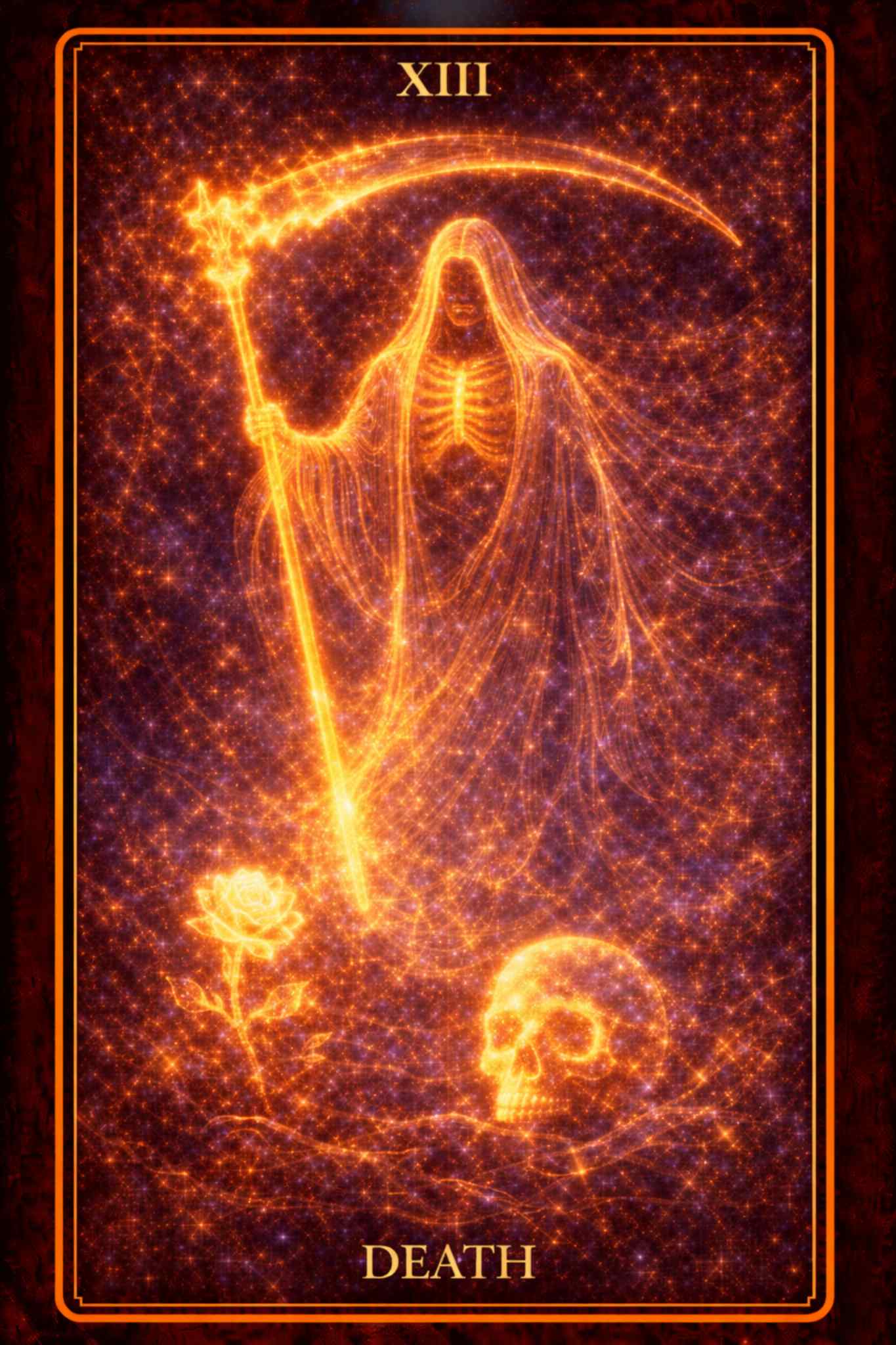
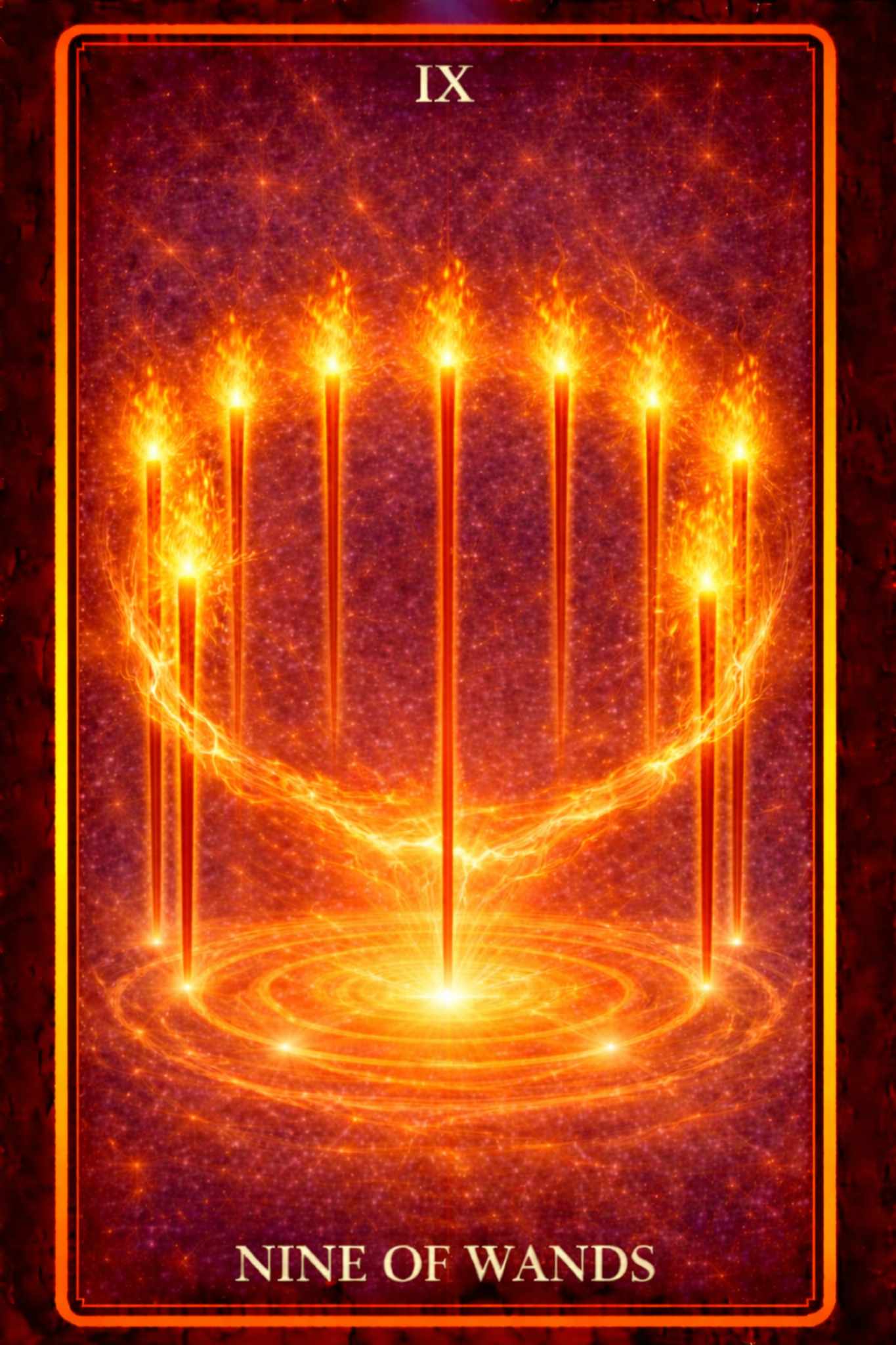
Death and Nine of Wands Tarot Combination Meaning
Death and Nine of Wands meet where transformation is already pressing against the final structure of endurance, and the self is still braced with the last reserves of vigilance, memory, and survival instinct. This is one of the most emotionally exact combinations in the Death and Wands sequence because both cards understand pressure, though they express it through very different languages. Death reveals when a form has been held past its inner life and has reached the point where it cannot remain coherent in the same way. The Nine of Wands shows what it feels like to keep standing after repeated strain, to remain guarded because experience has taught the body and psyche to stay alert. Together, these cards often appear when a person has moved far beyond the beginning of change and reached the point where the old arrangement is visibly tiring, thinning, and losing support, while the instinct to protect it still remains intensely active.
This gives the pair its particular poignancy. Death reveals that a chapter is structurally complete. The Nine of Wands responds by tightening around what remains, as if one last act of caution, courage, or determination might still preserve meaning. Sometimes that instinct is understandable and honorable. A person may have invested years of effort, patience, pain, or devotion into what is now nearing its end. Yet this is precisely where the cards become spiritually revealing. Endurance can merge with attachment. Guardedness can remain in place after life has already begun withdrawing from the form being guarded. The deeper question becomes whether continuing still serves something alive, or whether it has become the final defense against grief.
When exhaustion becomes part of the truth
The Nine of Wands belongs to the late stage of struggle. It shows the self after repeated pressure has already left its mark. The person is still upright, though with caution, fatigue, and the knowledge that whatever comes next will be met without innocence. Beside Death, this often means the ending has been approaching for some time. A relationship, role, ambition, identity, or coping structure may have been held together far beyond its living center. The person may already sense this. The mind may even know it clearly. Yet the body often releases more slowly than the mind admits. It stays prepared. It keeps watch. It braces against one more blow, even when the deeper issue is an old form that has already begun to lose coherence.
Need a little more context around this pairing?
A short reading can help you reflect on the tension, direction, or lesson this combination may be pointing toward.
This is why the combination can feel so exacting. Death reveals that exhaustion itself may be evidence. The depletion is more than a side effect. Sometimes it is part of the message. The amount of vigilance required to keep a structure standing may be showing that the structure is no longer naturally supported. The effort becomes diagnostic. The person begins to see that what once felt like admirable persistence may now be functioning as a ritual of delayed release. In this pairing, tiredness can be truth arriving through the body before the personality is fully ready to accept what that truth requires.
The line between courage and over-endurance
One of the most important themes in this pair is the distinction between courage and over-endurance. The Nine of Wands naturally evokes respect because it reflects stamina, determination, and the refusal to collapse too early. Those qualities matter. There are situations in which holding steady through one final stretch is exactly what integrity requires. Death does not dismiss resilience. It simply places a deeper measure beside it. Does the thing being endured still contain life, or is endurance preserving a shell whose meaning has already passed inwardly? This is rarely easy to see, especially for people who have survived much and learned to trust their own toughness more than surrender.
For such people, continuation can feel morally cleaner than release. They know how to brace, regroup, and keep going. Yet Death teaches that there are moments when continuation itself becomes misaligned, because it protects a form whose time has already passed. The Nine of Wands then becomes a threshold card in the truest sense. It shows the final defended posture of the old arrangement, sometimes because that arrangement still matters, and sometimes because letting it end would require a more vulnerable kind of courage. The pair asks whether the final act of strength lies in one more defense or in allowing the defended structure to complete itself honestly.
Love and relationship meaning
In relationship readings, Death and Nine of Wands often point toward a bond or pattern that has already gone through repeated stress, strain, disappointment, or cumulative emotional wear. Someone is tired, though perhaps still standing. Someone remains guarded because they have already learned how much effort it takes to hold the connection together. Death enters that field to show that the old relational form may have reached the edge of what it can carry. A familiar dynamic may have reached its inner conclusion even while one or both people remain in defensive readiness around it. The relationship may still exist outwardly, yet it now demands so much bracing that the effort itself becomes part of what must be understood.
At its healthiest, this pair can support the difficult wisdom of recognizing when protection has become more important than pretense. A person may finally admit that the bond in its current form has exhausted them. Or a couple may understand that a former way of relating must die if anything alive is to remain between them. The Nine of Wands is valuable here because it names the cost honestly. Death then gives permission for real transformation rather than one more cycle of damage control, recovery, and re-bracing.
In more difficult expressions, the person may continue guarding a chapter that is already over inwardly because they cannot bear for so much effort to end in release. They may tell themselves that having come this far means they must keep going. That logic is deeply human, but Death questions it. Prior investment is not automatically a reason for future continuation. Sometimes what must be honored is the depth of what was already tried and the honesty of allowing the exhausted form to complete itself.
Career, work, and practical life
In practical or professional contexts, Death and Nine of Wands often describe a role, project, mission, or pattern of labor that has been sustained through sheer force of will long after vitality began thinning out. The person may still be functioning, perhaps even competently, though at increasing internal cost. They may feel constantly on alert, perpetually compensating, forever preparing for the next demand, criticism, or setback. The Nine of Wands reflects this state vividly. Death then enters to show that the issue may be larger than temporary strain. The structure itself may be near the end of what it can honestly support.
This pairing is especially relevant for those who pride themselves on being able to endure what others cannot. They may be the one who always holds things together, survives hard phases, and keeps moving when others would already step away. Yet that strength can make it harder to recognize when resilience is being applied to a chapter whose inner life has already run thin. A business model, role, team identity, creative method, or public position may still be defended because the person knows how to withstand pressure, rather than because the future genuinely belongs there. Death asks whether all this guarded effort is carrying life forward or merely preserving the shell of something that once held life more fully.
At its clearest, the combination can be deeply liberating. It may help someone realize that exhaustion is information rather than failure. Their tiredness may be revealing that a form of work has completed itself. Or it may show that the next phase must be built on very different terms, with less permanent defense and more honest structure. The Nine of Wands then becomes the witness to what has been carried. Death becomes the force that says carrying it forever is no longer required.
Psychological and spiritual meaning
Psychologically, Death and Nine of Wands often describe a self that has survived enough to become highly defended, even in moments when defense has lost much of its former necessity. The body remembers what the conscious mind may already recognize is ending. The psyche remains braced because that bracing once protected something important. Death asks whether those defenses now need to be thanked and released. This is difficult because people rarely delay endings out of love for the old form alone. Very often they delay because the old form is wrapped around old wounds, hard-won strength, and a survival identity built from refusing collapse.
Spiritually, this combination offers a profound lesson about the limits of heroic endurance. Some stages of growth do require staying with discomfort. Others require the humility to stop making endurance the center of meaning. Death does not dishonor the warrior. It asks the warrior whether the battle is still alive, whether the armor still protects something necessary, or whether the soul is now being asked for a different kind of courage altogether: the courage to soften, release, grieve, and let the defended chapter finish without forcing it through one more cycle of strain.
Shadow expression and challenge
The shadow side of this pair appears when a person mistakes weariness for obligation. They may believe that because they have already gone through so much with a situation, they must continue until it becomes redemptive. The Nine of Wands can reinforce that mindset because it carries dignity, toughness, and the impulse to keep past effort from feeling wasted. Yet Death reveals that some devotion ripens into completion rather than restoration. In those moments, refusal to release does not protect meaning. It drains more life from what has already ended inwardly.
There is also an opposite difficulty in which a person interprets every wave of fatigue as proof that something must end immediately. That is not always true. The Nine of Wands can sometimes reflect a final difficult stretch before genuine breakthrough. The challenge is to tell the difference. Death helps by asking whether the core structure still contains life. If it does, then the guardedness may need support, rest, or reorientation. If it does not, then continued defense becomes a costly delay. The pair asks for exact discernment rather than blind quitting or blind endurance.
Timing and the last defended threshold
Timing in this pair often revolves around the final threshold before release. The Nine of Wands carries the feeling of being almost through, yet it does not by itself tell us whether “almost through” means breakthrough or ending. Death clarifies the nature of that completion. Sometimes the cards show that the person truly is near the end of an old chapter and that one more push will not revive it. In those moments, the right timing is less about fortifying and more about consciously allowing the structure to finish. The effort has already said what it needed to say.
At other times, the pair may indicate that the person is on the verge of allowing a necessary transformation and simply needs enough steadiness to avoid sliding backward into false hope or fear-driven repetition. In either case, the timing issue is recognition rather than raw endurance. What exactly are you almost through: a hard but living stage, or a form whose life has already gone? The answer matters enormously, because it determines whether the final act of courage will look like staying upright for one more honest passage or lowering the guard enough for the ending to become real.
What this combination is really asking
Death and Nine of Wands ask what you are still guarding, and whether it is alive enough to justify the cost. That is the heart of the pair. The effort is real. The scars are real. The instinct to hold on may come from honorable places within you. Yet the cards want to know whether your vigilance is protecting life or preserving a threshold you are afraid to cross. They ask whether your strength now belongs in one more defense or in finally allowing the defended form to complete itself.
The deeper lesson is that endings often arrive where a person has already proven their endurance many times over. Death strips away what can no longer continue. The Nine of Wands shows how much of the self may still be braced against that stripping. Together, they form one of the most moving images of guarded transformation in tarot: a soul tired from surviving, standing at the edge of a change it may already understand, yet still needing to decide whether the last act of courage is to keep holding or to let the old chapter lay itself down.
Explore the next layer of this reading.
This combination can mean different things depending on context. A short tarot reading can help you reflect on the question behind the cards.
Closing reflection
There is a special kind of grief that comes when a strong person realizes that everything is not meant to be carried through one more round of endurance. This pairing speaks to that grief with unusual honesty. It understands why the self braces after what it has lived through. Yet it also knows that some chapters become more painful precisely because strength keeps them standing past their time.
Death brings the deeper truth that the old form is ending. The Nine of Wands brings the human truth that endings are hardest when much has already been survived. Between them is a sober and beautiful wisdom: resilience is the power to keep going, and also the power to recognize when continuing is no longer the most living choice.
More combinations with Death
More combinations with Nine of Wands
Continue with Death
Explore Related Guides by Topic
If you want to explore this combination through a more specific emotional lens, these tarot guides can help you follow the broader pattern behind the reading.