
Death + Four of Wands
Explore how these two tarot cards interact in a reading through symbolic overlap, contrast, and shared narrative. Tarot combinations often reveal meaning that neither card fully expresses on its own.
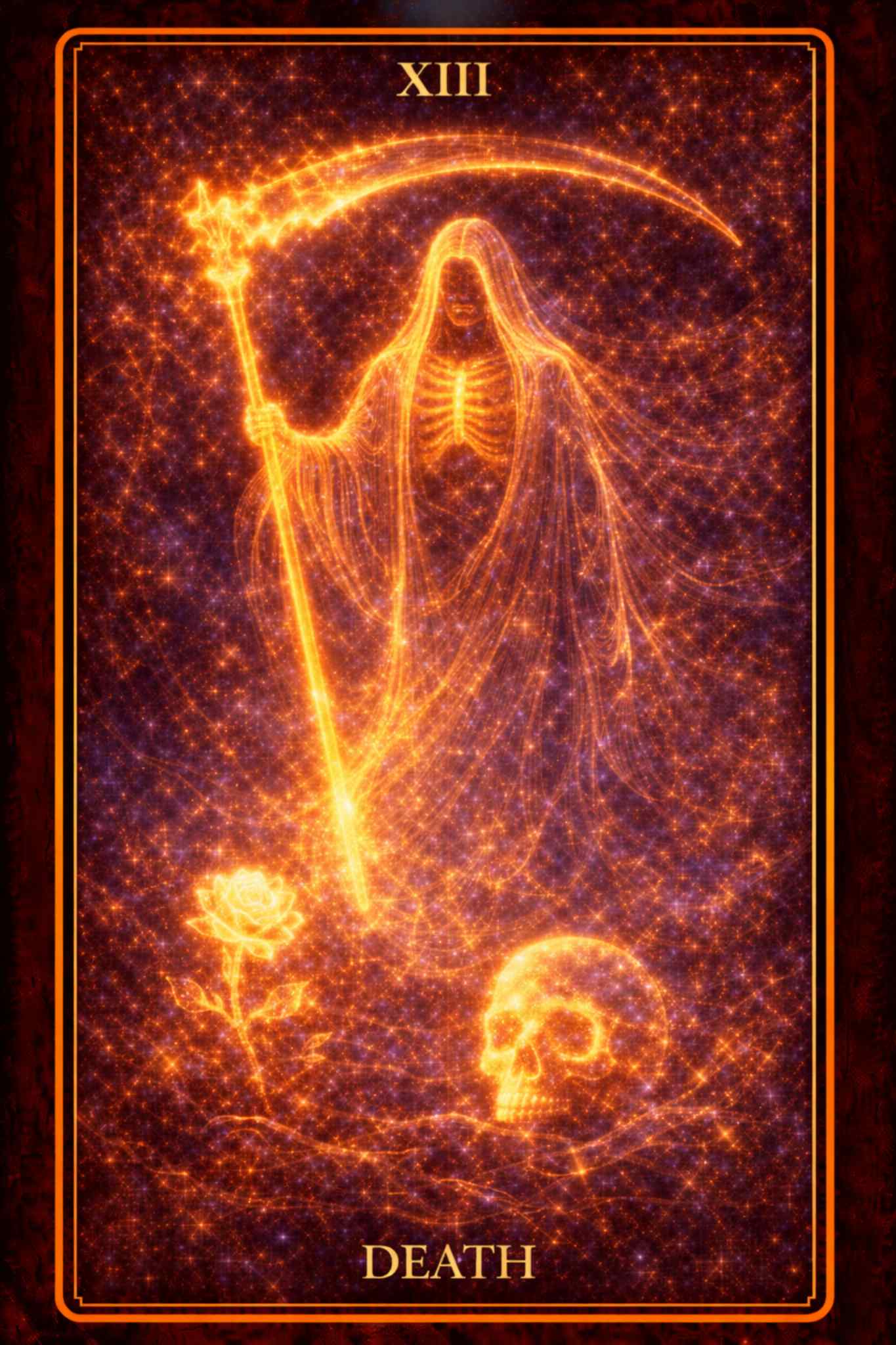
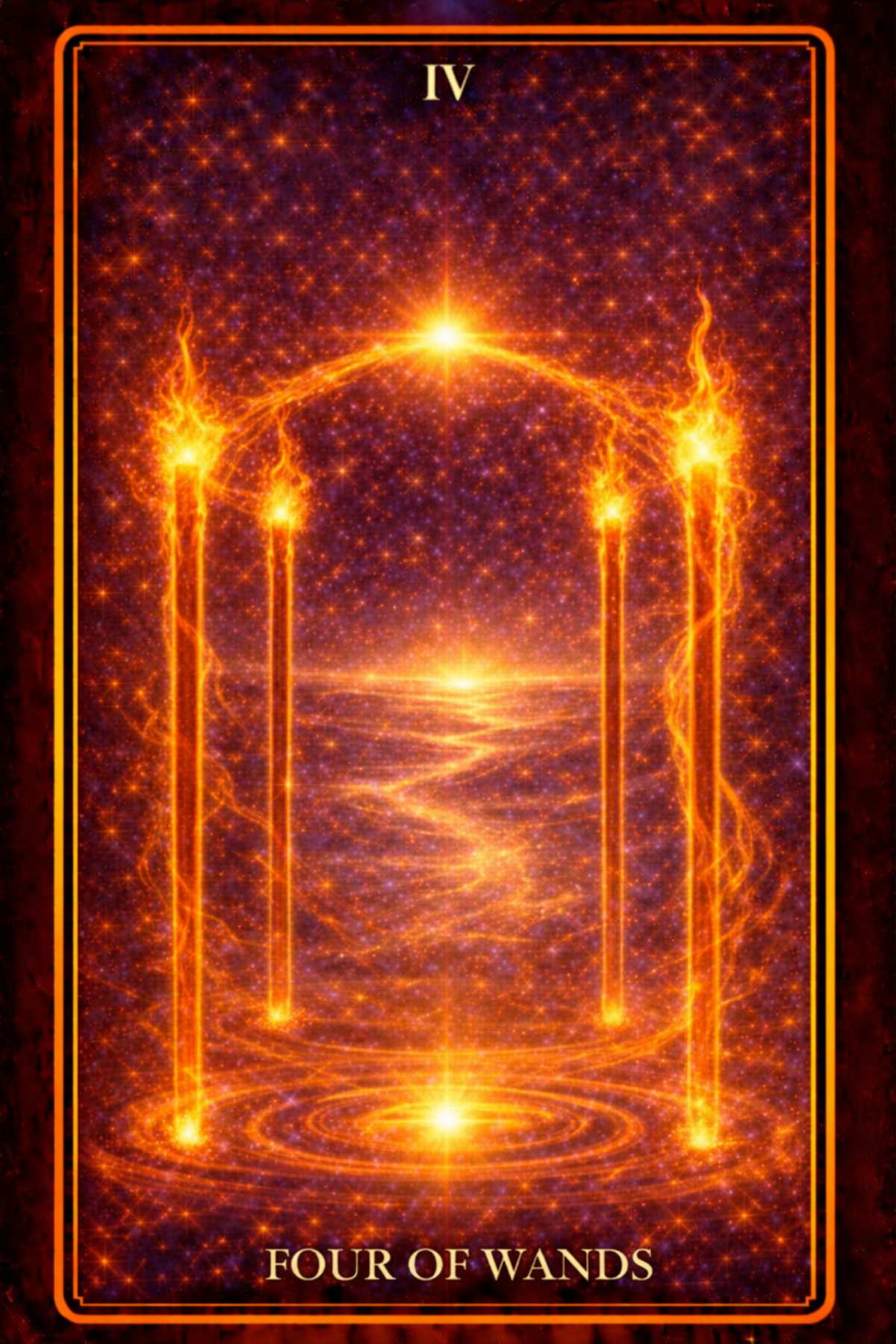
Death and Four of Wands Tarot Combination Meaning
Death and Four of Wands meet where transformation reaches the level of foundation, belonging, and the structures that once felt strong enough to celebrate inside. This pairing goes far beyond a simple story of change followed by relief. Death works at the level of completion. It reveals that a form of life has fulfilled its course and cannot continue in the same shape. The Four of Wands turns attention toward what is built, shared, stabilized, or recognized as home. Together, these cards often appear when an ending reaches deep into the framework of safety, community, partnership, and grounded joy. Something foundational may be passing away, or something lifeless within that foundation is finally being cleared so that a more honest kind of stability can emerge.
This gives the combination unusual emotional depth. The Four of Wands carries warmth, arrival, and the sense that life has become settled enough to inhabit with presence. Beside Death, that stability is examined more closely. What kind of foundation is this? Does it still support living belonging, or has it become a familiar arrangement that looks secure while holding less vitality than before? Death asks without sentimentality. The Four of Wands shows why it matters. When change touches home, commitment, or shared structure, it reaches the places where a person expected to rest.
When the old structure reaches its limit
Death often appears after decline has already begun inwardly. The old form may still look present, yet something essential has already completed itself. Beside the Four of Wands, this can concern a relationship framework, home life, or sense of belonging that has lost its former vitality. What once stabilized the person may now constrain them. What once felt like arrival may now feel like something carefully maintained rather than truly lived. Death reveals that gap between structure and spirit.
This can be painful because the Four of Wands is tied to places and bonds meant to hold us. Yet that is why Death matters here. It separates continuity from aliveness. Sometimes this points toward a real ending. Other times it marks the end of a pattern within a still meaningful structure. In either case, something deeper is asking to be acknowledged so the person can stop living inside a form that no longer reflects their present truth.
Transformation of belonging
A central theme in this pair is the transformation of belonging itself. The Four of Wands reflects where a person feels received, recognized, and anchored. Death asks whether that belonging still lives in the present. A person may remain in a structure that once felt like home but no longer reflects who they are becoming. Memory, identity, and emotional history can make it difficult to see that shift clearly.
Yet this pairing is not inherently destructive. Death often clears what has already faded within the foundation so that a more honest form of belonging can emerge. The Four of Wands then becomes a symbol of renewed grounding rather than fixed permanence. The form may change, but what remains can become more alive because it is no longer built around preserving what has already completed itself.
Love and relationship meaning
In relationships, Death and Four of Wands often point toward transformation in commitment, shared life, or the structure of connection itself. Sometimes an old relational form has ended and cannot be restored in the same way. A bond may still matter, yet its previous shape has reached completion. Death makes that visible. The Four of Wands shows that this is not surface-level change — it touches the ground of the relationship.
You may also want to go one step deeper.
Death + Four of Wands can open up differently inside a focused personal reading.
At its healthiest, this combination can describe the release of a dead pattern that allows a more stable and honest connection to emerge. A couple may rebuild on clearer terms. A person may leave a situation that appeared stable yet lacked living depth. The Four of Wands remains important here because it reminds us that stability still matters. Death is asking for truth within that stability, not its absence.
In more difficult expressions, a person may resist the ending because it threatens belonging or identity. They may hold onto structure because losing it would mean grieving the life built around it. Here the Four of Wands becomes bittersweet. It reflects the understanding that real stability must contain life, not only continuity.
Career, work, and practical foundations
In practical life, this combination often concerns structures that once provided security or a sense of arrival. A role, environment, or system may no longer support living growth. Death reveals that the foundation has reached its limit. The Four of Wands emphasizes that this is about how life is structured and supported, not only about output or ambition.
This can signal rebuilding after truth becomes clear. A person may move, restructure, or redefine what stability means. The Four of Wands then reflects renewed grounding rather than static comfort. The change may feel uncomfortable, yet it opens the possibility of living inside one’s life again rather than maintaining it from a distance.
Psychological and spiritual meaning
Psychologically, this pairing reflects a reorganization of safety and belonging. A person may discover that inner “home” cannot remain tied to an old identity or structure that no longer reflects their lived truth. Death loosens those attachments so a more honest foundation can form.
Spiritually, the pair asks what kind of ground remains after illusion or expired structure has been cleared. It can mark the death of false belonging and the beginning of a more authentic center. In that sense, the pairing supports stability that can truly hold life.
Shadow expression and challenge
The shadow appears when a person preserves structure because it still offers the image of safety. They may continue calling something home while sensing its vitality has changed. The familiarity makes it difficult to question. Death reveals that maintaining form alone cannot restore life within it.
There is also an opposite pattern where structure itself becomes suspect. A person may begin to distrust rootedness entirely. The Four of Wands brings balance by showing that stability is not the issue. The issue is holding onto a form after its life has shifted. The answer is honest rebuilding.
Timing and the threshold of rebuilding
This combination highlights timing around ending and rebuilding. Death asks when a foundation has truly reached completion. The Four of Wands asks when it is time to form a new kind of stability. Sometimes the old structure must fully release before something new can be trusted. Other times, the new ground is already beginning to take shape.
The key is whether rebuilding comes from clarity or from urgency. When it grows from truth, the new foundation tends to carry more life and stability than the old one.
FAQ — Death and Four of Wands
Is this always about breakup or loss of home? It can point to major change, but it may also reflect the end of an old pattern within an existing structure.
Can it be positive? Yes. It can reflect clearing away what has already faded so a more honest form of stability can emerge.
Does Death destroy the Four of Wands? It reveals whether the foundation is still alive and allows it to transform if needed.
Can this show rebuilding? Very often. It speaks to what kind of foundation can be formed after a meaningful ending.
What is the main lesson? Stability becomes stronger when it grows from living truth rather than preserved form.
What this combination is really asking
Death and Four of Wands ask what you are still calling stable even though its inner life has changed. The structure may still stand, yet the question is whether it is alive. The cards invite honesty about what kind of foundation can truly carry you now.
The deeper lesson is that renewal at the level of foundation requires clarity. Death clears what has completed itself. The Four of Wands shows what kind of grounded life can emerge afterward. Together, they form a powerful image of transformed stability — one that is lived, not maintained.
Want to place this combination into a wider reading?
If this pairing feels close to something you are experiencing, a simple spread can help you reflect on the surrounding energy with more clarity.
Closing reflection
Some endings reach the visible structures of life itself: the home, the relationship, the shared world that once felt steady enough to stand inside without question. This pairing belongs to those deeper transitions, where comfort and truth begin to diverge in quiet but undeniable ways. What once felt stable may still be present, yet its inner life has shifted. The familiarity remains, but the sense of being fully at home within it starts to change. These are not surface-level moments. They ask for a different kind of honesty — one that looks beyond appearance and listens for where life is still moving and where it has already begun to withdraw.
Death clears what can no longer hold life, even when the structure itself still stands. The Four of Wands shows that groundedness, belonging, and shared stability still matter deeply, yet they must be rooted in something living. When the old form is allowed to release with honesty, space opens for a more truthful foundation to take shape. Belonging becomes less about preserving what once was and more about inhabiting what is real now. In that space, stability returns with a different quality — quieter, more aligned, and more fully lived from the inside.
More combinations with Death
More combinations with Four of Wands
Continue with Death
Explore Related Guides by Topic
If you want to explore this combination through a more specific emotional lens, these tarot guides can help you follow the broader pattern behind the reading.